Gayatri Chalisa – Lyrics, Meaning & Benefits (गायत्री चालीसा)
Gayatri Chalisa Lyrics (हिंदी में)
॥ दोहा ॥
ह्रीं श्रीं क्लीं मेधा प्रभा, जीवन ज्योति प्रचण्ड।
शान्ति कान्ति जागृत प्रगति, रचना शक्ति अखण्ड॥
जगत जननी मङ्गल करनि, गायत्री सुखधाम।
प्रणवों सावित्री स्वधा, स्वाहा पूरन काम॥
॥ चौपाई ॥
भूर्भुवः स्वः ॐ युत जननी। गायत्री नित कलिमल दहनी॥
अक्षर चौविस परम पुनीता। इनमें बसें शास्त्र श्रुति गीता॥
शाश्वत सतोगुणी सत रूपा। सत्य सनातन सुधा अनूपा॥
हंसारूढ सितंबर धारी। स्वर्ण कान्ति शुचि गगन-बिहारी॥
पुस्तक पुष्प कमण्डलु माला। शुभ्र वर्ण तनु नयन विशाला॥
ध्यान धरत पुलकित हित होई। सुख उपजत दुःख दुर्मति खोई॥
कामधेनु तुम सुर तरु छाया। निराकार की अद्भुत माया॥
तुम्हरी शरण गहै जो कोई। तरै सकल संकट सों सोई॥
सरस्वती लक्ष्मी तुम काली। दिपै तुम्हारी ज्योति निराली॥
तुम्हरी महिमा पार न पावैं। जो शारद शत मुख गुन गावैं॥
चार वेद की मात पुनीता। तुम ब्रह्माणी गौरी सीता॥
महामन्त्र जितने जग माहीं। कोउ गायत्री सम नाहीं॥
सुमिरत हिय में ज्ञान प्रकासै। आलस पाप अविद्या नासै॥
सृष्टि बीज जग जननि भवानी। कालरात्रि वरदा कल्याणी॥
ब्रह्मा विष्णु रुद्र सुर जेते। तुम सों पावें सुरता तेते॥
तुम भक्तन की भक्त तुम्हारे। जननिहिं पुत्र प्राण ते प्यारे॥
महिमा अपरम्पार तुम्हारी। जय जय जय त्रिपदा भयहारी॥
पूरित सकल ज्ञान विज्ञाना। तुम सम अधिक न जगमे आना॥
तुमहिं जानि कछु रहै न शेषा। तुमहिं पाय कछु रहै न क्लेसा॥
जानत तुमहिं तुमहिं व्है जाई। पारस परसि कुधातु सुहाई॥
तुम्हरी शक्ति दिपै सब ठाई। माता तुम सब ठौर समाई॥
ग्रह नक्षत्र ब्रह्माण्ड घनेरे। सब गतिवान तुम्हारे प्रेरे॥
सकल सृष्टि की प्राण विधाता। पालक पोषक नाशक त्राता॥
मातेश्वरी दया व्रत धारी। तुम सन तरे पातकी भारी॥
जापर कृपा तुम्हारी होई। तापर कृपा करें सब कोई॥
मंद बुद्धि ते बुधि बल पावें। रोगी रोग रहित हो जावें॥
दरिद्र मिटै कटै सब पीरा। नाशै दुःख हरै भव भीरा॥
गृह क्लेश चित चिन्ता भारी। नासै गायत्री भय हारी॥
सन्तति हीन सुसन्तति पावें। सुख संपति युत मोद मनावें॥
भूत पिशाच सबै भय खावें। यम के दूत निकट नहिं आवें॥
जो सधवा सुमिरें चित लाई। अछत सुहाग सदा सुखदाई॥
घर वर सुख प्रद लहैं कुमारी। विधवा रहें सत्य व्रत धारी॥
जयति जयति जगदंब भवानी। तुम सम ओर दयालु न दानी॥
जो सतगुरु सो दीक्षा पावे। सो साधन को सफल बनावे॥
सुमिरन करे सुरूचि बडभागी। लहै मनोरथ गृही विरागी॥
अष्ट सिद्धि नवनिधि की दाता। सब समर्थ गायत्री माता॥
ऋषि मुनि यती तपस्वी योगी। सो सो मन वांछित फल पावें॥
बल बुधि विद्या शील स्वभाउ। धन वैभव यश तेज उछाउ॥
सकल बढें उपजें सुख नाना। जे यह पाठ करै धरि ध्याना॥
॥ दोहा ॥
यह चालीसा भक्ति युत पाठ करे जो कोई।
तापार कृपा प्रसंता गायत्री की होय॥
Gayatri Chalisa – Transliteration (English)
Doha:
Hrim Shrim Klim Medha Prabha, Jivana Jyoti Prachand.
Shanti Kanti Jagrit Pragati, Rachana Shakti Akhand.
Jagat Janani Mangala Karani, Gayatri Sukhadham.
Pranavon Savitri Svadhaa, Svaha Purana Kama.
Chaupai:
Bhurbhuvah Svah Om Yuta Janani. Gayatri Nita Kalimala Dahani.
Akshara Chauvisa Parama Punita. Inamem Base Shastra Shruti Gita.
Shashvata Satoguni Sata Rupa. Satya Sanatana Sudha Anupa.
Hansarudha Sitambar Dhari. Svarna Kanti Shuchi Gagan-Bihari.
Pushtak Pushpa Kamandalu Mala. Shubra Varna Tanu Nayana Vishala.
Kamadhenut Tum Sura Taru Chhaya. Nirakara Ki Adbhuta Maya.
Catvara Veda Ki Mata Punita. Tuma Brahmani Gauri Sita.
Mahamantra Jitane Jaga Mahi. Kou Gayatri Sama Nahi.
Ashta Siddhi Navanidhi Ki Data. Saba Samartha Gayatri Mata.
Doha:
Yaha Chalisa Bhakti Yuta Patha Kare Jo Koi.
Tapar Kripa Prasanta Gayatri Ki Hoya.
Meaning & Significance
The Gayatri Chalisa is a forty-verse hymn in praise of Mata Gayatri, the goddess of the Vedic Gayatri Mantra (Rigveda 3.62.10). The opening doha names her with her Tantric seed syllables-Hrim, Shrim, Klim-and identifies her as Medha (intellect), Prabha (radiance), Jivana Jyoti (light of life), Shanti (peace), Kanti (splendour), and Rachana Shakti (creative power), establishing that Gayatri is not merely a mantra but a complete divine personality. The forty chaupais progressively unfold her cosmic identity: she is Savitri (the solar goddess), Saraswati (goddess of knowledge), Lakshmi (goddess of prosperity), and Kali (goddess of time)-all three powers of creation, preservation, and dissolution are her expressions. The verse "Chaar Veda ki Maat Punita" declares her to be the mother of the four Vedas. The assertion "Mahamantra Jitane Jag Mahi, Kou Gayatri Sam Nahi" places the Gayatri Mantra above all other mantras. The closing doha promises that whoever recites this chalisa with devotion will receive Gayatri Mata's grace without fail.
About Gayatri
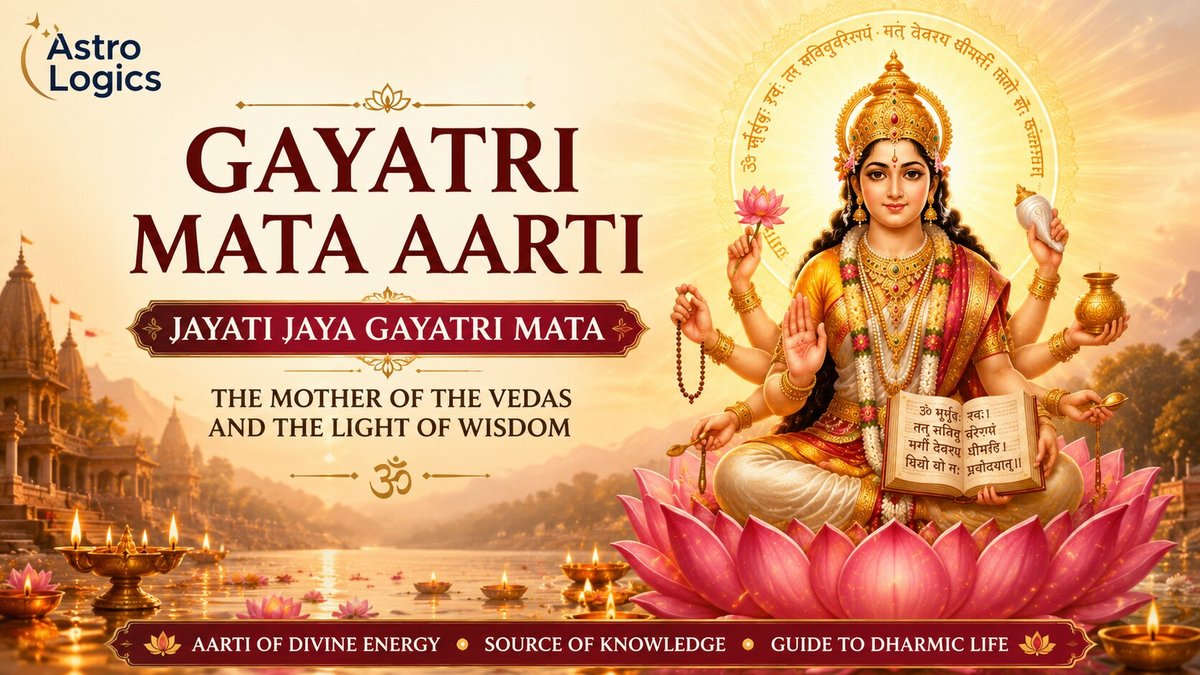
Gayatri Devi is the goddess-form of the Gayatri Mantra, a twenty-four-syllable Vedic verse that forms the centrepiece of the Sandhyavandana (morning, noon, and evening rituals) for initiated Hindus. The mantra meditates on the divine solar light (Savitr) and prays for the illumination of the intellect. In her iconographic form, Gayatri is depicted as a radiant five-headed goddess seated on a white swan (hansa), holding a book (Vedas), a lotus, a water pot (kamandalu), and a string of prayer beads. Her five heads represent the five pranas (vital forces) and the five elements. She is also identified with Saraswati and is considered by many Vaishnava and Shaiva texts alike to be the mother of all mantras. The Gayatri Pariwar movement founded by Pandit Shriram Sharma Acharya has been a major force in the modern revival of Gayatri devotion, promoting her worship across all sections of society.
Benefits of Reciting the Gayatri Chalisa
- Sharpens intellect and improves memory, making it invaluable for students and knowledge-seekers.
- Removes laziness, sinful tendencies, and ignorance (avidya) as described in the chalisa's own verses.
- Grants the eight siddhis and nine nidhis to devoted and consistent practitioners.
- Protects the devotee from fear, enemies, disease, and domestic strife.
- Ensures auspicious marriage and household happiness for women who recite it with faith.
- Leads ultimately to spiritual liberation, as Gayatri is described as the source of all liberation-granting mantras.
How to Recite (Vidhi)
- Perform the morning Sandhyavandana, or at minimum, wash hands, face, and feet before sitting for recitation.
- Face east at sunrise, or north at any other time of day, as these are considered the most auspicious directions for Gayatri worship.
- Light a lamp with clarified butter (ghee) and offer white or yellow flowers along with a water offering.
- Begin with three recitations of the Gayatri Mantra: "Om Bhur Bhuvah Svah, Tat Savitur Varenyam, Bhargo Devasya Dhimahi, Dhiyo Yo Nah Prachodayat."
- Recite the chalisa from the opening doha through all forty chaupais to the closing doha without interruption.
- Conclude with a silent meditation on Gayatri's five-headed radiant form and offer a prayer for wisdom and protection.
Best Day & Time to Recite
Gayatri Jayanti, which falls on the day after the Shukla Panchami of the month of Jyeshtha, is the most auspicious occasion for intensive Gayatri worship and chalisa recitation. Within every day, the three sandhyas-dawn, noon, and dusk-are the times specifically prescribed for Gayatri upasana, with the dawn recitation (Pratah Sandhya) being the most powerful. Friday (Shukravara) is considered particularly auspicious for Shakti-related worship including Gayatri. The month of Shravan and the nine days of Navaratri are also traditional periods of intensified Gayatri practice.
Frequently Asked Questions
Can women and non-brahmins recite the Gayatri Chalisa?
The Gayatri Chalisa is a devotional hymn in the bhakti tradition and is open to all devotees regardless of gender or caste. While some traditional schools restrict the formal Sandhyavandana ritual to initiated males, the chalisa as a form of bhakti prayer has always been available to all. The chalisa itself addresses women directly in its verses ("Jo Sadhava Sumiren Chit Lai" for married women; "Ghar Var Sukha Prad Lahain Kumari" for unmarried girls), affirming that Gayatri's grace extends to everyone.
What is the connection between the Gayatri Mantra and the Gayatri Chalisa?
The Gayatri Mantra (Rigveda 3.62.10) is a twenty-four syllable Vedic verse meditating on the divine solar light. The Gayatri Chalisa is a later devotional expansion of the same tradition, composed in the medieval bhakti style to make Gayatri's glory accessible to those who may not be formally initiated into mantra recitation. The chalisa praises the goddess who embodies the mantra and unpacks her attributes in devotional poetry, serving as a complement to-not a replacement for-the mantra itself.
Is the Gayatri Chalisa a traditional text?
The Gayatri Chalisa belongs to the classical Braj Bhasha devotional literature that flourished roughly between the 16th and 19th centuries. Unlike the Hanuman Chalisa (with its well-documented Tulsidas authorship), the Gayatri Chalisa's authorship is less definitively recorded, but the text is uniformly traditional in language, metre, and content, with no indicators of modern composition. It is widely published in standard Hindi chalisa collections and has been in common devotional use for generations.

Gayatri Chalisa - forty verses in honour of the mother of all mantras
Maa Gayatri occupies an unparalleled position in the Vedic tradition: she is simultaneously a goddess embodying the Vedic metres, the presiding deity of the Gayatri Mantra - the single most recited mantra in the Hindu world - and the principle of the illuminating power of sacred speech itself. The Gayatri Chalisa brings this multidimensional presence into forty accessible devotional verses, and its rasa is one of contemplative aspiration: the devotee is not rushing past the words but pausing inside them, seeking the refinement of intellect and the purification of mind that Maa Gayatri's grace is understood to bestow. Recitation is especially cherished at dawn, noon, and dusk - the three sandhya moments when the Gayatri Mantra has traditionally been chanted - and is associated with Gayatri Jayanti, which falls on Jyeshtha Shukla Ekadashi.
What sets this Chalisa apart is that it functions as both prayer and teaching: even as it worships the Goddess, it reminds the devotee of the nature of the boon being sought - not comfort or material gain but the awakening of discrimination (viveka) and the capacity to distinguish the real from the transient. In the Jyotish tradition, Gayatri worship is associated with strengthening the Sun's positive influence and is recommended for those seeking clarity of purpose and intellectual strength. The quiet revolution embedded in the Gayatri Chalisa is this: it suggests that the most powerful thing a human being can ask for is not protection from difficulty but the wisdom to meet it with clear eyes and an undivided heart.