Sheetala Chalisa: Complete Lyrics, Meaning, and Significance
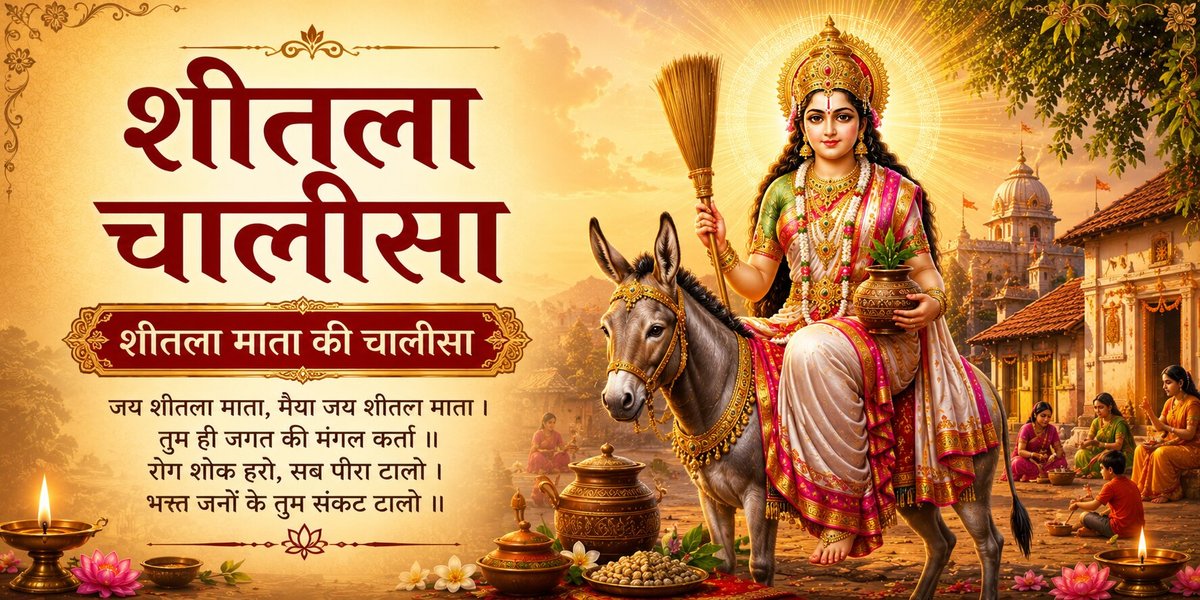
Sheetala Mata's cooling grace across seasons
Sheetala Mata, whose very name carries the Sanskrit root for coolness and calm, is one of the most tenderly invoked village goddesses across northern and central India. Devotees approach her especially during the warmer months, and her worship is particularly associated with the auspicious day of Sheetala Ashtami, which falls on the eighth day after Holi. On this day, traditional households offer stale food prepared the night before - a unique practice known as basoda - symbolising that the goddess herself holds sway over heat, fever, and all that inflames the body and mind. The Chalisa form, with its forty verses structured around the couplet framework, allows devotees to move through a complete arc of praise, petition, and surrender, making it as much a meditative rhythm as a prayer.
What distinguishes the Sheetala Chalisa from many other goddess hymns is its intimate, almost maternal register: devotees believe that singing it with sincere feeling invites the goddess's protective coolness into their homes and families. The composition is treasured across generations in rural households where Sheetala Mata is regarded as a guardian of children's wellbeing. Her presence is traditionally felt most keenly at the junction of seasons, and devotees recite this Chalisa as an act of collective faith that the community will pass safely through periods of vulnerability. For those drawn to goddess devotion, returning to these verses each week cultivates a quality of quiet trust.
Sheetala Chalisa Lyrics (हिंदी में)
॥ दोहा ॥
जय-जय माता शीतला, तुमहिं धरै जो ध्यान।
होय विमल शीतल हृदय, विकसै बुद्धि बलज्ञान॥
॥ चौपाई ॥
जय-जय-जय शीतला भवानी। जय जग जननि सकल गुणधानी॥
गृह-गृह शक्ति तुम्हारी राजित। पूरण शरदचन्द्र समसाजित॥
विस्फोटक से जलत शरीरा। शीतल करत हरत सब पीरा॥
मातु शीतला तव शुभनामा। सबके गाढ़े आवहिं कामा॥
शोकहरी शंकरी भवानी। बाल-प्राणरक्षी सुख दानी॥
शुचि मार्जनी कलश करराजै। मस्तक तेज सूर्य सम साजै॥
चौसठ योगिन संग में गावैं। वीणा ताल मृदंग बजावै॥
नृत्य नाथ भैरौं दिखलावैं। सहज शेष शिव पार ना पावैं॥
धन्य-धन्य धात्री महारानी। सुरनर मुनि तब सुयश बखानी॥
ज्वाला रूप महा बलकारी। दैत्य एक विस्फोटक भारी॥
घर-घर प्रविशत कोई न रक्षत। रोग रूप धरि बालक भक्षत॥
हाहाकार मच्यो जगभारी। सक्यो न जब संकट टारी॥
तब मैया धरि अद्भुत रूपा। करमें लिये मार्जनी सूपा॥
विस्फोटकहिं पकड़ि कर लीन्ह्यो। मूसल प्रमाण बहुविधि कीन्हो॥
बहुत प्रकार वह विनती कीन्हा। मैय्या नहीं भल मैं कछु कीन्हा॥
अब न जाऊं मातु, काहु गृह। जहँ अपवित्र वही दुख सहि॥
अब भगतन शीतल भय जइहौं। विस्फोटक भयघोर नसइहैं॥
श्री शीतलहिं भजे कल्याना। वचन सत्य भाषे भगवाना॥
पूजन पाठ मातु जब करी है। भय आनंद सकल दुःख हरी है॥
विस्फोटक भय जिहि गृह भाई। भजै देवि कहँ यही उपाई॥
कलश शीतला का सजवावै। द्विज से विधिवत पाठ करावै॥
तुम्हीं शीतला, जग की माता। तुम्हीं पिता जग की सुखदाता॥
तुम्हीं जगद्धात्री सुखसेवी। नमो नमामि शीतले देवी॥
नमो सुक्खकरणी दुःखहरणी। नमो-नमो जगतारणि धरणी॥
नमो-नमो त्रैलोक्य वन्दिनी। दुखदारिद्रादिक निकंदिनी॥
श्री शीतला, शेढ़ला, महला। रुणलीह्युणनी मातु मंदला॥
हो तुम दिगम्बर तनुधारी। शोभित पंचनाम असवारी॥
रासभ, खर बैशाख सुनन्दन। गर्दभ दुर्वाकंद निकन्दन॥
सुमिरत संग शीतला माई। जाहि सकल दुख दूर पराई॥
गलका, गलगन्डादि जुहोई। ताकर मंत्र न औषधि कोई॥
एक मातु जी का आराधन। और नहिं कोई है साधन॥
निश्चय मातु शरण जो आवै। निर्भय मन इच्छित फल पावै॥
कोढ़ी, निर्मल काया धारै। अन्धा, दृग-निज दृष्टि निहारै॥
वन्ध्या नारि पुत्र को पावै। जन्म दरिद्र धनी होई जावै॥
मातु शीतला के गुण गावत। लखा मूक को छन्द बनावत॥
यामे कोई करै जनि शंका। जग मे मैया का ही डंका॥
भगत 'कमल' प्रभुदासा। तट प्रयाग से पूरब पासा॥
पुरी तिवारी मोर निवासा। ककरा गंगा तट दुर्वासा॥
अब विलम्ब मैं तोहि पुकारत। मातु कृपा कौ बाट निहारत॥
पड़ा क्षर तव आस लगाई। रक्षा करहु शीतला माई॥
॥ दोहा ॥
यह चालीसा शीतला, पाठ करे जो कोय।
सपनें दुख व्यापे नही, नित सब मंगल होय॥
Sheetala Chalisa – Transliteration (English)
|| Doha ||
Jai-Jai Mata Shitala, Tumahin Dharai Jo Dhyana.
Hoya Vimal Shital Hridaya, Vikasai Buddhi Balagyana.
|| Chaupai ||
Jai-Jai-Jai Shitala Bhawani. Jai Jaga Janani Sakala Gunakhani.
Griha-Griha Shakti Tumhari Rajita. Purana Sharadachandra Samasajita.
Visphotaka Se Jalata Sharira. Shital Karata Harata Saba Pira.
Matu Shitala Tava Shubhanama. Sabake Gadhen Avahin Kama.
Shokahari Shankari Bhawani. Bala-Pranarakshi Sukha Dani.
Shuchi Marjani Kalasha Kararajai. Mastaka Teja Surya Samarajai.
Chausatha Yogina Sanga Me Gavain. Vina Tala Mridanga Bajavai.
Nritya Natha Bhairo Dikharavain. Sahaja Shesha Shiva Para Na Pavain.
Dhanya-Dhanya Dhatri Maharani. Suranara Muni Taba Suyasha Bakhani.
Jwala Rupa Maha Balakari. Daitya Eka Visphotaka Bhari.
Ghar-Ghar Pravishata Koi Na Rakshata. Roga Rupa Dhari Balaka Bhakshata.
Hahakara Machyo Jagabhari. Sakyo Na Jaba Sankata Tari.
Taba Maiya Dhari Adbhuta Rupa. Karamen Liye Marjani Supa.
Visphotakahin Pakadin Kar Linhyo. Musala Prahara Bahuvidhi Kinhyo.
Bahuta Prakara Vaha Vinati Kinha. Maiya Nahin Bhala Main Kachhu Kinha.
Ab Na Jaaon Matu, Kahu Grih. Jahan Apavitra Vahi Dukh Sahi.
Ab Bhagatana Shital Hvai Jaihain. Visphotaka Bhayaghora Nasaihain.
Shri Shitalahin Bhaje Kalyana. Vachana Satya Bhashe Bhagawana.
Poojan Path Matu Jab Kari Hai. Bhay Anand Sakal Duhkh Hari Hai.
Visphotaka Bhaya Jihi Griha Bhai. Bhajai Devi Kahan Yahi Upai.
Kalasha Shitala Ka Sajavavai. Dvija Se Vidhiwata Patha Karavai.
Tumhin Shitala, Jaga Ki Mata. Tumhin Pita Jaga Ki Sukhadata.
Tumhin Jagaddhatri Sukhasevi. Namo Namami Shitale Devi.
Namo Sukkhakarani Dukhaharani. Namo-Namo Jagatarani Tarani.
Namo-Namo Trailokya Vandini. Dukhadaridradika Kandini.
Shri Shitala, Shedhala, Mahala. Runalihyunani Matu Mandala.
Ho Tuma Digambara Tanudhari. Shobhita Panchanama Asawari.
Rasabha, Khara Baishakha Sunandana. Gardabha Durvakanda Nikandana.
Sumirata Sanga Shitala Mai. Jahi Sakala Dukha Dura Parai.
Galaka, Galagandadi Juhoi. Takara Mantra Na Aushadhi Koi.
Eka Matu Ji Ka Aradhana. Aura Nahin Koi Hai Sadhana.
Nishchaya Matu Sharana Jo Avai. Nirbhaya Man Ichchhita Phala Pavai.
Kodhi, Nirmala Kaya Dharai. Andha, Driga-Nija Drishti Niharai.
Vandhya Nari Putra Ko Pavai. Janma Daridra Dhani Hoi Javai.
Matu Shitala Ke Guna Gavata. Lakha Muka Ko Chhanda Banawata.
Yame Koi Karai Jani Shanka. Jaga Me Maiya Ka Hi Danka.
Bhanata Ramasundara Prabhudasa. Tat Prayaga Se Puraba Pasa.
Puri Tiwari Mora Nivasa. Kakara Ganga Tat Durvasa.
Aba Vilamba Main Tohi Pukarata. Matu Kripa Kau Bata Niharata.
Pada Kshara Tava Asa Lagai. Raksha Karahu Shitala Mai.
|| Doha ||
Yah Chalisa Shitala, Path Kare Jo Koy.
Sapane Dukh Vyape Nahin, Nit Sab Mangal Hoy.
Meaning & Significance
The Sheetala Chalisa is a forty-verse hymn to Goddess Sheetala (also spelled Shitala), the cooling, purifying deity who is the traditional sovereign over all febrile and pox-related diseases. The chalisa opens by praising her cooling grace - the very name Sheetala means "the cool one" - and proceeds to narrate a vivid mythological episode at its theological core: a terrible demon called Visphotak (the blister-causing affliction) invaded every household, devouring children through its disease-form. When none could stop it, the Goddess herself assumed a magnificent form, seized the demon, and subdued it - after which the chastened demon vowed to stay only in impure homes and to flee from every house where Sheetala is worshipped. This narrative is not merely myth but a devotional-epidemiological understanding of disease prevention through ritual purity, cleanliness (symbolised by the mop and broom in the Goddess's hands), and sincere prayer. The closing doha promises that whoever recites this chalisa regularly will never experience sorrow even in dreams.
About Sheetala Mata
Goddess Sheetala is one of the most ancient and widely worshipped folk deities of North and Central India. She is depicted riding a donkey (gardabha), holding a broom (jhadu), a water pot (kalash), a winnowing fan (soop), and a bunch of neem leaves - all symbols of cleansing, cooling, and purification. She is considered both the cause and the cure of smallpox, chickenpox, measles, and all skin-eruption diseases, and her worship is deeply embedded in folk medicine traditions. Her primary shrine is at Sheetala Mata Mandir in Gurugram (Haryana), which is one of the most visited temples in North India. She is also worshipped at shrines in Varanasi, Hardwar, and countless villages across the Hindi belt. Her festival, Sheetala Ashtami (also called Bada or Seetla Saat), falls on the eighth day after Holi and is celebrated by offering cold, day-old food - since no fire is lit on that day in her honour.
Benefits of Reciting the Sheetala Chalisa
- Traditionally recited to seek protection from fevers, skin diseases, and contagious illnesses, particularly for the welfare of young children.
- The chalisa promises that regular recitation drives away all forms of disease (rog) and affliction (dosh) from the household.
- Families maintain the practice during disease outbreaks or health concerns as a prayer for the Goddess's cooling, healing grace.
- The hymn associates the Goddess with the resolution of gular diseases (goitre and throat ailments) for which it states no other remedy suffices.
- Recitation cultivates awareness of cleanliness (shuchi), purity, and mindful living - the practical wisdom embodied by the Goddess's implements.
- The closing doha affirms that whoever reads this chalisa regularly will be free from sorrow even in the dream state - suggesting a depth of peace that extends to the subconscious.
How to Recite (Vidhi)
- Bathe and wear clean white or blue clothing; these cool colours are associated with the Goddess's sheetala (cooling) energy.
- Establish the Goddess's image with a clean white cloth; offer neem leaves, a pot of cool water, and a fan as symbolic implements.
- Light incense and a cool white-wax candle or diya; avoid using camphor, which generates heat, on this deity's altar.
- Recite the Sheetala Chalisa with attention to the narrative arc - particularly the episode of the demon Visphotak - as a meditation on the power of purity over disease.
- Conclude by sprinkling cool, clean water around the home as a symbolic act of the Goddess's purifying presence.
- On Sheetala Ashtami, observe the tradition of offering cold, previously cooked food (basi khana) as naivedya, lighting no fire in the kitchen as a mark of reverence.
Best Day & Time to Recite
Monday is traditionally the most auspicious day for Sheetala Mata's worship, as the cool, lunar energy of the day aligns with her cooling divine nature. Sheetala Ashtami - the eighth day after Holi (Falgun Shukla Ashtami or Krishna Ashtami of Chaitra) - is the supreme festival of the year for this Goddess, when she is worshipped throughout North India with cold-food offerings. Both Navratri festivals are also appropriate times for her recitation. The morning hours, particularly before sunrise when the air is naturally coolest, are the ideal daily time. During summer months, when heat-related illness is prevalent, reciting the chalisa at dusk - another cool, liminal time - is especially valued.
Frequently Asked Questions
Why does Goddess Sheetala ride a donkey?
The donkey (gardabha or rasabh) is Sheetala's vahana (vehicle) and symbolises patience, steadiness, and the willingness to bear burdens without complaint. In folk tradition, the donkey was associated with the removal of garbage and impurity - reinforcing the Goddess's identity as the great purifier who removes disease and filth from the world. The donkey also represents stubbornness transformed into devoted service, a quality the Goddess rewards in her devotees.
What is Sheetala Ashtami and how is it observed?
Sheetala Ashtami (also called Seetla Saat or Bada Seetla) falls on the eighth day after Holi. On the evening before this festival, families prepare a full meal which is then offered to the Goddess and consumed cold the next day - no fire is lit in the kitchen on this date, honouring the Goddess of cool healing. Devotees visit Sheetala temples, bathe the deity with cool water and milk, offer neem leaves, and recite the chalisa and aarti. The festival is an ancient public-health ritual that combines religious devotion with the cooling of the body after Holi's fires.
Is Sheetala Mata considered a village deity or a mainstream Devi?
Sheetala Mata occupies a unique position: she is simultaneously a beloved gram-devata (village deity) rooted in folk tradition and a fully mainstream Shakti goddess with major temples, a recognised Purana narrative, and pan-India following. Her chalisa, her ashtami festival, and her temples in major pilgrimage towns like Gurugram, Varanasi, and Hardwar establish her firmly within the classical Devi tradition, while her proximity to everyday health concerns keeps her deeply embedded in local, community-level devotion.