Pitra Gayatri Mantra: Sanskrit Text, Meaning & Benefits
Pitra Gayatri Mantra - Sanskrit Text
ॐ देवताभ्यः पितृभ्यश्च महायोगिभ्य एव च ।
नमः स्वाहायै स्वधायै नित्यमेव नमो नमः ॥
ॐ पितृभ्यो नमः ॥
Vedic Pitra Gayatri (alternate form for tarpana):
ॐ पितृगणाय विद्महे जगत्धारिणे धीमहि ।
तन्नो पितरो प्रचोदयात् ॥
Transliteration (Roman/IAST)
oṃ devatābhyaḥ pitṛbhyaśca mahāyogibhya eva ca |
namaḥ svāhāyai svadhāyai nityam eva namo namaḥ ||
oṃ pitṛbhyo namaḥ ||
oṃ pitṛ-gaṇāya vidmahe jagat-dhāriṇe dhīmahi |
tanno pitaro pracodayāt ||
Meaning
The first verse offers reverent salutation “to the deities, to the ancestors (pitr), and to the great yogis,” bowing to Svaha (the offering-power for the gods) and Svadha (the offering-power for the ancestors), with repeated “salutations again and again”; it closes with “Om, salutations to the ancestors.” The Gayatri-form prays: “We meditate upon the host of ancestors, the upholders of the world; may the ancestors inspire and guide us.” Both invoke the blessings, protection and grace of the departed forefathers.
About this Mantra
The Pitra Gayatri is the central invocation in pitr-puja, tarpana (water-offering) and shraddha rites for the ancestors. The first, classical form is widely used while offering svadha and water to the pitrs; the Gayatri-pattern form follows the “vidmahe…dhimahi…prachodayat” structure used to address every deity. Together they honour the chain of forefathers (pitr) who, in the Vedic worldview, must be remembered and nourished so that their blessings flow to their descendants.
Significance & Spiritual Benefits
Worship of the ancestors is held to settle the “pitr-rina,” the debt owed to those who gave us our lineage and life. Reciting the Pitra Gayatri during tarpana and shraddha is believed to bring peace to departed souls, attract their blessings for the family’s health, progeny and prosperity, and relieve obstacles arising from neglected ancestral duties. It cultivates gratitude, family continuity, and a sense of belonging to a larger lineage.
Astrological Relevance
In jyotisha, ancestral matters are read through the Sun (the father and forefathers), the 9th house (forefathers and dharma), and especially Ketu and the Moon’s nodes. An afflicted ninth house, a Sun–Rahu/Ketu combination, or the classic “Pitru Dosha” (often linked to malefics in the 9th or to Rahu/Ketu) is traditionally remedied through ancestral worship, tarpana and recitation of the Pitra Gayatri - particularly during Pitru Paksha. The mantra is thus a standard remedial measure for Pitru Dosha and for smoothing afflictions tied to lineage, father and Ketu.
How to Chant (Vidhi)
Face south (the direction of the ancestors), wear the sacred thread in the apasavya (right-shoulder) manner if initiated, and use water mixed with black sesame for tarpana. After a sankalpa stating the intention, recite the Pitra Gayatri while offering water from the joined palms toward the south, repeating it for the named ancestors. Maintain a clean, reverent and grateful attitude. A priest’s guidance is helpful for formal shraddha.
Best Day & Time
Pitru Paksha (the dark fortnight of Ashwin) is the foremost period; Amavasya (especially the Sarva-pitri Amavasya), the lunar day matching the ancestor’s passing (tithi), and the noon hour are particularly suitable. The mantra may also be recited on Saturdays and at any solar/lunar eclipse for ancestral peace.
Frequently Asked Questions
What is the difference between Svaha and Svadha?
Svaha is the word of offering to the gods (devas); Svadha is the word of offering to the ancestors (pitrs). The Pitra Gayatri salutes both, but the ancestral rites centre on Svadha.
When should the Pitra Gayatri be recited?
It is recited during daily or periodic tarpana, during shraddha ceremonies, and especially throughout Pitru Paksha and on Amavasya, to honour and nourish the departed forefathers.
Can it help with Pitru Dosha?
Traditionally, yes. Ancestral worship, tarpana and recitation of the Pitra Gayatri are among the classic remedies prescribed to relieve Pitru Dosha and to seek the blessings and peace of the ancestors.
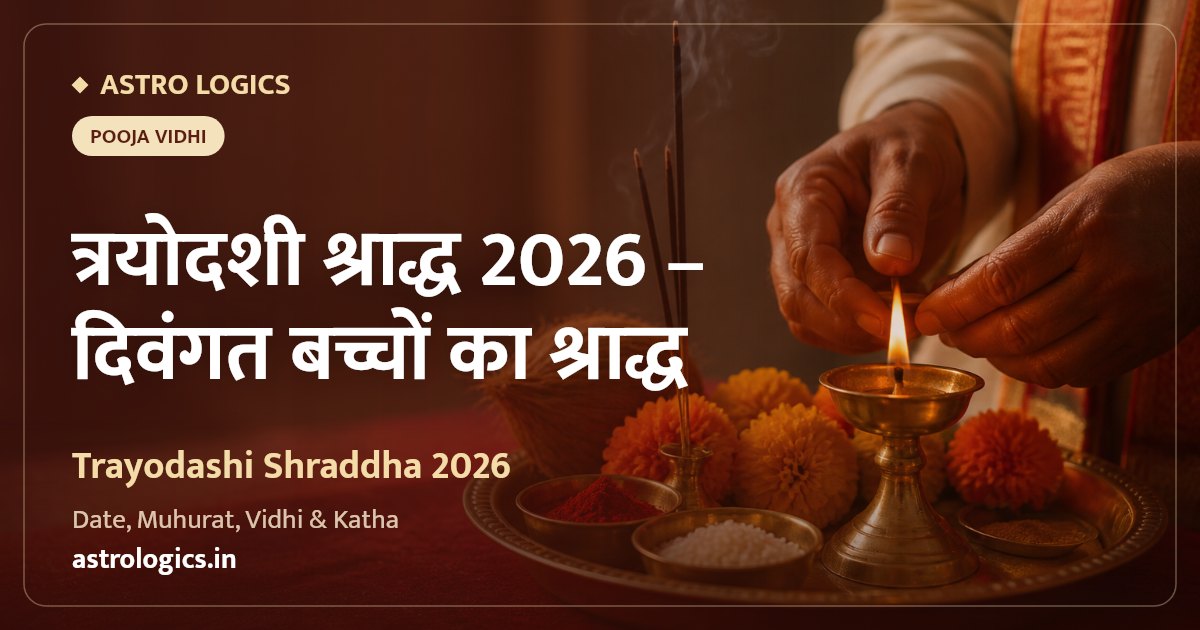
Honouring those who came before, through mantra and water
The Pitra Gayatri Mantra belongs to one of the oldest and most emotionally resonant strands of Vedic practice: the ongoing care of the ancestors (pitrs), whose welfare is understood in the tradition to be deeply intertwined with the welfare of their living descendants. Unlike many mantras that address luminous celestial deities, this invocation turns the devotee's attention toward those who have walked the human path before them - parents, grandparents, great-grandparents - and acknowledges that the debt to them is real, sacred and worthy of ritual recognition. Tarpana and shraddha rites, in which this mantra is central, are acts of memory, gratitude and reciprocal care across the threshold of death.
In the Jyotish tradition, Pitru Dosha - disturbances in the ancestral lineage - is identified through particular patterns in the natal chart, notably involving the ninth house, the Sun, the Moon, and certain nodes of the Moon (Rahu and Ketu). Reciting the Pitra Gayatri Mantra, especially during Pitru Paksha (the fortnight of the ancestors), on Amavasya (new moon), or during the sacred Mahalaya period, is considered by devotees to be among the most effective and respectful means of addressing such patterns. The practice ultimately asks something simple but profound: that we remember we are not the first, and that those who came before us still, in some living sense, belong to us.