Sheetalashtakam Stotram: Sanskrit Text, Meaning & Healing Benefits
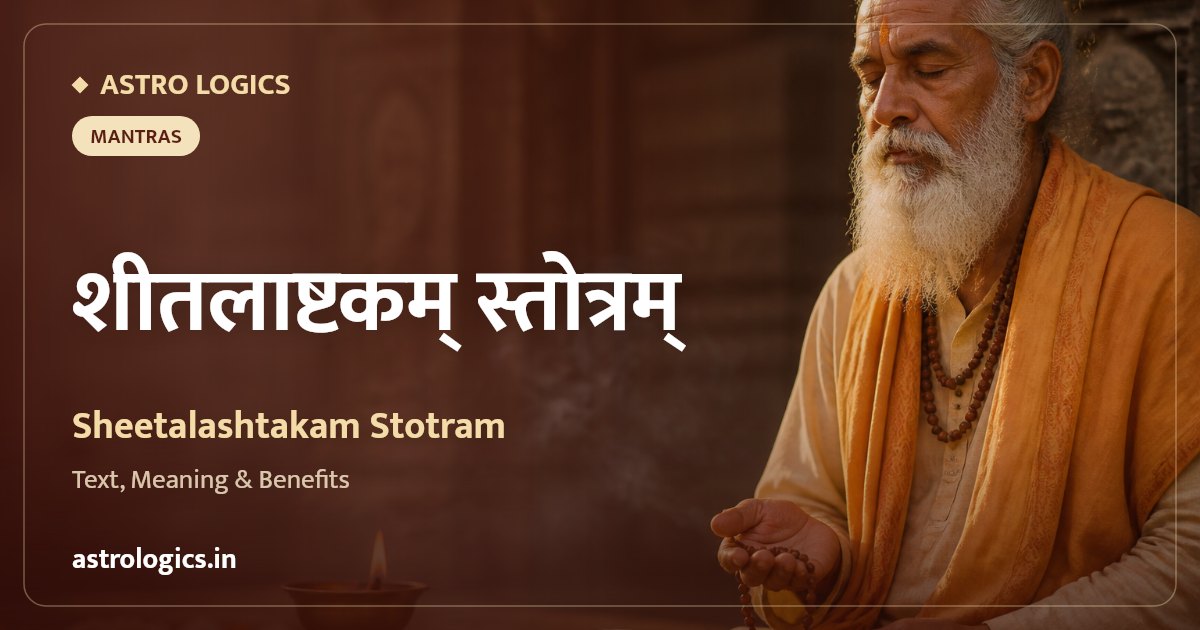
Sheetalashtakam Stotram - Sanskrit Text
॥ विनियोगः ॥
ॐ अस्य श्रीशीतलास्तोत्रस्य महादेव ऋषिः, अनुष्टुप् छन्दः, शीतला देवता, लक्ष्मीर्बीजम्, भवानी शक्तिः, सर्वविस्फोटकनिवृत्तये जपे विनियोगः ॥
वन्देऽहं शीतलां देवीं रासभस्थां दिगम्बराम् ।
मार्जनी-कलशोपेतां शूर्पालङ्कृत-मस्तकाम् ॥१॥
वन्देऽहं शीतलां देवीं सर्वरोगभयापहाम् ।
यामासाद्य निवर्तन्ते विस्फोटकभयं महत् ॥२॥
शीतले शीतले चेति यो ब्रूयाद् दाहपीडितः ।
विस्फोटकभयं घोरं क्षिप्रं तस्य प्रणश्यति ॥३॥
यस्त्वामुदकमध्ये तु ध्यात्वा पूजयते नरः ।
विस्फोटकभयं घोरं गृहे तस्य न जायते ॥४॥
शीतले ज्वरदग्धस्य पूतिगन्धयुतस्य च ।
प्रणष्टचक्षुषां पुंसां त्वामाहुर्जीवनौषधम् ॥५॥
शीतले तनुजान् रोगान् नृणां हरसि दुस्त्यजान् ।
विस्फोटकविदीर्णानां त्वमेकाऽमृतवर्षिणी ॥६॥
गलगण्डग्रहा रोगा ये चान्ये दारुणा नृणाम् ।
त्वदनुध्यानमात्रेण शीतले यान्ति सङ्क्षयम् ॥७॥
न मन्त्रो नौषधं तस्य पापरोगस्य विद्यते ।
त्वामेकां शीतले धात्रीं नान्यां पश्यामि देवताम् ॥८॥
मृणालतन्तुसदृशीं नाभिहृन्मध्यसंस्थिताम् ।
यस्त्वां चिन्तयते देवि तस्य मृत्युर्न जायते ॥९॥
अष्टकं शीतलादेव्या यो नरः प्रपठेत्सदा ।
विस्फोटकभयं घोरं गृहे तस्य न जायते ॥१०॥
श्रोतव्यं पठितव्यं च श्रद्धाभक्तिसमन्वितैः ।
उपसर्गविनाशाय परं स्वस्त्ययनं महत् ॥११॥
शीतले त्वं जगन्माता शीतले त्वं जगत्पिता ।
शीतले त्वं जगद्धात्री शीतलायै नमो नमः ॥१२॥
रासभो गर्दभश्चैव खरो वैशाखनन्दनः ।
शीतलावाहनश्चैव दूर्वाकन्दनिकृन्तनः ॥१३॥
एतानि खरनामानि शीतलाग्रे तु यः पठेत् ।
तस्य गेहे शिशूनां च शीतलारुङ् न जायते ॥१४॥
शीतलाष्टकमेवेदं न देयं यस्यकस्यचित् ।
दातव्यं च सदा तस्मै श्रद्धाभक्तियुताय वै ॥१५॥
॥ इति श्रीस्कन्दपुराणे शीतलाष्टकं सम्पूर्णम् ॥
Transliteration (Roman/IAST)
vande'haṁ śītalāṁ devīṁ rāsabha-sthāṁ digambarām |
mārjanī-kalaśopetāṁ śūrpālaṅkṛta-mastakām ||1||
(The opening verse is transliterated above; the full Roman text follows the Devanagari line for line.)
Meaning
"I bow to Goddess Sheetala, seated upon a donkey, sky-clad, holding a broom and a water-pot, with a winnowing-fan adorning her head. I bow to her who removes all disease and fear, on approaching whom the great terror of pox (visphotaka) recedes." The hymn declares that merely uttering "Sheetala, Sheetala" cools the one burning with fever; meditating on her in water keeps illness from the home; and remembering her cures fevers, foul afflictions, even failing eyesight. She alone is the "life-giving medicine," the one rain of nectar (amrita-varshini) for those wracked by disease. The closing verses affirm: "O Sheetala, you are the mother, the father and the sustainer of the world - salutations again and again," and promise that one who recites this ashtakam with faith will be spared the dread of epidemic disease in the household.
About this Stotra
The Sheetalashtakam is an eight-verse hymn (with phala-shruti) from the Skanda Purana, traditionally said to have been revealed by Lord Shiva (Mahadeva is named as the rishi). Goddess Sheetala - literally "the cool one" - is the deity of healing, especially of fevers, pox and epidemic disease. Her iconography is striking: riding a donkey, holding a broom (to sweep away disease), a pot of cooling water, and a winnowing fan. She is worshipped across northern and eastern India, particularly during the hot season.
Significance & Spiritual Benefits
This stotra is recited for protection from and cure of fevers, pox, skin diseases and epidemics, and more broadly for health and the cooling of bodily and mental "heat." Sheetala embodies the principle that the same power which can send affliction can also remove it; worshipping her with faith is held to keep illness from the home and to heal the sick. Devotees chant it during outbreaks of disease, for ailing children, and as a general prayer for family health and well-being.
Astrological Relevance
Fevers, inflammatory and "heat" disorders, pox and skin eruptions are classically linked in Jyotisha to an afflicted Sun and Mars (the fiery, pitta planets), while the sixth house governs disease itself. Goddess Sheetala, the "cooling" deity, is invoked precisely to pacify this excess fire - making her stotra a fitting remedy when Mars or the Sun aggravate health, or during malefic transits over the sixth house. As a healing Shakti, she also strengthens a weak Moon (bodily fluids, immunity, the mother's care of children). Worship intensifies in the heat of Chaitra-Vaishakha. Tuesdays and the cooling influence of Mondays suit her.
How to Chant (Vidhi)
Bathe and worship in the cool of the morning. Offer cold/stale (basi) food, cooling items, water and neem leaves, which are traditional to Sheetala. Light a lamp, invoke Ganesha, recite the viniyoga and then the ashtakam with faith. During illness or epidemics it may be recited daily. The festival of Sheetala Ashtami (Basoda), in the bright fortnight following Holi, is the high day of her worship. Conclude with a prayer for the family's health.
Best Day & Time
Sheetala Ashtami (Basoda) is the most auspicious day; otherwise Tuesdays and the hot months of Chaitra-Vaishakha, recited in the cool early morning.
Frequently Asked Questions
Who is Goddess Sheetala?
Sheetala, "the cool one," is the Hindu goddess of healing - especially of fevers, pox and epidemic disease - depicted riding a donkey and holding a broom, water-pot and winnowing fan.
What is the source of the Sheetalashtakam?
It is found in the Skanda Purana and is traditionally attributed to a revelation by Lord Shiva (Mahadeva is named as its rishi).
When is it especially recited?
During fevers, pox and epidemics, for ailing children, and above all on Sheetala Ashtami (Basoda) in the spring season.
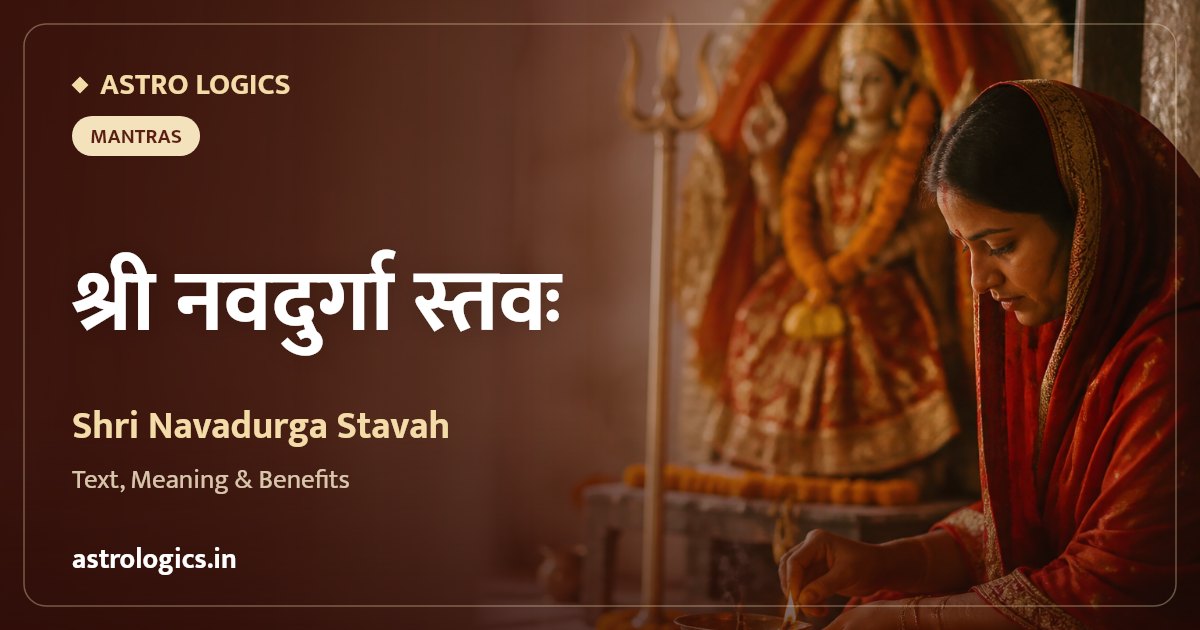
Sheetala Mata and the tradition of seeking coolness in the heat of illness
The Sheetalashtakam from the Skanda Purana is a hymn of extraordinary specific purpose. Goddess Sheetala - whose very name means "the cool one" - is understood in the tradition as the presiding power over conditions of burning, fever, and epidemic disease. Her iconography, riding a donkey and carrying a pot of cooling water and a broom, encodes a practical theology: she both spreads and, when propitiated, withdraws the very afflictions she governs. This paradox places her within a broader pattern of Indian goddess theology in which the deity who holds the power of harm is the same one who has the capacity to heal - and therefore the most important one to approach with respect and devotion in times of distress.
The Sheetalashtakam is traditionally recited on Sheetala Ashtami, the eighth day after Holi, when communities in northern India worship the Goddess with offerings of cold, pre-cooked food in a ritual acknowledgement of the seasonal transition toward summer heat. Devotees also turn to the hymn during times of household illness, reciting it in the belief that Goddess Sheetala's grace brings relief and protection for the vulnerable, particularly children. In the Jyotish tradition, afflictions associated with the Sun and Mars - heat, inflammation, and febrile conditions in their broader symbolic sense - are sometimes addressed through Sheetala worship as a complementary traditional practice alongside other remedial measures. The hymn's appeal endures because it speaks directly to human vulnerability, meeting the devotee not in abstract philosophy but in the lived reality of sickness and the longing for protection.