Shri Durga Mantra: Bija, Navarna, Gayatri and Stuti Mantras of the Goddess
Shri Durga Mantras - Sanskrit Text
1. Durga Bija Mantra
ॐ दुं दुर्गायै नमः ।
2. Durga Navarna Mantra
ॐ ऐं ह्रीं क्लीं चामुण्डायै विच्चे ।
3. Durga Gayatri Mantra
ॐ गिरिजायै च विद्महे शिवप्रियायै च धीमहि ।
तन्नो दुर्गा प्रचोदयात् ॥
4. Durga Stuti Mantra
ॐ सर्वमङ्गलमङ्गल्ये शिवे सर्वार्थसाधिके ।
शरण्ये त्र्यम्बके गौरि नारायणि नमोऽस्तु ते ॥
ॐ सर्वस्वरूपे सर्वेशे सर्वशक्तिसमन्विते ।
भयेभ्यस्त्राहि नो देवि दुर्गे देवि नमोऽस्तु ते ॥
5. Durga Dhyana Mantra
ॐ जटाजूटसमायुक्तमर्धेन्दुकृतलक्षणाम् ।
लोचनत्रयसंयुक्तां पद्मेन्दुसदृशाननाम् ॥
6. Durga Ekakshari Mantra
दुं ॥
7. Durga Ashtakshara Mantra
ॐ ह्रीं दुं दुर्गायै नमः ।
Transliteration (Roman/IAST)
1. oṃ duṃ durgāyai namaḥ |
2. oṃ aiṃ hrīṃ klīṃ cāmuṇḍāyai vicce |
3. oṃ girijāyai ca vidmahe śivapriyāyai ca dhīmahi | tanno durgā pracodayāt ||
4. oṃ sarva-maṅgala-māṅgalye śive sarvārtha-sādhike | śaraṇye tryambake gauri nārāyaṇi namo'stu te ||
6. duṃ ||
7. oṃ hrīṃ duṃ durgāyai namaḥ |
Meaning
These are the principal seed and prayer mantras of Goddess Durga. The Bija mantra "Om Dum Durgayai Namah" salutes Durga through her seed-syllable "Dum." The Navarna (Navakshari) mantra "Om Aim Hrim Klim Chamundayai Vicche" is the nine-syllabled heart-mantra of the Durga Saptashati, combining the seeds of Sarasvati (Aim), Mahalakshmi (Hrim) and Mahakali (Klim) with the invocation of Chamunda. The Durga Gayatri meditates upon Girija, beloved of Shiva, praying that the Goddess may inspire us. The Stuti mantra "Sarva-mangala-mangalye" hails her as the auspiciousness of all that is auspicious, the refuge, the three-eyed Gauri, and asks her to save us from all fears. The Dhyana verse describes her form, and the Ekakshari ("Dum") and Ashtakshara mantras are her one-syllable and eight-syllable forms for japa.
About these Mantras
Durga is among the most widely worshipped forms of the Divine Mother in Hinduism. During Navaratri her nine forms (Navadurga) are worshipped over nine nights. Devotees chant these mantras to invoke her grace, courage and protection. The collection here gathers her most popular and effective mantras - from the single-syllable seed "Dum" to the famous Navarna mantra that forms the ritual core of the Durga Saptashati and the universally loved "Sarva-mangala-mangalye" prayer.
Significance & Spiritual Benefits
Durga mantras are chanted for protection, courage, removal of obstacles, victory over difficulties, and inner strength. The Navarna mantra in particular is considered a complete sadhana in itself, uniting the powers of the three great goddesses. The Bija and Ekakshari mantras are ideal for japa on a mala, while the Stuti mantra is a heartfelt prayer for refuge from fear. Regular chanting is said to dispel negativity, strengthen willpower, and bestow the Mother's blessings of wellbeing and fearlessness.
Astrological Relevance
Durga, the warrior Mother, is a powerful remedial deity in Vedic astrology. Her mantras - especially the Navarna and Bija mantras - are prescribed to counter afflictions of Mars (Mangal), Saturn (Shani), Rahu and Ketu, and during challenging periods such as Saturn's sade-sati, Mangal dosha, and difficult dashas. As the embodiment of Shakti, she also strengthens the Moon (the mind) and grants courage against fear, enemies and obstacles (6th, 8th and 12th house matters). Many astrologers recommend the Durga Bija or Navarna mantra as a daily upaya for protection and confidence.
How to Chant (Vidhi)
Bathe and sit facing east or north before an image of Durga. Light a lamp and offer red flowers, kumkum and incense. Choose one mantra suited to your need - the Bija or Navarna for japa, the Stuti for prayer - and recite it on a rudraksha or red-coral/sphatika mala, ideally 108 times or in multiples. Maintain purity, steady breath and concentration. The Navarna mantra is traditionally taken under a guru's guidance for formal sadhana, but the Bija and Stuti mantras may be chanted freely with devotion.
Best Day & Time
Tuesday and Friday are the most auspicious days for Durga, and the nine nights of Navaratri are supremely powerful, especially Ashtami and Navami. The Brahma-muhurta of early morning or the evening lamp-lighting hour are ideal times for japa.
Frequently Asked Questions
Which Durga mantra is best for beginners?
The Bija mantra "Om Dum Durgayai Namah" and the Stuti "Sarva-mangala-mangalye" are simple, safe and powerful for daily chanting by anyone. The Navarna mantra is best learned under a guru for formal sadhana.
What is the Navarna mantra?
"Om Aim Hrim Klim Chamundayai Vicche" is the nine-syllabled core mantra of the Durga Saptashati, uniting the seed-syllables of Sarasvati, Lakshmi and Kali with the invocation of Chamunda.
How many times should I chant?
A common practice is 108 repetitions on a mala, daily or for a fixed sankalpa such as during Navaratri. Consistency and devotion matter more than large counts.
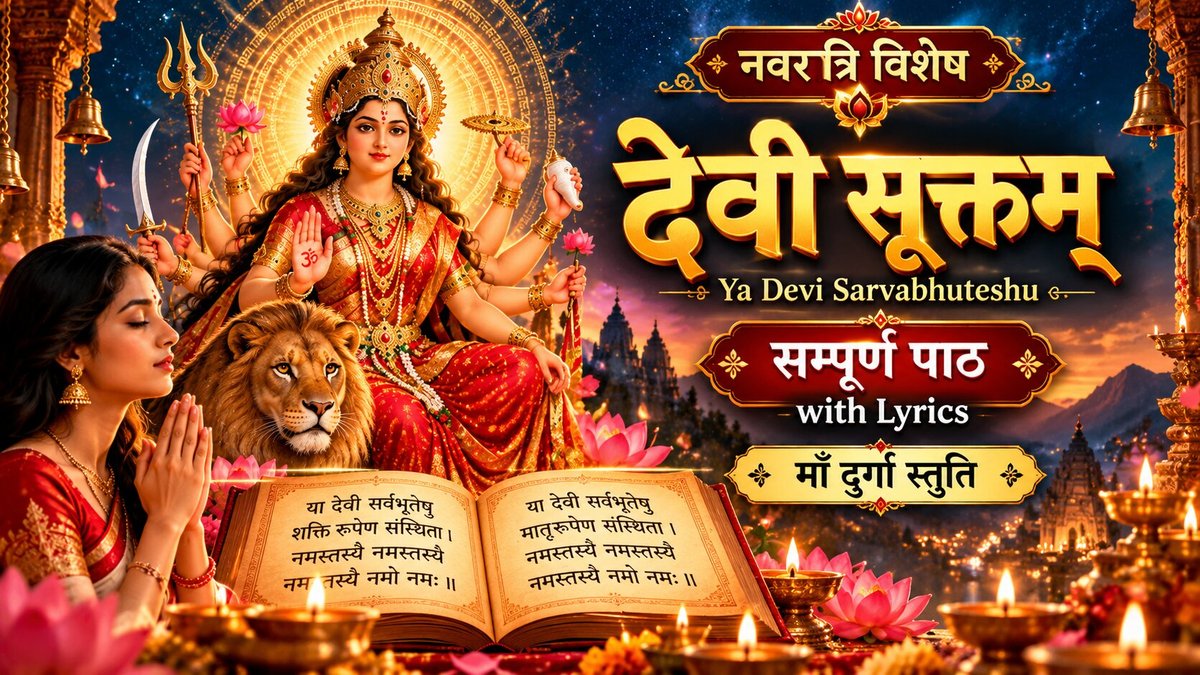
From seed-syllable to stotra: the full spectrum of Durga mantra sadhana
What makes this collection distinctive is its breadth across the levels of mantra practice. It moves from the compressed intensity of the bija mantra - a single syllable carrying the entire vibratory signature of the Goddess - through the intermediate register of the Navarna mantra, which classical tradition regards as the heart-sound of the entire Durga Saptashati, and on to the expansive praise of the Sarva-mangala-mangalye Stuti, which is sung at the close of so many rituals. This is not a random anthology but a map of how a practitioner might deepen over years: beginning with the Bija as an accessible entry, growing into the Navarna through disciplined repetition, and allowing the Stuti and Gayatri forms to broaden the heart's relationship with the Goddess.
The Navarna mantra in particular holds a central place in Shakta tradition and is recited with great intensity during Navratri, when Devi upasaks may undertake structured anushthans - prescribed numbers of repetitions across nine days. In the Jyotish tradition, the Durga mantras are among the most widely recommended traditional remedial measures for Rahu, whose restless and shadowy energy is understood to be calmed and directed through sincere Shakti worship. Devotees believe that regular practice with even a single mantra from this collection gradually cultivates an inner steadiness and fearlessness rooted not in confidence of outcome but in trust in the Goddess's encompassing care. The collection, taken whole, offers every devotee a point of entry suited to their temperament and stage of practice.