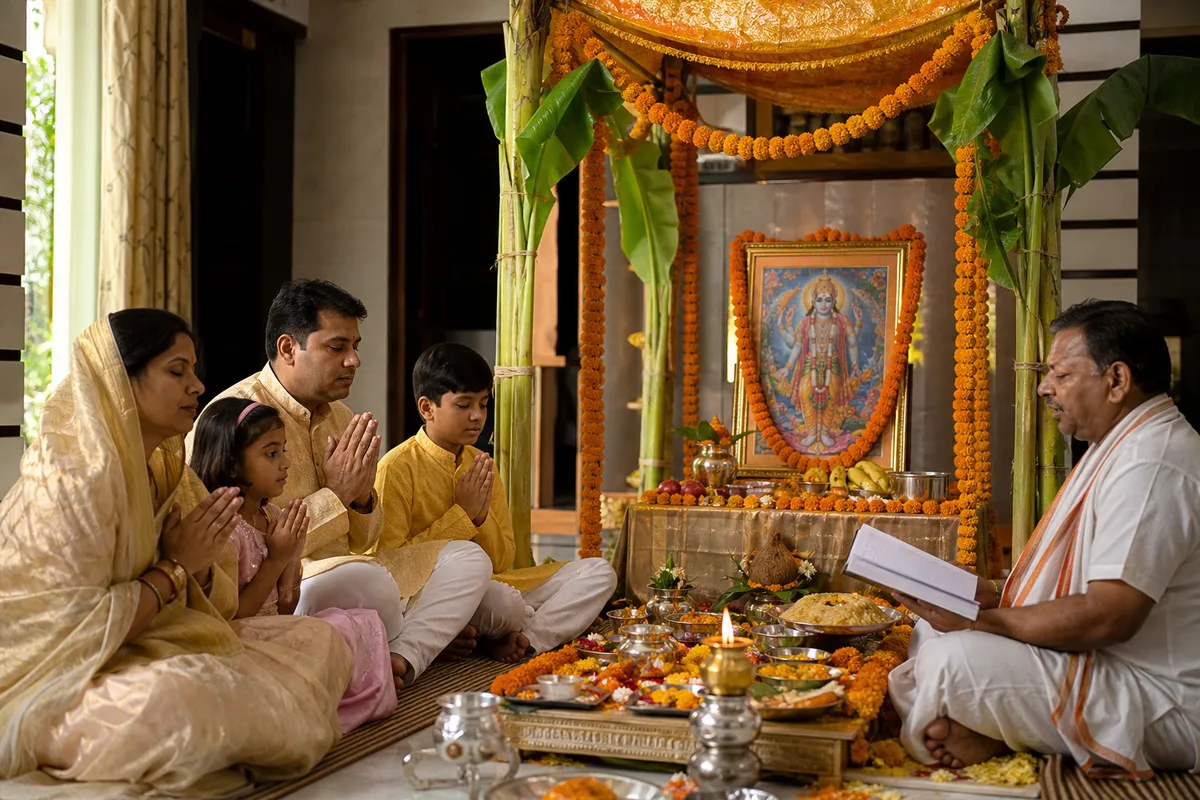
Kaal Sarp Dosh Nivaran Puja
- ✓Personalised Sankalp in your name & gotra, performed by verified Vedic pandits at an auspicious muhurat
- 🎥Full recorded video & photos of your puja
- 📜Downloadable e-certificate + email confirmation
- 📦Sacred prasad couriered worldwide - to your door, anywhere
Product information
About this Kaal Sarp Dosh Nivaran Puja
Kaal Sarp Dosh forms when all seven main planets in your birth chart are hemmed between the shadow nodes Rahu and Ketu, creating a sense of blocked progress despite genuine effort. This puja invokes Lord Shiva and the Naga (serpent) deities through Rudra Abhishek, Sarpa Shanti and mantra japa to neutralise the dosh and release its hold. It is traditionally performed to remove recurring obstacles, sudden setbacks and mental unrest so life can move forward smoothly.
Who should book the Kaal Sarp Dosh Nivaran Puja
- You work hard yet success keeps slipping away at the last moment
- Recurring obstacles, delays and unexpected setbacks in career or business
- Frequent nightmares, fear of snakes, or disturbed and broken sleep
- All planets fall between Rahu and Ketu in your birth chart
- Persistent financial instability despite good earning opportunities
- Ongoing family discord, health scares or a feeling of being stuck
Benefits of the Kaal Sarp Dosh Nivaran Puja
- Neutralises the coiled Rahu-Ketu affliction and clears blocked progress
- Removes persistent obstacles in career, business and finances
- Calms the mind, easing anxiety, fear and disturbed sleep
- Restores harmony and stability in family and relationships
- Supports better health and relief from unexplained struggles
- Opens the path for delayed success, growth and peace of mind
Shubh muhurat & auspicious dates
Kaal Sarp Dosh Nivaran Puja is traditionally performed on Nag Panchami, Maha Shivratri, Amavasya or a Panchami tithi, and on Mondays sacred to Lord Shiva. Through 2026, the Shukla and Krishna Panchami days and the Shravan Mondays are considered especially potent for this remedy.
Puja samagri (offerings)
- Silver or metal serpent (naag-naagin) pair idols
- Panchamrit (milk, curd, honey, ghee, sugar) for abhishek
- Raw cow's milk and Gangajal
- Bilva (bel) leaves and white flowers
- Rudraksha beads and sacred thread (kalava)
- Sandalwood paste, roli and akshat (unbroken rice)
- Nagkesar, black sesame and dry coconut
- Ghee lamp, camphor and incense
Frequently asked questions
Full, partial, or not present at all
Kaal Sarp forms when every planet falls on one side of the Rahu–Ketu axis. If even one planet sits outside that span the condition is partial, and a good number of charts described as Kaal Sarp turn out to be partial or unaffected. Your birth chart reports which of the three applies, names the houses and signs Rahu and Ketu occupy, and states plainly when the chart is clear of it. The chart is free with an account — open your birth chart.
Check before you book
The axis either hems the planets in or it does not, and establishing which takes a moment. It is worth doing before commissioning a remedy for a condition your chart may not carry. If you want the raw planetary positions without signing up, the free kundli gives you those, and planetary positions shows where Rahu and Ketu sit today.
What the pattern is read as — and what it is not
Classically it is understood to colour the rhythm of a life rather than decide its outcome: sudden rises and equally sudden reversals, effort that pays later than expected, a sense of being carried by events rather than steering them. It is not a verdict, and the texts do not treat it as a barrier to a successful life. It is read alongside the planetary period that is running, which is what actually governs timing — see your Vimshottari periods.
What is Kaal Sarp Dosh Puja?
It is a Vedic remedial ritual to pacify the Kaal Sarp Dosh formed when all planets lie between Rahu and Ketu. Through Rudra Abhishek, Sarpa Shanti and mantra japa, it aims to release blocked progress and restore balance.
Who should get this puja done?
Anyone with Kaal Sarp Dosh in their chart, or those facing repeated last-minute failures, chronic obstacles, disturbed sleep or a persistent sense of being stuck despite real effort.
How is it done remotely for NRIs?
Our verified pandits perform the complete puja on your behalf after taking your personalised sankalp, so you can participate in spirit and benefit from anywhere in the world.
How long does the puja take?
The core ritual is typically completed in a single sitting of a few hours on the chosen muhurat, while the prescribed mantra japa may be spread across the auspicious day.
Will I get a video and prasad?
Yes. You receive a recorded video and photos of your puja, a downloadable e-certificate, and blessed prasad couriered to your address worldwide, along with email confirmation.
Is it effective if done on my behalf?
Yes. In Vedic tradition a puja performed by qualified pandits with a proper sankalp in your name, gotra and nakshatra carries the intended benefit to you, wherever you are.
What do you need from me?
Simply share your full name, gotra (or we use a default), date and place of birth, and nakshatra if known, so the sankalp can be personalised for you.
How do I know whether mine is full or partial?
The birth chart states it directly, together with the houses Rahu and Ketu occupy. Partial means at least one planet sits outside the Rahu–Ketu span.
My chart shows no Kaal Sarp, but I was told I have it. Why?
Readings differ over whether a planet sitting exactly on the axis counts as inside or outside it, which changes the answer for a small number of charts. Our chart shows the positions it used, so the difference can be checked rather than argued about.
How your remote puja works
- Book & share your details - your name, gotra, birth details and your sankalp (wish).
- We fix the muhurat - our pandits choose the most auspicious date for your puja.
- Puja performed in your name - with full vidhi, mantras and offerings, recorded on video.
- You receive everything - video, photos, e-certificate and prasad couriered worldwide.
You may also like
Related products

Guru Chandal Dosh Nivaran Puja
Restore clear judgment and faith when Rahu clouds the wisdom of Jupiter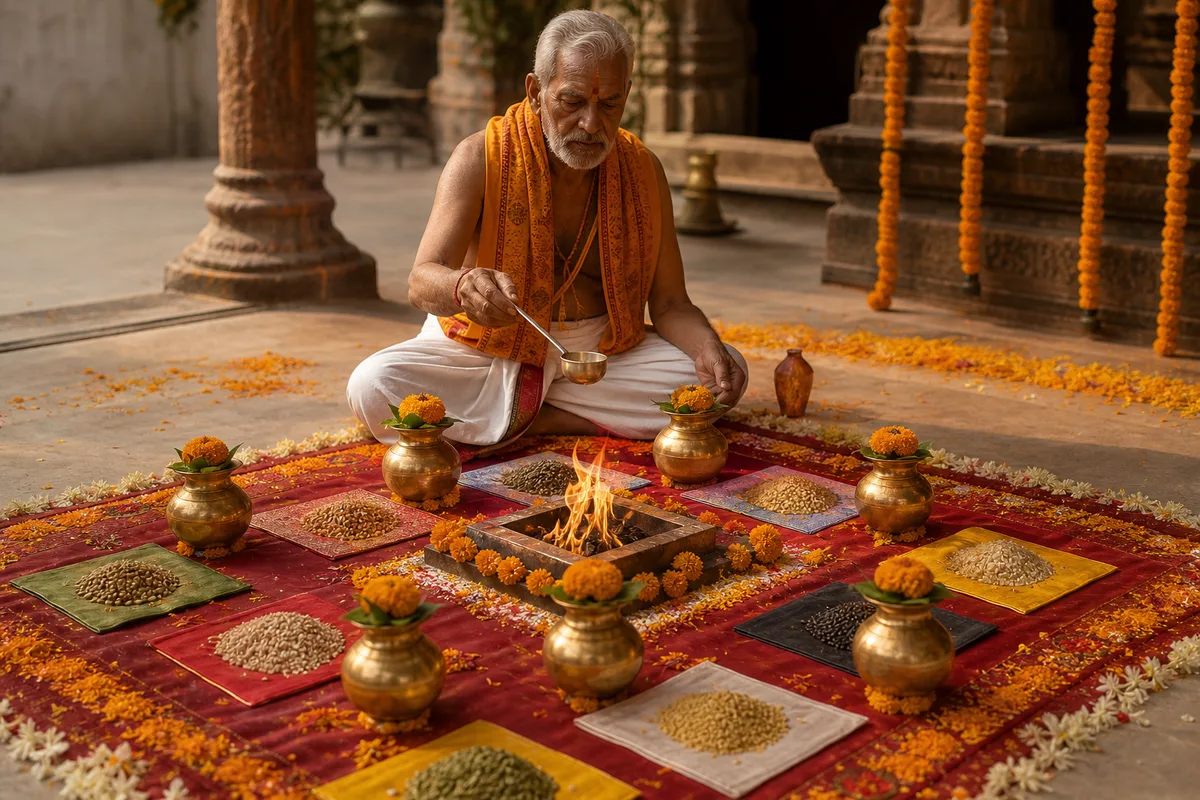
Navgraha Shanti Puja
Harmonise all nine planets to remove obstacles and restore balance to your life
Kuber Lakshmi Puja & Yagya
Invoke Lakshmi and Kuber together to attract wealth, abundance and financial stability