Sri Babosa Bhagwan 108 Naam: Namavali, Text & Meaning
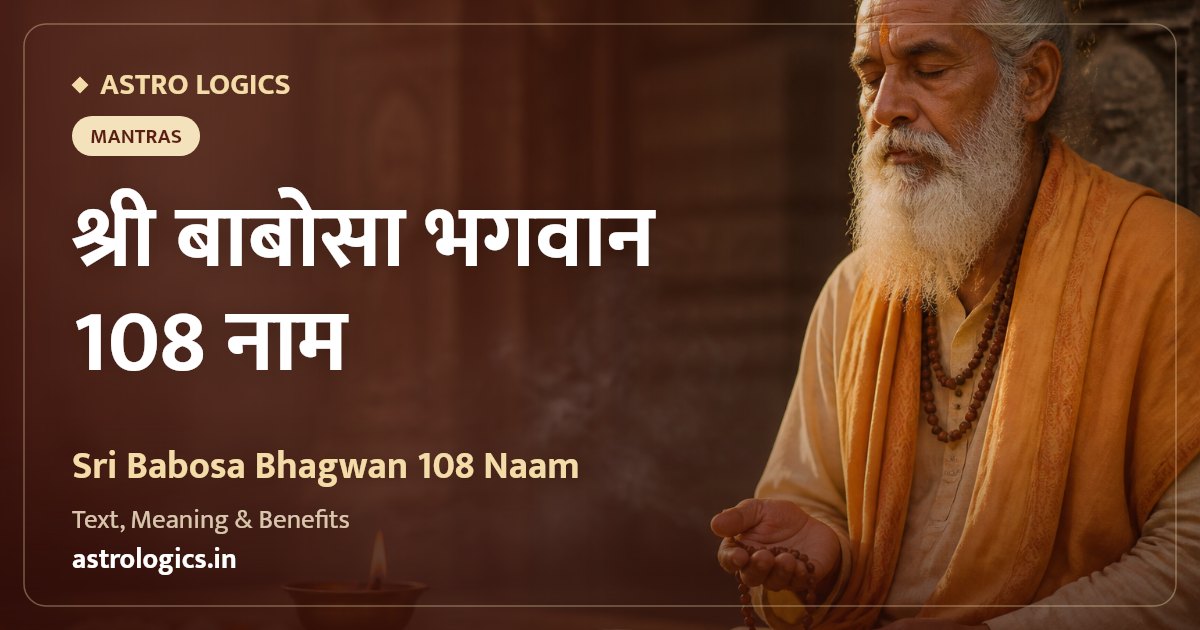
Sri Babosa Bhagwan 108 Naam - Sanskrit Text (Namavali)
ॐ ओंकाराय नमः । ॐ बाबोसा देवाय नमः । ॐ पन्नाय नमः । ॐ छगनी सुताय नमः । ॐ चूरू निवासाय नमः ।
ॐ गदाधराय नमः । ॐ कृपाकराय नमः । ॐ ब्रह्मचारिणे नमः । ॐ कुमाराय नमः । ॐ घेवरचंद नन्दनाय नमः ॥10॥
ॐ रोगनाशनाय नमः । ॐ हनुमत रूपाय नमः । ॐ हनुमत प्रियाय नमः । ॐ जीवन दात्रे नमः । ॐ मृत्यु हराय नमः ।
ॐ जयाय नमः । ॐ विजयाय नमः । ॐ भक्त मनः स्थिताय नमः । ॐ कष्ट हराय नमः । ॐ संकट विमोचनाय नमः ॥20॥
ॐ शांति दूताय नमः । ॐ बाला रूपाय नमः । ॐ महाबलाय नमः । ॐ वरदाय नमः । ॐ कलियुग वरदाय नमः ।
ॐ भक्त ईष्ट देवता रूपाय नमः । ॐ भक्त कुल देवता रूपाय नमः । ॐ तपस्फलाय नमः । ॐ कोठारी कुल दीपाय नमः । ॐ हनुमत नाम जपकराय नमः ॥30॥
ॐ हनुमत हृदय स्थिताय नमः । ॐ नीलवर्ण अश्वारूढाय नमः । ॐ प्रत्यक्ष देवताय नमः । ॐ वंश वृद्धिकराय नमः । ॐ सौभाग्य दात्रे नमः ।
ॐ दुर्भाग्य नाशनाय नमः । ॐ सुख समृद्धि प्रदायकाय नमः । ॐ जन्मान्तर ऋण विमोचनाय नमः । ॐ सौम्य मूर्तये नमः । ॐ शांति स्वरूपाय नमः ॥40॥
ॐ ज्योति स्वरूपाय नमः । ॐ भक्त वत्सलाय नमः । ॐ लोक नायकाय नमः । ॐ लोक रक्षकाय नमः । ॐ भय नाशनाय नमः ।
ॐ तंत्र शक्ति हरायकाय नमः । ॐ भूत प्रेत पिशाच नाशनाय नमः । ॐ स्वर्ण मुकुट धारणाय नमः । ॐ कर्ण कुंडल धारणाय नमः । ॐ आत्म शुद्धाय नमः ॥50॥
ॐ काम क्रोध नाशनाय नमः । ॐ मातृ पितृ भक्ताय नमः । ॐ कालान्तकाय नमः । ॐ कालहराय नमः । ॐ कारागृह विमोक्त्रे नमः ।
ॐ चिरंजीविने नमः । ॐ उज्ज्वलाय नमः । ॐ कीर्तये नमः । ॐ भक्त मान संरक्षणाय नमः । ॐ शरणागत रक्षकाय नमः ॥60॥
ॐ त्रैलोक्य अधिपतये नमः । ॐ सर्व देव स्वरूपाय नमः । ॐ बुद्धि दात्रे नमः । ॐ रिद्धि सिद्धि दात्रे नमः । ॐ विद्या दात्रे नमः ।
ॐ शांति दात्रे नमः । ॐ योग मूर्तये नमः । ॐ धर्म रक्षकाय नमः । ॐ महावीराय नमः । ॐ मार्ग बंधवे नमः ॥70॥
ॐ मार्ग दर्शकाय नमः । ॐ दुर्विचार नाशनाय नमः । ॐ सद्गति प्रदाय नमः । ॐ अतुल्याय नमः । ॐ जितेन्द्रियाय नमः ।
ॐ प्रसादाय नमः । ॐ दुष्ट गृह निहन्त्रे नमः । ॐ पिशाच गृह घातकाय नमः । ॐ बाल गृह विनाशाय नमः । ॐ सच्चिदानन्दाय नमः ॥80॥
ॐ पुरुषोत्तमाय नमः । ॐ सर्वभौमाय नमः । ॐ उत्तम श्री परिवाराय नमः । ॐ राम चरित्र भजनाय नमः । ॐ अपार करुणामूर्तये नमः ।
ॐ धैर्य प्रदायकाय नमः । ॐ सूर्य कोटिप्रकाशाय नमः । ॐ मंगल प्रदायकाय नमः । ॐ माया निकृत्तकाय नमः । ॐ अभस्मराय नमः ॥90॥
ॐ ज्ञान विग्रहाय नमः । ॐ एकाय नमः । ॐ अनेकाय नमः । ॐ गुणाय नमः । ॐ गुण निधये नमः ।
ॐ जगत गुरवे नमः । ॐ दिव्य औषधि बसाय नमः । ॐ शोकहारिणे नमः । ॐ मिष्ठान प्रियाय नमः । ॐ बलभुजे नमः ॥100॥
ॐ सन्मार्ग स्थापिताय नमः । ॐ कीर्तन प्रियाय नमः । ॐ शाकिनी डाकिनी यक्ष रक्षा भूत प्रपंचनाय नमः । ॐ भस्मरूपेण औषधि प्रदाय नमः । ॐ जल रूपेण व्याधि निवृत्तकाय नमः ।
ॐ मंजु हृदया स्थिताय नमः । ॐ प्रकाश गृहस्थिताय नमः । ॐ मोक्ष दात्रे नमः ॥108॥
Transliteration (Roman/IAST)
Oṁ oṅkārāya namaḥ | Oṁ bābosā devāya namaḥ | Oṁ pannāya namaḥ | Oṁ chaganī sutāya namaḥ | Oṁ cūrū nivāsāya namaḥ | … | Oṁ mokṣa dātre namaḥ ||
(Each of the 108 names is recited in the dative case with the formula "Oṁ … namaḥ" - "Om, salutations to …".)
Meaning
This is an aṣṭottara-śata-nāmāvali - a garland of 108 names - of Babosa Bhagwan, worshipped as a living form of Lord Hanuman. The names salute him as the remover of disease (rogaśanāya) and untimely death (mṛtyu-harāya), the giver of life, victory, progeny, prosperity and good fortune, the destroyer of obstacles and of malevolent spirits (bhūta-preta-piśāca-nāśanāya), the one who frees devotees from inherited debt and karmic bondage, and ultimately the giver of liberation (mokṣa-dātre). Several names openly tie him to Hanuman - "of Hanuman's form," "dear to Hanuman," "abiding in Hanuman's heart."
About this Namavali
Babosa Bhagwan is a beloved deity of the Marwar–Shekhawati region of Rajasthan, with his principal shrine at Pannasar (and a strong following around Churu), worshipped as an incarnate form of Hanuman. This 108-name namavali is a devotional composition of that living tradition rather than an ancient Puranic sahasranama; it names the deity's family lineage (Ghevarchand-nandana, Kothari-kula) and his Rajasthani home (Churu-nivasa), which marks it as a regional bhakti text. We reproduce the full verified namavali as published, while noting its folk-devotional origin.
Significance & Spiritual Benefits
Reciting the 108 names is held to bring health, courage, removal of obstacles and protection from negative forces - the classic blessings sought from Hanuman. Devotees chant it for relief from illness, for family welfare and progeny, for freedom from fear and for steady prosperity. Because it is a Hanuman-centred namavali, it is commonly paired with Hanuman Chalisa and Bajrang Baan in regular worship.
Astrological Relevance
As a Hanuman namavali, this is a primary remedy for Mangal (Mars) and Shani (Saturn). Hanuman is the classical karaka for courage, strength and protection, and his worship is the foremost upaya for an afflicted or malefic Saturn (Shani sade-sati, dhaiyya) and for a weak or aggressive Mars. Names invoking protection from spirits and the removal of inherited debt directly address the Saturn–Rahu and Mangal-rina (ancestral-debt) themes that astrologers read in difficult charts.
How to Chant (Vidhi)
Bathe, wear clean clothes and sit before an image of Hanuman or Babosa Bhagwan. Light a lamp with sesame or mustard oil, offer a garland and laddoo or boondi. Begin with a prayer to Ganesha and Hanuman, then recite all 108 names with a tulsi or rudraksha mala. Close with the Hanuman Chalisa and a prayer for the welfare of all. Saturday and Tuesday are ideal.
Best Day & Time
Tuesday (Mangalwar) and Saturday (Shanivar) are the most powerful days; "Budhe Mangal" (the Tuesdays of Krishna-paksha) is especially prized. Recite at dawn or dusk after bath.
Frequently Asked Questions
Who is Babosa Bhagwan?
Babosa Bhagwan is a Rajasthani folk deity worshipped as a living incarnation of Lord Hanuman, with his main temple at Pannasar near Churu. His devotees revere him for healing, protection and the fulfilment of vows.
Is this an ancient scripture?
No. It is a devotional 108-name namavali of the living Babosa/Hanuman tradition of Rajasthan, not a classical Puranic sahasranama. It carries genuine spiritual value within that bhakti tradition.
Which day is best to recite it?
Tuesday and Saturday - the days sacred to Hanuman - are considered most auspicious for this namavali.
Babosa Bhagwan of Pannasar: A Living Hanuman of the Desert
The 108 Naam Namavali of Sri Babosa Bhagwan honours a beloved regional deity of Rajasthan, venerated at the Pannasar shrine near Churu as a living manifestation of Lord Hanuman. The names in this namavali are deeply rooted in the lived faith of desert communities -- they invoke Babosa as remover of disease, guardian against fear, giver of progeny and prosperity, and ultimately as the one who leads the devotee toward liberation. This local devotional tradition exemplifies how the vast current of Hanuman bhakti has found countless regional expressions across India, each shaped by the landscape, language, and needs of the community it serves. Devotees recite this namavali on Tuesdays and Saturdays, on full-moon nights, and during personal crises when Hanuman's protection is especially sought.
In the Jyotish tradition, Hanuman and his regional forms like Babosa are associated with Mars (Mangal) and Saturn (Shani), and this namavali is traditionally recommended as a devotional remedy during difficult periods of these planets, believed within the tradition to cultivate courage, endurance, and the dissolution of fear. What makes the Babosa Bhagwan namavali particularly touching is its intimate, local character: unlike pan-Indian stotras addressed to distant celestial forms, these 108 names feel as close as the desert wind itself, spoken by generations of ordinary devotees who knew their Lord as a living presence. The practice invites a reflection on how the infinite divine makes itself accessible through the particular and the near.