Durga Kavach (Devi Kavacham): The Protective Armour of the Goddess
Durga Kavach (Devi Kavacham) - Sanskrit Text
॥ अथ श्री देव्याः कवचम् ॥
ॐ अस्य श्रीचण्डीकवचस्य ब्रह्मा ऋषिः, अनुष्टुप् छन्दः,
चामुण्डा देवता, अङ्गन्यासोक्तमातरो बीजम्, दिग्बन्धदेवतास्तत्त्वम्,
श्रीजगदम्बाप्रीत्यर्थे सप्तशतीपाठाङ्गत्वेन जपे विनियोगः ।
ॐ नमश्चण्डिकायै ॥
मार्कण्डेय उवाच
ॐ यद्गुह्यं परमं लोके सर्वरक्षाकरं नृणाम् ।
यन्न कस्यचिदाख्यातं तन्मे ब्रूहि पितामह ॥१॥
ब्रह्मोवाच
अस्ति गुह्यतमं विप्र सर्वभूतोपकारकम् ।
देव्यास्तु कवचं पुण्यं तच्छृणुष्व महामुने ॥२॥
प्रथमं शैलपुत्री च द्वितीयं ब्रह्मचारिणी ।
तृतीयं चन्द्रघण्टेति कूष्माण्डेति चतुर्थकम् ॥३॥
पञ्चमं स्कन्दमातेति षष्ठं कात्यायनीति च ।
सप्तमं कालरात्रीति महागौरीति चाष्टमम् ॥४॥
नवमं सिद्धिदात्री च नवदुर्गाः प्रकीर्तिताः ।
उक्तान्येतानि नामानि ब्रह्मणैव महात्मना ॥५॥
प्रेतसंस्था तु चामुण्डा वाराही महिषासना ।
ऐन्द्री गजसमारुढा वैष्णवी गरुडासना ॥९॥
नमस्तेऽस्तु महारौद्रे महाघोरपराक्रमे ।
महाबले महोत्साहे महाभयविनाशिनि ॥१६॥
प्राच्यां रक्षतु मामैन्द्री आग्नेय्यामग्निदेवता ।
दक्षिणेऽवतु वाराही नैर्ऋत्यां खड्गधारिणी ॥१७-१८॥
जया मे चाग्रतः पातु विजया पातु पृष्ठतः ।
अजिता वामपार्श्वे तु दक्षिणे चापराजिता ॥२०-२१॥
शिखामुद्योतिनि रक्षेदुमा मूर्ध्नि व्यवस्थिता ।
मालाधरी ललाटे च भ्रुवौ रक्षेद् यशस्विनी ॥२१-२२॥
हृदये ललिता देवी उदरे शूलधारिणी ।
नाभौ च कामिनी रक्षेद् गुह्यं गुह्येश्वरी तथा ॥२९-३०॥
आयू रक्षतु वाराही धर्मं रक्षतु वैष्णवी ।
यशः कीर्तिं च लक्ष्मीं च धनं विद्यां च चक्रिणी ॥३९॥
पुत्रान् रक्षेन्महालक्ष्मीर्भार्यां रक्षतु भैरवी ।
पन्थानं सुपथा रक्षेन्मार्गं क्षेमकरी तथा ॥४०-४१॥
कवचेनावृतो नित्यं यत्र यत्रैव गच्छति ।
तत्र तत्रार्थलाभश्च विजयः सार्वकामिकः ॥४३-४४॥
इदं तु देव्याः कवचं देवानामपि दुर्लभम् ।
यः पठेत्प्रयतो नित्यं त्रिसन्ध्यं श्रद्धयान्वितः ॥४६॥
जीवेद् वर्षशतं साग्रमपमृत्युविवर्जितः ।
नश्यन्ति व्याधयः सर्वे लूताविस्फोटकादयः ॥४७-४८॥
देहान्ते परमं स्थानं यत्सुरैरपि दुर्लभम् ।
प्राप्नोति पुरुषो नित्यं महामायाप्रसादतः ॥५५॥
लभते परमं रूपं शिवेन सह मोदते ॥ ॐ ॥५६॥
॥ इति देव्याः कवचं सम्पूर्णम् ॥
(The complete Devi Kavacham of the Devi Mahatmya / Durga Saptashati comprises about 56–61 verses; the principal anga-nyasa and dig-bandha verses are reproduced above. Devotees recite the full kavacha as a preface to the Saptashati.)
Transliteration (Roman/IAST)
oṃ namaścaṇḍikāyai ||
prathamaṃ śailaputrī ca dvitīyaṃ brahmacāriṇī |
tṛtīyaṃ candraghaṇṭeti kūṣmāṇḍeti caturthakam ||3||
pañcamaṃ skandamāteti ṣaṣṭhaṃ kātyāyanīti ca |
saptamaṃ kālarātrīti mahāgaurīti cāṣṭamam ||4||
navamaṃ siddhidātrī ca navadurgāḥ prakīrtitāḥ ||5||
idaṃ tu devyāḥ kavacaṃ devānāmapi durlabham |
yaḥ paṭhet prayato nityaṃ trisandhyaṃ śraddhayānvitaḥ ||46||
Meaning
The Devi Kavacham ("Armour of the Goddess") is a protective hymn in which the sage Markandeya asks Brahma to reveal the supreme secret that guards all beings. Brahma replies by naming the Nine Durgas (Navadurga) - Shailaputri, Brahmacharini, Chandraghanta, Kushmanda, Skandamata, Katyayani, Kalaratri, Mahagauri and Siddhidatri - and then assigns a form of the Goddess to guard every direction and every part of the devotee's body: Aindri in the east, Varahi in the south, the Mother goddesses at the head, brow, eyes, heart, navel and limbs. The closing verses promise that one who recites this kavacha daily with faith, at the three junctions of the day, is freed from untimely death and disease, lives a full life, and after death attains the supreme abode and union with Shiva.
About this Stotra
The Devi Kavacham, popularly called Durga Kavach, is one of the three preliminary hymns (the Kavacha, Argala and Kilaka) recited before the Durga Saptashati (Chandi Path / Devi Mahatmya) from the Markandeya Purana. "Kavacha" means armour or shield. By invoking the Goddess to protect each direction and each part of the body in turn, the reciter wraps themselves in a spiritual shield. It is among the most beloved protective stotras in the Shakta tradition and is recited daily by many devotees, especially throughout the nine nights of Navaratri.
Significance & Spiritual Benefits
The kavacha is recited for protection (raksha) of body, mind and family. Its verse-by-verse "nyasa" - stationing a goddess at every limb and every direction - is a powerful meditative technique that builds a felt sense of being surrounded and guarded by the divine Mother. The phala-shruti promises freedom from disease, untimely death, fear, negative forces and obstacles, and the granting of long life, prosperity, fame and final liberation. Many recite it before travel, before difficult undertakings, or daily for general wellbeing.
Astrological Relevance
As a Shakta protective hymn, the Durga Kavach is a classic remedial measure (upaya) for afflictions caused by malefic grahas - particularly Mars (Mangal), Saturn (Shani), Rahu and Ketu - and for periods of accident-risk, illness, enemies and litigation (6th, 8th and 12th house concerns). Durga, the warrior Mother, is closely associated with Mars-like protective energy and with the Moon (mind). The kavacha is therefore widely prescribed during difficult dashas and antardashas, sade-sati of Saturn, and Rahu-Ketu transits, as a shield against unseen harm and to steady the mind.
How to Chant (Vidhi)
Bathe and sit facing east or north before an image of Durga. Light a lamp and offer red flowers, kumkum and incense. The kavacha is traditionally recited as the opening of the Saptashati path, ideally at the three sandhyas (dawn, noon, dusk). Recite with concentration, visualising the protective goddesses at each direction and limb as they are named. During Navaratri, daily recitation across all nine nights is especially meritorious.
Best Day & Time
Tuesday and Friday are the most auspicious days for Durga worship, and the nine nights of Navaratri are supremely powerful. Ashtami and Navami tithis are particularly favoured. Recitation at the three sandhya junctions, especially at dawn, gives the fullest protective benefit.
Frequently Asked Questions
What does the Durga Kavach protect against?
It is a protective armour against disease, untimely death, accidents, enemies, fear and negative or unseen forces. The phala-shruti promises long life, prosperity and ultimately spiritual liberation.
Is it part of the Durga Saptashati?
Yes. The Devi Kavacham is one of the three opening hymns (Kavacha, Argala, Kilaka) traditionally recited before the Durga Saptashati / Chandi Path of the Markandeya Purana.
Can it be recited daily?
Yes, it is meant for daily recitation, ideally at the three junctions of the day, and is especially recited throughout Navaratri for ongoing protection.
The Goddess as living armour: protection in every direction
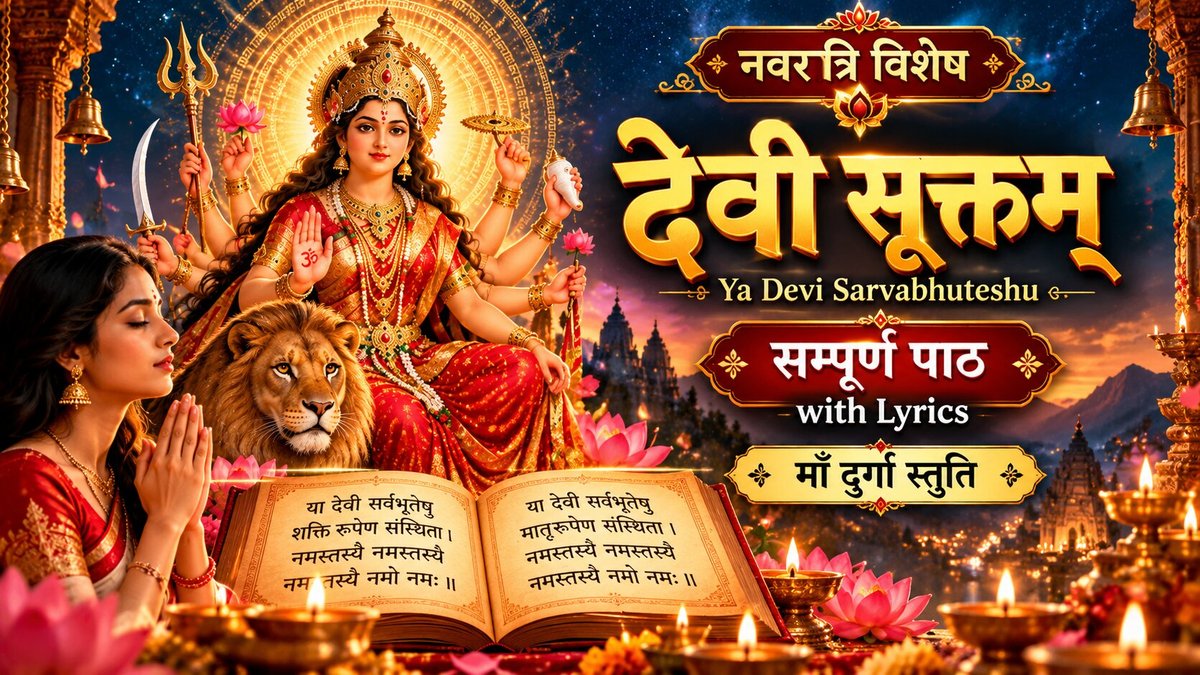
The Durga Kavach, drawn from the Devi Mahatmya - the central scripture of Shakta worship - operates on a principle that is both ancient and elegantly practical: the devotee is understood to move through a world of multiple vulnerabilities, and the kavach systematically places the Nine Durgas as guardians at every direction, every limb, and every threshold of the body and the home. This is not magical thinking in a naive sense but a structured meditative practice: by naming each goddess and each direction, the devotee constructs an inner architecture of divine presence, cultivating the awareness that no moment or corner of life is outside the Goddess's protecting gaze. It is this comprehensiveness that has made the kavach an indispensable part of Devi Mahatmya parayana for centuries.
In the Jyotish tradition, the Durga Kavach is widely recommended as a protective measure against malefic planetary influences, particularly those associated with Rahu, Mars, and Saturn when they afflict sensitive points in the natal chart. Devotees recite it during Navaratri above all, and also on Fridays and the eighth tithi (Ashtami) of each lunar fortnight. It is traditionally believed that regular recitation, especially when undertaken as a vow over forty days or nine days, builds a subtle field of protection that reduces accidents, removes fears, and gradually dissolves obstacles of karmic origin. The Goddess does not merely guard from outside - the kavach, devotees say, is ultimately a reminder that Shakti herself is the very ground in which all life unfolds.