Kanakadhara Stotram: Shankaracharya’s Wealth Hymn - Meaning & Benefits
Kanakadhara Stotram - Sanskrit Text
॥ श्रीकनकधारास्तोत्रम् ॥
अङ्गं हरेः पुलकभूषणमाश्रयन्ती
भृङ्गाङ्गनेव मुकुलाभरणं तमालम् ।
अङ्गीकृताखिलविभूतिरपाङ्गलीला
माङ्गल्यदास्तु मम मङ्गलदेवतायाः ॥ १ ॥
मुग्धा मुहुर्विदधती वदने मुरारेः
प्रेमत्रपाप्रणिहितानि गतागतानि ।
माला दृशोर्मधुकरीव महोत्पले या
सा मे श्रियं दिशतु सागरसम्भवायाः ॥ २ ॥
विश्वामरेन्द्रपदविभ्रमदानदक्षम्
आनन्दहेतुरधिकं मुरविद्विषोऽपि ।
ईषन्निषीदतु मयि क्षणमीक्षणार्धम्
इन्दीवरोदरसहोदरमिन्दिरायाः ॥ ३ ॥
आमीलिताक्षमधिगम्य मुदा मुकुन्दम्
आनन्दकन्दमनिमेषमनङ्गतन्त्रम् ।
आकेकरस्थितकनीनिकपक्ष्मनेत्रं
भूत्यै भवेन्मम भुजङ्गशयाङ्गनायाः ॥ ४ ॥
बाह्वन्तरे मधुजितः श्रितकौस्तुभे या
हारावलीव हरिनीलमयी विभाति ।
कामप्रदा भगवतोऽपि कटाक्षमाला
कल्याणमावहतु मे कमलालयायाः ॥ ५ ॥
कालाम्बुदालिललितोरसि कैटभारेर्
धाराधरे स्फुरति या तडिदङ्गनेव ।
मातुः समस्तजगतां महनीयमूर्तिर्
भद्राणि मे दिशतु भार्गवनन्दनायाः ॥ ६ ॥
प्राप्तं पदं प्रथमतः किल यत्प्रभावान्
माङ्गल्यभाजि मधुमाथिनि मन्मथेन ।
मय्यापतेत्तदिह मन्थरमीक्षणार्धं
मन्दालसं च मकरालयकन्यकायाः ॥ ७ ॥
दद्याद् दयानुपवनो द्रविणाम्बुधाराम्
अस्मिन्नकिञ्चनविहङ्गशिशौ विषण्णे ।
दुष्कर्मघर्ममपनीय चिराय दूरं
नारायणप्रणयिनीनयनाम्बुवाहः ॥ ८ ॥
इष्टा विशिष्टमतयोऽपि यया दयार्द्र-
दृष्ट्या त्रिविष्टपपदं सुलभं लभन्ते ।
दृष्टिः प्रहृष्टकमलोदरदीप्तिरिष्टां
पुष्टिं कृषीष्ट मम पुष्करविष्टरायाः ॥ ९ ॥
गीर्देवतेति गरुडध्वजसुन्दरीति
शाकम्भरीति शशिशेखरवल्लभेति ।
सृष्टिस्थितिप्रलयकेलिषु संस्थितायै
तस्यै नमस्त्रिभुवनैकगुरोस्तरुण्यै ॥ १० ॥
श्रुत्यै नमोऽस्तु शुभकर्मफलप्रसूत्यै
रत्यै नमोऽस्तु रमणीयगुणार्णवायै ।
शक्त्यै नमोऽस्तु शतपत्रनिकेतनायै
पुष्ट्यै नमोऽस्तु पुरुषोत्तमवल्लभायै ॥ ११ ॥
नमोऽस्तु नालीकनिभाननायै
नमोऽस्तु दुग्धोदधिजन्मभूत्यै ।
नमोऽस्तु सोमामृतसोदरायै
नमोऽस्तु नारायणवल्लभायै ॥ १२ ॥
सम्पत्कराणि सकलेन्द्रियनन्दनानि
साम्राज्यदानविभवानि सरोरुहाक्षि ।
त्वद्वन्दनानि दुरितोद्धरणोद्यतानि
मामेव मातरनिशं कलयन्तु मान्ये ॥ १३ ॥
यत्कटाक्षसमुपासनाविधिः
सेवकस्य सकलार्थसम्पदः ।
सन्तनोति वचनाङ्गमानसैस्
त्वां मुरारिहृदयेश्वरीं भजे ॥ १४ ॥
सरसिजनिलये सरोजहस्ते
धवलतमांशुकगन्धमाल्यशोभे ।
भगवति हरिवल्लभे मनोज्ञे
त्रिभुवनभूतिकरि प्रसीद मह्यम् ॥ १५ ॥
दिग्घस्तिभिः कनककुम्भमुखावसृष्ट-
स्वर्वाहिनीविमलचारुजलप्लुताङ्गीम् ।
प्रातर्नमामि जगतां जननीमशेष-
लोकाधिनाथगृहिणीममृताब्धिपुत्रीम् ॥ १६ ॥
कमले कमलाक्षवल्लभे त्वं
करुणापूरतरङ्गितैरपाङ्गैः ।
अवलोकय मामकिञ्चनानां
प्रथमं पात्रमकृत्रिमं दयायाः ॥ १७ ॥
स्तुवन्ति ये स्तुतिभिरमूभिरन्वहं
त्रयीमयीं त्रिभुवनमातरं रमाम् ।
गुणाधिका गुरुतरभाग्यभागिनो
भवन्ति ते भुवि बुधभाविताशयाः ॥ १८ ॥
॥ इति श्रीमच्छङ्कराचार्यविरचितं कनकधारास्तोत्रं सम्पूर्णम् ॥
Transliteration (Roman/IAST)
Verse 1: Aṅgaṁ Hareḥ pulaka-bhūṣaṇam-āśrayantī bhṛṅgāṅganeva mukulābharaṇaṁ tamālam; aṅgīkṛtākhila-vibhūtir-apāṅga-līlā māṅgalya-dāstu mama maṅgala-devatāyāḥ.
Verse 17: Kamale kamalākṣa-vallabhe tvaṁ karuṇā-pūra-taraṅgitair-apāṅgaiḥ; avalokaya mām-akiñcanānāṁ prathamaṁ pātram-akṛtrimaṁ dayāyāḥ.
Meaning
The Kanakadhara Stotram praises Goddess Lakshmi as the consort of Vishnu, dwelling at his side like a bee clinging to a blossoming tamala tree. Verse after verse the poet adores the side-glance (apanga, kataksha) of the Goddess - the merciful, half-closed look that bestows all prosperity and even gladdens the Lord himself. He salutes her as the ocean-born (sea of milk), the lotus-dweller, the mother of all worlds, the daughter of the ocean of nectar; as Saraswati (Gir-devata), Rati, Shakti, Pushti and Shri. In verse 17 he prays the most famous plea: “O Kamala, beloved of the lotus-eyed Lord, cast upon me your glance flooded with waves of compassion - I who am the foremost vessel of poverty and the truest object of your mercy.” The closing verse promises great fortune and wisdom to all who recite these praises daily.
About this Stotra
The Kanakadhara Stotram (“the stream of gold”) is among the most celebrated hymns of Adi Shankaracharya. The famous legend tells that as a young boy seeking alms, Shankara came to the house of a desperately poor woman who had nothing to give but a single amla (gooseberry) fruit. Moved by her selfless generosity, he spontaneously composed this hymn to Lakshmi. So pleased was the Goddess that she showered a rain of golden amlas (kanaka-dhara) upon the poor woman’s home. The stotra has since been treasured as the supreme prayer for the removal of poverty and the attainment of wealth.
Significance & Spiritual Benefits
The Kanakadhara is recited above all for relief from poverty and for the inflow of wealth and prosperity, exactly as in its origin legend. Its power is said to lie in its single-pointed focus on Lakshmi’s compassionate side-glance: where that glance falls, fortune follows. Beyond material wealth, the hymn cultivates the inner wealth of devotion, contentment and surrender, and is believed to clear obstacles, debts and financial struggles, and to bring blessings to home and family. The closing verse promises that its daily reciters become “richly endowed with virtue and great good fortune.”
Astrological Relevance
As the supreme Lakshmi hymn for wealth, the Kanakadhara Stotram is a classic Vedic remedy for the planets and houses of prosperity: Venus (Shukra), karaka of wealth and luxury; Jupiter (Guru), karaka of fortune and grace; and the 2nd house (wealth) and 11th house (gains). It is prescribed for a weak, debilitated or afflicted 2nd or 11th lord, a poorly placed Venus or Jupiter, chronic financial difficulty, mounting debts, or blocked income during adverse dashas. Recited on Fridays before a Sri Yantra, it is one of the most recommended remedies for Lakshmi’s grace.
How to Chant (Vidhi)
Bathe and sit before an image of Lakshmi (with Vishnu) or a Sri Yantra, facing east or north. Light a ghee lamp, offer red or pink flowers (especially lotus), kumkum and sweets. Recite the stotra with devotion, ideally daily; a common discipline is to chant it for a fixed number of days (such as 21 or 48) as a sankalpa for relief from poverty. Conclude by offering a little amla or fruit and praying for prosperity and contentment.
Best Day & Time
Fridays (sacred to Venus and Lakshmi), Diwali, Akshaya Tritiya, Varalakshmi Vrata and Kojagari Purnima are most auspicious. The early morning, after bath, is the ideal daily time.
Frequently Asked Questions
What is the legend behind the Kanakadhara Stotram?
Adi Shankaracharya, as a boy, received a single amla fruit as alms from a woman too poor to give anything else. Moved by her generosity, he composed this hymn to Lakshmi, who showered golden amlas (kanaka-dhara, a stream of gold) on the woman’s home.
What is the Kanakadhara Stotram recited for?
It is recited primarily for the removal of poverty and the attainment of wealth and prosperity, and to invoke the compassionate grace of Goddess Lakshmi for the home and family.
How long should it be recited?
Daily recitation is ideal. Many follow a discipline of chanting it for a set period - such as 21 or 48 consecutive days - as a focused prayer for relief from financial hardship, traditionally on Fridays.
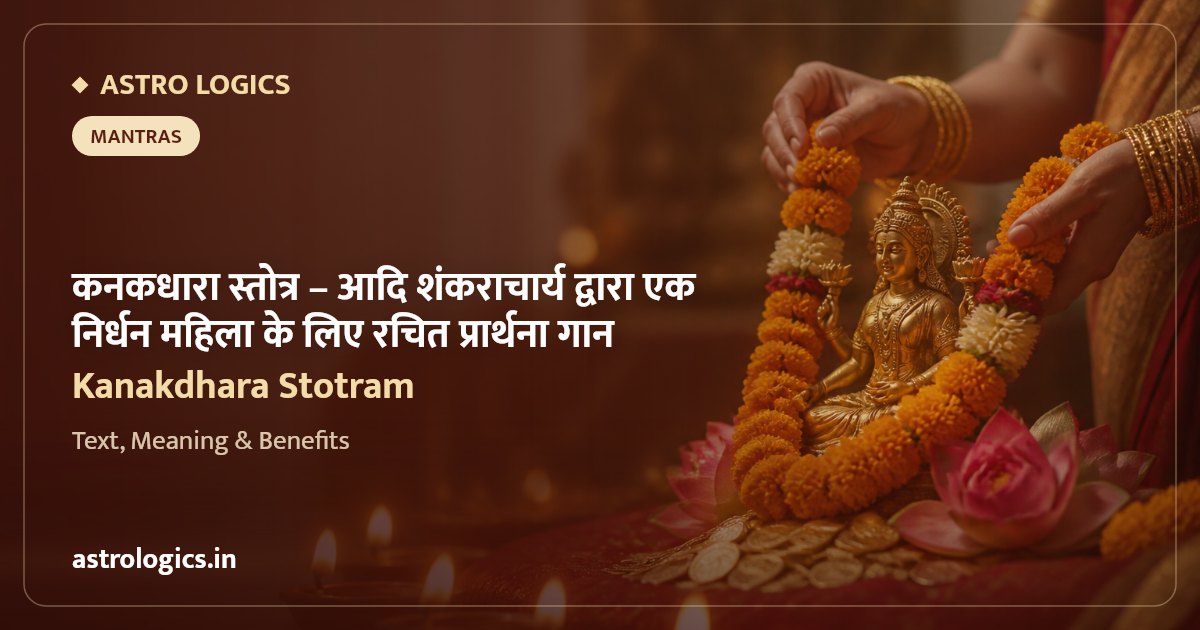
Golden grace: the Kanakadhara's timeless prayer for abundance
The Kanakadhara Stotram by Adi Shankaracharya occupies a singular place in the Lakshmi bhakti tradition, for it is not merely a philosophical hymn but a composition deeply rooted in a beloved story of compassion - the great Acharya, moved by the poverty of a devotee who had offered him the last of her food, is said to have composed these verses extemporaneously, after which the Goddess rained golden amla fruits upon her home. Whether one reads the story as literal miracle or devotional metaphor, its message is consistent with the Stotram's inner tenor: Shankaracharya, the master of non-dualistic Vedanta, bows before the Goddess in the most direct and heartfelt way, demonstrating that jnana and bhakti are not opposites but two wings of the same flight.
The eighteen verses of the Kanakadhara move through a succession of luminous images - Lakshmi born of the ocean, resting on the blue lotus, enthroned on Vishnu's chest - each verse a meditation in miniature on her inexhaustible grace. In the Jyotish tradition, the Stotram is widely recommended as a Venus (Shukra) strengthening practice, as Lakshmi governs all that Venus signifies: beauty, comfort, prosperity, and refined feeling. Devotees believe it is especially efficacious when chanted on Fridays during the waxing fortnight, with a ghee lamp lit before the Goddess. The deeper devotional teaching, however, is that the Kanakadhara's true gift is not external wealth but the opening of the heart - the discovery that genuine generosity, like the woman who shared her last amla, is itself the condition that invites Lakshmi's presence.