Murti Rahasyam: The Secret of the Forms of the Goddess
Murti Rahasyam - Sanskrit Text
॥ अथ मूर्तिरहस्यम् ॥
ऋषिरुवाच
ॐ नन्दा भगवती नाम या भविष्यति नन्दजा ।
स्तुता सा पूजिता भक्त्या वशीकुर्याज्जगत्त्रयम् ॥१॥
कनकोत्तमकान्तिः सा सुकान्तिकनकाम्बरा ।
देवी कनकवर्णाभा कनकोत्तमभूषणा ॥२॥
कमलाङ्कुशपाशाब्जैरलङ्कृतचतुर्भुजा ।
इन्दिरा कमला लक्ष्मीः सा श्री रुक्माम्बुजासना ॥३॥
या रक्तदन्तिका नाम देवी प्रोक्ता मयानघ ।
तस्याः स्वरूपं वक्ष्यामि शृणु सर्वभयापहम् ॥४॥
रक्ताम्बरा रक्तवर्णा रक्तसर्वाङ्गभूषणा ।
रक्तायुधा रक्तनेत्रा रक्तकेशातिभीषणा ॥५॥
रक्ततीक्ष्णनखा रक्तदशना रक्तदन्तिका ।
पतिं नारीवानुरक्ता देवी भक्तं भजेज्जनम् ॥६॥
वसुधेव विशाला सा सुमेरुयुगलस्तनी ।
दीर्घौ लम्बावतिस्थूलौ तावतीव मनोहरौ ॥७॥
खड्गं पात्रं च मुसलं लाङ्गलं च बिभर्ति सा ।
आख्याता रक्तचामुण्डा देवी योगेश्वरीति च ॥९॥
अनया व्याप्तमखिलं जगत्स्थावरजङ्गमम् ।
इमां यः पूजयेद्भक्त्या स व्याप्नोति चराचरम् ॥१०॥
शाकम्भरी नीलवर्णा नीलोत्पलविलोचना ।
गम्भीरनाभिस्त्रिवलीविभूषिततनूदरी ॥१२॥
कार्मुकं च स्फुरत्कान्ति बिभ्रती परमेश्वरी ।
शाकम्भरी शताक्षी सा सैव दुर्गा प्रकीर्तिता ॥१५॥
विशोका दुष्टदमनी शमनी दुरितापदाम् ।
उमा गौरी सती चण्डी कालिका सा च पार्वती ॥१६॥
शाकम्भरीं स्तुवन् ध्यायञ्जपन् सम्पूजयन्नमन् ।
अक्षय्यमश्नुते शीघ्रमन्नपानामृतं फलम् ॥१७॥
भीमापि नीलवर्णा सा दंष्ट्रादशनभासुरा ।
विशाललोचना नारी वृत्तपीनपयोधरा ॥१८॥
चन्द्रहासं च डमरुं शिरः पात्रं च बिभ्रती ।
एकवीरा कालरात्रिः सैवोक्ता कामदा स्तुता ॥१९॥
तेजोमण्डलदुर्धर्षा भ्रामरी चित्रकान्तिभृत् ।
चित्रानुलेपना देवी चित्राभरणभूषिता ॥२०॥
चित्रभ्रमरपाणिः सा महामारीति गीयते ।
इत्येता मूर्तयो देव्या याः ख्याता वसुधाधिप ॥२१॥
जगन्मातुश्चण्डिकायाः कीर्तिताः कामधेनवः ।
इदं रहस्यं परमं न वाच्यं कस्यचित्त्वया ॥२२॥
व्याख्यानं दिव्यमूर्तीनामभीष्टफलदायकम् ।
तस्मात् सर्वप्रयत्नेन देवीं जप निरन्तरम् ॥२३॥
सप्तजन्मार्जितैर्घोरैर्ब्रह्महत्यासमैरपि ।
पाठमात्रेण मन्त्राणां मुच्यते सर्वकिल्बिषैः ॥२४॥
देव्या ध्यानं मया ख्यातं गुह्याद् गुह्यतरं महत् ।
तस्मात् सर्वप्रयत्नेन सर्वकामफलप्रदम् ॥२५॥
॥ इति मूर्तिरहस्यं सम्पूर्णम् ॥
Transliteration (Roman/IAST)
oṃ nandā bhagavatī nāma yā bhaviṣyati nandajā |
stutā sā pūjitā bhaktyā vaśīkuryāj jagat-trayam ||1||
yā rakta-dantikā nāma devī proktā mayānagha |
tasyāḥ svarūpaṃ vakṣyāmi śṛṇu sarva-bhayāpaham ||4||
śākambharī nīla-varṇā nīlotpala-vilocanā |
śākambharī śatākṣī sā saiva durgā prakīrtitā ||12,15||
Meaning
The Murti Rahasyam ("Secret of the Forms") describes the iconographic forms (murti) of the Goddess Chandika as worshipped in the three episodes of the Devi Mahatmya. It reveals the forms of Nanda Bhagavati, golden-hued and four-armed, bearing lotus, goad, noose and lotus - identified with Lakshmi, Indira and Kamala; of Raktadantika ("the red-toothed"), entirely red - red garments, red limbs, red weapons, red eyes - who loves her devotee as a wife loves her husband, also called Rakta-chamunda and Yogeshvari; of Shakambhari ("the herb-bearing"), blue-hued with lotus-eyes, holding bow and abundant vegetables, fruits and flowers, who is also Shatakshi ("the hundred-eyed") and Durga herself; and of Bhima (the terrible) and Bhramari (the bee-goddess). These, the text says, are the forms of the World-Mother Chandika, wish-fulfilling like Kamadhenu. It closes declaring this a supreme secret whose mere recitation frees one even from the gravest sins accumulated over seven births.
About this Stotra
The Murti Rahasyam is the third of the three "Rahasyas" (secret teachings) - Pradhanika, Vaikritika and Murti - appended to the Durga Saptashati (Devi Mahatmya) of the Markandeya Purana. Where the Pradhanika Rahasya explains the Goddess's metaphysical origin, the Murti Rahasya explains her sacred forms - the specific iconography, names and natures of the manifestations of Chandika, including Nanda, Raktadantika and Shakambhari, who appear in her promise to incarnate again and again to protect the world. It is recited as a concluding part of the Chandi Path.
Significance & Spiritual Benefits
This text gives the devotee the knowledge needed to meditate rightly upon the Goddess's forms during worship - the colours, weapons and attributes by which each manifestation is contemplated. Reciting and contemplating it deepens the meditation (dhyana) at the heart of Devi upasana and is said to bestow the complete fruit of the Saptashati. Its phala promises that mere recitation frees one from the gravest sins of many lifetimes and grants all desired fruits. It is recited especially during Navaratri as part of the full Chandi Path.
Astrological Relevance
The three principal forms it describes carry distinct astrological resonances. Nanda Bhagavati, golden and identified with Lakshmi, aligns with Venus (Shukra) and the wealth houses (2nd, 11th). Raktadantika, entirely red and fierce, resonates with Mars (Mangal), the red planet of energy and protection. Shakambhari, the nourishing herb-bearing Goddess who ends famine, aligns with the Moon and Jupiter - sustenance, growth and abundance. As part of the Chandi Path, reciting the Murti Rahasya is a comprehensive Shakta remedy for invoking the Mother's protection, prosperity and nourishment, especially during Navaratri sadhana and in difficult planetary periods.
How to Chant (Vidhi)
The Rahasyas are recited at the conclusion of the Durga Saptashati path. Sit purified before an image of the Goddess, having completed the Saptashati. Begin with the appropriate invocation, then recite the verses with attention, visualising each form of the Goddess as it is described - golden Nanda, red Raktadantika, blue Shakambhari. Conclude by offering the merit of the recitation to the Divine Mother.
Best Day & Time
Navaratri (Sharadiya and Chaitra) is the ideal period, especially Ashtami and Navami. Tuesdays and Fridays are auspicious for Devi worship. Recite in the morning after bath, as part of the complete Chandi Path.
Frequently Asked Questions
What is the Murti Rahasyam about?
It describes the sacred forms (murti) of the Goddess Chandika - Nanda, Raktadantika, Shakambhari, Bhima and Bhramari - with their colours, weapons and natures, so that the devotee may meditate upon them correctly during worship.
Where does it come from?
It is the third of the three Rahasyas (secret teachings) appended to the Durga Saptashati / Devi Mahatmya of the Markandeya Purana, recited at the conclusion of the Chandi Path.
What benefit does reciting it give?
It enables right meditation on the Goddess's forms and is said to bestow the complete fruit of the Saptashati, freedom from grave sins, and the fulfilment of all worthy desires.
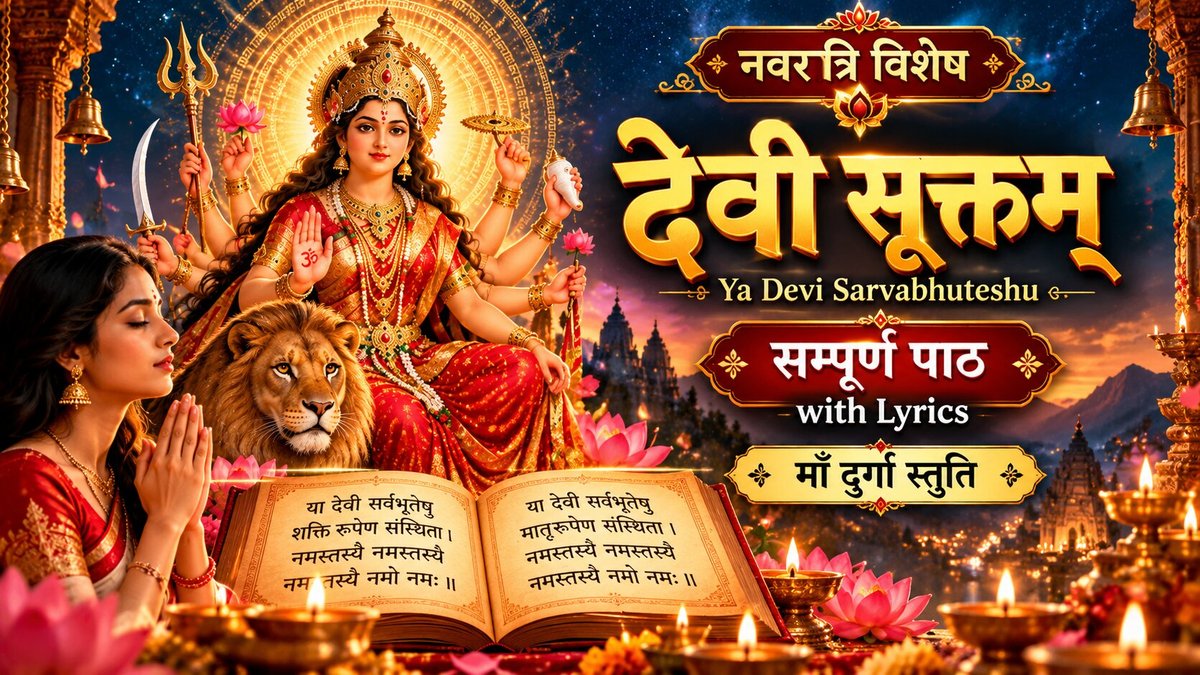
The secret forms of Chandika and what their colours reveal
The Murti Rahasyam is the third of the three "secret teachings" appended to the Durga Saptashati, and it is perhaps the most visually rich. Where the Pradhanika and Vaikritika Rahasyams address the metaphysical and cosmic levels of the Goddess's reality, the Murti Rahasyam comes closer to the ground of devotional practice by describing specific, named forms - golden Nanda, red Raktadantika, the blue Shakambhari, the vast Bhima, and the humming Bhramari - each associated with a different moment of cosmic crisis and divine response. The colours and attributes of these forms are not decorative detail; in the visual theology of Shakta tradition, each hue encodes a specific quality of divine energy and a particular mode of the Goddess's action in the world.
The Murti Rahasyam is recited as part of the complete Chandi Path during Navratri, following the thirteen chapters of the Saptashati, and its proper place in the liturgical sequence is understood to complete and seal the protective power of the entire recitation. Devotees familiar with the text find in the five described forms a contemplative map of the Goddess's responsiveness to human need; she who feeds the world through Shakambhari, she who protects through Bhima, she who hums creation into being as Bhramari. In the Jyotish tradition, the multi-form nature of Chandika and her planetary correspondences vary by form, with Shakambhari's blue associated with Saturn's depth and Raktadantika's red resonating with Mars's protective intensity. Meditating on these forms allows the devotee to approach the Goddess not as a single distant power but as an intimate presence who takes exactly the form the moment requires.