Om Jai Jagdish Hare Aarti: Lyrics, Meaning and Spiritual Benefits
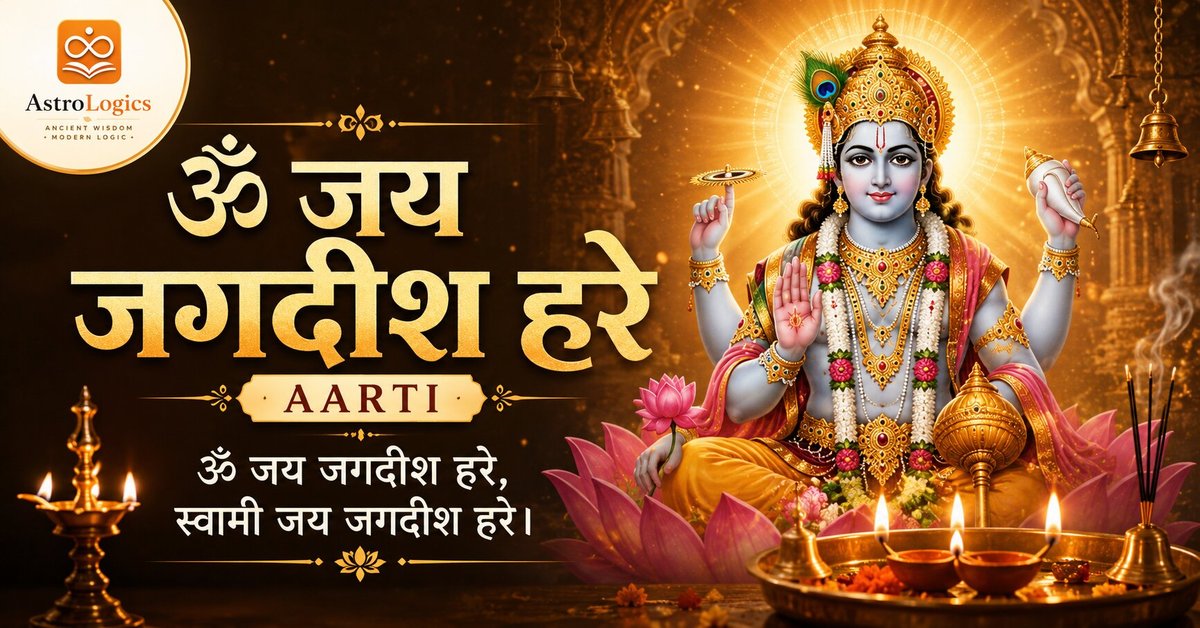
Om Jai Jagdish Hare Aarti Lyrics (हिंदी में)
ॐ जय जगदीश हरे, स्वामी जय जगदीश हरे।
भक्त जनों के संकट, दास जनों के संकट, क्षण में दूर करे॥
ॐ जय जगदीश हरे॥
जो ध्यावे फल पावे, दुःख विनशे मन का।
स्वामी दुःख विनशे मन का।
सुख सम्पत्ति घर आवे, सुख सम्पत्ति घर आवे, कष्ट मिटे तन का॥
ॐ जय जगदीश हरे॥
मात पिता तुम मेरे, शरण गहूँ मैं किसकी।
स्वामी शरण गहूँ मैं किसकी।
तुम बिन और न दूजा, तुम बिन और न दूजा, आस करूँ मैं जिसकी॥
ॐ जय जगदीश हरे॥
तुम पूरण परमात्मा, तुम अन्तर्यामी।
स्वामी तुम अन्तर्यामी।
पारब्रह्म परमेश्वर, पारब्रह्म परमेश्वर, तुम सब के स्वामी॥
ॐ जय जगदीश हरे॥
तुम करुणा के सागर, तुम पालनकर्ता।
स्वामी तुम पालनकर्ता।
मैं मूरख खल कामी, मैं सेवक तुम स्वामी, कृपा करो भर्ता॥
ॐ जय जगदीश हरे॥
तुम हो एक अगोचर, सब के प्राणपति।
स्वामी सब के प्राणपति।
किस विधि मिलूँ दयामय, किस विधि मिलूँ दयामय, तुमको मैं कुमति॥
ॐ जय जगदीश हरे॥
दीनबन्धु दुखहर्ता, तुम रक्षक मेरे।
स्वामी तुम रक्षक मेरे।
अपने हाथ उठाओ, अपने हाथ उठाओ, द्वार पड़ा मैं तेरे॥
ॐ जय जगदीश हरे॥
विषय विकार मिटाओ, पाप हरो देवा।
स्वामी पाप हरो देवा।
श्रद्धा भक्ति बढ़ाओ, श्रद्धा भक्ति बढ़ाओ, सन्तन की सेवा॥
ॐ जय जगदीश हरे॥
तन मन धन सब कुछ है तेरा।
स्वामी सब कुछ है तेरा।
तेरा तुझको अर्पण, तेरा तुझको अर्पण, क्या लागे मेरा॥
ॐ जय जगदीश हरे॥
Om Jai Jagdish Hare Aarti – Transliteration (English)
Om Jai Jagdish Hare, Swami Jai Jagdish Hare
Bhakta janon ke sankat, dasa janon ke sankat, kshan mein door kare
Om Jai Jagdish Hare
Jo dhyaave phal paave, dukh vinashe man ka
Swami dukh vinashe man ka
Sukh sampati ghar aave, sukh sampati ghar aave, kasht mite tan ka
Om Jai Jagdish Hare
Maat pita tum mere, sharan gahoon main kiski
Swami sharan gahoon main kiski
Tum bin aur na dooja, tum bin aur na dooja, aas karoon main jiski
Om Jai Jagdish Hare
Tum pooran Paramatma, tum Antaryaami
Swami tum Antaryaami
Paraabrahm Parameshwar, Paraabrahm Parameshwar, tum sab ke Swami
Om Jai Jagdish Hare
Tum karuna ke saagar, tum palankarta
Swami tum palankarta
Main moorakh khal kaami, main sevak tum Swami, kripa karo bharta
Om Jai Jagdish Hare
Tum ho ek agochar, sab ke praanpati
Swami sab ke praanpati
Kis vidhi miloon dayaamayi, kis vidhi miloon dayaamayi, tumko main kumati
Om Jai Jagdish Hare
Deenbandhu dukhharta, tum rakshak mere
Swami tum rakshak mere
Apane haath uthaao, apane haath uthaao, dwaar pada main tere
Om Jai Jagdish Hare
Vishay vikaar mitaao, paap haro devaa
Swami paap haro devaa
Shraddha bhakti badhaao, shraddha bhakti badhaao, santan ki sevaa
Om Jai Jagdish Hare
Tan man dhan sab kuch hai tera
Swami sab kuch hai tera
Tera tujhko arpan, tera tujhko arpan, kya laage mera
Om Jai Jagdish Hare
Meaning & Significance
Om Jai Jagdish Hare is the most universally sung aarti in the Hindu tradition, composed by Pandit Shardaram Bhardwaj (Phillauri) in 1870 in accessible Braj Bhasha so that ordinary devotees - not just Sanskrit scholars - could offer heartfelt praise to the Lord. Each of its nine verses addresses a different facet of the devotee's relationship with the Divine: surrender, longing, petition, and gratitude. The closing verse - "Tera tujhko arpan, kya laage mera" (I offer back to You what was always Yours - what can I call mine?) - is considered among the most profound statements of non-doership in all of devotional poetry.
The aarti is universal in the sense that, although addressed to Jagdish (Lord of the Universe, an epithet of Vishnu), it is sung with equal devotion at shrines of Shiva, Devi, and Rama across the Indian subcontinent. Its melody and words have become the common language of Hindu evening worship.
About Lord Vishnu (Jagdish)
Vishnu, known by a thousand names including Jagdish (Lord of the World), Narayan, Hari, and Paalankarta (the Sustainer), is the second deity of the Hindu Trimurti and the preserver of cosmic order (dharma). He descends into the world as an avatar whenever dharma is threatened - his ten principal avatars include Rama and Krishna, who are themselves objects of intense devotion. Vishnu is often depicted reclining on the cosmic serpent Shesha, with his consort Lakshmi at his feet, symbolising the eternal rest that underlies all creation.
In Vedic astrology, Vishnu is associated with Jupiter (Guru/Brihaspati) and the principle of expansion, wisdom, and protection. Propitiating Vishnu through aarti is believed to strengthen one's Jupiterian qualities - generosity, faith, and good fortune.
Benefits of Reciting the Om Jai Jagdish Hare Aarti
How to Perform the Aarti (Pooja Vidhi)
- Light a ghee or camphor lamp (diya) and place it in a thali (plate) along with flowers, kumkum, and incense.
- Bathe and wear clean clothes before beginning the puja; light incense to purify the space.
- Ring a bell continuously as the aarti begins - the sound is said to summon divine presence and drive away distracting energies.
- Wave the lamp in a clockwise circle before the deity's image: five circles at the full form, then specially at the feet, navel, face, and a final sweep over the whole.
- Sing all nine verses of the aarti aloud with full attention; family members may clap along to keep the rhythm.
After the aarti concludes, pass the lamp to all present so they may hold their palms over the flame and touch their eyes - receiving the divine warmth as prasad.
Best Day & Time to Recite
Om Jai Jagdish Hare may be sung at any time of day and on any day of the week, making it the cornerstone of daily home worship. The most auspicious times are at sunrise (Brahma muhurta, approximately 90 minutes before dawn) and at sunset (Sandhya), when the transition between day and night is considered a spiritually potent window. Thursday (Guruvar) is especially favoured for Vishnu worship, and Ekadashi (the eleventh lunar day of each fortnight) is the premier tithi for deepened Vishnu devotion. On Diwali, singing this aarti after the Lakshmi puja is an ancient and widely observed tradition.
Frequently Asked Questions
Who composed Om Jai Jagdish Hare?
The aarti was composed by Pandit Shardaram Bhardwaj Phillauri in 1870. He wrote it in Braj Bhasha so that all Hindus - regardless of Sanskrit literacy - could participate in Vishnu worship through a song they could understand and feel.
Can Om Jai Jagdish Hare be sung for deities other than Vishnu?
Yes. While the text specifically praises Jagdish (Vishnu), the universal appeal of its lyrics - centred on surrender, protection, and gratitude - has led generations of devotees to sing it at the close of puja for any deity. It functions as a universal closing aarti in many households.
How many times should the aarti be sung?
Tradition does not mandate a fixed number of repetitions. Singing all nine verses once, with full attention, is considered complete. On special occasions such as Ekadashi or Vishnu Jayanti, devotees may sing it three or five times as an extended act of devotion.
One lamp, countless devotees: the universal reach of Om Jai Jagdish Hare
Om Jai Jagdish Hare occupies a rare and cherished place in Indian devotional life -- it is the aarti that has crossed sectarian lines and become a shared heritage of Hindu households across regions, languages, and traditions. Addressed to the Lord of the Universe in a form that encompasses Vishnu, Rama, and Krishna while remaining inclusive enough for devotees of every path, it has the quality of a prayer that feels both ancient and immediately present. The rasa it evokes is shanta -- a deep, settled peace -- combined with dasya, the joyful love of a devotee who knows themselves to be utterly held in the care of a loving, all-seeing Lord.
This aarti is traditionally performed during the evening puja in homes across North India and beyond, with the entire family gathering around the lamp as it is waved in clockwise circles. On Ekadashi and other Vaishnava observances, it takes on added significance as a closing act of worship. What makes this composition particularly treasured is the way it speaks to ordinary human yearning without requiring scholarly knowledge or elaborate preparation -- it simply asks the Lord to look upon the devotee with compassion, to be the one who listens, protects, and lights the way. Devotees believe that the regularity and sincerity of this evening offering, more than any grand gesture, quietly transforms the character of a household into one where the divine is a constant, gentle presence.