Pradhanika Rahasyam: The Secret of the Goddess in the Durga Saptashati
Pradhanika Rahasyam - Sanskrit Text
॥ अथ प्राधानिकं रहस्यम् ॥
॥ विनियोगः ॥
ॐ अस्य श्रीसप्तशतीरहस्यत्रयस्य नारायण ऋषिरनुष्टुप्छन्दः,
महाकालीमहालक्ष्मीमहासरस्वत्यो देवता यथोक्तफलावाप्त्यर्थं जपे विनियोगः ।
राजोवाच
भगवन्नवतारा मे चण्डिकायास्त्वयोदिताः ।
एतेषां प्रकृतिं ब्रह्मन्प्रधानं वक्तुमर्हसि ॥१॥
आराध्यं यन्मया देव्याः स्वरूपं येन च द्विज ।
विधिना ब्रूहि सकलं यथावत्प्रणतस्य मे ॥२॥
ऋषिरुवाच
इदं रहस्यं परममनाख्येयं प्रचक्षते ।
भक्तोऽसीति न मे किञ्चित्तवावाच्यं नराधिप ॥३॥
सर्वस्याद्या महालक्ष्मीस्त्रिगुणा परमेश्वरी ।
लक्ष्यालक्ष्यस्वरूपा सा व्याप्य कृत्स्नं व्यवस्थिता ॥४॥
मातुलुङ्गं गदां खेटं पानपात्रं च बिभ्रती ।
नागं लिङ्गं च योनिं च बिभ्रती नृप मूर्धनि ॥५॥
तप्तकाञ्चनवर्णाभा तप्तकाञ्चनभूषणा ।
शून्यं तदखिलं स्वेन पूरयामास तेजसा ॥६॥
सा भिन्नाञ्जनसङ्काशा दंष्ट्राङ्कितवरानना ।
विशाललोचना नारी बभूव तनुमध्यमा ॥८॥
महामाया महाकाली महामारी क्षुधा तृषा ।
निद्रा तृष्णा चैकवीरा कालरात्रिर्दुरत्यया ॥१२॥
अक्षमालाङ्कुशधरा वीणापुस्तकधारिणी ।
सा बभूव वरा नारी नामान्यस्यै च सा ददौ ॥१५॥
महाविद्या महावाणी भारती वाक् सरस्वती ।
आर्या ब्राह्मी कामधेनुर्वेदगर्भा च धीश्वरी ॥१६॥
ब्रह्मणे प्रददौ पत्नीं महालक्ष्मीर्नृप त्रयीम् ।
रुद्राय गौरीं वरदां वासुदेवाय च श्रियम् ॥२६॥
महालक्ष्मीर्महाराज सर्वसत्त्वमयीश्वरी ।
निराकारा च साकारा सैव नानाभिधानभृत् ॥३०॥
नामान्तरैर्निरूप्यैषा नाम्ना नान्येन केनचित् ॥ ॐ ॥३१॥
॥ इति प्राधानिकं रहस्यं सम्पूर्णम् ॥
Transliteration (Roman/IAST)
oṃ asya śrī-saptaśatī-rahasya-trayasya nārāyaṇa ṛṣiḥ anuṣṭup chandaḥ,
mahākālī-mahālakṣmī-mahāsarasvatyo devatā yathokta-phalāvāptyarthaṃ jape viniyogaḥ |
sarvasyādyā mahālakṣmīs triguṇā parameśvarī |
lakṣyālakṣya-svarūpā sā vyāpya kṛtsnaṃ vyavasthitā ||4||
mahālakṣmīr mahārāja sarva-sattvamayī-īśvarī |
nirākārā ca sākārā saiva nānābhidhāna-bhṛt ||30||
Meaning
The Pradhanika Rahasyam ("Secret concerning the Primary Cause") is a dialogue in which King Suratha asks the sage to explain the underlying nature (prakriti) and supreme essence (pradhana) of the Goddess Chandika and her many forms. The sage reveals the great secret: Mahalakshmi, the primordial one (Adya), is the supreme Ishvari composed of the three gunas, pervading all that is seen and unseen. From her own being she brings forth Mahakali (tamas) and Mahasarasvati (sattva), and through them the cosmic couples - Brahma and his consort, Rudra and Gauri, Vishnu and Shri - and thereby the whole creation. The closing verse declares that Mahalakshmi is the all-pervading Ishvari, both formless and with form, known by countless names; she is the one reality behind all the goddesses.
About this Stotra
The Pradhanika Rahasyam is the first of the three "Rahasyas" (secret teachings) - Pradhanika, Vaikritika and Murti Rahasya - appended to the Durga Saptashati (Devi Mahatmya) of the Markandeya Purana. Composed in the framework of the dialogue between King Suratha and the sage, it sets out the metaphysical foundation of Shakta theology: that the three great goddesses Mahakali, Mahalakshmi and Mahasarasvati are emanations of a single supreme Shakti, and that the entire manifest universe arises from her. The rishi of these verses is Narayana and the metre is Anushtup.
Significance & Spiritual Benefits
Where the main Saptashati narrates the Goddess's victories, the Rahasyas explain who she truly is. Reciting and contemplating the Pradhanika Rahasyam deepens the devotee's understanding that the Divine Mother is the one cause (pradhana / prakriti) of all existence, beyond and within the three gunas. It is recited as a concluding part of the Chandi Path to gain the complete fruit (yathokta-phala) of the Saptashati and to anchor devotion in right knowledge (jnana). It fosters a non-dual vision in which all forms of the Goddess are seen as one supreme reality.
Astrological Relevance
The text's central revelation - Mahalakshmi as the all-pervading Ishvari from whom Mahakali and Mahasarasvati arise - corresponds beautifully to the threefold astrological significations of the feminine divine: Mahalakshmi with Venus (Shukra) and the wealth houses (2nd, 11th); Mahakali with the fierce, transformative energies of Saturn, Mars, Rahu and Ketu; and Mahasarasvati with Mercury (Budha) and Jupiter, the karakas of learning and wisdom. As part of the Chandi Path, reciting this Rahasya is prescribed as a comprehensive Shakta remedy for strengthening the benefic significations of wealth, knowledge and protection, and is especially recommended during Navaratri sadhana.
How to Chant (Vidhi)
The Rahasyas are recited at the conclusion of the Durga Saptashati path. Sit purified before an image of the Goddess, having first completed the Saptashati (or at least the Kavacha–Argala–Kilaka and the chapters). Begin with the viniyoga, then recite the verses with attention to their meaning, contemplating Mahalakshmi as the one supreme Shakti. Conclude with offering of the merit to the Devi.
Best Day & Time
Navaratri (both Sharadiya and Chaitra) is the ideal period, and the Ashtami and Navami tithis especially so. Tuesdays and Fridays are auspicious for Devi worship. Recite in the morning after bath, as part of the complete Chandi Path.
Frequently Asked Questions
What is the Pradhanika Rahasyam?
It is the first of the three secret teachings (Rahasyas) appended to the Durga Saptashati, explaining the metaphysical origin of the Goddess - that Mahalakshmi, the primordial Shakti, gives rise to Mahakali and Mahasarasvati and to all creation.
When is it recited?
It is recited at the conclusion of the Durga Saptashati / Chandi Path, especially during Navaratri, to obtain the full fruit of the recitation and to ground the worship in right knowledge.
Who are the three goddesses it describes?
Mahalakshmi (the supreme, of the three gunas), Mahakali (of tamas) and Mahasarasvati (of sattva) - understood as emanations of one supreme Divine Mother.
The hidden teaching that crowns the Chandi Path
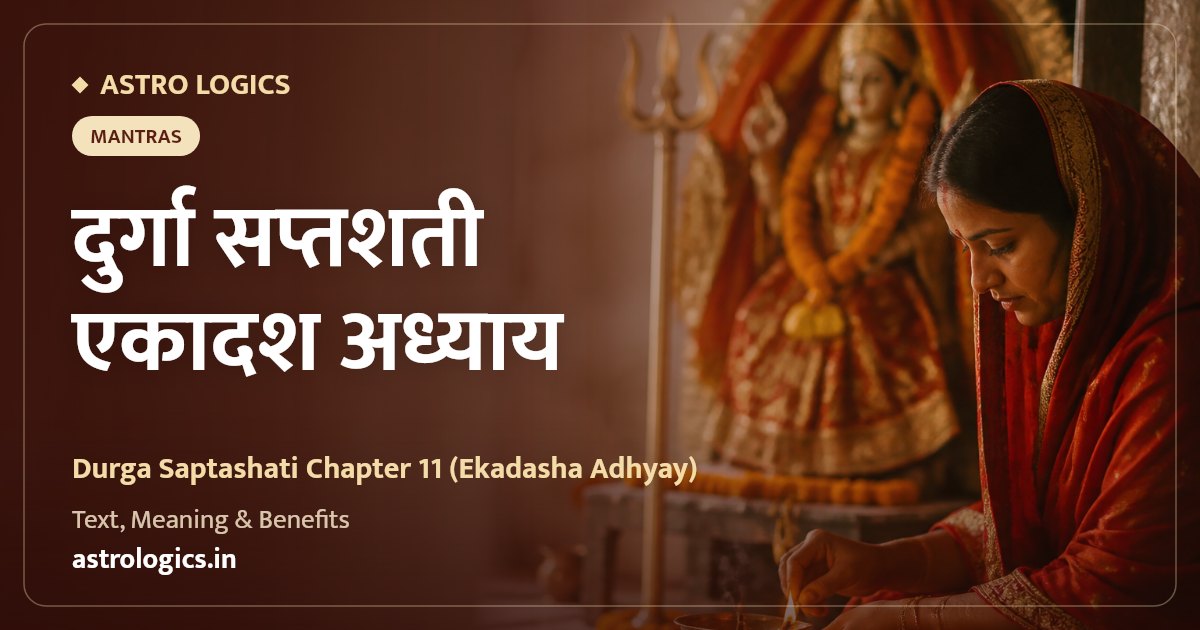
The Pradhanika Rahasyam occupies a unique position within the corpus of Shakta scripture: it is one of three esoteric texts appended to the Durga Saptashati, intended not for the general recitation but for the earnest seeker who wishes to penetrate the deepest meaning of the Devi Mahatmya. Here, the text reveals Mahalakshmi not simply as the goddess of prosperity but as the primordial, undivided Shakti - the ground from which Mahakali and Mahasarasvati, and through them all creation, emerge and dissolve. The mood it evokes is one of awe before the formless absolute wearing the form of the feminine divine. It is traditionally recited as part of the complete Chandi Path during Navratri, particularly in the final phase, and is considered a fitting close to the intellectual and devotional journey the Saptashati itself sets in motion.
What distinguishes the Pradhanika Rahasyam from the Saptashati's narrative chapters is its unambiguously philosophical register. It asks the devotee to shift from story to principle, from the mythic battles of the goddess to the metaphysical reality those battles symbolise. Scholars of Tantra and Vedanta alike have found a meeting point in this text. In the Jyotish tradition, Mahalakshmi in her primordial form is sometimes associated with the cosmic role of the Moon and the regenerative force of Rahu - forces of creation and dissolution operating beyond ordinary perception. Approaching this rahasyam with a prepared and steady mind is, the tradition teaches, its own act of worship.