Radha Chalisa: Complete Lyrics, Meaning, and Significance
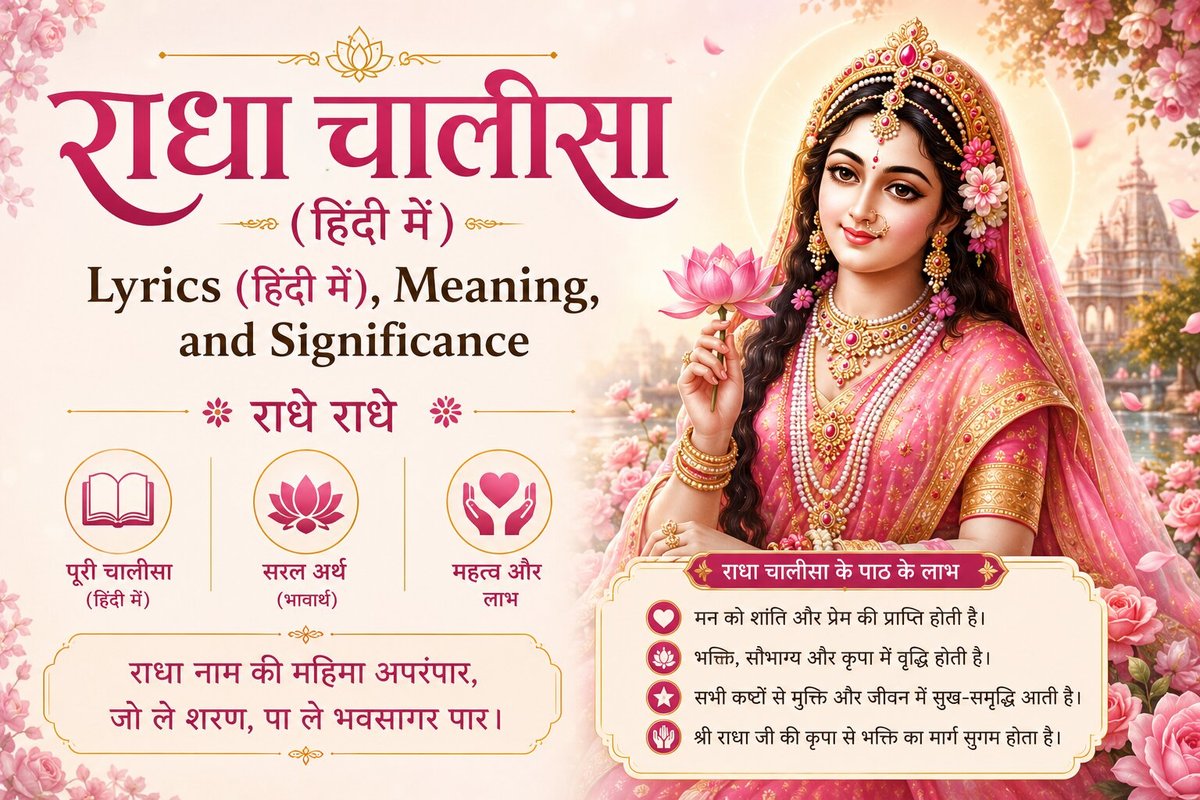
Radha - the supreme beloved whose hymn maps the innermost territory of bhakti
Among the great figures of the Vaishnava tradition, Shri Radha holds a place of extraordinary theological intimacy: she is understood not as a secondary figure beside Krishna but as the very embodiment of madhura bhakti - the sweetest, most complete form of devotional love. The Radha Chalisa dwells entirely in this rasa, and reciting it is understood as an invitation to orient one's entire inner life toward the experience of loving the Divine without reservation. This hymn is naturally at home in the sacred landscape of Vrindavan, Barsana, and Nandgaon, recited by pilgrims walking the traditional parikrama routes, and celebrated with particular fervour on Radha Ashtami - the day traditionally associated with Radha's appearance, which falls in the Bhadrapada month. Devotees also recite it on the full-moon nights that fall during the autumn, connecting with the spirit of the Raas.
What distinguishes this Chalisa is the emotional register it sustains from beginning to end: unlike hymns centred on protection or cosmic majesty, the Radha Chalisa keeps its attention fixed entirely on the quality of love itself - its purity, its willingness to give without calculation, and its capacity to transform the one who loves as much as the one who is loved. In the bhakti tradition, to contemplate Radha is understood as contemplating the ideal of the soul's relationship with the Divine. The warm takeaway this Chalisa offers is this: the highest form of spiritual practice may not be renunciation or ritual complexity, but simply learning to love more completely and without condition.
Radha Chalisa Lyrics (हिंदी में)
॥ दोहा ॥
श्री राधे वृषभानुजा, भक्तनि प्राणाधार।
वृन्दावनविपिन विहारिणी, प्रणवों बारंबार॥
जैसो तैसो रावरौ, कृष्ण प्रिया सुखधाम।
चरण शरण निज दीजिये, सुन्दर सुखद ललाम॥
॥ चौपाई ॥
जय वृषभान कुँवरि श्री श्यामा। कीरति नंदिनि शोभा धामा॥
नित्य बिहारिनि श्याम अधारा। अमित मोद मंगल दातारा॥
रास विलासिनि रस विस्तारिनी। सहचरि सुभग यूथ मन भावनि॥
नित्य किशोरी राधा गोरी। श्याम प्राणधन अति जिय भोरी॥
करुणा सागर हिय उमंगिनि। ललितादिक सखियन की संगिनी॥
दिन कर कन्या कूल बिहारिनि। कृष्ण प्राण प्रिय हिय हुलसावनि॥
नित्य श्याम तुमरौ गुण गावें। राधा राधा कहि हरषावें॥
मुरली में नित नाम उचारे। तुव कारण प्रिया वृषभानु दुलारी॥
नवल किशोरी अति छवि धामा। द्युति लघु लगै कोटि रति कामा॥
गौरांगी शशि निंदक बढ़ना। सुभग चपल अनियारे नयना॥
जावक युग युग पंकज चरना। नूपुर धुनि प्रीतम मन हरना॥
संतत सहचरि सेवा करहीं। महा मोद मंगल मन भरहीं॥
रसिकन जीवन प्राण अधारा। राधा नाम सकल सुख सारा॥
अगम अगोचर नित्य स्वरूपा। ध्यान धरत निशदिन ब्रज भूपा॥
उपजेउ जासु अंश गुण खानी। कोटिन उमा रमा ब्रह्मानी॥
नित्यधाम गोलोक विहारिनी। जन रक्षक दुख दोष नसावनि॥
शिव अज मुनि सनकादिक नारद। पार न पायें शेष अरु शारद॥
राधा शुभ गुण रूप उजारी। निरखि प्रसन्न होत बनवारी॥
ब्रज जीवन धन राधा रानी। महिमा अमित न जाय बखानी॥
प्रीतम संग देई गलबाँही। बिहरत नित्य वृन्दाबन माँही॥
राधा कृष्ण कृष्ण कहैं राधा। एक रूप दोउ प्रीति अगाधा॥
श्री राधा मोहन मन हरनी। जन सुख दायक प्रफुलित बदनी॥
कोटिक रूप धरें नंद नन्दा। दर्श करन हित गोकुल चन्दा॥
रास केलि करि तुम्हें रिझावें। मान करौ जब अति दुख पावें॥
प्रफुलित होत दर्श जब पावें। विविध भाँति नित विनय सुनावें॥
वृन्दारण्य बिहारिनि श्यामा। नाम लेत पूरण सब कामा॥
कोटिन यज्ञ तपस्या करहू। विविध नेम व्रत हिय में धरहू॥
तऊ न श्याम भक्तहिं अपनावें। जब लगि राधा नाम न गावे॥
वृन्दाविपिन स्वामिनी राधा। लीला बपु तब अमित अगाधा॥
स्वयं कृष्ण नहीं पावहीं पारा। और तुम्हें को जननी हारा॥
श्री राधा रस प्रीति अभेदा। सारद गान करत नित वेदा॥
राधा त्यागि कृष्ण को भेजिहैं। ते सपनेहु जग जलधि न तरिहैं॥
कीरति कुँवरि लाड़िली राधा। सुमिरत सकल मिटहिं भव बाधा॥
नाम अमंगल मूल नसावन। त्रिविध ताप हर हरि मन भावन॥
राधा नाम लेइ जो कोई। सहजहि दामोदर बस होई॥
राधा नाम परम सुखदाई। भजतहिं कृपा करहिं यदुराई॥
यशुमति नन्दन पीछे फिरिहैं। जो कोउ राधा नाम सुमिरिहैं॥
राम विहारिन श्यामा प्यारी। करहु कृपा बरसाने वारी॥
वृन्दावन है शरण तिहारौ। जय जय जय वृषभानु दुलारी॥
॥ दोहा ॥
श्रीराधा सर्वेश्वरी, रसिकेश्वर घनश्याम।
करहुँ निरंतर बास मैं, श्रीवृन्दावन धाम॥
Radha Chalisa – Transliteration (English)
|| Doha ||
Shri Radhe Vrishabhanuja, Bhaktani Praanaadhaar.
Vrindavan Vipin Vihaarini, Pranavo Baarambaar.
Jaiso Taiso Raavarou, Krishna Priya Sukhdham.
Charan Sharan Nij Dijiye, Sundar Sukhad Lalaam.
|| Chaupai ||
Jai Vrishabhan Kunvari Shri Shyama. Kirati Nandini Shobha Dhama.
Nitya Viharini Shyam Adhara. Amit Mod Mangal Datara.
Raas Vilasini Ras Vistarini. Sahachari Subhag Yuth Man Bhaavani.
Nitya Kishori Radha Gori. Shyam Praandhan Ati Jiya Bhori.
Karuna Sagar Hiya Umangini. Lalitadik Sakhiyan Ki Sangini.
Dinkar Kanya Kuul Vihaarini. Krishna Praana Priya Hiy Hulsavani.
Nitya Shyam Tumharo Gun Gave. Radha Radha Kahi Harshavahin.
Murali Mein Nit Naam Uchaarein. Tuv Kaaran Priya Vrishabhaanu Dulaari.
Naval Kishori Ati Chhavi Dhaamaa. Dyuti Laghu Lagai Koti Rati Kaamaa.
Gourangi Shashi Nindak Vandana. Subhag Chapal Aniyaare Naina.
Javak Yug Yug Pankaj Charanaa. Nupur Dhwani Pritam Man Harnaa.
Santat Sahachari Seva Karahin. Maha Mod Mangal Man Bharahin.
Rasikan Jeevan Praana Adhaaraa. Radha Naam Sakal Sukh Saara.
Agam Agochar Nitya Swaroopa. Dhyan Dharat Nishdin Brajabhoopa.
Upjeo Jaasu Ansh Gun Khaani. Kotin Uma Ramaa Brahmaani.
Nitya Dhaam Golok Vihaarini. Jan Rakshak Dukh Dosh Nasaavani.
Shiv Aj Muni Sankaadik Naarad. Paar Na Paaye Sesh Aru Shaarad.
Radha Shubh Gun Roopa Ujaari. Nirakhi Prasanna Hot Banvaari.
Braj Jeevan Dhan Radha Rani. Mahima Amit Na Jaay Bakhaani.
Preetam Sang Diye Gal Baahin. Biharata Nit Vrindavan Maahi.
Radha Krishna Krishna Hai Radha. Ek Roop Dou Preeti Agaadha.
Shri Radha Mohan Man Harani. Jan Sukh Daayak Prafulit Badani.
Kotik Roop Dhare Nand Nanda. Darash Karan Hith Gokul Chanda.
Raas Keli Kar Tumhein Rijhaaven. Man Karo Jab Ati Dukh Paave.
Prafullit Hoth Darash Jab Paave. Vividh Bhaanti Nit Vinay Sunaave.
Vrinda Rannya Vihaarini Shyama. Naam Leth Puran Sab Kaamaa.
Kotin Yagya Tapasya Karahu. Vividh Nem Vrat Hiy Mein Dharahu.
Tau Na Shyam Bhaktahi Apanaave. Jab Lagi Radha Naam Na Gaave.
Vrinda Vipin Swamini Radha. Leela Vapu Tub Amit Agaadhaa.
Swayam Krishna Paavain Nahi Paara. Aur Tumhe Ko Jaanan Haara.
Shri Radha Ras Preeti Abheda. Saadar Gaan Karat Nit Veda.
Radha Tyagi Krishna Jo Bhajihai. Te Sapnehu Jag Jaladhi Na Tarihai.
Kirati Kuvari Laadali Radha. Sumirat Sakal Mitahi Bhav Baadha.
Naam Amangal Mool Nasaavan. Trividh Taap Har Hari Man Bhaavan.
Radha Naam Lei Jo Koi. Sahajahi Damodar Bash Hoi.
Radha Naam Param Sukhadaayi. Bhajatahin Kripa Karahin Yadurai.
Yashumati Nandan Peeche Phirihain. Jo Kouu Radha Naam Sumirihain.
Raas Vihaarini Shyama Pyaari. Karshu Kripa Barsaane Vaari.
Vrindavan Hai Sharan Tihaari. Jai Jai Jai Vrishabhaanu Dulari.
|| Doha ||
Shri Radha Sarveshwari, Rasikeshwar Ghanshyam.
Karahu Nirantar Baas Mai, Shri Vrindavan Dham.
Meaning & Significance
The Radha Chalisa is a forty-verse devotional hymn rooted in the Braj Bhakti tradition, celebrating Shri Radha as the sovereign of Vrindavan, the personification of Krishna's hladini shakti (bliss-potency), and the supreme refuge for all devotees. Each chaupai illuminates a facet of her transcendent grace - her eternal youth, her compassion, her inseparability from Krishna, and the liberating power of her name. The hymn proclaims a central Vaishnava truth: even Lord Krishna endlessly circles her name through his flute's melody, and without Radha's intercession, union with the divine is beyond reach. The opening and closing dohas frame the verses in complete surrender, placing the devotee at Radha's lotus feet in Vrindavan.
About Radha
Shri Radha - also known as Radhika, Kishori, Vrishabhanu-nandini, and Vrindavaneshvari - is the daughter of King Vrishabhanu and Kirtida of Barsana. She is venerated as the supreme goddess of devotion across the Gaudiya, Nimbarki, and Radhavallabha Vaishnava sampradayas. Radha's boundless love for Krishna is held to be the archetype of the soul's longing for the Supreme. Attended by eight principal sakhis including Lalita and Vishakha, she presides eternally over Goloka Vrindavan. Her festival, Radhashtami, falls on Bhadrapada Shukla Ashtami and draws thousands of pilgrims to Barsana and Vrindavan every year. Chanting the single syllable "Radhe" is considered by many traditions to be a complete spiritual practice in itself.
Benefits of Reciting the Radha Chalisa
- Fosters pure, selfless devotion (bhakti) and gradually dissolves ego-centred thinking through meditation on Radha's divine qualities.
- Regular recitation is associated with inner calm, clarity of mind, and an increase in devotional feeling (bhava) in daily life.
- Believed to invoke Radha's grace in removing worldly obstacles and smoothing the path of sincere spiritual aspirants.
- Reciting on Radhashtami, Ekadashi, or Sharad Purnima is considered particularly auspicious and multiply meritorious.
- Devotees report greater harmony in personal relationships and a sense of being held within a larger divine love.
- The closing prayer for residence in Vrindavan symbolises the aspiration for liberation through love - moksha through bhakti.
How to Recite (Vidhi)
- Bathe and wear clean, light-coloured or yellow clothing before beginning the recitation.
- Set up a small altar with an image of Shri Radha-Krishna; offer fresh flowers, incense, and a ghee or oil lamp.
- Begin by chanting "Radhe Radhe" or "Jai Shri Radhe" three times to settle the mind and invoke the deity's presence.
- Recite the Radha Chalisa slowly, verse by verse, with full attention on the meaning of each chaupai.
- Conclude by offering tulsi leaves or seasonal flowers at the deity's feet and singing the Radha aarti.
- Sit quietly for a few moments after the recitation, holding the vibration of the hymn within before resuming activity.
Best Day & Time to Recite
Wednesday and Friday are considered the most favourable weekdays for reciting the Radha Chalisa. The pre-dawn Brahma Muhurta (approximately 4:00–6:00 AM) is the ideal daily time, as the atmosphere is charged with sattvic energy and the mind is most receptive. Among festival days, Radhashtami (Bhadrapada Shukla Ashtami), Sharad Purnima, and all Ekadashi tithis hold special significance. Year-round, any day in the sacred month of Kartika - observed with lamps and Vrindavan parikrama - amplifies the merit of this recitation manyfold.
Frequently Asked Questions
What is the spiritual importance of Radha's name according to the chalisa?
The Radha Chalisa repeatedly affirms that the name "Radha" is the most efficacious path to Krishna's grace. Several verses state that even Lord Krishna himself chants Radha's name through his flute, and that one who sincerely takes Radha's name automatically gains Krishna's favour. This encapsulates the Radhavallabha and Gaudiya understanding that Radha-nama is a complete sadhana.
Can the Radha Chalisa be recited by anyone, regardless of tradition?
Yes. The Radha Chalisa is an open devotional hymn requiring no prior initiation. Any person who approaches Radha with sincerity and reverence may recite it. The Braj devotional tradition is notably inclusive, welcoming all who come with love. Formal diksha deepens the practitioner's connection but is not a prerequisite for this chalisa.
What is the relationship between Radha and Krishna in Vedic philosophy?
In Vaishnava theology, Radha and Krishna are one divine reality expressed as two - like fire and its heat, or a fragrance and its flower. Krishna is the source consciousness and Radha is his supreme potency of bliss; together they manifest the eternal rasa-lila of Goloka Vrindavan. This non-dual yet relational understanding is the theological heart of the Braj Bhakti tradition and is affirmed directly in the chalisa verse "Radha Krishna Krishna kahain Radha - ek roop dou preeti agaadha."