Shambhu Stuti: Namami Shambhum - Lyrics, Meaning & Benefits
The Shambhu Stuti hails Shiva as daridrya-vidaranam, the tearer-apart of poverty, and rogapaharam, the remover of disease. Devotees chant it to seek relief from financial hardship, chronic illness, and the deep-seated grief of life.
Shambhu Stuti - Sanskrit Text
नमामि शम्भुं पुरुषं पुराणं नमामि सर्वज्ञमपारभावम् ।
नमामि रुद्रं प्रभुमक्षयं तं नमामि शर्वं शिरसा नमामि ॥१॥
नमामि देवं परमव्ययं तमुमापतिं लोकगुरुं नमामि ।
नमामि दारिद्र्यविदारणं तं नमामि रोगापहरं नमामि ॥२॥
नमामि कल्याणमचिन्त्यरूपं नमामि विश्वोद्भवबीजरूपम् ।
नमामि विश्वस्थितिकारणं तं नमामि संहारकरं नमामि ॥३॥
नमामि गौरीप्रियमव्ययं तं नमामि नित्यं क्षरमक्षरं तम् ।
नमामि चिद्रूपममेयभावं त्रिलोचनं तं शिरसा नमामि ॥४॥
नमामि कारुण्यकरं भवस्य भयंकरं वाऽपि सदा नमामि ।
नमामि दातारमभीप्सितानां नमामि सोमेशमुमेशमादौ ॥५॥
नमामि वेदत्रयलोचनं तं नमामि मूर्तित्रयवर्जितं तम् ।
नमामि पुण्यं सदसद्व्यतीतं नमामि तं पापहरं नमामि ॥६॥
नमामि विश्वस्य हिते रतं तं नमामि रूपाणि बहूनि धत्ते ।
यो विश्वगोप्ता सदसत्प्रणेता नमामि तं विश्वपतिं नमामि ॥७॥
यज्ञेश्वरं सम्प्रति हव्यकव्यं तथागतिं लोकसदाशिवो यः ।
आराधितो यश्च ददाति सर्वं नमामि दानप्रियमिष्टदेवम् ॥८॥
नमामि सोमेश्वरमस्वतन्त्रमुमापतिं तं विजयं नमामि ।
नमामि विघ्नेश्वरनन्दिनाथं पुत्रप्रियं तं शिरसा नमामि ॥९॥
नमामि देवं भवदुःखशोकविनाशनं चन्द्रधरं नमामि ।
नमामि गङ्गाधरमीशमीड्यमुमाधवं देववरं नमामि ॥१०॥
नमाम्यजादीशपुरन्दरादिसुरासुरैरर्चितपादपद्मम् ।
नमामि देवीमुखवादनानामीक्षार्थमक्षित्रितयं य ऐच्छत् ॥११॥
पञ्चामृतैर्गन्धसुधूपदीपैर्विचित्रपुष्पैर्विविधैश्च मन्त्रैः ।
अन्नप्रकारैः सकलोपचारैः सम्पूजितं सोममहं नमामि ॥१२॥
॥ इति श्रीब्रह्ममहापुराणे शम्भुस्तुतिः सम्पूर्णा ॥
Transliteration (Roman/IAST)
namāmi śambhuṁ puruṣaṁ purāṇaṁ namāmi sarvajñam apāra-bhāvam |
namāmi rudraṁ prabhum akṣayaṁ taṁ namāmi śarvaṁ śirasā namāmi || 1 ||
namāmi devaṁ param avyayaṁ tam umā-patiṁ loka-guruṁ namāmi |
namāmi dāridrya-vidāraṇaṁ taṁ namāmi rogāpaharaṁ namāmi || 2 ||
namāmi kalyāṇam acintya-rūpaṁ namāmi viśvodbhava-bīja-rūpam |
namāmi viśva-sthiti-kāraṇaṁ taṁ namāmi saṁhāra-karaṁ namāmi || 3 ||
namāmi gaurī-priyam avyayaṁ taṁ namāmi nityaṁ kṣaram akṣaraṁ tam |
namāmi cid-rūpam ameya-bhāvaṁ trilocanaṁ taṁ śirasā namāmi || 4 ||
namāmi kāruṇya-karaṁ bhavasya bhayaṅkaraṁ vā'pi sadā namāmi |
namāmi dātāram abhīpsitānāṁ namāmi someśam umeśam ādau || 5 ||
namāmi veda-traya-locanaṁ taṁ namāmi mūrti-traya-varjitaṁ tam |
namāmi puṇyaṁ sadasad-vyatītaṁ namāmi taṁ pāpa-haraṁ namāmi || 6 ||
namāmi viśvasya hite rataṁ taṁ namāmi rūpāṇi bahūni dhatte |
yo viśva-goptā sadasat-praṇetā namāmi taṁ viśva-patiṁ namāmi || 7 ||
yajñeśvaraṁ samprati havya-kavyaṁ tathā-gatiṁ loka-sadāśivo yaḥ |
ārādhito yaśca dadāti sarvaṁ namāmi dāna-priyam iṣṭa-devam || 8 ||
namāmi someśvaram asvatantram umā-patiṁ taṁ vijayaṁ namāmi |
namāmi vighneśvara-nandi-nāthaṁ putra-priyaṁ taṁ śirasā namāmi || 9 ||
namāmi devaṁ bhava-duḥkha-śoka-vināśanaṁ candra-dharaṁ namāmi |
namāmi gaṅgā-dharam īśam īḍyam umā-dhavaṁ deva-varaṁ namāmi || 10 ||
namāmy ajādīśa-purandarādi-surāsurair arcita-pāda-padmam |
namāmi devī-mukha-vādanānām īkṣārtham akṣi-tritayaṁ ya aicchat || 11 ||
pañcāmṛtair gandha-sudhūpa-dīpair vicitra-puṣpair vividhaiśca mantraiḥ |
anna-prakāraiḥ sakalopacāraiḥ sampūjitaṁ somam ahaṁ namāmi || 12 ||
Meaning
The hymn is a litany of salutations; nearly every phrase opens with "Namami" - "I bow."
1. I bow to Shambhu, the ancient Purusha; I bow to the all-knowing one of boundless nature; I bow to Rudra, the imperishable Lord; with my head I bow to Sharva.
2. I bow to the supreme, changeless God, the consort of Uma, the world's guru; I bow to him who tears apart poverty; I bow to the remover of disease.
3. I bow to the auspicious one of inconceivable form, the seed-form of the universe's origin; I bow to the cause of the world's sustenance; I bow to the agent of its dissolution.
4. I bow to the beloved of Gauri, the changeless, eternal, perishable-yet-imperishable; I bow to him of the form of consciousness, of immeasurable being, the three-eyed one.
5. I bow to the doer of compassion who is also the terror of worldly existence; I bow to the bestower of cherished desires; I bow first of all to Somesha, the lord of Uma.
6. I bow to him whose three eyes are the three Vedas, who is yet free of the three forms (gunas); I bow to the holy one beyond good and bad, the remover of sin.
7. I bow to him devoted to the welfare of the world, who assumes many forms; the protector of the universe, the guide of being and non-being, the lord of all.
8. I bow to the lord of sacrifice who is now both offering and oblation, the goal, the ever-auspicious Sadashiva of the worlds, who when worshipped grants everything, the cherished deity fond of giving.
9. I bow to Somesha, the self-dependent (yet bound by love), consort of Uma, the victorious; I bow to the lord of Nandi and of Ganesha, the one fond of his sons.
10. I bow to the God who destroys the sorrow and grief of worldly life, who bears the moon; I bow to the bearer of the Ganga, the praiseworthy Lord, the consort of Uma, the best of gods.
11. I bow to him whose lotus-feet are worshipped by Brahma, Vishnu, Indra and all gods and demons; who desired a third eye only to gaze upon the face of the Goddess.
12. With the five nectars, fragrance, fine incense and lamps, with wondrous varied flowers and many mantras, with offerings of food and every service; I bow to Soma (Shiva), fully worshipped.
About this Stotra
The Shambhu Stuti, beginning "Namami Shambhum Purusham Puranam," is a twelve-verse hymn to Lord Shiva drawn from the Brahma Purana (Brahma-mahapurana). Tradition holds that Lord Rama himself recited this praise of Shiva at Rameshwaram, when, on the eve of the war against Ravana, he installed a Shiva-linga on the seashore and worshipped Mahadeva to seek his blessings. This sacred association - Vishnu's avatar worshipping Shiva - makes the hymn a beautiful emblem of Hari-Hara unity.
The stotra is composed in the dignified Upajati / Indravajra meter, and almost every line begins with the single word "Namami" ("I bow"), so that the whole hymn becomes one continuous act of prostration. Across its twelve verses it names Shiva in his every aspect: ancient Purusha, Rudra, Sharva, three-eyed Trilochana, bearer of the moon and the Ganga, lord of Nandi and Ganesha, and Sadashiva - the formless absolute who yet takes form for the welfare of the world.
Significance & Spiritual Benefits
The second verse explicitly hails Shiva as "daridrya-vidaranam" (the tearer-apart of poverty) and "rogapaharam" (the remover of disease). Devotees therefore chant the Shambhu Stuti to seek relief from financial hardship, chronic illness, and the deep-seated grief of life ("bhava-duhkha-shoka-vinashanam," verse 10). Because Rama recited it before facing his greatest battle, it is also invoked for courage and victory over seemingly insurmountable obstacles.
On a deeper level, the hymn trains the devotee to see Shiva both as the auspicious giver of boons and as the awe-inspiring power behind dissolution - "the doer of compassion who is also the terror of worldly existence." Holding both, the mind learns surrender and fearlessness together, and the repeated "Namami" cultivates humility and steadiness.
Astrological Relevance
Lord Shiva is the supreme deity of Vedic remedial worship, and is especially connected with Shani (Saturn), Rahu and Ketu - the planets associated with chronic difficulty, delay, karmic debt, disease and poverty. Because this hymn directly invokes Shiva as the destroyer of poverty and disease, it is a favoured remedy during a hard Saturn period (Sade Sati, Saturn dasha or transit) and for afflictions of the Moon (mental grief and unrest), since Shiva, the moon-crested Chandra-dhara, is the calmer of the troubled mind. As Mrityunjaya, Shiva is also invoked for health and longevity. Reciting the Shambhu Stuti is thus recommended for those facing Saturnine hardship, persistent illness, or money troubles, alongside the customary worship of the Shiva-linga.
How to Chant (Vidhi)
Bathe and sit before a Shiva-linga or an image of Mahadeva. Offer water (abhisheka), bilva (bel) leaves, white flowers, and light a lamp and incense. Begin with "Om Namah Shivaya," then recite the twelve verses calmly and clearly, ideally aloud, keeping the meaning in mind. The final verse describes a full shodashopachara worship, so accompanying the recitation with simple offerings of water, incense, lamp and flowers is in keeping with the hymn's spirit. Conclude with three repetitions of "Om Namah Shivaya" and a silent prayer. Monday is traditional, and daily recitation builds the greatest benefit.
Best Day & Time
Monday (Somvar), the day of Soma/Shiva, is the most auspicious, and the pradosha hour (twilight) is classically dedicated to Shiva worship. Saturdays are also fitting when chanting for Saturn-related relief. Maha Shivaratri, the monthly Masik Shivaratri, and the Mondays of the Shravan month are especially powerful occasions to recite the Shambhu Stuti.
Frequently Asked Questions
Where does the Shambhu Stuti come from?
It appears in the Brahma Purana (Brahma-mahapurana) and is traditionally said to have been recited by Lord Rama at Rameshwaram when he installed and worshipped the Shiva-linga before the war with Ravana.
What problems is it chanted to overcome?
Its verses directly invoke Shiva as the remover of poverty and disease and the destroyer of sorrow, so it is chanted for relief from financial hardship, illness, grief, and for courage and victory over great obstacles.
Which planets does it help in astrology?
As a Shiva hymn it is especially helpful during difficult periods of Saturn (Shani), including Sade Sati, and for calming an afflicted Moon. It is also recited for health and longevity, invoking Shiva as the conqueror of death.
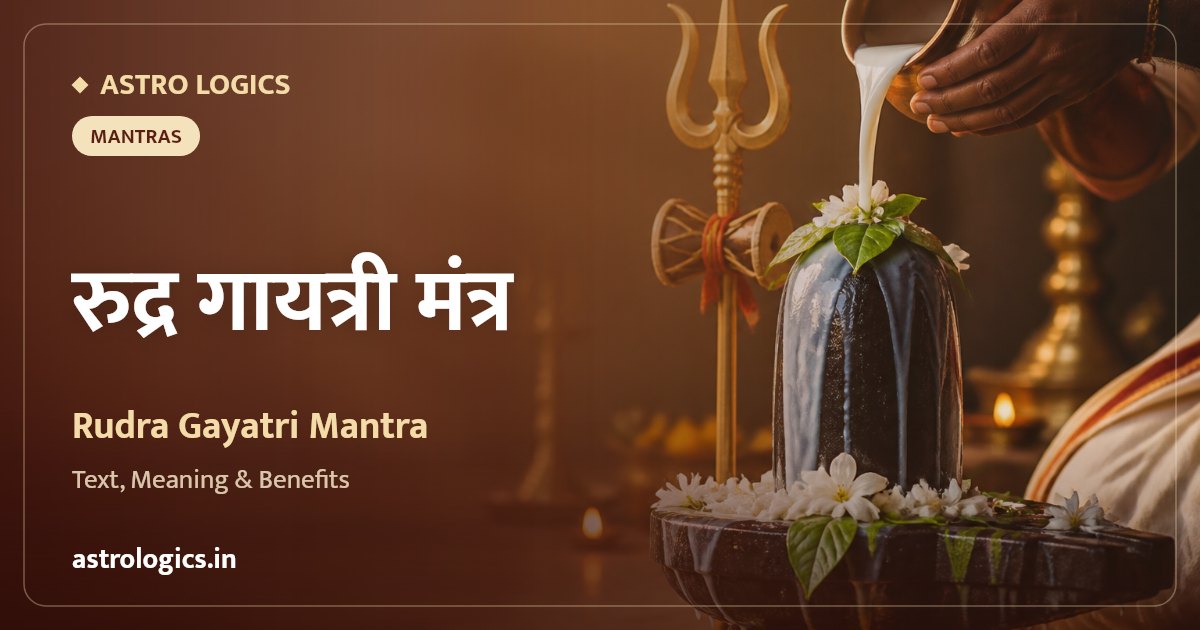
Bowing twelve times to the Ancient One: Rama's Rameshwaram prayer
The Shambhu Stuti carries an extraordinary devotional charge because of the context attributed to it in the Brahma Purana: it is said to be the prayer Rama himself offered to Shiva before his great undertaking, acknowledging that even the avatara of Vishnu bows to the ancient Purusha who is beyond all forms. Each verse opens with Namami - a word that is simultaneously grammar and gesture, a bowing of the whole self - and then unfolds a vision of Shiva as the remover of poverty, sorrow, and worldly affliction. This is Shiva in his aspect of Shambhu, the auspicious one whose very nature is the well-being of all beings.
The stotra's twelve verses map onto a complete devotional vision of Shiva's qualities, and reciting it in full is considered equivalent to a circumambulation of these qualities in the heart. In the Jyotish tradition, Shiva is deeply linked with Saturn (Shani), whose difficult transits - particularly Sade Sati and Dhaiya - are traditionally navigated through Shiva worship, fasting on Mondays, and recitation of Shiva stotras. The Shambhu Stuti, with its specific prayer for the removal of poverty and hardship, aligns naturally with Saturn's domain of discipline, endurance, and eventual liberation from material constraint. Devotees recite it on Mondays, at twilight, or during Shiva Ratri as an act of complete surrender to the ancient, ever-auspicious one.