Aditya Hridaya Stotra: Full Sanskrit Text, Meaning & Sun Benefits
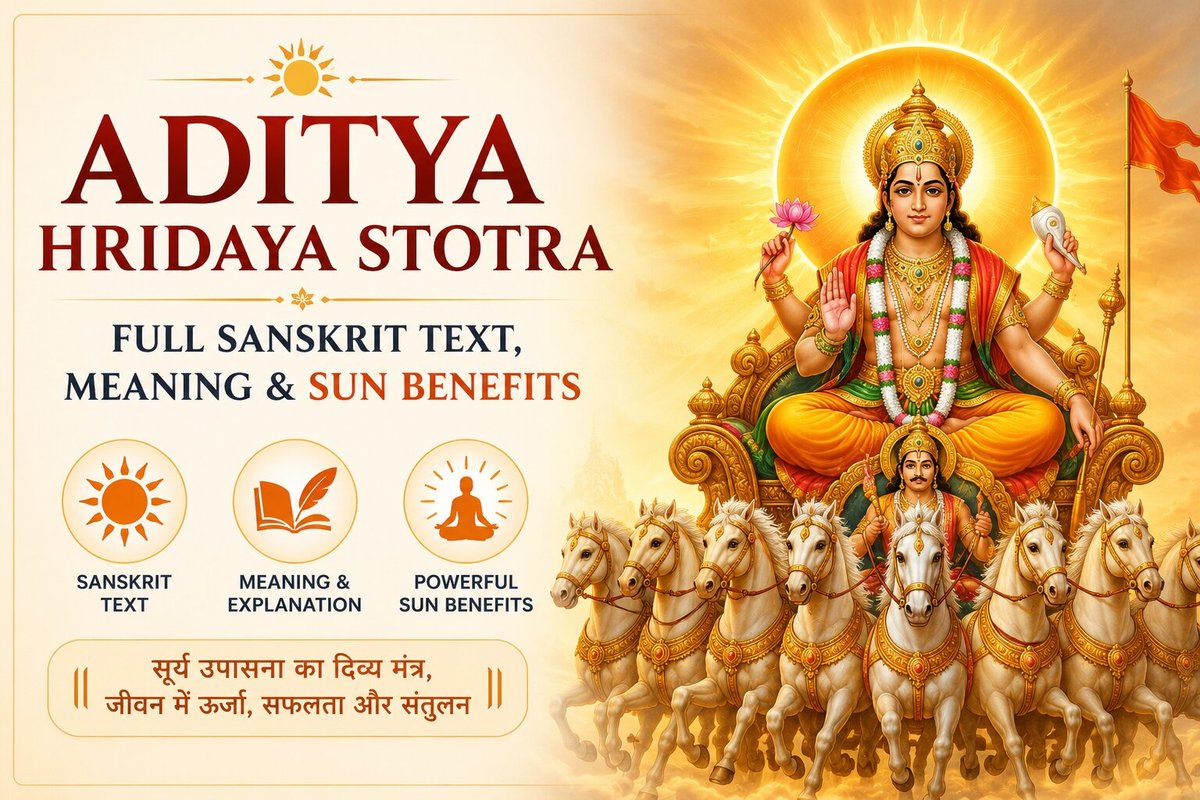
The Aditya Hridaya Stotra’s own verses call it punyam (holy), sarva-shatru-vinashanam (destroyer of all enemies) and jayavaham (bringer of victory), and promise sarva-papa-pranashanam (the destruction of all sin), chinta-shoka-prashamanam (the allaying of anxiety and grief) and ayur-vardhanam (increase of lifespan). Sage Agastya gave it to the exhausted Rama on the field of Lanka.
A battlefield gift that became a daily solar sadhana
The Aditya Hridaya Stotra holds a singular place among Vedic solar hymns because of its dramatic scriptural setting: sage Agastya approaches the exhausted Rama on the field of Lanka and transmits this luminous teaching as both a battle-blessing and a spiritual initiation. Devotees regard it not merely as praise of the visible sun but as an invocation of the inner light of consciousness - the hridaya, or heart, of the solar principle. In the Jyotish tradition, the Sun (Surya) governs vitality, self-confidence, authority, and the father; accordingly, this stotra is widely recommended as a graha remedy for those seeking to strengthen a weak or afflicted Surya in their natal chart.
The most beloved time to recite it is at sunrise, facing east, ideally on Sundays or during the Uttarayana period when the sun's energy is considered most benefic. Devotees believe that regular recitation fosters clarity of mind, inner courage, and a steady connection with one's own dharmic purpose. What makes this composition particularly distinctive is the way it weaves cosmic praise - addressing Surya by dozens of names that map his roles as giver of sight, remover of darkness, sustainer of all living things - into a moment of profound human vulnerability, reminding the listener that even the mightiest hero must sometimes receive grace from a wise elder.
Aditya Hridaya Stotra - Sanskrit Text
ततो युद्धपरिश्रान्तं समरे चिन्तया स्थितम्।
रावणं चाग्रतो दृष्ट्वा युद्धाय समुपस्थितम्।।1।।
दैवतैश्च समागम्य द्रष्टुमभ्यागतो रणम्।
उपगम्याब्रवीद् राममगस्त्यो भगवांस्तदा।।2।।
राम राम महाबाहो शृणु गुह्यं सनातनम्।
येन सर्वानरीन् वत्स समरे विजयिष्यसे।।3।।
आदित्यहृदयं पुण्यं सर्वशत्रुविनाशनम्।
जयावहं जपेन्नित्यमक्षयं परमं शिवम्।।4।।
सर्वमंगलमांगल्यं सर्वपापप्रणाशनम्।
चिन्ताशोकप्रशमनमायुर्वर्धनमुत्तमम्।।5।।
रश्मिमन्तं समुद्यन्तं देवासुरनमस्कृतम्।
पूजयस्व विवस्वन्तं भास्करं भुवनेश्वरम्।।6।।
सर्वदेवात्मको ह्येष तेजस्वी रश्मिभावनः।
एष देवासुरगणाँल्लोकान् पाति गभस्तिभिः।।7।।
एष ब्रह्मा च विष्णुश्च शिवः स्कन्दः प्रजापतिः।
महेन्द्रो धनदः कालो यमः सोमो ह्यपां पतिः।।8।।
पितरो वसवः साध्या ह्यश्विनौ मरुतो मनुः।
वायुर्वह्निः प्रजाप्राण ऋतुकर्ता प्रभाकरः।।9।।
आदित्यः सविता सूर्यः खगः पूषा गभस्तिमान्।
सुवर्णसदृशो भानुर्हिरण्यरेता दिवाकरः।।10।।
हरिदश्वः सहस्रार्चिः सप्तसप्तिर्मरीचिमान्।
तिमिरोन्मथनः शम्भुस्त्वष्टा मार्तण्डकोंऽशुमान्।।11।।
हिरण्यगर्भः शिशिरस्तपनोऽहस्करो रविः।
अग्निगर्भोऽदितेः पुत्रः शंखः शिशिरनाशनः।।12।।
व्योमनाथस्तमोभेदी ऋग्यजुःसामपारगः।
घनवृष्टिरपां मित्रो विन्ध्यवीथीप्लवंगमः।।13।।
आतपी मण्डली मृत्युः पिङ्गलः सर्वतापनः।
कविर्विश्वो महातेजा रक्तः सर्वभवोद्भवः।।14।।
नक्षत्रग्रहताराणामधिपो विश्वभावनः।
तेजसामपि तेजस्वी द्वादशात्मन् नमोऽस्तु ते।।15।।
नमः पूर्वाय गिरये पश्चिमायाद्रये नमः।
ज्योतिर्गणानां पतये दिनाधिपतये नमः।।16।।
जयाय जयभद्राय हर्यश्वाय नमो नमः।
नमो नमः सहस्रांशो आदित्याय नमो नमः।।17।।
नम उग्राय वीराय सारंगाय नमो नमः।
नमः पद्मप्रबोधाय प्रचण्डाय नमोऽस्तु ते।।18।।
ब्रह्मेशानाच्युतेशाय सूर्यायादित्यवर्चसे।
भास्वते सर्वभक्षाय रौद्राय वपुषे नमः।।19।।
तमोघ्नाय हिमघ्नाय शत्रुघ्नायामितात्मने।
कृतघ्नघ्नाय देवाय ज्योतिषां पतये नमः।।20।।
तप्तचामीकराभाय हरये विश्वकर्मणे।
नमस्तमोऽभिनिघ्नाय रुचये लोकसाक्षिणे।।21।।
नाशयत्येष वै भूतं तदेव सृजति प्रभुः।
पायत्येष तपत्येष वर्षत्येष गभस्तिभिः।।22।।
एष सुप्तेषु जागर्ति भूतेषु परिनिष्ठितः।
एष एवाग्निहोत्रं च फलं चैवाग्निहोत्रिणाम्।।23।।
वेदाश्च क्रतवश्चैव क्रतूनां फलमेव च।
यानि कृत्यानि लोकेषु सर्व एष रविः प्रभुः।।24।।
एनमापत्सु कृच्छ्रेषु कान्तारेषु भयेषु च।
कीर्तयन् पुरुषः कश्चिन्नावसीदति राघव।।25।।
पूजयस्वैनमेकाग्रो देवदेवं जगत्पतिम्।
एतत् त्रिगुणितं जप्त्वा युद्धेषु विजयिष्यसि।।26।।
अस्मिन् क्षणे महाबाहो रावणं त्वं वधिष्यसि।
एवमुक्त्वा ततोऽगस्त्यो जगाम च यथागतम्।।27।।
एतच्छ्रुत्वा महातेजा नष्टशोकोऽभवत्तदा।
धारयामास सुप्रीतो राघवः प्रयतात्मवान्।।28।।
आदित्यं प्रेक्ष्य जप्त्वा तु परं हर्षमवाप्तवान्।
त्रिराचम्य शुचिर्भूत्वा धनुरादाय वीर्यवान्।।29।।
रावणं प्रेक्ष्य हृष्टात्मा युद्धाय समुपागमत्।
सर्वयत्नेन महता वधे तस्य धृतोऽभवत्।।30।।
अथ रविरवदन्निरीक्ष्य रामं मुदितमनाः परमं प्रहृष्यमाणः।
निशिचरपतिसंक्षयं विदित्वा सुरगणमध्यगतो वचस्त्वरेति।।31।।
Transliteration (Roman/IAST)
tato yuddhapariśrāntaṁ samare cintayā sthitam |
rāvaṇaṁ cāgrato dṛṣṭvā yuddhāya samupasthitam ||1||
daivataiśca samāgamya draṣṭumabhyāgato raṇam |
upagamyābravīd rāmamagastyo bhagavāṁstadā ||2||
rāma rāma mahābāho śṛṇu guhyaṁ sanātanam |
yena sarvānarīn vatsa samare vijayiṣyase ||3||
ādityahṛdayaṁ puṇyaṁ sarvaśatruvināśanam |
jayāvahaṁ japennityamakṣayaṁ paramaṁ śivam ||4||
sarvamaṁgalamāṁgalyaṁ sarvapāpapraṇāśanam |
cintāśokapraśamanamāyurvardhanamuttamam ||5||
raśmimantaṁ samudyantaṁ devāsuranamaskṛtam |
pūjayasva vivasvantaṁ bhāskaraṁ bhuvaneśvaram ||6||
sarvadevātmako hyeṣa tejasvī raśmibhāvanaḥ |
eṣa devāsuragaṇāṁllokān pāti gabhastibhiḥ ||7||
eṣa brahmā ca viṣṇuśca śivaḥ skandaḥ prajāpatiḥ |
mahendro dhanadaḥ kālo yamaḥ somo hyapāṁ patiḥ ||8||
pitaro vasavaḥ sādhyā hyaśvinau maruto manuḥ |
vāyurvahniḥ prajāprāṇa ṛtukartā prabhākaraḥ ||9||
ādityaḥ savitā sūryaḥ khagaḥ pūṣā gabhastimān |
suvarṇasadṛśo bhānurhiraṇyaretā divākaraḥ ||10||
haridaśvaḥ sahasrārciḥ saptasaptirmarīcimān |
timironmathanaḥ śambhustvaṣṭā mārtaṇḍakoṁ'śumān ||11||
hiraṇyagarbhaḥ śiśirastapano'haskaro raviḥ |
agnigarbho'diteḥ putraḥ śaṁkhaḥ śiśiranāśanaḥ ||12||
vyomanāthastamobhedī ṛgyajuḥsāmapāragaḥ |
ghanavṛṣṭirapāṁ mitro vindhyavīthīplavaṁgamaḥ ||13||
ātapī maṇḍalī mṛtyuḥ piṅgalaḥ sarvatāpanaḥ |
kavirviśvo mahātejā raktaḥ sarvabhavodbhavaḥ ||14||
nakṣatragrahatārāṇāmadhipo viśvabhāvanaḥ |
tejasāmapi tejasvī dvādaśātman namo'stu te ||15||
namaḥ pūrvāya giraye paścimāyādraye namaḥ |
jyotirgaṇānāṁ pataye dinādhipataye namaḥ ||16||
jayāya jayabhadrāya haryaśvāya namo namaḥ |
namo namaḥ sahasrāṁśo ādityāya namo namaḥ ||17||
nama ugrāya vīrāya sāraṁgāya namo namaḥ |
namaḥ padmaprabodhāya pracaṇḍāya namo'stu te ||18||
brahmeśānācyuteśāya sūryāyādityavarcase |
bhāsvate sarvabhakṣāya raudrāya vapuṣe namaḥ ||19||
tamoghnāya himaghnāya śatrughnāyāmitātmane |
kṛtaghnaghnāya devāya jyotiṣāṁ pataye namaḥ ||20||
taptacāmīkarābhāya haraye viśvakarmaṇe |
namastamo'bhinighnāya rucaye lokasākṣiṇe ||21||
nāśayatyeṣa vai bhūtaṁ tadeva sṛjati prabhuḥ |
pāyatyeṣa tapatyeṣa varṣatyeṣa gabhastibhiḥ ||22||
eṣa supteṣu jāgarti bhūteṣu pariniṣṭhitaḥ |
eṣa evāgnihotraṁ ca phalaṁ caivāgnihotriṇām ||23||
vedāśca kratavaścaiva kratūnāṁ phalameva ca |
yāni kṛtyāni lokeṣu sarva eṣa raviḥ prabhuḥ ||24||
enamāpatsu kṛcchreṣu kāntāreṣu bhayeṣu ca |
kīrtayan puruṣaḥ kaścinnāvasīdati rāghava ||25||
pūjayasvainamekāgro devadevaṁ jagatpatim |
etat triguṇitaṁ japtvā yuddheṣu vijayiṣyasi ||26||
asmin kṣaṇe mahābāho rāvaṇaṁ tvaṁ vadhiṣyasi |
evamuktvā tato'gastyo jagāma ca yathāgatam ||27||
etacchrutvā mahātejā naṣṭaśoko'bhavattadā |
dhārayāmāsa suprīto rāghavaḥ prayatātmavān ||28||
ādityaṁ prekṣya japtvā tu paraṁ harṣamavāptavān |
trirācamya śucirbhūtvā dhanurādāya vīryavān ||29||
rāvaṇaṁ prekṣya hṛṣṭātmā yuddhāya samupāgamat |
sarvayatnena mahatā vadhe tasya dhṛto'bhavat ||30||
atha raviravadannirīkṣya rāmaṁ muditamanāḥ paramaṁ prahṛṣyamāṇaḥ |
niśicarapatisaṁkṣayaṁ viditvā suragaṇamadhyagato vacastvareti ||31||
Meaning
Exhausted and anxious on the battlefield, Rama stands facing Ravana who is poised for war. The divine sage Agastya, who has come with the gods to witness the battle, approaches and says: "O mighty-armed Rama, hear this eternal secret by which you shall conquer all foes. The Aditya Hridaya is holy, destroys all enemies, ever bestows victory, is imperishable and supremely auspicious. It is the auspiciousness of all auspicious things, destroyer of all sins, dispeller of anxiety and grief, and the best prolonger of life. Worship the rising, radiant Sun, adored by gods and demons alike, the Bhaskara who is lord of the worlds." Agastya then unfolds the Sun's universal nature: he is the soul of all gods; he is Brahma, Vishnu, Shiva, Skanda, Indra, Yama, Soma and Varuna; he is Aditya, Savita, Surya, the golden-hued Bhanu, the thousand-rayed dispeller of darkness, knower of the three Vedas, lord of the planets and stars. After a long garland of salutations to the twelve-formed Sun, Agastya assures Rama that whoever recites this hymn in distress, peril or fear never perishes. "Worship this Lord of the universe single-mindedly; recite it three times and you will triumph; in this very moment you shall slay Ravana." Rama, freed of grief, sips water thrice, takes up his bow, and the Sun-god himself, gladdened, perceiving Ravana's imminent end, urges him onward.
About this Stotra
The Aditya Hridaya Stotra appears in the Yuddha Kanda of Valmiki's Ramayana, at the climactic moment before Lord Rama's final duel with Ravana. It is therefore one of the oldest and most authoritative Sun-hymns in the Hindu tradition, framed as direct instruction from the sage Agastya to Rama. "Aditya Hridaya" means "the heart of the Sun" - the essence or innermost secret of Surya worship. Its thirty-one verses move from narrative, to the praise of the Sun as the unified form of all deities, to a long namavali of salutations, to the phala-shruti (declaration of fruits), and finally back to the battlefield where the hymn proves its power.
Significance & Spiritual Benefits
The stotra itself enumerates its blessings: it is victory-bestowing, sin-destroying, anxiety- and grief-dispelling, and life-prolonging. Devotees recite it for courage in adversity, success in undertakings, recovery of health, and protection during danger, travel and fear. Because the Sun is identified here with the entire pantheon, worshipping Aditya through this hymn is regarded as worship of the Supreme itself. Daily recitation is said to bring mental clarity, vitality, fearlessness and steady fortune, exactly as it dispelled Rama's despondency.
Astrological Relevance
Surya (the Sun) is the king of the planets (graha-raja) in Vedic astrology - the karaka of the soul (atmakaraka), vitality, health, authority, the father, government and self-confidence. The Aditya Hridaya is the foremost prescribed remedy for a weak, afflicted, debilitated or combust Sun, and during Surya Mahadasha or antardasha. It is recited to strengthen the first house (self and health), the ninth (fortune, father) and tenth (status, career, authority), and to relieve issues such as low confidence, eye and heart troubles, bone weakness, or conflicts with authority figures and the father. Pairing the recitation with the Sunday Surya Arghya (offering water to the rising Sun) at dawn amplifies its remedial effect.
How to Chant (Vidhi)
Rise before sunrise, bathe, and wear clean clothes. Face east toward the rising Sun. Offer Arghya (water with a little red sandal, vermilion or red flowers) to Surya, then sit and recite the Aditya Hridaya. The text recommends reciting it three times (etat triguṇitaṁ japtvā) for victory; daily single recitation at dawn is the common practice. Maintain inner purity and one-pointed focus on the solar disc or an image of Surya. Conclude with salutations and a prayer for strength and well-being.
Best Day & Time
Sunday (Ravivar), the Sun's own day, and sunrise are ideal. Ratha Saptami (Magha Shukla Saptami, the Sun's birthday), Makar Sankranti, and the two equinoxes are especially powerful occasions. Many devotees recite it every morning at first light throughout life as a daily solar practice.
Frequently Asked Questions
Where does the Aditya Hridaya Stotra come from?
It is found in the Yuddha Kanda of Valmiki's Ramayana, taught by sage Agastya to Lord Rama just before his final battle with Ravana.
What are its main benefits?
The hymn declares it grants victory, destroys sins and enemies, removes anxiety and grief, and prolongs life. It is also chanted to strengthen health, courage and the Sun's blessings.
How many times should it be recited?
The text recommends reciting it three times before an important challenge for victory. For daily practice, one recitation at sunrise facing east is ideal.
Frequently Asked Questions
Is the Aditya Hridaya Stotra recited for marriage?
The stotra does not mention marriage anywhere in its verses. Its own phalashruti (verses 4–5) promises something different: victory over all enemies, the destruction of all sin, the allaying of anxiety and grief, and the increase of lifespan. It is recited as a Surya remedy — to strengthen a weak or afflicted Sun, which in Jyotish governs vitality, self-confidence, authority and the father. If your question is about when you will marry, or whether a particular match is compatible, that is read from the birth chart rather than from any single hymn: see Kundli Matching or your free Janam Kundli.
What does the Aditya Hridaya Stotra itself promise?
Verses 4 and 5 describe it as punyam (holy), sarva-shatru-vinashanam (destroyer of all enemies) and jayavaham (bringer of victory), and as sarva-mangala-mangalyam (the auspiciousness of all auspicious things), sarva-papa-pranashanam (destroyer of all sin), chinta-shoka-prashamanam (allayer of anxiety and grief) and ayur-vardhanam-uttamam (the best increaser of lifespan).
When should the Aditya Hridaya Stotra be recited?
The most beloved time to recite it is at sunrise, facing east, ideally on Sundays or during the Uttarayana period, when the Sun’s energy is considered most benefic.