Om Namo Hanumate Rudravtaraya: Hanuman Protection Mantra, Meaning & Benefits
Om Namo Hanumate Rudravtaraya - Sanskrit Text
ॐ नमो हनुमते रुद्रावताराय सर्वशत्रुसंहारणाय ।
सर्वरोग हराय सर्ववशीकरणाय रामदूताय स्वाहा ॥
Transliteration (Roman/IAST)
Oṃ namo hanumate rudrāvatārāya sarva-śatru-saṃhāraṇāya |
sarva-roga harāya sarva-vaśīkaraṇāya rāma-dūtāya svāhā ||
Meaning
Om. Salutations to Hanuman, the incarnation of Rudra (Shiva), the destroyer of all enemies, the remover of every disease, the one who brings all things and beings under benevolent control, the messenger of Lord Rama - svaha (so be it).
About this Mantra
This is a compact, high-energy beeja-style Hanuman mantra that frames the deity in his fiercest and most protective aspect. Tradition holds Hanuman to be an avatara of Rudra, a portion of Shiva who took birth to serve Lord Rama. The mantra gathers four powerful epithets - destroyer of foes, healer of disease, master of every situation, and divine messenger - and seals them with the offering syllable svaha, which is used in invocations meant to be charged with intent and energy.
Significance & Spiritual Benefits
Devotees turn to this mantra when facing hostility, prolonged illness, or situations that feel beyond their control. By invoking Hanuman as Rudravatara, the chanter calls upon the unshakeable courage and burning protective force associated with Shiva, channelled through the perfect servant-devotee. Regular recitation is believed to dissolve fear, build mental fortitude, clear negative influences, and restore a sense of safety and confidence.
Astrological Relevance
In Vedic astrology Hanuman is the supreme remedial deity for an afflicted Mangal (Mars) and for the malefic pressure of Shani (Saturn). Because Hanuman is celebrated as Rudravatara, this mantra is also drawn upon to soften Shani and Ketu doshas. When Mars sits weak or combust, when Saturn transits the Moon (Sade Sati), or during a difficult Mangal mahadasha, this protective mantra is prescribed to build resilience, courage and immunity from enemies and disease.
How to Chant (Vidhi)
Bathe and sit facing east or north before an image of Hanuman. Light a lamp with sesame or mustard oil and offer red flowers and sindoor. Chant the mantra 108 times using a rudraksha or red-coral mala, keeping the breath steady and the mind on Hanuman. A 40-day (mandala) discipline strengthens the practice. Offer boondi or jaggery as prasad on completion.
Best Day & Time
Tuesday and Saturday are the most auspicious days for Hanuman worship. The pre-dawn Brahma Muhurta or dusk are ideal. Tuesdays address Mars-related troubles while Saturdays address Saturn-related ones.
Frequently Asked Questions
What does Rudravatara mean in this mantra?
It identifies Hanuman as an incarnation of Rudra, the fierce form of Lord Shiva, underscoring his immense destructive power against evil and his protective grace toward devotees.
Can this mantra be chanted for health problems?
Yes. The phrase sarva-roga-haraya (remover of all disease) makes it a traditional choice for those seeking relief from chronic illness, alongside, not instead of, proper medical care.
How many times should I chant it daily?
A round of 108 repetitions is standard. Even 11 or 21 sincere repetitions each morning and evening are beneficial when done with faith and consistency.
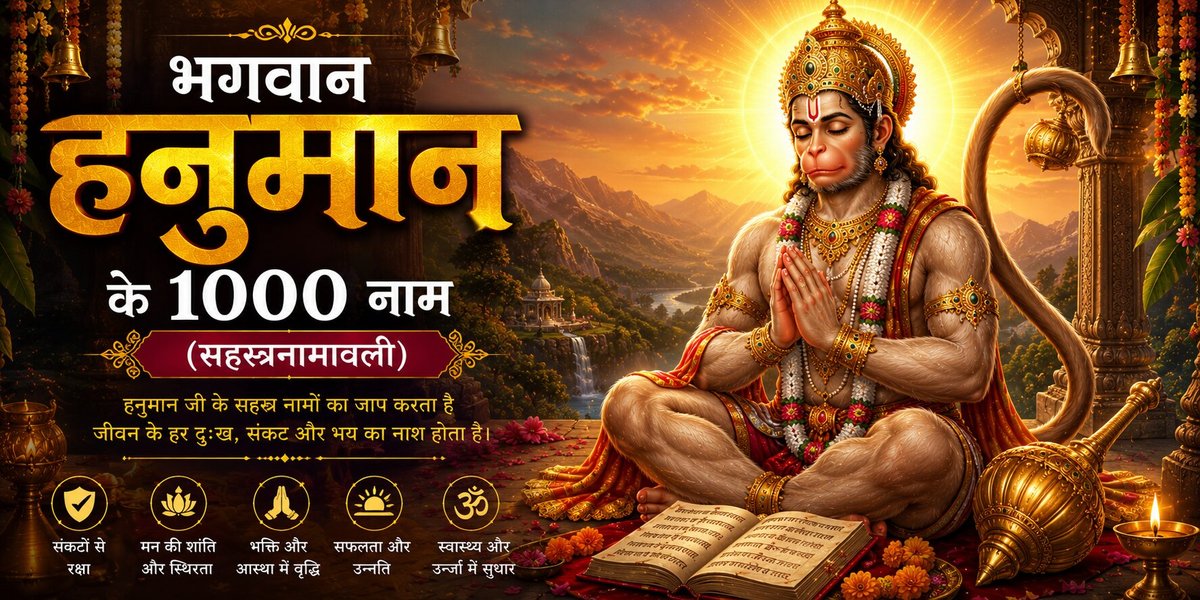
Invoking Hanuman as the Rudra-avatar: protection at its most primal
The mantra Om Namo Hanumate Rudravataraya draws directly on one of Hanuman's most theologically significant identities - that of the eleventh Rudra, the avatar of Shiva's ferocious and protective shakti dwelling in a form of pure devotion and strength. This identification is not incidental: it places Hanuman at the intersection of two of Hinduism's most powerful streams, Shaivism and Vaishnavism, making him simultaneously the servant of Rama and the very power of Rudra manifest in the world. The mantra's invocation of this dual nature is what gives it its distinctive intensity among Hanuman mantras. Where other Hanuman hymns emphasise his tenderness, humility, or wisdom, this mantra calls upon his warrior aspect - the one who subdues enemies, removes obstacles of a more fierce and urgent kind, and brings what devotees call shatru-nigraha, the control of adversarial forces.
This mantra is traditionally recited on Tuesdays and Saturdays, the days associated in Jyotish with Mars (Mangala) and Saturn (Shani) respectively - two planets whose challenging transits or dashas are particularly eased, devotees believe, through dedicated Hanuman upasana. In the Jyotish tradition, Hanuman is the presiding deity for Shani-related afflictions, and as Rudravatara he also carries the Mars quality of courage and protective force. The mantra is especially valued for those facing prolonged difficulties, situations requiring courage, or periods when other protective practices have not brought relief. Its brevity and directness make it suitable for japa - repetition as a meditative discipline - across the changing moods of daily life.