Daridrya Dahana Shiva Stotram: The Hymn That Burns Poverty
Daridrya Dahana Shiva Stotram - Sanskrit Text
विश्वेश्वराय नरकार्णवतारणाय
कर्णामृताय शशिशेखरधारणाय।
कर्पूरकान्तिधवलाय जटाधराय
दारिद्र्यदुःखदहनाय नमः शिवाय॥१॥
गौरीप्रियाय रजनीशकलाधराय
कालान्तकाय भुजगाधिपकङ्कणाय।
गङ्गाधराय गजराजविमर्दनाय
दारिद्र्यदुःखदहनाय नमः शिवाय॥२॥
भक्तिप्रियाय भवरोगभयापहाय
उग्राय दुर्गभवसागरतारणाय।
ज्योतिर्मयाय गुणनामसुनृत्यकाय
दारिद्र्यदुःखदहनाय नमः शिवाय॥३॥
चर्माम्बराय शवभस्मविलेपनाय
भालेक्षणाय मणिकुण्डलमण्डिताय।
मञ्जीरपादयुगलाय जटाधराय
दारिद्र्यदुःखदहनाय नमः शिवाय॥४॥
पञ्चाननाय फणिराजविभूषणाय
हेमांशुकाय भुवनत्रयमण्डिताय।
आनन्दभूमिवरदाय तमोमयाय
दारिद्र्यदुःखदहनाय नमः शिवाय॥५॥
भानुप्रियाय भवसागरतारणाय
कालान्तकाय कमलासनपूजिताय।
नेत्रत्रयाय शुभलक्षणलक्षिताय
दारिद्र्यदुःखदहनाय नमः शिवाय॥६॥
रामप्रियाय रघुनाथवरप्रदाय
नागप्रियाय नरकार्णवतारणाय।
पुण्येषु पुण्यभरिताय सुरार्चिताय
दारिद्र्यदुःखदहनाय नमः शिवाय॥७॥
मुक्तेश्वराय फलदाय गणेश्वराय
गीतप्रियाय वृषभेश्वरवाहनाय।
मातङ्गचर्मवसनाय महेश्वराय
दारिद्र्यदुःखदहनाय नमः शिवाय॥८॥
वसिष्ठेन कृतं स्तोत्रं सर्वरोगनिवारणम्।
सर्वसम्पत्करं शीघ्रं पुत्रपौत्रादिवर्धनम्।
त्रिसन्ध्यं यः पठेन्नित्यं स हि स्वर्गमवाप्नुयात्॥
॥ इति श्रीवसिष्ठविरचितं दारिद्र्यदहनशिवस्तोत्रं सम्पूर्णम् ॥
Transliteration (Roman/IAST)
viśveśvarāya narakārṇavatāraṇāya · karṇāmṛtāya śaśiśekharadhāraṇāya · karpūrakāntidhavalāya jaṭādharāya · dāridryaduḥkhadahanāya namaḥ śivāya (1)
(each of the eight verses ends with the refrain "dāridryaduḥkhadahanāya namaḥ śivāya" - salutations to Shiva who burns away the misery of poverty)
... phalashruti: vasiṣṭhena kṛtaṁ stotraṁ sarvaroganivāraṇam · sarvasampatkaraṁ śīghraṁ putrapautrādivardhanam.
Meaning
Each verse heaps epithets upon Shiva - Lord of the universe, ferryman across the ocean of hell, wearer of the crescent moon, white as camphor, matted-haired, beloved of Gauri, bearer of the Ganga, serpent-bangled, three-eyed, smeared with sacred ash - and closes with the powerful refrain: "Salutations to Shiva, who burns away the suffering of poverty." The closing phalashruti declares that this hymn, composed by the sage Vasishtha, cures all disease, swiftly bestows every prosperity, increases progeny, and grants heaven to whoever recites it faithfully thrice daily.
About this Stotra
The Daridrya Dahana Shiva Stotram is attributed to the great rishi Vasishtha and is among the most direct of all prayers for relief from want. Its very title means "the hymn that burns away poverty." In just eight verses it gathers a garland of Shiva's names while hammering home, line after line, the single plea to incinerate daridrya - the grinding misery of lack - and the dukha that accompanies it. It has long been recited by householders facing financial hardship and by all who seek Shiva's grace for stability and abundance.
Significance & Spiritual Benefits
The repeated refrain works like a hammer of faith, fixing the mind on Shiva as the destroyer not only of cosmic ignorance but of material distress. The phalashruti promises healing of disease, swift prosperity, growth of family, and ultimately heaven. Beyond the material, the stotra teaches that true poverty is inner - and Shiva, the supremely auspicious, fills the devotee with the wealth of contentment and grace as he consumes the fire of lack.
Astrological Relevance
Shiva is the deity of Shani (Saturn), the planet most associated with poverty, hardship, delay, and chronic struggle. A weak or afflicted Saturn, an adverse Shani Mahadasha or Sade Sati, and the dosha of sustained financial want are precisely the conditions this stotra addresses. By burning away daridrya, the hymn is among the foremost Saturn-pacifying remedies. Its blessing of prosperity also touches the second house of wealth and the eleventh of gains, and offering it on Mondays draws the cooling grace of Chandra (the Moon) that Shiva carries on his brow.
How to Chant (Vidhi)
Bathe and sit before a Shiva-linga or image. Offer bilva (bel) leaves, white flowers, and water or milk abhisheka. The phalashruti recommends recitation at the three sandhyas - dawn, noon, and dusk - so chant the eight verses with concentration, ideally thrice daily, or at least once each morning, ending with "Om Namah Shivaya."
Best Day & Time
Monday (the day of Shiva and the Moon) and Saturday (the day of Saturn) are especially powerful, as are Pradosha (the thirteenth lunar day) and Maha Shivaratri. The predawn Brahma Muhurta and the three sandhya periods are the recommended hours.
Frequently Asked Questions
What is the Daridrya Dahana Shiva Stotram for?
It is a hymn to Shiva that prays to burn away poverty and its attendant suffering, bringing prosperity, health, and increase of family.
Who composed it?
It is traditionally attributed to the sage Vasishtha, as stated in its closing phalashruti.
How often should it be recited?
The stotra itself recommends recitation thrice daily at the three sandhyas; even a single sincere recitation each morning, especially on Mondays and Saturdays, is held to be beneficial.
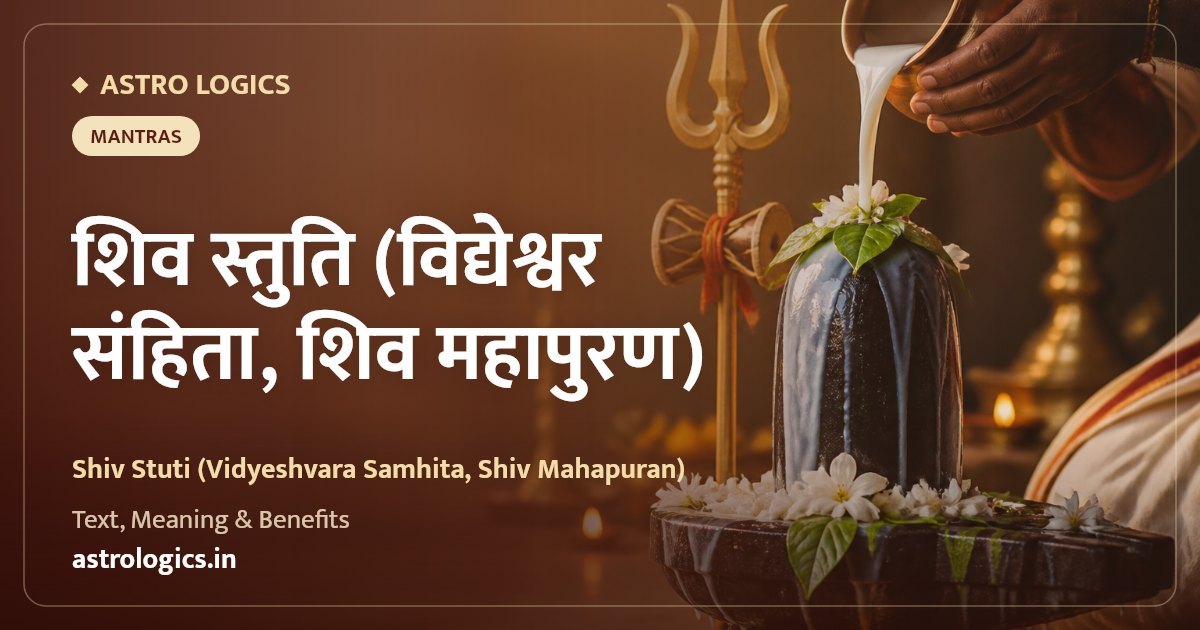
Shiva as the one who consumes misfortune itself
The Daridrya Dahana Shiva Stotram addresses Shiva in one of his most compassionate aspects: not the cosmic destroyer of worlds, but the daridrya-dahana, the one who burns away the poverty and want that weigh upon his devotees' lives. The word dahana - consuming by fire - is significant: it does not merely ask Shiva to remove poverty but to incinerate it utterly, just as Shiva's third eye reduces all obstacles to ash. The rasa here is a blend of karuna (compassion) and adbhuta (wonder), as the devotee turns to the lord who himself lives beyond all material comfort yet unfailingly responds to the sincere cry of his bhaktas. The attribution to the sage Vasishtha, a great rishi revered across traditions, lends this stotra an air of ancient authority, though as with many traditional stotras it is best held as a devotional heritage rather than a verifiable historical fact.
In the Jyotish tradition, Shiva is deeply associated with Saturn (Shani), which governs scarcity, delay, and the lessons of material limitation. Devotees traditionally recite this hymn on Saturdays, during Shani Sade Sati or Shani Mahadasha, or on Pradosh Vrat, trusting that Shiva's grace can transmute even Saturn's most austere teachings into opportunities for growth and eventual abundance. The stotra also reflects a profound Shaiva teaching: that true prosperity is not merely material, but arises from alignment with dharma and the removal of inner contraction - and Shiva, the auspicious one (Shiva means auspiciousness itself), is uniquely qualified to grant both.