Raghupati Raghav Raja Ram – Ram Dhun Lyrics, Meaning & History
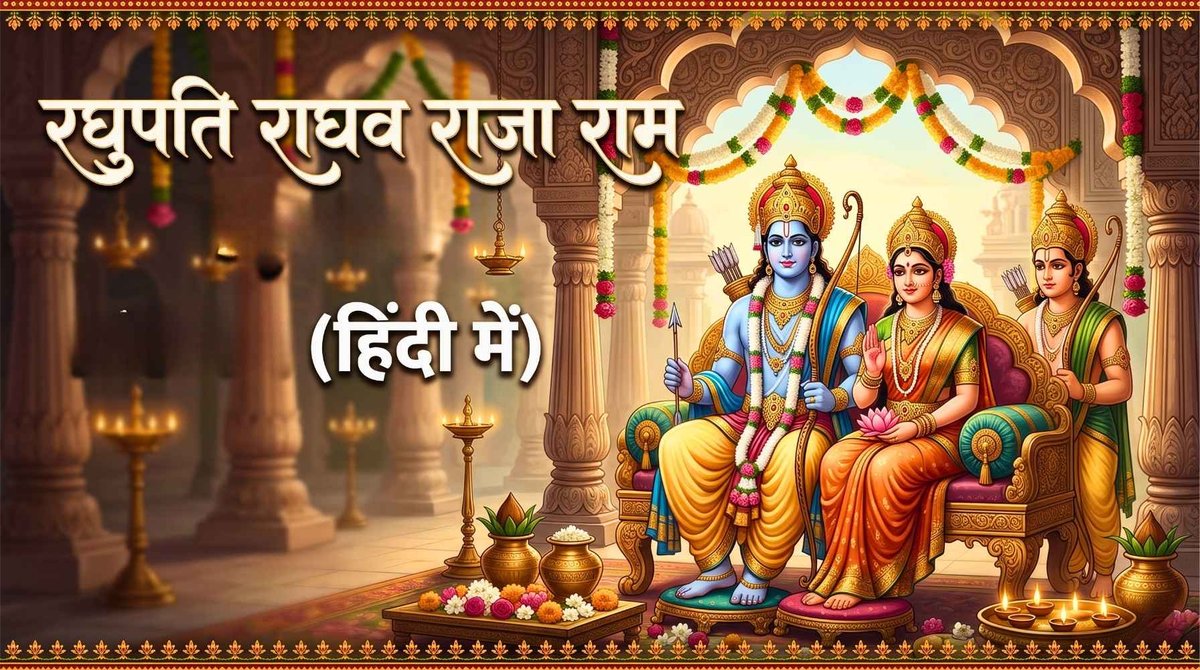
A prayer that walked the road to freedom with Gandhi
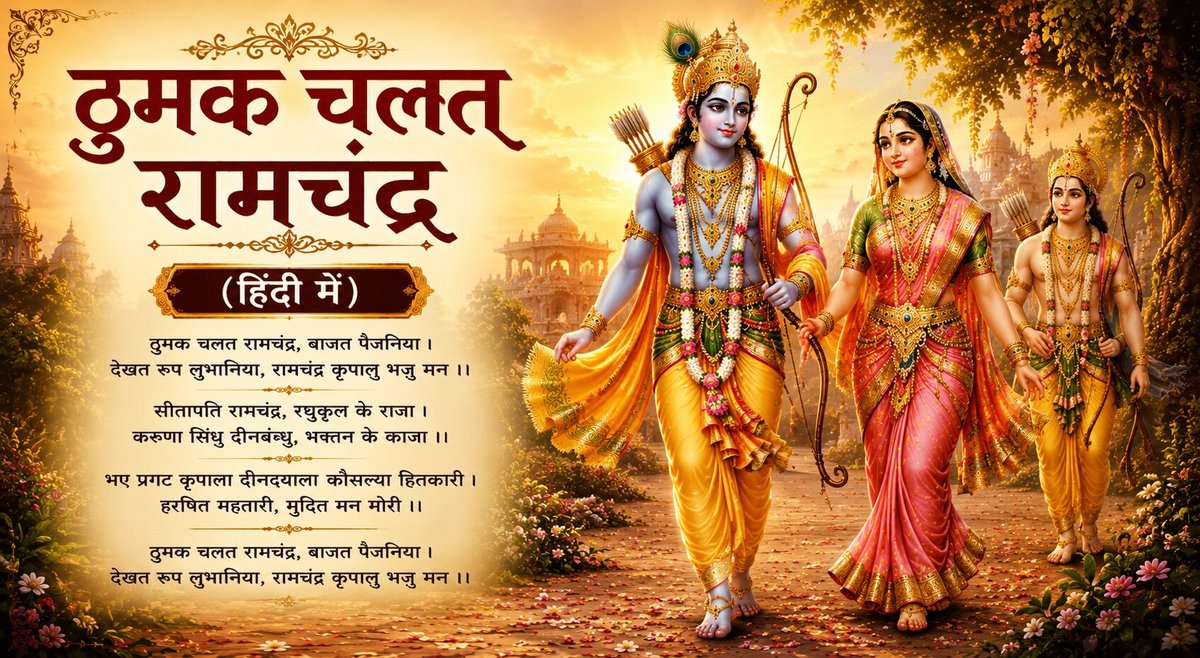
Few devotional compositions carry as layered a history as this Ram Dhun. While its roots lie in the ancient tradition of glorifying Lord Rama as the supreme ruler of the solar dynasty, this arrangement became inseparable from the Indian independence movement after Mahatma Gandhi adopted it as the spiritual heartbeat of his ashram prayers and public marches, including the Salt March of 1930. The dhun praises Rama using his most venerable Vedic names - Raghupati, Raghav - and affirms Sita and Ram as the supreme reality, drawing on shanta rasa to generate a mood of serene, all-embracing devotion. Gandhi's version added verses affirming the oneness of all divine names, though the core glorification of Rama and Sita remains the dhun's sacred anchor.
Today this Ram Dhun is sung in temples, schools, and community gatherings across India, particularly on Ram Navami, Diwali, and during Ramayan recitations. Its call-and-response structure makes it naturally suited to group kirtan, where the collective voice becomes an offering in itself. Devotees believe that singing the names of Rama with sincerity purifies the mind and dispels anxiety. In the Jyotish tradition, Rama is associated with the Sun (Surya), and the dhun's solar, kingly imagery makes it a meaningful recitation on Sundays and during Surya-related sadhanas.
Raghupati Raghav Raja Ram Lyrics (हिंदी में)
रघुपति राघव राजाराम, पतित पावन सीताराम।
रघुपति राघव राजाराम, पतित पावन सीताराम॥
सुंदर विग्रह मेघश्याम, गंगा तुलसी शालिग्राम।
रघुपति राघव राजाराम, पतित पावन सीताराम॥
भद्रगिरीश्वर सीताराम, भगतजनप्रिय सीताराम।
रघुपति राघव राजाराम, पतित पावन सीताराम॥
जानकीरमण सीताराम, जयजय राघव सीताराम।
रघुपति राघव राजाराम, पतित पावन सीताराम॥
Raghupati Raghav Raja Ram – Transliteration (English)
Raghupati Rāghav Rājārām, patit pāvan Sītārām.
Raghupati Rāghav Rājārām, patit pāvan Sītārām.
Sundar vigrah meghashyām, Gaṃgā Tulsī Shāligrām.
Raghupati Rāghav Rājārām, patit pāvan Sītārām.
Bhadragirīshvar Sītārām, bhagat-jan-priya Sītārām.
Raghupati Rāghav Rājārām, patit pāvan Sītārām.
Jānakīramaṇa Sītārām, jayjay Rāghav Sītārām.
Raghupati Rāghav Rājārām, patit pāvan Sītārām.
Meaning & Significance
These four verses, each cascading into the anchor refrain Raghupati Rāghav Rājārām, patit pāvan Sītārām, are a compressed garland of Rama's divine attributes. The refrain itself declares three identities simultaneously: Raghupati (lord of the Raghu dynasty), Rāghav (scion of Raghu), Rājārām (Rama the king) - and then proclaims that this same sovereign is Patit Pāvan (the purifier of the fallen) and Sītārām (inseparably one with Sita). The first verse describes Rama's beautiful form as meghashyāma - the colour of rain clouds, a classical epithet indicating both dark beauty and the life-giving nature of the divine. The association with Ganga (sacred river), Tulsi (the holy basil plant) and Shaligram (the black river-stone form of Vishnu) places Rama at the centre of the whole devotional cosmos. The second verse identifies Rama with Bhadrachalam - a sacred pilgrimage town in Andhra Pradesh where a renowned Rama temple stands - marking his presence in the south as well as the north. Jānakīramaṇa in the final verse celebrates Rama as the beloved husband of Janaki (Sita), returning the hymn to the relational core of Ram devotion: the eternal union of Rama and Sita.
About the Composer
The Ram Dhun is traditionally traced to the Nāma Rāmāyaṇam, a Sanskrit devotional composition attributed to Lakshmanacharya that narrates the Ramayana through the chanting of Rama's names across 108 verses. The specific melody and form used as the Ram Dhun was set by Vishnu Digambar Paluskar, the great Hindustani vocalist and music reformer, in Rāga Mishira Gāra in the late 19th or early 20th century. Mahatma Gandhi adopted this composition as the centrepiece of the morning prayer at his Sabarmati Ashram, and from there it travelled to every corner of the freedom movement and became one of the most recognisable devotional melodies in India.
About Ram
Lord Rama, the seventh avatāra of Vishnu, represents the apex of dharmic human aspiration. Born in the Ikshvaku dynasty of Ayodhya, he is the faithful son who accepts forest exile without complaint, the devoted husband who traverses an ocean for Sita, the just king whose governance became the gold standard of righteous rule - Rāma Rājya. The epithet Patit Pāvan - purifier of the fallen - is one of the most comforting in the entire devotional lexicon, assuring every seeker, however burdened by past error, that Rama's grace is available without discrimination. This democratic spirituality, reflected in both the Ram Dhun and Narsinh Mehta's Vaishnav Jan To, animated Gandhi's vision of devotion as a force for social and moral transformation.
Spiritual Significance & Benefits
- Chanting Raghupati Raghav Raja Ram as a kirtan or japa is said to invoke Rama's purifying grace, which the text itself calls upon in the phrase patit pāvan.
- The simple, four-beat rhythm makes this dhun accessible to practitioners of every age and musical background, enabling whole communities to enter a shared meditative state.
- The condensed theological content - Rama as cosmic sovereign, beloved of Sita, dweller in holy places - provides a complete devotional orientation in just a few lines.
- Repetitive singing of the Ram Dhun in a group (kirtan) is regarded as a powerful practice for cultivating communal harmony and dissolving individual ego into collective devotion.
- The meghashyāma imagery is used in visualization practice: fixing the mind on Rama's rain-cloud form while chanting purifies mental turbulence just as rain cleanses the atmosphere.
When & How It Is Sung
The Ram Dhun is among the most versatile of all bhajans. It is sung at the opening and closing of morning prayer gatherings, at Ram Katha recitations, at Ram Navami celebrations, in kirtan sessions and as a processional chant during religious processions. Its four-beat pulse lends itself equally to a slow, meditative pace with harmonium and tabla, or to an energetic call-and-response kirtan. In Gandhi's ashram tradition, it was sung as the first item of morning prayer, setting the ethical and devotional tone for the day. The refrain Raghupati Rāghav Rājārām, pounded rhythmically, creates a nāda-based meditation that calms the nervous system and centres the practitioner's awareness in the name of Rama.
Frequently Asked Questions
What is the Nāma Rāmāyaṇam and is Raghupati Raghav part of it?
The Nāma Rāmāyaṇam is a Sanskrit devotional composition that condenses the Ramayana into 108 verses structured around the chanting of Rama's names. It is attributed to Lakshmanacharya, though the precise identity of this author remains a matter of scholarly discussion. The Ram Dhun's verses are drawn from, or aligned with, this tradition of name-based Ramayana recitation. The melody and the specific arrangement used as a bhajan was popularised by Vishnu Digambar Paluskar in the late 19th century.
Did Gandhi change the original lyrics?
Gandhi used the traditional core of the Ram Dhun and added verses reflecting his values of interfaith harmony. His version introduced the line Ishvar Allah tero nām - the names Ishvara and Allah both belong to the one God - alongside the traditional Rama-Sita verses. This addition was Gandhi's personal theological contribution and is not part of the classical Nāma Rāmāyaṇam tradition. Devotees today sing either the traditional text, Gandhi's extended version, or both, depending on the context and their own tradition.
What does the name Raghupati mean?
Raghupati is a compound Sanskrit name: Raghu refers to the Raghu dynasty, the solar lineage of Ayodhya to which Rama belongs; pati means lord, master, or sovereign. Together, Raghupati means "the lord of the Raghu dynasty." The name Rāghav, also used in the first line, means "descendant of Raghu." Both names identify Rama through his royal and ancestral lineage, underscoring that the cosmic preserver Vishnu chose to manifest within a specific human dynasty, making the divine accessible through historical and familial continuity.