Shri Brihaspati Dev Ki Aarti – Om Jai Brihaspati Deva: Lyrics & Benefits

Shri Brihaspati Dev Ki Aarti Lyrics (हिंदी में)
जय बृहस्पति देवा, ऊँ जय बृहस्पति देवा।
छिन छिन भोग लगाऊँ, कदली फल मेवा॥
ऊँ जय बृहस्पति देवा॥
तुम पूरण परमात्मा, तुम अन्तर्यामी।
जगतपिता जगदीश्वर, तुम सबके स्वामी॥
ऊँ जय बृहस्पति देवा॥
चरणामृत निज निर्मल, सब पातक हर्ता।
सकल मनोरथ दायक, कृपा करो भर्ता॥
ऊँ जय बृहस्पति देवा॥
तन, मन, धन अर्पण कर, जो जन शरण पड़े।
प्रभु प्रकट तब होकर, आकर द्वार खड़े॥
ऊँ जय बृहस्पति देवा॥
दीनदयाल दयानिधि, भक्तन हितकारी।
पाप दोष सब हर्ता, भव बन्धन हारी॥
ऊँ जय बृहस्पति देवा॥
सकल मनोरथ दायक, सब संशय तारो।
विषय विकार मिटाओ, सन्तन सुखकारी॥
ऊँ जय बृहस्पति देवा॥
जो कोई आरती तेरी प्रेम सहित गावे।
जेष्टानन्द बन्द सो निश्चय पावे॥
ऊँ जय बृहस्पति देवा॥
सब बोलो विष्णु भगवान की जय।
बोलो बृहस्पति देव भगवान की जय॥
Shri Brihaspati Dev Ki Aarti – Transliteration (English)
Jai Brihaspati Deva, Om Jai Brihaspati Deva
Chhin chhin bhog lagaaoon, kadali phal meva
Om Jai Brihaspati Deva
Tum pooran Paramatma, tum Antaryami
Jagatpita Jagdishwar, tum sabke Swami
Om Jai Brihaspati Deva
Charanamrit nij nirmal, sab patak harta
Sakal manorath daayak, kripa karo bharta
Om Jai Brihaspati Deva
Tan man dhan arpan kar, jo jan sharan pade
Prabhu prakat tab hokar, aakar dwaar khade
Om Jai Brihaspati Deva
Deendayal Dayanidhi, bhaktan hitkari
Paap dosh sab harta, bhav bandhan haari
Om Jai Brihaspati Deva
Sakal manorath daayak, sab sanshay taaro
Vishay vikaar mitaao, santan sukhkaari
Om Jai Brihaspati Deva
Jo koi aarti teri prem sahit gaave
Jeshthanand band so nishchay paave
Om Jai Brihaspati Deva
Sab bolo Vishnu Bhagwan ki jai
Bolo Brihaspati Dev Bhagwan ki jai
Meaning & Significance
The Brihaspati Dev Ki Aarti is the central devotional composition for Thursday (Brihaspati Vaar) worship, sung to honour the divine Guru - the cosmic teacher who presides over wisdom, dharma, spiritual learning, and the grace of the planet Jupiter. The aarti opens with the offering of banana and other fruits (kadali phal meva), which are Brihaspati's traditional prasad, and immediately establishes the theological depth of the hymn: Brihaspati is addressed as Pooran Paramatma (the complete Supreme Soul) and Antaryami (the inner witness of all hearts), elevating him far beyond a mere planetary deity into an aspect of the Absolute itself.
The middle verses trace the devotee's complete surrender - offering body, mind, and wealth (tan, man, dhan) - with the beautiful promise that the moment such surrender is wholehearted, the Lord himself appears at the devotee's door. The aarti then prays for liberation from the cycle of birth and rebirth (bhav bandhan) and the dissolution of all sensory entanglements (vishay vikaar), revealing a contemplative, moksha-oriented dimension beneath the planetary propitiation. The closing verse promises that whoever sings this aarti with sincere love will receive the highest fulfilment - a benediction consistent across nearly all traditional aarti compositions.
About Brihaspati Dev (Guru / Jupiter)
Brihaspati, known as Devguru (teacher of the gods), is the preceptor of the divine assembly in Hindu cosmology. He is the lord of knowledge, dharma, philosophy, and eloquence, and his worship is intimately linked with Jupiter (Guru Graha), the most benevolent of the nine planets (Navagrahas) in Vedic astrology. A well-placed Jupiter in the birth chart indicates wisdom, good fortune, spiritual inclination, generous teachers, and abundant blessings; an afflicted Jupiter may cause obstacles in education, finance, children, and spiritual progress - all of which are considered remediable through sincere Brihaspati worship.
Brihaspati is depicted as a golden-complexioned elder holding a staff and a rosary, seated on a golden throne - symbols of wisdom, righteousness, and the power of sacred speech. He is the author of the Brihaspati Smriti and is celebrated in the Vedas as the purohita (chief priest) of Indra's heaven.
Benefits of Reciting the Shri Brihaspati Dev Ki Aarti
- Propitiates the planet Jupiter, whose grace is associated with wisdom, prosperity, good children, higher education, and spiritual advancement.
- Regular Thursday recitation with a Brihaspati vrat (fast) is a classical remedy for a weak or afflicted Jupiter in the natal chart.
- The aarti's prayer to remove paap (accumulated negative karma) and bhav bandhan (worldly bondage) supports both material and spiritual liberation.
- Devotees seeking success in teaching, law, philosophy, or any wisdom-related field invoke Brihaspati's grace through this aarti.
- The offering of banana (kadali) and yellow foods on Thursdays, accompanied by this aarti, is considered one of the simplest and most effective Jupiter upayas.
- Reciting the aarti builds faith (shraddha) and removes doubt (sanshay), two qualities specifically mentioned within the text itself.
How to Perform the Aarti (Pooja Vidhi)
- On Thursday morning, observe a fast or eat only yellow-coloured sattvic food - yellow is Brihaspati's colour, associated with gold and wisdom.
- Prepare the puja thali with yellow flowers (marigold or champa), a ghee lamp, incense, yellow cloth, and offerings of banana, chana dal, and turmeric.
- Place a Brihaspati yantra or an image of the deity, or worship before a peepal tree (sacred to Brihaspati and Jupiter).
- Recite the Brihaspati Katha (Thursday vrat story) before the aarti if observing the full vrat.
- Light the ghee lamp, ring the bell, and sing all seven verses of the aarti with steady devotion.
- Distribute yellow prasad (chana dal, banana, or yellow laddoo) and donate yellow items to a priest or the needy as part of the Thursday ritual.
Best Day & Time to Recite
Thursday (Brihaspati Vaar / Guruvar) is the designated day for this aarti, and observing the full Brihaspati vrat - fasting, wearing yellow, donating yellow items, and reciting this aarti - on all Thursdays of the Margashirsha month (November–December) is considered especially powerful. The Pushya nakshatra (lunar mansion ruled by Brihaspati) falling on a Thursday is considered a rare and highly auspicious confluence. Guru Purnima - the full moon of the month of Ashadha, celebrated as the day of the Guru - is the most important annual occasion for honouring Brihaspati with this aarti and seeking a teacher's blessings.
Frequently Asked Questions
What is the astrological significance of Brihaspati worship for Guru Dosha?
Guru Dosha refers to the weakening or affliction of Jupiter in a person's natal chart, which can manifest as delays in marriage, difficulties with children, obstacles in education, lack of spiritual direction, and financial instability. Performing the Brihaspati vrat on Thursdays - which includes reciting this aarti, offering yellow flowers and banana, and donating to teachers or Brahmins - is one of the most widely prescribed remedies in Vedic astrology for strengthening Jupiter's influence.
Can women observe the Brihaspati vrat and recite this aarti?
Yes. Women widely observe the Brihaspati Vaar Vrat, particularly those seeking blessings for marriage, happy family life, and the well-being of children. The vrat includes fasting, wearing yellow, and reciting this aarti. There is no restriction based on gender; the tradition encourages all sincere devotees to invoke Guru's grace.
What is the difference between Brihaspati Dev and Guru Graha?
Brihaspati Dev is the divine personality - the celestial teacher, the Devguru - while Guru Graha is the planet Jupiter as understood in Vedic astrology. In Hindu cosmology, the two are considered aspects of the same divine principle: Brihaspati rules over the planet Jupiter, and propitiating the deity directly affects the planet's influence in the native's chart. Worshipping Brihaspati Dev is thus simultaneously a devotional act and an astrological remedy.

Thursday's teacher: celebrating the grace of Jupiter
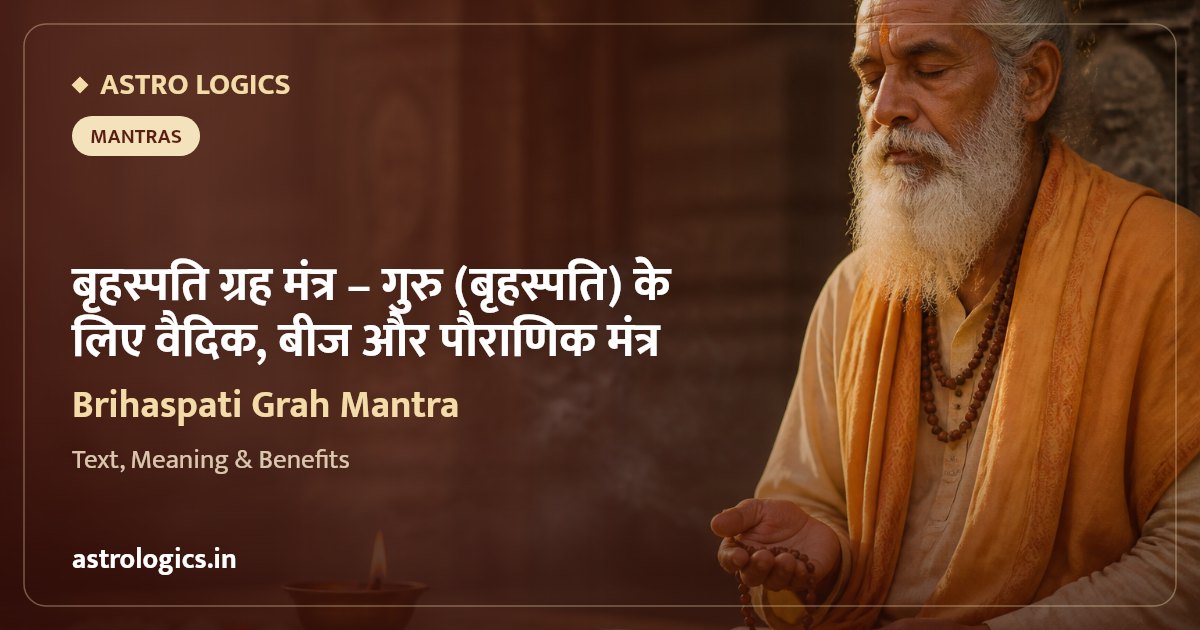
The Om Jai Brihaspati Deva aarti is the devotional heart of Thursday worship, dedicated to Brihaspati - the Guru of the gods, the celestial preceptor whose Sanskrit name literally means lord of prayer or lord of the vast. In the Jyotish tradition, Brihaspati (Jupiter) governs wisdom, dharma, children, higher learning, prosperity, and the blessings that flow from righteous living. His day, Guruvaar, is traditionally observed with a yellow-cloth puja, the lighting of ghee lamps, offerings of yellow flowers and chickpea preparations, and the singing of this aarti - a practice especially dear to students, teachers, newly-wed couples, and those seeking clarity about their life's purpose.
What gives this particular aarti its warm pedagogical flavour is the way it addresses Brihaspati not only as a planetary lord but as a genuine guru - a guide who illuminates the path rather than merely bestowing material gifts. Devotees believe that Thursday puja performed with sincerity over time helps strengthen Jupiter's benefic influence in the natal chart, bringing with it a gradual deepening of faith, improved judgment, and openings in areas related to study, teaching, and honest livelihood. The aarti reminds the worshipper that knowledge and wealth are not separate domains in the Vedic worldview: when Brihaspati is pleased, both the inner richness of wisdom and the outer abundance of life are said to flourish together.