Sri Durga Shodashanama Stotram: Sixteen Names of the Goddess
Sri Durga Shodashanama Stotram - Sanskrit Text
॥ श्रीदुर्गा षोडशनामस्तोत्रम् ॥
सर्वाख्यानं श्रुतं ब्रह्मन्नतीव परमाद्भुतम् ।
अधुना श्रोतुमिच्छामि दुर्गोपाख्यानमुत्तमम् ॥१॥
दुर्गा नारायणीशाना विष्णुमाया शिवा सती ।
नित्या सत्या भगवती शर्वाणी सर्वमङ्गला ॥२॥
अम्बिका वैष्णवी गौरी पार्वती च सनातनी ।
नामानि कौथुमोक्तानि सर्वेषां शुभदानि च ॥३॥
अर्थं षोडशनाम्नां च सर्वेषामीप्सितं वरम् ।
ब्रूहि वेदविदां श्रेष्ठ वेदोक्तं सर्वसम्मतम् ॥४॥
॥ इति श्रीब्रह्मवैवर्ते महापुराणे प्रकृतिखण्डे सप्तपञ्चाशत्तमोऽध्याये श्रीदुर्गाषोडशनामस्तोत्रं सम्पूर्णम् ॥
Transliteration (Roman/IAST)
sarvākhyānaṁ śrutaṁ brahman atīva paramādbhutam ।
adhunā śrotum icchāmi durgopākhyānam uttamam ॥1॥
durgā nārāyaṇī īśānā viṣṇumāyā śivā satī ।
nityā satyā bhagavatī śarvāṇī sarvamaṅgalā ॥2॥
ambikā vaiṣṇavī gaurī pārvatī ca sanātanī ।
nāmāni kauthumoktāni sarveṣāṁ śubhadāni ca ॥3॥
arthaṁ ṣoḍaśa-nāmnāṁ ca sarveṣām īpsitaṁ varam ।
brūhi veda-vidāṁ śreṣṭha vedoktaṁ sarva-sammatam ॥4॥
Meaning
The seeker says: "O Brahman, I have heard the most wonderful account; now I wish to hear the supreme story of Durga." The Lord then names the Goddess in her sixteen aspects - Durga, Narayani, Ishana, Vishnumaya, Shiva, Sati, Nitya, Satya, Bhagavati, Sharvani, Sarvamangala (the all-auspicious), Ambika, Vaishnavi, Gauri, Parvati and Sanatani (the eternal). These names, declared in the tradition, bestow auspiciousness on all. The seeker then requests the meaning of the sixteen names - the cherished boon of all - as taught in the Vedas and accepted by the knowers of the Veda. Each name reveals a facet of the one Divine Mother: protector, sustainer, sovereign, world-illusion, the gracious one, the chaste, the ever-existent, the truth, the radiant queen, the bringer of all good fortune, the mother, the devotee of Vishnu, the fair goddess, the daughter of the mountain, and the eternal one.
About this Stotra
The Sri Durga Shodashanama Stotram is a short hymn enshrining the sixteen principal names of the Goddess. It is preserved in the Prakriti Khanda of the Brahmavaivarta Purana, where it appears as part of a dialogue revealing the glory and meanings of Durga's names. Although brief, it is treasured precisely because each of the sixteen names is a complete meditation in itself, summarising the Mother's roles as creatrix, protectress and liberator.
Significance & Spiritual Benefits
Reciting the sixteen names is held to be especially auspicious ("śubhadāni") and capable of granting the devotee's cherished wishes. The stotra is valued for removing difficulties - the very name Durga means "she who removes distress and is hard to assail" - and for invoking the Mother's protection in times of fear, illness or obstacle. Daily recitation is believed to cultivate fearlessness, prosperity and steadiness of mind, and is a favourite during Navratri worship.
Astrological Relevance
Goddess Durga, as the supreme Shakti, is the presiding power behind the energising and protective planets, and her worship is a classic remedy for the Moon (mind and emotional stability) and for malefic influences of Rahu, Ketu and Mars. Those facing Mangal dosha, Saturn's Sade Sati, or affliction from shadowy planets are advised to invoke Durga for shielding grace. The name Sarvamangala is invoked for all-round auspiciousness, while Gauri and Parvati are linked to marital harmony and Venus-related blessings. Chanting the sixteen names is a recommended upaya for protection, courage and the dissolving of obstacles in the horoscope.
How to Chant (Vidhi)
Bathe and sit facing east or north before an image of Durga. Light a lamp (preferably with ghee) and offer red flowers, kumkum and a little water. Invoke the Goddess, then recite the names with devotion, ideally meditating on each of the sixteen as you utter it. Recite once daily, or in rounds of nine during Navratri. Close by offering the recitation at the Mother's feet and praying for protection and well-being.
Best Day & Time
Friday and Tuesday are traditionally devoted to the Goddess, and the nine nights of Navratri are the most powerful period. Early morning or dusk (sandhya) are the preferred times of day.
Frequently Asked Questions
What does Shodashanama mean?
Shodasha means sixteen and nama means name; the stotra enshrines the sixteen sacred names of Goddess Durga.
Where is this stotra found?
It is preserved in the Prakriti Khanda of the Brahmavaivarta Purana, within a dialogue that reveals the meaning of the Goddess's names.
What benefits does it grant?
The text itself calls the names auspicious and wish-granting; devotees recite it for protection, removal of obstacles, courage and fulfilment of sincere desires.
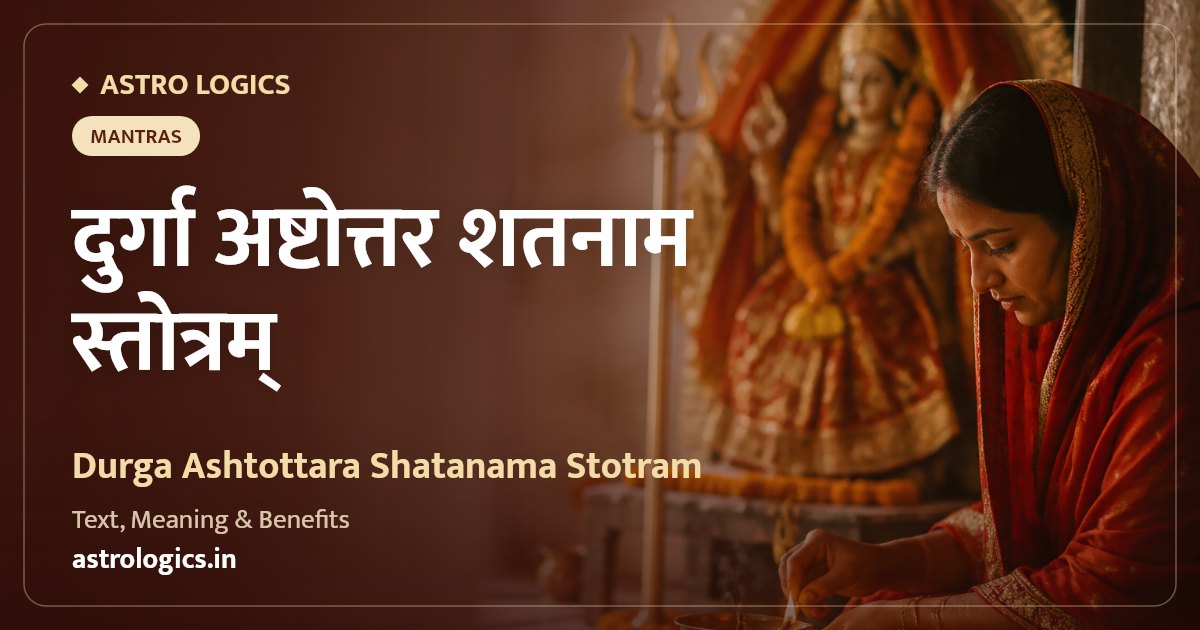


Sixteen names, one invincible Goddess
The Sri Durga Shodashanama Stotram, drawn from the Brahmavaivarta Purana, works through the distinctive spiritual logic of the namavali: that the goddess is not a distant deity but a multiplicity of powers whose names, when spoken with awareness, bring those very powers into the life of the devotee. Each of the sixteen names - from Durga, who removes what is difficult, to Sanatani, the eternal - describes a different dimension of the Divine Mother's nature. Some names emphasise her fierce protective energy, others her cosmic identity as the consort of Vishnu and Shiva, and still others her role as the universal auspiciousness that holds creation together. Taken together they offer a complete portrait of the Goddess as both transcendent and intimately present.
Devotees recite this stotram especially during the nine nights of Navratri, on Fridays associated with Devi, and on ashtami and navami tithis. It is also offered at the start of new undertakings and in households that maintain a regular Devi puja. In the Jyotish tradition, Durga's grace is sought when Mars or Rahu create disruption or conflict in the horoscope, and this stotram's breadth - encompassing the goddess's warrior, maternal, and cosmic aspects - makes it a versatile devotional recourse. Its brevity gives it a quality that devotees describe as complete without being elaborate.