Bajrang Baan – Tulsidas Lyrics, Meaning & Spiritual Importance
Bajrang Baan Lyrics (हिंदी में)
दोहा (Doha):
निश्चय प्रेम प्रतीति ते, विनय करैं सनमान।
तेहि के कारज सकल शुभ, सिद्ध करैं हनुमान॥
चौपाई (Chaupāī):
जय हनुमंत संत हितकारी। सुन लीजै प्रभु अरज हमारी॥
जन के काज विलंब न कीजै। आतुर दौरि महा सुख दीजै॥
जैसे कूदि सिंधु महि पारा। सुरसा बदन पैठि बिस्तारा॥
आगे जाय लंकिनी रोका। मारेहु लात गई सुर लोका॥
जाय विभीषण को सुख दीन्हा। सीता निरखि परम पद लीन्हा॥
बाग उजारि सिंधु मँह बोरा। अति आतुर जमकातर तोरा॥
अक्षय कुमार मारि संहारा। लूम लपेटि लंक जारि जारा॥
लाह समान लंक जरि गई। जय जय धुनि सुरपुर नभ भई॥
अब विलंब केहि कारण स्वामी। कृपा करहु उर अंतरयामी॥
जय जय लखन प्राण के दाता। आतुर ह्वै दुख करहु निपाता॥
जय गिरधर जय जय सुखसागर। सुर समूह समरथ भटनागर॥
ॐ हनु हनु हनु हनुमंत हठीले। बैरिहि मारु बज्र की कीले॥
ॐ ह्नीं ह्नीं ह्नीं हनुमंत कपीसा। ॐ हुं हुं हुं हनु अरि उर सीसा॥
सत्य होहु हरि शपथ पाय के। रामदूत धरु मारु धाय के॥
जय जय जय हनुमंत अगाधा। दुख पावत जन केहि अपराधा॥
पूजा जप तप नेम अचारा। नहिं जानत कछु दास तुम्हारा॥
वन उपवन मग गिरि गृह माहीं। तुम्हरे बल हम डरपत नाहीं॥
पाँय परौं कर जोरि मनावौं। यहि अवसर अब केहि गोहरावौं॥
जय अंजनि कुमार बलवंता। शंकरसुवन वीर हनुमंता॥
बदन कराल काल कुल घालू। राम सहाय सदा प्रतिपालू॥
भूत प्रेत पिशाच निशाचर। अग्नि बेताल काल मारी मर॥
इन्हें मारु तोहि शपथ राम की। राखु नाथ मरजाद नाम की॥
जनकसुता हरि दास कहावौ। ताकी शपथ विलंब न लावौ॥
जय जय जय धुनि होत अकाशा। सुमिरत होय दुसह दुख नाशा॥
चरण शरण कर जोरि मनावौं। यहि अवसर अब केहि गोहरावौं॥
उठु उठु चलु तोहि राम दुहाई। पाँय परौं कर जोरि मनाई॥
ॐ चं चं चं चं चपल चलंता। ॐ हनु हनु हनु हनु हनुमंता॥
ॐ हं हं हाँक देत कपि चंचल। ॐ सं सं सहमि पराने खल दल॥
अपने जन को तुरत उबारो। सुमिरत होय आनंद हमारो॥
यह बजरंग बाण जेहि मारे। ताहि कहो फिर कौन उबारे॥
पाठ करै बजरंग बाण की। हनुमत रक्षा करैं प्राण की॥
दोहा (Closing Doha):
यह बजरंग बाण जो जापैं। तिनके काज सकल हनु थापैं॥
सत्रु नाश करि जय जय धुनि। भजु हनुमंत महाबलनाम पुनि॥
Bajrang Baan – Transliteration (English)
Opening Doha:
Nishchay prem pratīti te, vinay karaiṃ sanmān.
Tehi ke kāraj sakal shubh, siddh karaiṃ Hanumān.
Chaupāī (selected verses):
Jay Hanumant sant hitakārī. Sun lījai prabhu araj hamārī.
Jan ke kāj vilamb na kījai. Ātur dauri mahā sukh dījai.
Jaise kūdi sindhu mahi pārā. Sursā badan paiṭhi vistārā.
Āge jāy Lankini rokā. Mārehu lāt gaī sur lokā.
Jāy Vibhīṣhaṇ ko sukh dīnhā. Sītā nirakhi param pad līnhā.
Bāg ujāri sindhu maṃh borā. Ati ātur jamkātar torā.
Akṣhay kumār māri saṃhārā. Lūm lapeṭi Lank jāri jārā.
Lāh samān Lank jari gaī. Jay jay dhuni surpur nabh bhaī.
Oṃ hanu hanu hanu Hanumant haṭhīle. Bairahi māru bajra kī kīle.
Oṃ hrīṃ hrīṃ hrīṃ Hanumant kapīsā. Oṃ huṃ huṃ huṃ hanu ari ur sīsā.
Paāṭh karai bajrang bāṇ kī. Hanumat rakṣhā karaiṃ prāṇ kī.
Closing Doha:
Yah bajrang bāṇ jo jāpaiṃ. Tinhke kāj sakal hanu thāpaiṃ.
Satru nāsh kari jay jay dhuni. Bhaju Hanumant mahābal nām puni.
Meaning & Significance
Bajrang Baan - literally "arrow of Bajrang" (Bajrang being one of Hanuman's names, meaning diamond-bodied) - is not a gentle praise hymn but a concentrated invocation of Hanuman's protective power in moments of dire need. The opening doha establishes the condition for its efficacy: genuine love, firm faith, and humble reverence. The chaupāīs then recount a series of Hanuman's legendary feats from the Ramayana - leaping the ocean, entering Surasa's mouth, slaying Lankini, bringing news to Vibhishana, locating Sita, destroying Ashoka Vana, killing Akshay Kumar, burning Lanka - and use each episode as a testimony that the same power is available to the devotee in the present moment of distress. Particularly striking is the "shapath" device: the devotee invokes the oath of Rama, Rama's messenger status, and even the name of Sita - Janakasutā harī dāsa kahāvo - compelling Hanuman through the holiest of bonds to act without delay. The bīja mantras (OM hanu hanu, OM hrīṃ hrīṃ, OM huṃ huṃ huṃ) embedded in the text give it a vibratory, tantric quality that intensifies the protective invocation.
About the Composer
Goswami Tulsidas (approximately 1532–1623 CE) is the towering figure of Vaishnava devotional poetry in northern India. Author of the Ramcharitmanas, Hanuman Chalisa, Vinaya Patrika, Kavitāvalī and many other works, Tulsidas spent much of his life in Varanasi and Ayodhya. His compositions are remarkable for moving simultaneously on multiple registers: they are accessible popular prayers, sophisticated poetic texts, and rigorous theological statements. Bajrang Baan, attributed to Tulsidas, stands apart from his other compositions in its urgency and the intensity of its protective petitions, reflecting the tradition's recognition that Hanuman is not only a celestial devotee of Rama but an immediate guardian who acts swiftly on behalf of those in genuine need.
About Hanuman
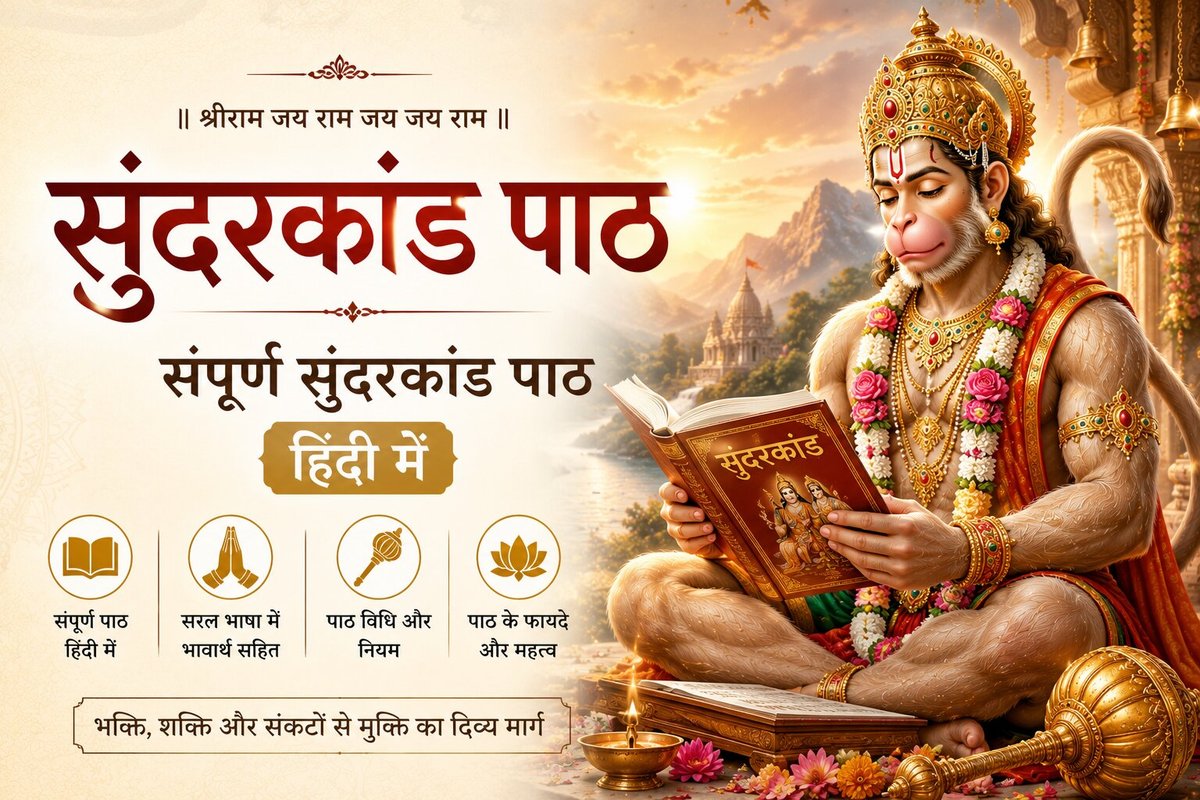
Lord Hanuman is among the most universally beloved deities in the Hindu tradition. Son of Vayu (the wind god) and Anjana, born with boundless strength and the power to assume any form, he devoted his entire life to the service of Lord Rama. His journey across the ocean to Lanka, his discovery of Sita in captivity, his burning of Lanka, his carrying of the Sanjīvanī herb to revive Lakshmana - these acts are not merely mythological episodes but emblems of what pure, egoless devotion can accomplish. Hanuman embodies eight superhuman qualities (aṣhṭa siddhi) and nine forms of devotion simultaneously. He is worshipped on Tuesdays and Saturdays as the remover of obstacles, the subduer of malefic planetary influences, and the unfailing protector of those who call upon him sincerely.
Spiritual Significance & Benefits
- Recitation of Bajrang Baan with focused intent is regarded as a powerful protection against negative energies, black magic, and unseen obstacles.
- The text is traditionally recommended during periods of acute personal crisis - illness, legal troubles, threats to safety - rather than as a daily recitation.
- The embedded bīja mantras are said to create a vibratory shield around the practitioner when recited with proper pronunciation and concentration.
- Regular study of its verses deepens understanding of Hanuman's Ramayana deeds, strengthening the devotee's identification with the values of selfless service and fearless action.
- Pairing Bajrang Baan recitation with Hanuman Chalisa creates a complete devotional practice: the Chalisa for daily praise and surrender, the Baan for specific petitions in times of need.
When & How It Is Sung
Bajrang Baan is not recommended for casual or daily recitation; the tradition advises reserving it for genuine need. When recited, it is typically done on a Tuesday or Saturday, before sunrise, after bathing and donning clean clothes. The practitioner faces an image or murti of Hanuman, lights a ghee lamp, and recites with complete concentration and without interruption. The recitation should be accompanied by firm faith and the conscious intention of seeking Hanuman's protection. The bīja mantras within the text are meant to be pronounced clearly and with force. In many Hanuman temples across North India, the Bajrang Baan is recited communally at special occasions such as Hanuman Jayanti, or when the community faces collective distress.
Frequently Asked Questions
Why is Bajrang Baan considered more intense than Hanuman Chalisa?
The Hanuman Chalisa is a devotional praise poem extolling Hanuman's qualities and deeds in a mood of calm surrender and gratitude. The Bajrang Baan, by contrast, is structured as an urgent petition invoking Hanuman through oaths and bīja mantras to intervene immediately in a crisis. Its tone is more insistent, its imagery more martial, and its vibratory content - through embedded mantras - more concentrated. This is why the tradition treats it as a powerful tool to be used thoughtfully rather than as a routine prayer.
Who should recite Bajrang Baan?
Any sincere devotee may recite Bajrang Baan when facing genuine difficulties. The opening doha makes clear that the sole requirement is nishchay prem pratīti - firm love and unwavering faith. The text does not prescribe any caste, gender or age restriction. However, given its intensity, traditional guidance suggests approaching it with humility, a pure heart and focused intent, rather than reciting it mechanically.
Is Bajrang Baan really composed by Tulsidas?
The attribution to Tulsidas is traditional and widely accepted across the devotional community. Scholars note that the linguistic register and devotional framework are consistent with Tulsidas's other works. However, unlike the Ramcharitmanas or Hanuman Chalisa, the Bajrang Baan does not carry an explicit colophon in the primary manuscripts. The devotional tradition regards its attribution to Tulsidas as established, and its authenticity as a sacred text rests firmly on centuries of sincere use.
Oath-bound urgency: why Bajrang Baan stands apart from the Chalisa
The Bajrang Baan, attributed to the great saint-poet Tulsidas, carries a tone markedly different from his more widely recited Hanuman Chalisa. Where the Chalisa flows in steady, devotional praise, the Bajrang Baan is structured as a direct, urgent appeal - almost a command rooted in deep faith - calling on Hanuman to act swiftly for the afflicted devotee. The composition invokes Hanuman's sworn duty, his fearlessness, his role as the supreme destroyer of obstacles and malevolent forces. Devotees believe the language of intense entreaty within this hymn reflects a tradition of approaching the Lord not with ceremony alone but with the full weight of one's distress.
In the Jyotish tradition, Hanuman is closely associated with the planet Mars (Mangal) and is also considered a powerful counterbalancing force for the afflictions of Saturn (Shani) and Rahu. Accordingly, the Bajrang Baan is recited with particular fervour on Tuesdays and Saturdays, and during periods when a devotee faces fear, illness, or perceived supernatural obstruction. It is traditionally regarded as a text to be approached with sincere devotion and some preparation - many practitioners recite the Hanuman Chalisa regularly before taking up the Bajrang Baan. This context gives the composition its special character: it is not an everyday kirtan but a devotional refuge for moments of genuine crisis and need.