Bhagwan Surya Ashtottara Shatanamavali: 108 Names, Meaning & Benefits
Bhagwan Surya Ashtottara Shatanamavali (108 Names) - Sanskrit Text
॥ अथ श्रीसूर्याष्टोत्तरशतनामावलिः ॥
1. ॐ अरुणाय नमः ।
2. ॐ शरण्याय नमः ।
3. ॐ करुणारससिन्धवे नमः ।
4. ॐ असमानबलाय नमः ।
5. ॐ आर्तरक्षकाय नमः ।
6. ॐ आदित्याय नमः ।
7. ॐ आदिभूताय नमः ।
8. ॐ अखिलागमवेदिने नमः ।
9. ॐ अच्युताय नमः ।
10. ॐ अखिलज्ञाय नमः ।
11. ॐ अनन्ताय नमः ।
12. ॐ इनाय नमः ।
13. ॐ विश्वरूपाय नमः ।
14. ॐ इज्याय नमः ।
15. ॐ इन्द्राय नमः ।
16. ॐ भानवे नमः ।
17. ॐ इन्दिरामन्दिराप्ताय नमः ।
18. ॐ वन्दनीयाय नमः ।
19. ॐ ईशाय नमः ।
20. ॐ सुप्रसन्नाय नमः ।
21. ॐ सुशीलाय नमः ।
22. ॐ सुवर्चसे नमः ।
23. ॐ वसुप्रदाय नमः ।
24. ॐ वसवे नमः ।
25. ॐ वासुदेवाय नमः ।
26. ॐ उज्ज्वलाय नमः ।
27. ॐ उग्ररूपाय नमः ।
28. ॐ ऊर्ध्वगाय नमः ।
29. ॐ विवस्वते नमः ।
30. ॐ उद्यत्किरणजालाय नमः ।
31. ॐ हृषीकेशाय नमः ।
32. ॐ ऊर्जस्वलाय नमः ।
33. ॐ वीराय नमः ।
34. ॐ निर्जराय नमः ।
35. ॐ जयाय नमः ।
36. ॐ ऊरुद्वयाभावरूपयुक्तसारथये नमः ।
37. ॐ ऋषिवन्द्याय नमः ।
38. ॐ रुग्घन्त्रे नमः ।
39. ॐ ऋक्षचक्रचराय नमः ।
40. ॐ ऋजुस्वभावचित्ताय नमः ।
41. ॐ नित्यस्तुत्याय नमः ।
42. ॐ ॠकारमातृकावर्णरूपाय नमः ।
43. ॐ उज्ज्वलतेजसे नमः ।
44. ॐ ॠक्षाधिनाथमित्राय नमः ।
45. ॐ पुष्कराक्षाय नमः ।
46. ॐ लुप्तदन्ताय नमः ।
47. ॐ शान्ताय नमः ।
48. ॐ कान्तिदाय नमः ।
49. ॐ घनाय नमः ।
50. ॐ कनत्कनकभूषाय नमः ।
51. ॐ खद्योताय नमः ।
52. ॐ लूनिताखिलदैत्याय नमः ।
53. ॐ सत्यानन्दस्वरूपिणे नमः ।
54. ॐ अपवर्गप्रदाय नमः ।
55. ॐ आर्तशरण्याय नमः ।
56. ॐ एकाकिने नमः ।
57. ॐ भगवते नमः ।
58. ॐ सृष्टिस्थित्यन्तकारिणे नमः ।
59. ॐ गुणात्मने नमः ।
60. ॐ घृणिभृते नमः ।
61. ॐ बृहते नमः ।
62. ॐ ब्रह्मणे नमः ।
63. ॐ ऐश्वर्यदाय नमः ।
64. ॐ शर्वाय नमः ।
65. ॐ हरिदश्वाय नमः ।
66. ॐ शौरये नमः ।
67. ॐ दशदिक्सम्प्रकाशाय नमः ।
68. ॐ भक्तवश्याय नमः ।
69. ॐ ओजस्कराय नमः ।
70. ॐ जयिने नमः ।
71. ॐ जगदानन्दहेतवे नमः ।
72. ॐ जन्ममृत्युजराव्याधिवर्जिताय नमः ।
73. ॐ उच्चस्थानसमारूढरथस्थाय नमः ।
74. ॐ असुरारये नमः ।
75. ॐ कमनीयकराय नमः ।
76. ॐ अब्जवल्लभाय नमः ।
77. ॐ अन्तर्बहिःप्रकाशाय नमः ।
78. ॐ अचिन्त्याय नमः ।
79. ॐ आत्मरूपिणे नमः ।
80. ॐ अच्युताय नमः ।
81. ॐ अमरेशाय नमः ।
82. ॐ परस्मै ज्योतिषे नमः ।
83. ॐ अहस्कराय नमः ।
84. ॐ रवये नमः ।
85. ॐ हरये नमः ।
86. ॐ परमात्मने नमः ।
87. ॐ तरुणाय नमः ।
88. ॐ वरेण्याय नमः ।
89. ॐ ग्रहाणांपतये नमः ।
90. ॐ भास्कराय नमः ।
91. ॐ आदिमध्यान्तरहिताय नमः ।
92. ॐ सौख्यप्रदाय नमः ।
93. ॐ सकलजगतांपतये नमः ।
94. ॐ सूर्याय नमः ।
95. ॐ कवये नमः ।
96. ॐ नारायणाय नमः ।
97. ॐ परेशाय नमः ।
98. ॐ तेजोरूपाय नमः ।
99. ॐ श्रीं हिरण्यगर्भाय नमः ।
100. ॐ ह्रीं सम्पत्कराय नमः ।
101. ॐ ऐं इष्टार्थदाय नमः ।
102. ॐ अनुप्रसन्नाय नमः ।
103. ॐ श्रीमते नमः ।
104. ॐ श्रेयसे नमः ।
105. ॐ भक्तकोटिसौख्यप्रदायिने नमः ।
106. ॐ निखिलागमवेद्याय नमः ।
107. ॐ नित्यानन्दाय नमः ।
108. ॐ श्रीसूर्यनारायणाय नमः ।
॥ इति श्रीसूर्याष्टोत्तरशतनामावलिः सम्पूर्णा ॥
Transliteration (Roman/IAST)
oṃ aruṇāya namaḥ | oṃ śaraṇyāya namaḥ | oṃ karuṇā-rasa-sindhave namaḥ | oṃ asamāna-balāya namaḥ |
oṃ ārta-rakṣakāya namaḥ | oṃ ādityāya namaḥ | oṃ ādi-bhūtāya namaḥ | oṃ akhilāgama-vedine namaḥ | oṃ acyutāya namaḥ ...
(each of the 108 names is recited in the form “oṃ ... namaḥ”, concluding with)
oṃ bhāskarāya namaḥ ... oṃ sūryāya namaḥ ... oṃ nārāyaṇāya namaḥ ... oṃ śrī-sūrya-nārāyaṇāya namaḥ ||
Meaning
This is a litany of 108 names of Surya, the Sun God, each offered with “namah” (salutation). The names praise him from many angles: as Aruna (the reddish dawn), Aditya (son of Aditi), Bhanu and Bhaskara (the maker of light), Vivasvat (the radiant), Grahanam-pataye (lord of the planets), Sarva-jagatam-pataye (lord of the whole world), Karuna-rasa-sindhu (ocean of compassion), Arta-rakshaka (protector of the distressed), and ultimately Narayana and Parameshvara - the Supreme. Reciting the garland of names meditates on the Sun as both the visible source of life and the inner light of the soul.
About this Namavali
The Surya Ashtottara Shatanamavali (“garland of 108 names of the Sun”) is a traditional devotional litany used in Surya worship. Each name distils an attribute of the Sun - his brilliance, his compassion, his sovereignty over time, the planets and the world, and his identity with the supreme Self. Such ashtottara namavalis are commonly recited during archana, offering a flower or akshata at each name, and form a core part of Sunday worship and Surya-related vratas.
Significance & Spiritual Benefits
Regular recitation of the 108 names of Surya is held to bestow health, vitality, confidence, success and clarity of mind, and to remove diseases - especially those of the eyes, heart, bones and skin traditionally linked to the Sun. As the Sun is the soul of the cosmos, his worship is also said to dispel inner darkness, strengthen willpower and leadership, and grant the steady radiance of good fortune. The namavali is a complete daily practice of gratitude to the giver of light and life.
Astrological Relevance
Surya is the Sun (Surya graha), king of the planetary cabinet and significator of the soul (atma), the father, vitality, authority, health and government. A weak, debilitated or afflicted Sun in the chart - affecting confidence, status, the father, or health - is classically remedied by Surya worship, and the Ashtottara Shatanamavali is among the foremost recitations prescribed. It is paired with Sunday observance, sun-salutations (Surya Namaskar), offering arghya (water) to the rising Sun, and fasting, to strengthen the Sun and to relieve the troubles of a poorly-placed Surya in dasha or transit.
How to Chant (Vidhi)
Rise early, bathe, and face the rising Sun in the east. Offer arghya - water poured from a copper vessel toward the Sun - then sit and recite the 108 names, ideally counting on a rudraksha or red-sandal mala and offering red flowers or akshata at each name. Wearing clean red or saffron cloth and using a copper lamp is traditional. Conclude with a salutation and a moment of meditation on the Sun’s light entering the heart.
Best Day & Time
Sunday is the day of Surya, and sunrise is the ideal time. Recitation is especially powerful on Rathasaptami (Surya Jayanti), during Makar Sankranti, on the Sankranti of each month, and on the sixth and seventh lunar days (Shashthi/Saptami).
Frequently Asked Questions
What is the benefit of reciting Surya’s 108 names?
It is believed to grant health, vitality, confidence, success and protection from disease, while strengthening the Sun’s positive influence - leadership, status and the well-being of the father - in one’s life.
How should the namavali be offered?
Traditionally, after offering arghya (water) to the rising Sun, one recites the 108 names while offering a red flower or rice grain (akshata) at each name, facing east at sunrise.
Which planet does this worship strengthen?
It strengthens Surya, the Sun, the planet of the soul, father, vitality and authority. It is a classic remedy for a weak or afflicted Sun in the horoscope.
Saluting the Sun through 108 sacred names
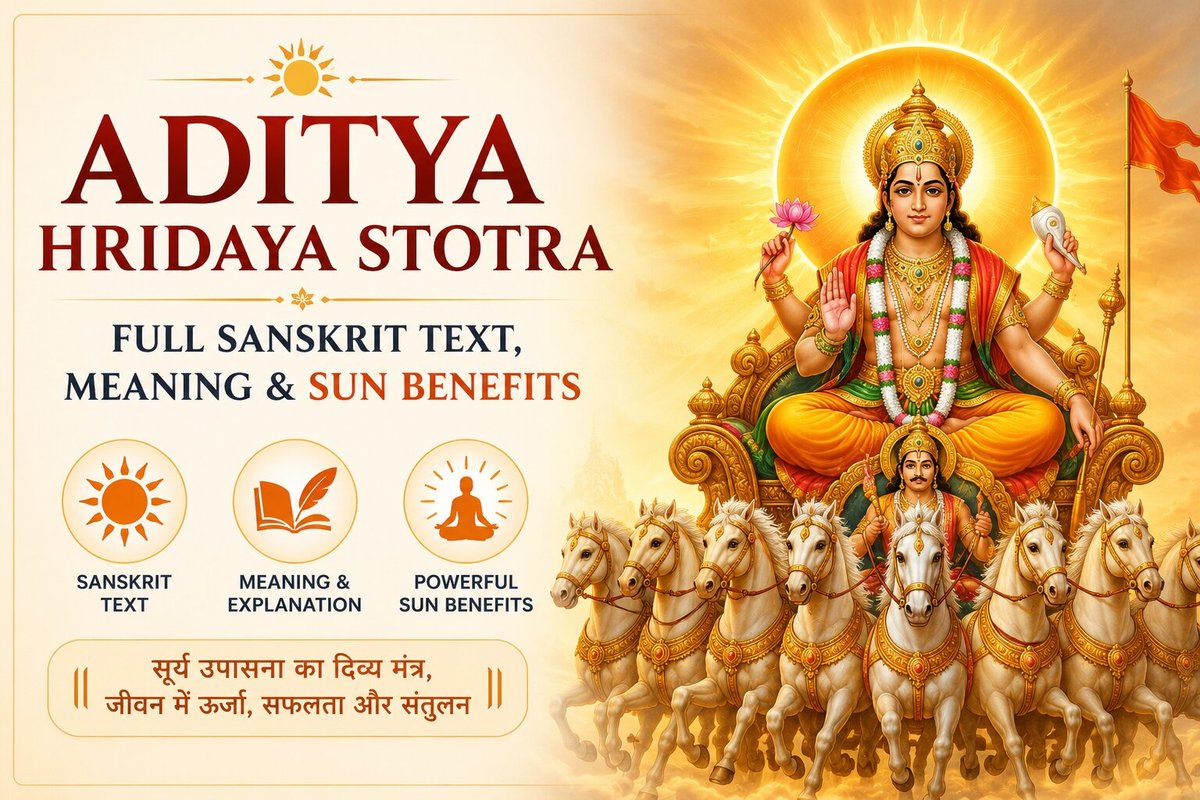
The Surya Ashtottara Shatanamavali weaves together 108 titles of the Sun God, each name illuminating a distinct aspect of his cosmic presence - from the radiant source of life to the witness of all action to the lord who dispels the darkness of ignorance. Together these names form a complete portrait of Surya as both the physical orb that sustains the world and the inner light that guides the soul. Devotees traditionally recite the namavali at sunrise, facing east with joined palms, finding in the rhythmic enumeration a meditative discipline that steadies the mind and kindles reverence for the day ahead.
In the Jyotish tradition, the Sun (Surya) is the atmakaraka - the significator of the soul, vitality, father, authority, and self-expression. Devotees believe that regular recitation of this namavali, especially on Sundays and during Uttarayana, helps strengthen a weakly placed Sun in the natal chart, supporting clarity, confidence, and physical wellbeing. The practice is traditionally recommended as a remedy for those undergoing the Sun's Mahadasha or Antardasha, and many Jyotishis suggest pairing it with the offering of water (arghya) to the rising Sun as an act of integrated devotion and astrological remedy.