Durga Devi Stotram (Yudhishthir Virachitam): Text, Meaning & Benefits
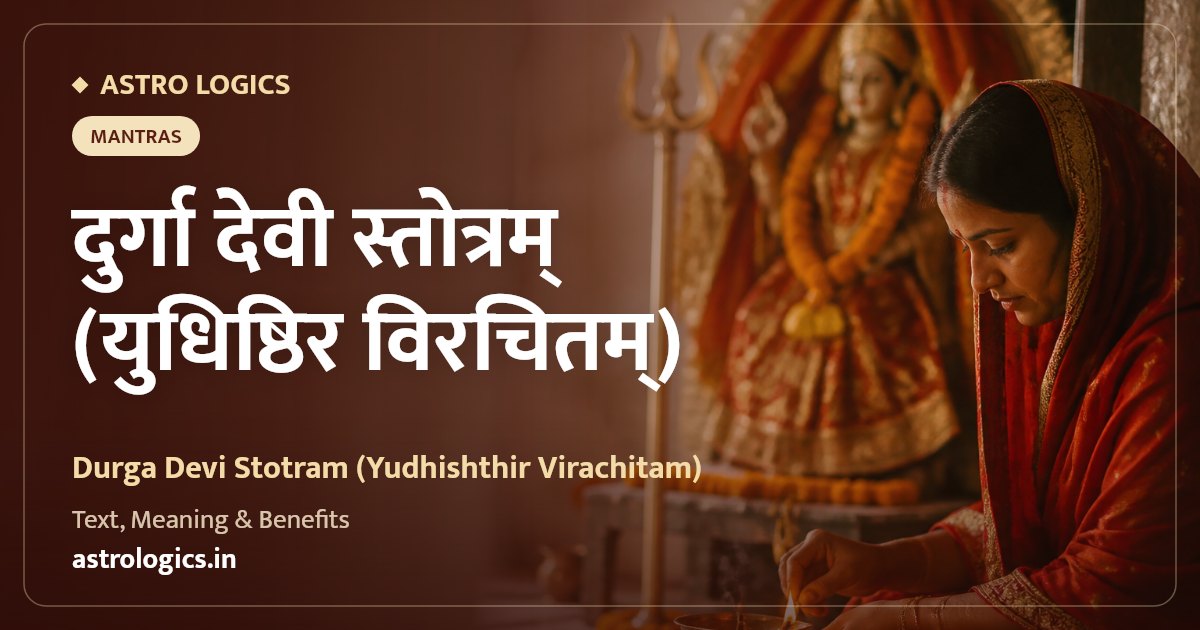
Shri Durga Devi Stotram (Yudhishthir Virachitam) - Text
Note: This stotra is composed in Marathi (ovi metre), not classical Sanskrit, and is traditionally ascribed to Dharmaraja Yudhishthira's prayer to Goddess Durga. The verified Devanagari text is reproduced faithfully below.
श्रीगणेशाय नमः । श्री दुर्गायै नमः ।
नगरांत प्रवेशले पंडुनंदन । तो देखिले दुर्गास्थान ।
धर्मराज करी स्तवन । जगदंबेचे तेधवा ॥१॥
जय जय दुर्गे भुवनेश्वरी । यशोदागर्भसंभवकुमारी ।
इंदिरारमणसहोदरी । नारायणी चंडिके अंबिके ॥२॥
जय जय जगदंबे विश्वकुटुंबिनी । मूलस्फूर्ति प्रणवरूपिणी ।
ब्रह्मानंदपददायिनी । चिद्विलासिनी अंबिके तू ॥३॥
जय जय धराधरकुमारी । सौभाग्यगंगे त्रिपुरसुंदरी ।
हेरंबजननी अंतरी । प्रवेशीं तू आमुचे ॥४॥
भक्तह्रदयारविंदभ्रमरी । तुझे कृपाबळे निर्धारी ।
अतिगूढ निगमार्थ विवरी । काव्यरचना करी अद्भुत ॥५॥
तुझिये कृपावलोकनेंकरुन । गर्भांधासी येतील नयन ।
पांगुळा करील गमन । दूर पंथे जाऊनी ॥६॥
जन्मादारभ्य जो मुका । होय वाचस्पतिसमान बोलका ।
तूं स्वानंदसरोवरमराळिका । होसी भाविकां सुप्रसन्न ॥७॥
ब्रह्मानंदे आदिजननी । तव कृपेची नौका करुनि ।
दुस्तर भवसिंधु उल्लंघूनी । निवृत्तीतटां जाइजे ॥८॥
जय जय आदिकुमारिके । जय जय मूलपीठनायिके ।
सकलसौभाग्यदायिके । जगदंबिके मूलप्रकृतिके ॥९॥
जय जय भार्गवप्रिये भवानी । भयनाशके भक्तवरदायिनी ।
सुभद्रकारिके हिमनगनंदिनी । त्रिपुरसुंदरी महामाये ॥१०॥
जय जय आनंदकासारमराळिके । पद्मनयने दुरितवनपावके ।
त्रिविधतापभवमोचके । सर्वव्यापके मृडानी ॥११॥
शिवमानसकनकलतिके । जय चातुर्यचंपककलिके ।
शुंभनिशुंभदैत्यांतके । निजजनपालके अपर्णे ॥१२॥
तव मुखकमलशोभा देखोनी । इंदुबिंब गेले विरोनी ।
ब्रह्मादिदेव बाळें तान्ही । स्वानंदसदनी निजविसी ॥१३॥
जीव शिव दोन्ही बाळकें । अंबे त्वां निर्मिली कौतुकें ।
स्वरूप तुझे जीव नोळखे । म्हणोनि पडला आवर्ती ॥१४॥
शिव तुझे स्मरणीं सावचित्त । म्हणोनि तो नित्यमुक्त ।
स्वानंदपद हातां येत । तुझे कृपेनें जननिये ॥१५॥
मेळवूनि पंचभूतांचा मेळ । त्वां रचिला ब्रह्मांडगोळ ।
इच्छा परततां तत्काळ । क्षणें निर्मूळें करिसी तूं ॥१६॥
अनंत बालादित्यश्रेणी । तव प्रभेमाजी गेल्या लपोनि ।
सकलसौभाग्यशुभकल्याणी । रमारमणवरप्रदे ॥१७॥
जय शंबरिपुहरवल्लभे । त्रैलोक्यनगरारंभस्तंभे ।
आदिमाये आत्मप्रिये । सकलारंभे मूलप्रकृती ॥१८॥
जय करुणामृतसरिते । भक्तपालके गुणभरिते ।
अनंतब्रह्मांडफलांकिते । आदिमाये अन्नपूर्णे ॥१९॥
तूं सच्चिदानंदप्रणवरूपिणी । सकलचराचरव्यापिनी ।
सर्गस्थित्यंतकारिणी । भवमोचिनी ब्रह्मानंदे ॥२०॥
ऐकोनि धर्माचे स्तवन । दुर्गा जाहली प्रसन्न ।
म्हणे तुमचे शत्रू संहारीन । राज्यीं स्थापीन धर्माते ॥२१॥
तुम्ही वास करा येथ । प्रगटी नेदीं जनांत ।
शत्रू क्षय पावती समस्त । सुख अद्भुत तुम्हां होय ॥२२॥
त्वां जें स्तोत्र केलें पूर्ण । तें जे त्रिकाल करिती पठन ।
त्यांचे सर्व काम पुरवीन । सदा रक्षीन अंतर्बाह्य ॥२३॥
॥ इति श्रीयुधिष्ठिरविरचितं श्रीदुर्गास्तोत्रं संपूर्णम् ॥
Transliteration (Roman/IAST)
jaya jaya durge bhuvaneśvarī | yaśodā-garbha-sambhava-kumārī |
indirā-ramaṇa-sahodarī | nārāyaṇī caṇḍike ambike ||2||
(The hymn is in Marathi ovi metre; the opening invocation and the famous second stanza are transliterated above, with the remaining stanzas following the Devanagari line for line.)
Meaning
As the Pandavas entered the city they beheld the shrine of Durga, and Dharmaraja (Yudhishthira) began to praise the World-Mother. "Victory to you, Durga, Empress of the worlds, the maiden born of Yashoda's womb, sister of Narayana, O Narayani, Chandika, Ambika!" The poet hails her as the primordial energy (mula-prakriti), the syllable Om personified, giver of the bliss of Brahman. By her merciful glance the blind regain sight and the lame cross great distances; the mute speak like Brihaspati. She fashioned the cosmos from the five elements and can dissolve it in an instant. Pleased by this praise, Durga grants Yudhishthira victory over his enemies and the restoration of his kingdom, promising to protect and fulfil the wishes of all who recite this hymn three times a day.
About this Stotra
This Durga Stotra is framed as the prayer offered by Yudhishthira, eldest of the Pandavas, before the great war - echoing the episode in the Mahabharata where the Pandavas invoke the Goddess for victory. The surviving popular text, however, is a Marathi devotional composition in ovi metre (the same metre used by saint-poets like Eknath and Ramdas), which is why its language differs from Sanskrit shlokas. It is widely recited in Maharashtra during Navaratri.
Significance & Spiritual Benefits
The hymn is recited for victory over enemies, protection from adversity, and the fulfilment of righteous desires. Its closing boon-verses promise that one who reads it thrice daily (trikala) with faith is guarded "within and without" and has all needs met. Devotees turn to it for courage before difficult undertakings, for the removal of fear, and for the Goddess's grace in restoring lost fortune and dignity - just as she restored the Pandavas' kingdom.
Astrological Relevance
Durga is the supreme Shakti and her worship strengthens the planetary lord of power and protection. In Jyotisha, the Goddess is invoked to fortify a weak or afflicted Moon and Mars: the Moon (manas) for emotional steadiness and the Mars (Mangala) for courage, victory and freedom from enmity. Her stotras are classic remedies during Mangala-dosha, Saturn's sade-sati hardships, and periods of conflict or litigation (sixth-house matters). Recitation during Navaratri aligns with the most Shakti-charged window of the year.
How to Chant (Vidhi)
Bathe and sit before an image of Durga. Light a lamp (preferably with a red flower and kumkum offering), invoke Ganesha first ("Shri Ganeshaya Namah"), then recite the stotra with devotion. For specific results the text itself recommends trikala patha - recitation at dawn, noon and dusk. During Navaratri, daily recitation through the nine nights is especially powerful. Conclude with arati and a prayer for protection.
Best Day & Time
Fridays and Tuesdays, Ashtami and Navami tithis, and above all the nine nights of Navaratri are ideal. Dawn (Brahma Muhurta) and dusk are the most potent timings.
Frequently Asked Questions
Is this stotra in Sanskrit?
No. Although the colophon names Yudhishthira, the popular text is a Marathi devotional composition in ovi metre, reproduced here as found in tradition.
What benefit does it promise?
The Goddess promises victory over enemies, restoration of fortune, and that those who recite it thrice daily will be protected and have their wishes fulfilled.
When is the best time to recite it?
During Navaratri, and otherwise trikala (dawn, noon and dusk) on Fridays and Tuesdays.


A king's cry to the World-Mother on the eve of battle
The Durga Devi Stotram ascribed to Yudhishthira occupies a unique devotional space because it emerges from a moment of human vulnerability rather than abstract theology. Yudhishthira - Dharmaraja, the embodiment of righteousness - stands at the threshold of the Mahabharata war, and his hymn to the Goddess carries within it the weight of that immense moment: the prayer of a man who has done his utmost to preserve dharma and now places the outcome entirely in the Mother's hands. That quality of wholehearted surrender, of a righteous soul asking not for victory alone but for her grace and protection, gives the stotram its distinctive rasa - a blend of awe, humility and fierce faith.
In the Jyotish tradition, Goddess Durga is associated with the protective and transformative energies of Shakti, and her worship connects particularly to Mars (Mangal) in its aspect of courage and righteous war, as well as to the Moon as the sustaining, nurturing power of the World-Mother. This stotra is considered especially potent during Navaratri - the nine nights dedicated to the Goddess - when devotees recite it for victory over inner obstacles as much as outer ones. The ovi metre of the composition lends it a musical quality that has long made it a living part of devotional life, chanted with feeling as much as with scholarship.