Durga Dwatrinshat Nam Mala: 32 Names of Maa Durga with Meaning
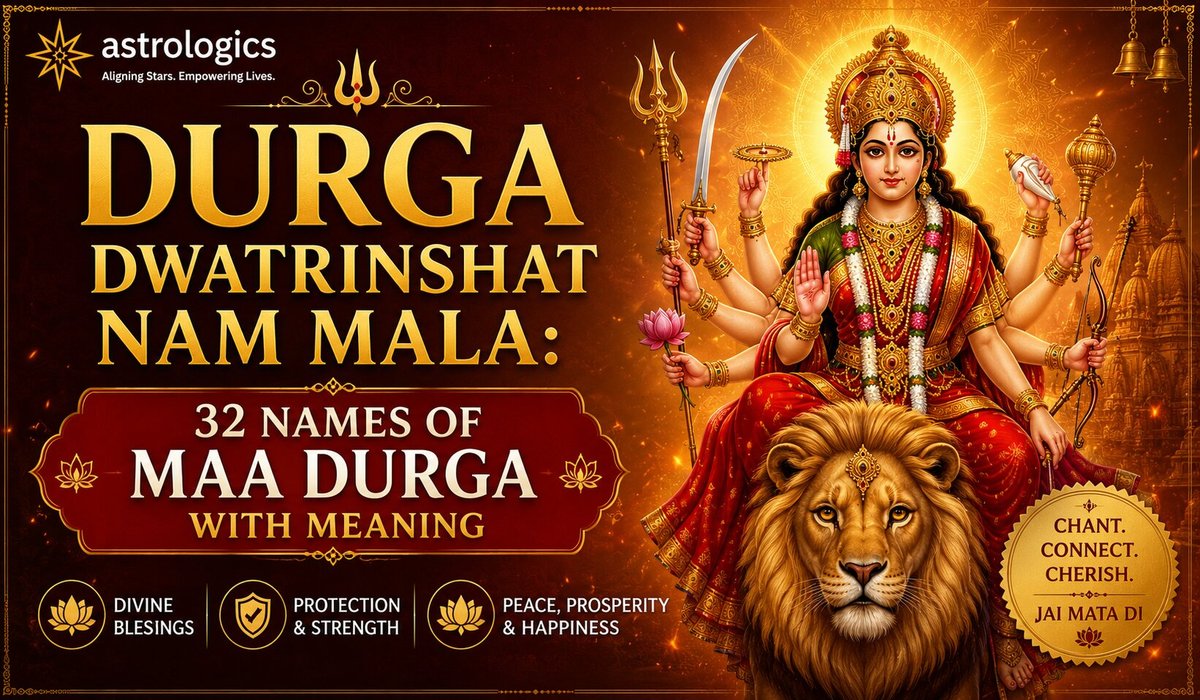
Durga Dwatrinshat Nam Mala - Sanskrit Text
॥ अथ दुर्गाद्वात्रिंशन्नाममाला ॥
दुर्गा दुर्गार्तिशमनी दुर्गापद्विनिवारिणी।दुर्गमच्छेदिनी दुर्गसाधिनी दुर्गनाशिनी॥
दुर्गतोद्धारिणी दुर्गनिहन्त्री दुर्गमापहा।दुर्गमज्ञानदा दुर्गदैत्यलोकदवानला॥
दुर्गमा दुर्गमालोका दुर्गमात्मस्वरूपिणी।दुर्गमार्गप्रदा दुर्गमविद्या दुर्गमाश्रिता॥
दुर्गमज्ञानसंस्थाना दुर्गमध्यानभासिनी।दुर्गमोहा दुर्गमगा दुर्गमार्थस्वरूपिणी॥
दुर्गमासुरसंहन्त्री दुर्गमायुधधारिणी।दुर्गमाङ्गी दुर्गमता दुर्गम्या दुर्गमेश्वरी॥
दुर्गभीमा दुर्गभामा दुर्गभा दुर्गदारिणी।नामावलिमिमां यस्तु दुर्गाया मम मानवः॥
पठेत् सर्वभयान्मुक्तो भविष्यति न संशयः॥
॥ इति दुर्गाद्वात्रिंशन्नाममाला सम्पूर्णम् ॥
Transliteration (Roman/IAST)
atha durgādvātriṃśannāmamālā
durgā durgārtiśamanī durgāpadvinivāriṇī |durgamacchedinī durgasādhinī durganashinī ||
durgatoddhāriṇī durganihantrī durgamāpahā |durgamajñānadā durgadaityalokadavānalā ||
durgamā durgamālokā durgamātmasvarūpiṇī |durgamārgapradā durgamavidyā durgamāśritā ||
durgamajñānasaṃsthānā durgamadhyānabhāsinī |durgamohā durgamagā durgamārthasvarūpiṇī ||
durgamāsurasaṃhantrī durgamāyudhadhāriṇī |durgamāṅgī durgamatā durgamyā durgameśvarī ||
durgabhīmā durgabhāmā durgabhā durgadāriṇī |nāmāvalimimāṃ yastu durgāyā mama mānavaḥ ||
paṭhet sarvabhayānmukto bhaviṣyati na saṃśayaḥ ||
Meaning
This name-garland praises the Goddess as Durga, the remover of the pains of adversity (Durgarti-shamani) and the one who wards off difficult calamities (Durgapad-vinivarini). She cuts through the impassable (Durgama-chchhedini), accomplishes the difficult (Durga-sadhini) and destroys distress (Durga-nashini). She rescues from the unreachable, slays the demon of difficulty, dispels every hardship, and grants the knowledge that overcomes the inaccessible. She is the indweller of the difficult path, the secret wisdom, the slayer of the demon Durgama, the bearer of weapons against him, the beautiful-limbed sovereign of the impassable, and the terrifying destroyer of every obstacle. The closing verse promises that whoever recites this garland of the names of Durga becomes free from all fear, without any doubt.
About this Stotra
The Durga Dwatrinshat Nam Mala, literally the “garland of thirty-two names of Durga,” is one of the most concise and potent invocations within the tradition of the Durga Saptashati (Devi Mahatmya), the seven-hundred-verse scripture drawn from the Markandeya Purana. Nearly every name in the litany is built on the syllable durga, meaning “that which is hard to cross, a fortress, a difficulty” - underscoring the Goddess as the one who carries the devotee across every impassable situation of life. Because it is short, rhythmic and easily memorised, it has become a favourite supplementary recitation during Navratri and daily Devi worship.
Significance & Spiritual Benefits
Each of the thirty-two names is regarded as a living seed of protective power. Traditionally the stotra is recited to dissolve fear, remove obstacles, recover from illness, and gain courage in times of crisis. The phala-shruti (fruit-statement) at the end declares unequivocally that the reciter is liberated from all forms of fear. Devotees turn to it before journeys, examinations, court matters, surgeries and any “hard to cross” juncture, trusting the Mother to clear the way. Beyond worldly protection, repeated chanting steadies the mind and cultivates fearless devotion (abhaya-bhakti).
Astrological Relevance
In Vedic astrology Goddess Durga is the supreme expression of Shakti and is invoked as a remedy for afflictions involving Mars (Mangal), Rahu, Ketu and a weak or troubled Moon - the planets most associated with fear, accidents, enemies, sudden obstacles and mental unrest. When the chart shows a debilitated Moon, a harsh Mars, or malefic transits over the lagna, the Durga Dwatrinshat Nam Mala is prescribed as a protective upaya. Recitation on Tuesdays, Fridays and during Navratri is believed to strengthen the native against shatru-bhava (6th house enemies and litigation) and to shield against marana-karaka or accident-prone yogas.
How to Chant (Vidhi)
Bathe and sit facing east or north before an image or yantra of the Goddess. Light a ghee lamp and offer red flowers, kumkum and a little water. Begin with a prayer to your guru and to Lord Ganesha, then recite the thirty-two names attentively, ideally in repetitions of 3, 11 or 32. Within the full Durga Saptashati ritual this name-mala is chanted after the main path; on its own it can be repeated daily. Conclude with the phala-shruti verse and a moment of silent surrender, dedicating the merit to the welfare of all beings.
Best Day & Time
The most auspicious times are the nine nights of Navratri (Chaitra and Sharada), Ashtami and Navami tithis, Tuesdays and Fridays, and the early morning Brahma-muhurta. It may also be recited at dusk during sandhya. Any moment of fear or danger is itself the right time, since the stotra is foremost a kavacha of protection.
Frequently Asked Questions
What is the source of the Durga Dwatrinshat Nam Mala?
It belongs to the supplementary stotras of the Durga Saptashati (Devi Mahatmya), part of the Markandeya Purana, and is recited as a compact litany of thirty-two protective names of the Goddess.
How many names does it contain and what is their theme?
It contains thirty-two names, almost all formed from the word durga, portraying the Goddess as the power that carries the devotee safely across every difficulty, danger and fear.
Can anyone recite it?
Yes. There are no restrictions; with a clean body, sincere devotion and basic care of pronunciation, any devotee may recite it daily for protection and courage.
Thirty-two faces of Shakti: the Saptashati's inner garland
The Durga Dwatrinshat Nam Mala distils the ocean of the Durga Saptashati into thirty-two concentrated epithets, each name a capsule of a specific aspect of the Goddess's power and grace. Unlike a simple list, these names form a mala - a garland - meant to be passed through the fingers of awareness one by one, each name landing with the weight of the scripture from which it is drawn. Devotees believe that holding even one of these names in the mind during a moment of fear or uncertainty is sufficient to invoke the Goddess's protective presence, because each name is a door into the full reality that the Saptashati describes.
The stotra is traditionally recited during the nine nights of Navaratri, when the Goddess's energy is considered most accessible, but many devotees also include it in their daily practice on Fridays or on Ashtami tithi. In the Jyotish tradition, Maa Durga's grace is invoked to mitigate difficult combinations involving Rahu and Mars, planets associated with aggression and unpredictability, and the thirty-two names are said to create a ring of divine protection around the devotee's life circumstances. The final promise of the stotra - freedom from all fear - is its deepest offering, one that devotees discover not as a doctrinal claim but as a lived experience of the heart gradually relaxing into trust.