Shiv Chalisa – Jai Girijapati Deen Dayala Lyrics, Meaning & Benefits
Shiv Chalisa Lyrics (हिंदी में)
॥ दोहा ॥
जय गणेश गिरिजा सुवन, मंगल मूल सुजान।
कहत अयोध्यादास तुम, देहु अभय वरदान ॥
॥ चौपाई ॥
जय गिरिजा पति दीन दयाला। सदा करत सन्तन प्रतिपाला ॥
भाल चन्द्रमा सोहत नीके। कानन कुण्डल नागफनी के ॥
अंग गौर शिर गंग बहाये। मुण्डमाल तन क्षार लगाए ॥
वस्त्र खाल बाघम्बर सोहे। छवि को देखि नाग मन मोहे ॥
मैना मातु की हवे दुलारी। बाम अंग सोहत छवि न्यारी ॥
कर त्रिशूल सोहत छवि भारी। करत सदा शत्रुन क्षयकारी ॥
नन्दि गणेश सोहैं तहँ कैसे। सागर मध्य कमल हैं जैसे ॥
कार्तिक श्याम और गणराऊ। या छवि को कहि जात न काऊ ॥
देवन जबहीं जाय पुकारा। तब ही दुख प्रभु आप निवारा ॥
किया उपद्रव तारक भारी। देवन सब मिलि तुमहिं जुहारी ॥
तुरत षडानन आप पठायउ। लवनिमेष महँ मारि गिरायउ ॥
आप जलंधर असुर संहारा। सुयश तुम्हार विदित संसारा ॥
त्रिपुरासुर सन युद्ध मचाई। सबहिं कृपा कर लीन बचाई ॥
किया तपहिं भागीरथ भारी। पुरब प्रतिज्ञा तासु पुरारी ॥
दानिन महँ तुम सम कोउ नाहीं। सेवक स्तुति करत सदाहीं ॥
वेद माहि महिमा तुम गाई। अकथ अनादि भेद नहिं पाई ॥
प्रकटी उदधि मंथन में ज्वाला। जरत सुरासुर भए विहाला ॥
कीन्ही दया तहं करी सहाई। नीलकण्ठ तब नाम कहाई ॥
पूजन रामचन्द्र जब कीन्हा। जीत के लंक विभीषण दीन्हा ॥
सहस कमल में हो रहे धारी। कीन्ह परीक्षा तबहिं पुरारी ॥
एक कमल प्रभु राखेउ जोई। कमल नयन पूजन चहं सोई ॥
कठिन भक्ति देखी प्रभु शंकर। भए प्रसन्न दिए इच्छित वर ॥
जय जय जय अनन्त अविनाशी। करत कृपा सब के घटवासी ॥
दुष्ट सकल नित मोहि सतावै। भ्रमत रहौं मोहि चैन न आवै ॥
त्राहि त्राहि मैं नाथ पुकारो। येहि अवसर मोहि आन उबारो ॥
लै त्रिशूल शत्रुन को मारो। संकट ते मोहि आन उबारो ॥
मात-पिता भ्राता सब होई। संकट में पूछत नहिं कोई ॥
स्वामी एक है आस तुम्हारी। आय हरहु मम संकट भारी ॥
धन निर्धन को देत सदा हीं। जो कोई जांचे सो फल पाहीं ॥
अस्तुति केहि विधि करैं तुम्हारी। क्षमहु नाथ अब चूक हमारी ॥
शंकर हो संकट के नाशन। मंगल कारण विघ्न विनाशन ॥
योगी यति मुनि ध्यान लगावैं। शारद नारद शीश नवावैं ॥
नमो नमो जय नमः शिवाय। सुर ब्रह्मादिक पार न पाय ॥
जो यह पाठ करे मन लाई। ता पर होत है शम्भु सहाई ॥
ॠनियां जो कोई हो अधिकारी। पाठ करे सो पावन हारी ॥
पुत्र होन कर इच्छा जोई। निश्चय शिव प्रसाद तेहि होई ॥
पण्डित त्रयोदशी को लावे। ध्यान पूर्वक होम करावे ॥
त्रयोदशी व्रत करै हमेशा। ताके तन नहीं रहै कलेशा ॥
धूप दीप नैवेद्य चढ़ावे। शंकर सम्मुख पाठ सुनावे ॥
जन्म जन्म के पाप नसावे। अन्त धाम शिवपुर में पावे ॥
कहैं अयोध्यादास आस तुम्हारी। जानि सकल दुःख हरहु हमारी ॥
॥ दोहा ॥
नित्त नेम कर प्रातः ही, पाठ करौं चालीसा।
तुम मेरी मनोकामना, पूर्ण करो जगदीश ॥
मगसर छठि हेमन्त ॠतु, संवत चौसठ जान।
अस्तुति चालीसा शिवहि, पूर्ण कीन कल्याण ॥
Shiv Chalisa – Transliteration (English)
|| Doha ||
Jai Ganesh Girija suvan, Mangal mul sujan |
Kahat Ayodhyadas tum, dehu abhay varadan ||
|| Chaupai ||
Jai Girijapati deen dayala | Sada karat santan pratipala ||
Bhal chandrama sohat nike | Kanan kundal nagaphani ke ||
Ang gaur shir gang bahaye | Mundamala tan chhara lagae ||
Vastra khal bagambar sohe | Chhavi ko dekhi nag mun mohe ||
Maina matu ki havai dulari | Wam ang sohat chhavi nyari ||
Kar trishul sohat chhavi bhari | Karat sada shatrun chayakari ||
Nandi Ganesh sohain tahan kaise | Sagar madhya kamal hain jaise ||
Kartik shyam aur ganarau | Ya chhavi ko kahi jat na kau ||
Devani jab hi jai pukara | Tabahi dukh Prabhu aap nivara ||
Kiya upadrav Tarak bhari | Devani sab mili tumhain juhari ||
Turat shadanan aap pathayo | Lav nimesh mahin mari girayo ||
Aap jalandhar asur sanhara | Suyash tumhara vidit sansara ||
Tripurasur sang yudh machai | Sabahi kripa kari linh bachai ||
Kiya tapahi Bhagirath bhari | Purve pratigya tasu purari ||
Danin manh tum sama kou nahin | Sevak astuti karat sadai ||
Ved mahin mahima tum gai | Akath anadi bhed nahin pai ||
Pragati udadhi manthan mein jwala | Jarat surasur bhae bihala ||
Kinha daya tahan kari sahai | Nilkanth tab nam kahai ||
Pujan Ramchandra jab kinha | Jit ke Lanka Vibhishan dinha ||
Sahas kamal men ho rahe dhari | Kinha pariksha tabahi purari ||
Ek kamal prabhu rakhyau joi | Kamal nayan pujan chahan soi ||
Kathin bhakti dekhi Prabhu Shankar | Bhaye prasan diye ichchhit var ||
Jai Jai Jai Anant avinashi | Karat kripa sab ke ghat vasi ||
Dushat sakal nit mohi satavain | Bhramat rahon mohi chain na aave ||
Trahi trahi main nath pukaro | Yahi avasar mohi ani ubaro ||
Lai trishul shatrun ko maro | Sankat se mohi ani ubaro ||
Mata pita bhrata sab hoi | Sankat men puchhat nahin koi ||
Svami ek hai as tumhari | Aye harahu mam sankat bhari ||
Dhan nirdhan ko det sada hin | Jo koi janche so phal pahin ||
Astuti kehi vidhi karain tumhari | Kshamahu nath ab chuk hamari ||
Shankar ho sankat ke nashan | Mangal karan vighna vinashan ||
Yogi yati muni dhyan lagavain | Sharad Narad shish navavain ||
Namo namo jai namah shivaye | Sur Brahmadik par na paye ||
Jo yah path kare man lai | Ta par hot hai Shambhu sahai ||
Riniyan jo koi ho adhikari | Path kare so pavanahara ||
Putra hon ki ichchha joi | Nishchaya Shiv prasad tehi hoi ||
Pandit trayodashi ko lave | Dhyan purvak hom karave ||
Trayodashi vrat karai hamesha | Take tan nahin rahe kalesha ||
Dhup dip naivedya chadhave | Shankar sanmukh path sunave ||
Janam janam ke pap nasave | Ant dham Shivpur men pave ||
Kahe Ayodhyadas as tumhari | Jani sakal duhkh harahu hamari ||
|| Doha ||
Nitya nema kari pratah hi, path karaun chalisa |
Tum meri manokamana, purna karahu jagadish ||
Magsar chhathi hemant ritu, savant chausath jan |
Astuti chalisa Shivahi, purna kina kalyan ||
Meaning & Significance
The Shiv Chalisa is a forty-verse hymn in praise of Lord Shiva, composed by the poet Ayodhyadas. The opening doha itself is revealing: the poet invokes Ganesha, the son of Girija (Parvati), asking for an auspicious beginning - a detail that also identifies the chalisa's central deity as the father of Ganesha, Lord Shiva. The chaupais paint a vivid iconographic portrait: the crescent moon on Shiva's forehead, the sacred river Ganga flowing from his matted locks, the serpents as his ornaments, the tiger-skin garment, the trident in his hand, and the ash coating his body. The verses then move through his cosmic exploits - slaying the demon Tarakasur through Kartikeya, destroying Jalandhara, defeating Tripurasura, and drinking the deadly Halahala poison churned from the cosmic ocean, earning him the name Nilakantha, the Blue-Throated One. The episode of Lord Rama worshipping Shiva with a thousand lotus flowers, and Shiva testing his devotion by hiding one - which Rama offered his own eye to replace - conveys the depth of bhakti that Shiva demands and rewards. The closing verses move from mythology into personal supplication, with Ayodhyadas asking the Lord to remove worldly suffering and grant liberation.
About Shiva
Lord Shiva is one of the Trimurti - the three primary aspects of Brahman - serving as the destroyer and transformer who makes way for renewal and creation. Known by thousands of names including Mahadev, Bholenath, Mahakala, Neelakantha, and Nataraja, Shiva represents the supreme ascetic who transcends all worldly attachments while simultaneously being the most benevolent and accessible of deities. He is worshipped in his aniconic form as the Shivalinga, a cylindrical symbol representing the union of creation and dissolution. In Shaiva philosophy, Shiva is the absolute reality - Brahman itself - and his cosmic dance, the Tandava, drives the rhythm of creation, preservation, and destruction. Shiva's consort is Parvati, the daughter of the mountain-king Himavan; together they are the divine couple whose union is the archetype of all loving relationships in the cosmos. His vehicle is the sacred bull Nandi, his companions are the Ganas led by Ganesha, and his abode is Mount Kailash in the Himalayas.
Benefits of Reciting the Shiv Chalisa
- Regular recitation of the Shiv Chalisa is traditionally believed to invoke Lord Shiva's protection and dissolve fear, confusion, and suffering from the devotee's life.
- The hymn specifically promises that Lord Shambhu becomes a helper to those who recite it with sincere attention - dispelling danger and granting refuge.
- Chanting on Mondays and during the sacred month of Shravan deepens the devotee's connection to Shiva's energy, fostering inner peace and mental clarity.
- The Chalisa is associated with relief from financial difficulties - the verses state that the Lord bestows wealth even upon the destitute who seek his grace.
- Trayodashi recitation, accompanied by homa, is mentioned within the chalisa itself as a way to dissolve the afflictions of the body.
- Devoted daily recitation is said to purify accumulated karmic debt from past lifetimes and ultimately grant residence in Shiva's realm, Shivapura.
How to Recite (Vidhi)
- Bathe early in the morning and wear clean white or grey clothing; sit on a wooden seat or mat facing east or north.
- Prepare a Shiva altar with a Shivalinga or image of Lord Shiva; offer water abhishek, bilva leaves, white flowers, and sandalwood paste.
- Light a ghee lamp and incense sticks; begin with Om Namah Shivaya repeated five times to center the mind before starting the Chalisa.
- Recite each chaupai mindfully, pausing between couplets to absorb the meaning; rushing defeats the meditative purpose of the hymn.
- After completing the Chalisa, perform Shiva Aarti and remain in silent contemplation for a few minutes, resting in awareness of the Lord's presence.
- During Maha Shivaratri, reciting the Chalisa through the night in multiple cycles is considered extremely meritorious and is practiced by devoted Shiva bhaktas.
Best Day & Time to Recite
Monday (Somavar) is sacred to Lord Shiva and is the most widely observed day for Shiv Chalisa recitation. The entire month of Shravan is considered the holiest period for Shiva worship, and daily Chalisa recitation during these weeks is a cherished practice across North India. The pre-dawn Brahma muhurta is the ideal time, as the atmosphere is charged with sattvic energy conducive to deep contemplation. Pradosh kaal - the evening twilight that falls three-quarters into the lunar fortnight - is another highly auspicious time for Shiva worship. Maha Shivaratri is the singular most important night for extended Chalisa recitation and Shiva sadhana of all kinds.
Frequently Asked Questions
Who composed the Shiv Chalisa?
The Shiv Chalisa is attributed to the poet Ayodhyadas, whose name appears in both the opening doha and the final chaupai of the hymn. The closing doha further records the time of composition as Magsar Shashti in Samvat 64, which corresponds to a medieval period of Indian literary tradition. The text belongs to the classical corpus of Braj Bhasha devotional poetry and is universally regarded as a traditional, public-domain composition.
What is the significance of chanting Om Namah Shivaya before the Chalisa?
Om Namah Shivaya is the Panchakshara mantra - the five-syllable root mantra of Lord Shiva. Reciting it before the Chalisa is a traditional way of sanctifying the mind and clearing accumulated mental noise, so that the forty verses are received with full attentiveness. The mantra's five syllables - Na, Ma, Shi, Va, Ya - are associated with the five elements, earth, water, fire, air, and space, reminding the devotee that Shiva pervades all of creation.
Can the Shiv Chalisa be recited by women?
Yes, the Shiv Chalisa is open to all devotees without distinction of gender, caste, or initiatory status. Lord Shiva is well known in tradition as Bholenath - the Simple, Accessible One - whose grace extends equally to all who call on him with genuine sincerity. Women have been prominent Shiva devotees throughout history, and no classical injunction restricts them from reciting this hymn at any time.
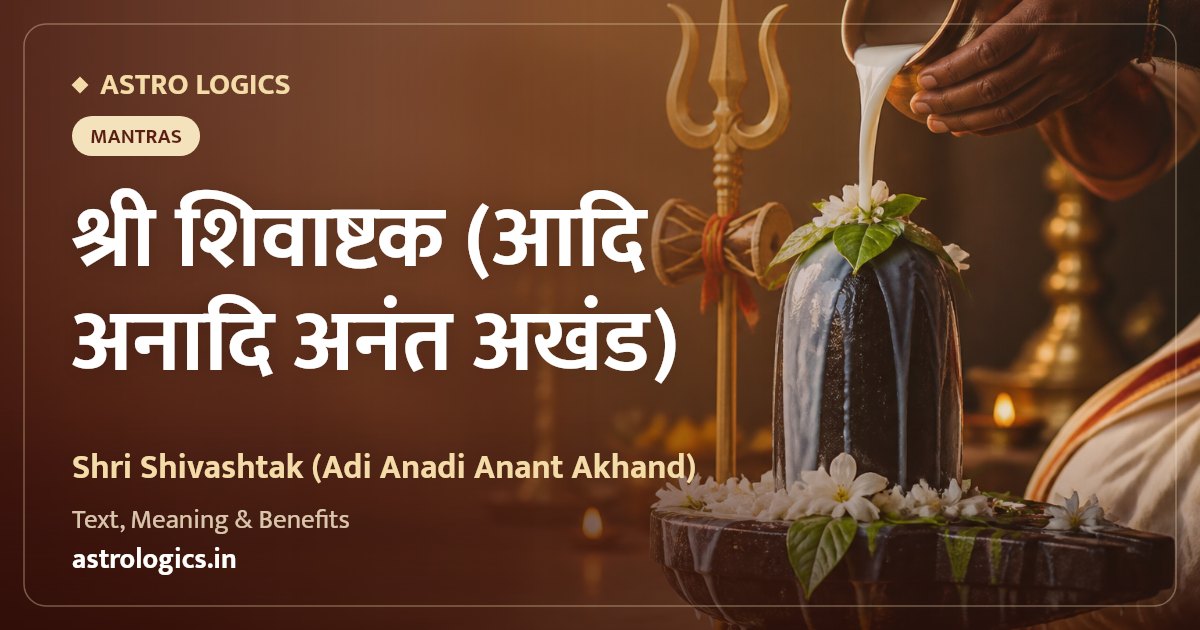
Jai Girijapati - devotion to the lord of all paradoxes
The Shiv Chalisa, opening with the beloved line Jai Girijapati Deen Dayala, captures in its very first words the central paradox that makes Shiva so enduringly fascinating: he is the husband of the gracious Goddess Parvati (Girija) and at the same time the compassionate refuge of the downtrodden and dispossessed (Deen Dayala). This ascetic who smears himself with ash, who dwells in cremation grounds, and who wears the crescent moon like an ornament, is also the supreme householder, the most attentive of fathers, the lord whose grace is said to be the most swiftly given. The chalisa navigates these paradoxes with devotional ease, celebrating each attribute as a facet of his boundless grace.
Mondays are the most auspicious day for Shiva's worship and for reciting this chalisa, and the month of Shravan is considered the most sacred period of the year for Shiva devotees, when daily recitation is a common vow (vrata). Mahashivratri, celebrated in Phalguna, is the grand occasion when the chalisa resounds in temples throughout the night in a spirit of joyful wakefulness (jaagran). In the Jyotish tradition, Shiva is invoked for the appeasement of Saturn (Shani) and to ease the trials of Sade Sati, reflecting his deep association with time, mortality, and ultimate liberation.