Parvati Chalisa: Complete Lyrics, Meaning, and Significance
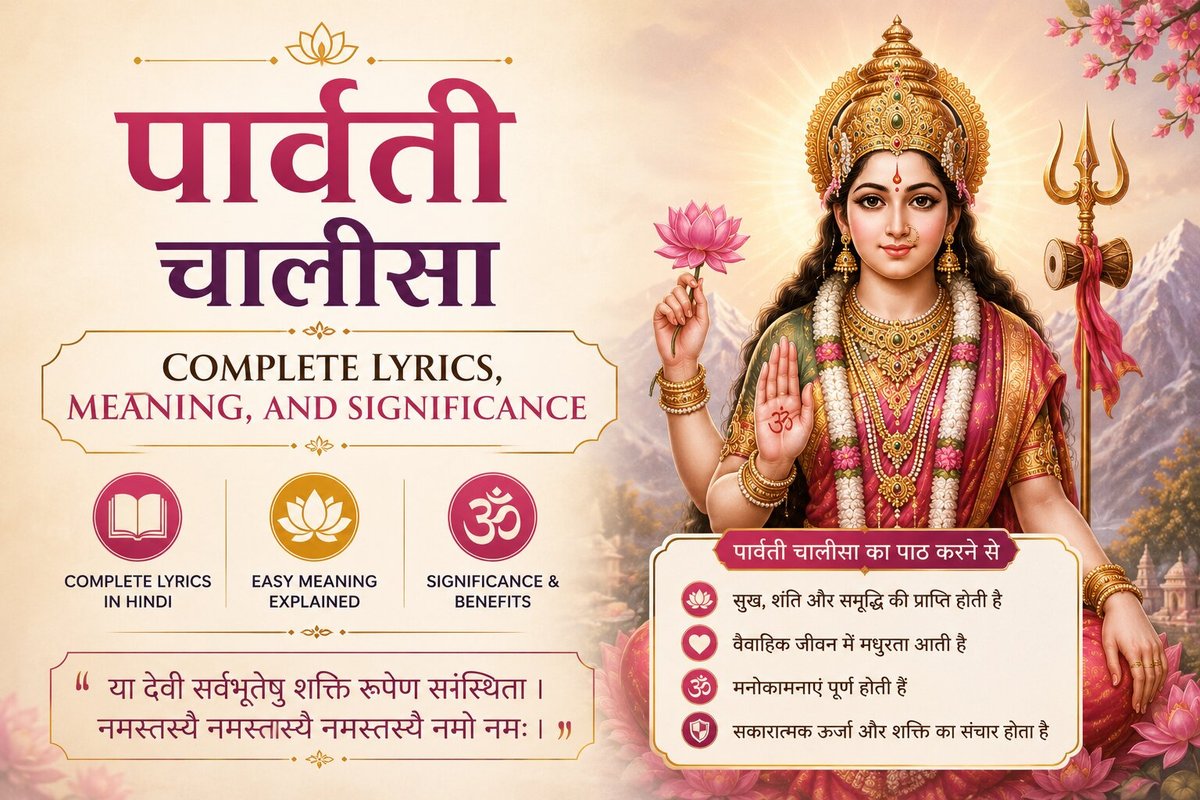
The mountain's daughter and the grace she bestows on seekers
Goddess Parvati - daughter of Himavan, consort of Shiva, mother of Ganesha and Kartikeya - embodies a form of devotional love that is perhaps the most human in all the divine feminine tradition: she who chose her beloved through sheer tapasya, who waited with patient, burning intensity until the ascetic god opened his eyes and recognised her. The Parvati Chalisa honours this quality of steadfast, purified love alongside her other attributes as Shakti, the cosmic energy without which even Shiva remains inert. Devotees drawn to this chalisa often find in Parvati's story a model for their own spiritual perseverance - the teaching that sincerity and sustained effort do, in the end, draw the divine near.
The Parvati Chalisa is recited with particular devotion on Fridays, which are sacred to the Goddess across many traditions, and on the third day (Tritiya) of the lunar fortnight, especially the auspicious Hartalika Tritiya fast observed by married and unmarried women who seek her blessings for love, marital harmony, and family wellbeing. During Navratri, the chalisa is included in the daily worship of her many forms. Devotees believe that offering this prayer with a sincere heart cultivates inner strength, harmonious relationships, and the particular grace of anugraha - the goddess's gift of opening doors that seemed permanently closed.
Parvati Chalisa Lyrics (हिंदी में)
॥ दोहा ॥
जय गिरी तनये दक्षजे शम्भू प्रिये गुणखानि।
गणपति जननी पार्वती, अम्बे, शक्ति, भवानि॥
॥ चौपाई ॥
ब्रह्मा भेद न तुम्हरे पावे। पंच बदन नित तुमको ध्यावे॥
षड्मुख कहि न सकत यश तेरो। सहसबदन श्रम करत घनेरो॥
तेरो पार न पावत माता। स्थित रक्षा लय हित सजाता॥
अधर प्रवाल सदृश अरुणारे। अति कमनीय नयन कजरारे॥
ललित लालट विलेपित केशर। कुंकुंम अक्षत शोभा मनोहर॥
कनक बसन कञ्चुकि सजाये। कटी मेखला दिव्य लहराए॥
कंठ मदार हार की शोभा। जाहि देखि सहजहि मन लोभ॥
बालारुण अनंत छवि धारी। आभूषण की शोभा प्यारी॥
नाना रत्न जड़ित सिंहासन। तापर राजित हरी चतुरानन॥
इन्द्रादिक परिवार पूजित। जग मृग नाग यक्ष रव कूजित॥
गिर कैलाश निवासिनी जय जय। कोटिकप्रभा विकासिनी जय जय॥
त्रिभुवन सकल, कुटुंब तिहारी। अणु अणु महं तुम्हारी उजियारी॥
हैं महेश प्राणेश, तुम्हारे। त्रिभुवन के जो नित रखवारे॥
उनसो पति तुम प्राप्त कीन्ह जब। सुकृत पुरातन उदित भए तब॥
बुढा बैल सवारी जिनकी। महिमा का गावे कोउ तिनकी॥
सदा श्मशान विहरी शंकर। आभूषण हैं भुजंग भयंकर॥
कंठ हलाहल को छवि छायी। नीलकंठ की पदवी पायी॥
देव मगन के हित अस किन्हों। विष लै आपु तिनहि अमि दिन्हो॥
ताकी, तुम पत्नी छवि धारिणी। दुरित विदारिणी मंगल कारिणी॥
देखि परम सौंदर्य तिहारो। त्रिभुवन चकित बनावन हारो॥
भय भीता सो माता गंगा। लज्जा मय है सलिल तरंगा॥
सौत सामान शम्भू पहआयी। विष्णु पदाब्ज छोड़ि सो धायी॥
तेहि कों कमल बदन मुर्झायो। लखी सत्वर शिव शीश चढायो॥
नित्यानंद करी वरदायिनी। अभय भक्त कर नित अनपायिनी॥
अखिल पाप त्रय्ताप निकन्दनी। माहेश्वरी, हिमालय नन्दिनी॥
काशी पूरी सदा मन भायी। सिद्ध पीठ तेहि आपु बनायीं॥
भगवती प्रतिदिन भिक्षा दात्री। कृपा प्रमोद सनेह विधात्री॥
रिपुक्षय कारिणी जय जय अम्बे। वाचा सिद्ध करी अवलम्बे॥
गौरी उमा शंकरी काली। अन्नपूर्णा जग प्रतिपाली॥
सब जन की ईश्वरी भगवती। पतप्राणा परमेश्वरी सती॥
तुमने कठिन तपस्या किणी। नारद सो जब शिक्षा लीनी॥
अन्न न नीर न वायु अहारा। अस्थि मात्रतन भयउ तुम्हारा॥
पत्र घास को खाद्या न भायउ। उमा नाम तब तुमने पायउ॥
तप बिलोकी ऋषि सात पधारे। लगे डिगावन डिगी न हारे॥
तव तव जय जय जयउच्चारेउ। सप्तऋषि, निज गेह सिद्धारेउ॥
सुर विधि विष्णु पास तब आए। वर देने के वचन सुनाए॥
मांगे उमा वर पति तुम तिनसो। चाहत जग त्रिभुवन निधि, जिनसों॥
एवमस्तु कही ते दोऊ गए। सुफल मनोरथ तुमने लए॥
करि विवाह शिव सों हे भामा। पुनः कहाई हर की बामा॥
जो पढ़िहै जन यह चालीसा। धन जनसुख देइहै तेहि ईसा॥
॥ दोहा ॥
कूट चन्द्रिका सुभग शिर जयति सुख खानी।
पार्वती निज भक्त हित रहहु सदा वरदानी॥
Parvati Chalisa – Transliteration (English)
|| Doha ||
Jay Giri Tanye Dakshaje Shambhu Priye Gunkhani,
Ganpati Janani Parvati, Ambe, Shakti, Bhavani.
|| Chaupai ||
Brahma Bhed Na Tumhare Pave. Panch Badan Nit Tumko Dhyawe.
Shadmukh Kahi Na Sakat Yash Tero. Sahasbadan Shram Karat Ghanero.
Tero Paar Na Pawat Mata. Sthit Raksha Lay Hit Sajata.
Adhar Praval Sadrish Arunare. Ati Kamaniya Nayan Kajrare.
Lalit Lalat Vilepit Keshar. Kumkum Akshat Shobha Manohar.
Kanak Basan Kanchuki Sajaye. Kati Mekhla Divya Lahraye.
Kanth Madar Haar Ki Shobha. Jaahi Dekhi Sahajahi Man Lobha.
Balarun Anant Chhavi Dhari. Aabhushan Ki Shobha Pyari.
Nana Ratna Jadit Sinhasan. Taapar Raajit Hari Chaturanan.
Indradik Parivar Poojit. Jag Mrig Naag Yaksh Rav Kujit.
Gir Kailash Nivasini Jay Jay. Kotikprabha Vikasini Jay Jay.
Tribhuvan Sakal, Kutumb Tihari. Anu-Anu Mahn Tumhari Ujiyari.
Hain Mahesh Pranesh, Tumhare. Tribhuvan Ke Jo Nit Rakhvare.
Unso Pati Tum Prapt Kinha Jab. Sukrit Puratan Udit Bhaye Tab.
Budha Bail Savari Jinki. Mahima Ka Gave Kou Tinki.
Sada Shamshan Vihari Shankar. Aabhushan Hai Bhujang Bhayankar.
Kanth Halahal Ko Chavi Chayi. Nilkanth Ki Padvi Paayi.
Dev Magan Ke Hit As Kinho. Vish Lai Aapu Tinahi Ami Dinho.
Taaki, Tum Patni Chavi Dharini. Durit Vidarini Mangal Karini.
Dekhi Param Soundrya Tiharo. Tribhuvan Chakit Banavan Haro.
Bhay Bhita So Mata Ganga. Lajja May Hai Salil Taranga.
Sout Saman Shambhu Pahaayi. Vishnu Padabj Chhori So Dhaayi.
Tehiko Kamal Badan Murjhayo. Lakhi Satvar Shiv Shish Chadhayo.
Nityanand Kari Vardayini. Abhay Bhakt Kar Nit Anpayini.
Akhil Paap Traytaap Nikandani. Maheshwari, Himalay Nandini.
Kaashi Puri Sada Man Bhaayi. Siddh Pith Tehi Aapu Banayi.
Bhagvati Pratidin Bhiksha Daatri. Kripa Pramod Saneh Vidhatri.
Ripukshay Kaarini Jay Jay Ambe. Vacha Siddh Kari Avlambe.
Gauri Uma Shankari Kali. Annpurna Jag Pratipali.
Sab Jan Ki Ishwari Bhagvati. Patprana Parmeshvari Sati.
Tumne Kathin Tapasya Kini. Narad So Jab Shiksha Lini.
Ann Na Neer Na Vayu Ahara. Asthi Matratan Bhayau Tumhara.
Patra Ghaas Ko Khadha Na Bhayau. Uma Naam Tab Tumne Payau.
Tap Biloki Rishi Saat Padhare. Lage Digavan Digi Na Hare.
Tav Tav Jay Jay Jay Uchchareyu. Saptrishi, Nij Geh Siddhareyu.
Sur Vidhi Vishnu Paas Tab Aaye. Var Dene Ke Vachan Sunaye.
Maange Uma Var Pati Tum Tinso. Chahat Jag Tribhuvan Nidhi, Jinso.
Avamstu Kahi Te Dou Gaye. Suphal Manorath Tumne Laye.
Kari Vivah Shiv So He Bhama. Punah Kahai Har Ki Bama.
Jo Padhihe Jan Yah Chalisa. Dhan Jansukh Deyihe Tehi Isha.
|| Doha ||
Kut Chandrika Subhag Shir Jayati Sukh Khani,
Parvati Nij Bhakt Hit Rahahu Sada Vardani.
Meaning & Significance
The Parvati Chalisa is a forty-verse hymn that extols Goddess Parvati as the universal mother, the daughter of the Himalayas, and the ardent consort of Lord Shiva. Each chaupai layers her divine attributes - her matchless beauty, her supreme tapas (austerity) through which she won Shiva as her husband, her role as protectress of the three worlds, and her identity with Kali, Annapurna, Gauri, and all other Devi forms. The hymn is particularly cherished for the vivid narrative of Parvati's penances inspired by sage Narada, during which she renounced food, water, and even fallen leaves - earning the name "Uma" (O, do not). The closing doha places the devotee under the perpetual shelter of her grace, seeking the boon of unwavering faith and prosperity.
About Parvati
Goddess Parvati is the daughter of Himavan, king of the mountains, and Mainavati. She is the reincarnation of Sati, Shiva's first consort, and is regarded as the Adi-Shakti - the primordial cosmic energy - in her gentle, benevolent aspect. Known by over a hundred names - Gauri (the fair one), Uma, Bhavani, Maheshvari, Girija, Shailputri, and Ambika; she represents the nurturing, compassionate face of the divine feminine. Married to Lord Shiva on Mount Kailasha, she is the mother of Ganesha and Kartikeya. As Annapurna she feeds the universe; as Kali she destroys evil; as Durga she protects the dharmic order. Her worship is central to the Shakta tradition and integral to Shaiva households across India.
Benefits of Reciting the Parvati Chalisa
- Devotees seeking a harmonious and loving married life traditionally recite this chalisa to invoke Parvati's blessings on their household.
- Young women and those seeking a virtuous partner recite it, inspired by Parvati's steadfast penance to attain the husband of her choice.
- The chalisa is associated with removal of obstacles, increase in patience, and the strength to persevere through difficulty.
- Reciting on Mondays, Fridays, and during Navratri is held to multiply the spiritual benefit and deepen devotion to the Mother.
- The hymn is also recited for the welfare of children, invoking Parvati in her role as the cosmic mother who guards all life.
- Regular chanting cultivates inner stillness and gratitude, qualities Parvati herself exemplified through years of silent tapas.
How to Recite (Vidhi)
- Bathe before recitation and wear clean white or red clothing, both colours sacred to the Goddess.
- Establish an image or idol of Goddess Parvati; offer red hibiscus flowers, kumkuma, sindoor, and a lit lamp.
- Light incense (dhoop) and offer a sweet such as kheer or halwa as naivedya before beginning the path.
- Recite the Parvati Chalisa with slow, clear pronunciation, holding the deity's form in the mind's eye throughout.
- Conclude with the Parvati aarti and circumambulate the altar three times if space permits.
- Offer gratitude and sit quietly for a moment, surrendering any personal petition to the Mother's wisdom.
Best Day & Time to Recite
Monday is the day of Lord Shiva and, by extension, deeply auspicious for the worship of Parvati as his consort. Friday carries the energy of the divine feminine and is equally favoured. During Navratri - both Chaitra and Shardiya - daily recitation of the Parvati Chalisa holds particular significance. The third day of Navratri, dedicated to Chandraghanta (a fierce form of Parvati), and Hartalika Teej (Bhadrapada Shukla Tritiya) - the festival celebrating Parvati's marriage to Shiva - are the most auspicious single days in the year for this practice. Early morning, after bath and before sunrise, is the preferred daily time.
Frequently Asked Questions
What makes the Parvati Chalisa different from the Durga Chalisa?
While both chalisas venerate the divine feminine, the Parvati Chalisa focuses on the benevolent, gracious aspect of the Goddess - her maternal warmth, her tapas, her role as Shiva's consort, and her identity as the source of universal nourishment. The Durga Chalisa emphasises her warrior aspect as the slayer of demons and the protector of dharma. In practice, many devotees recite both, understanding that Parvati and Durga are two expressions of one Adi-Shakti.
Can this chalisa be recited during pregnancy or for the welfare of children?
Yes. Parvati, as the cosmic mother and protector of children, is widely invoked during pregnancy and for the welfare of young ones. The chalisa's celebration of her nurturing, life-giving energy makes it deeply appropriate for such intentions. Many families in North India recite it regularly as a household protective prayer.
What is the significance of Parvati's tapas described in the chalisa?
The chalisa recounts that Parvati, guided by the sage Narada, performed extraordinary penance to win Shiva as her husband - subsisting without food, water, or even fallen leaves until her body was reduced to bones. This tapas symbolises the soul's absolute, unyielding longing for union with the divine. It teaches that no obstacle is insurmountable when the aspiration is pure, and that the supreme Shiva responds to the devotee's total surrender and one-pointed focus.