Tantrokta Ratri Suktam: Night Hymn to Maa Durga (Full Text)
Tantrokta Ratri Suktam - Sanskrit Text
॥ अथ तन्त्रोक्तं रात्रिसूक्तम् ॥
ॐ विश्वेश्वरीं जगद्धात्रीं स्थितिसंहारकारिणीम्।
निद्रां भगवतीं विष्णोरतुलां तेजसः प्रभुः॥१॥
ब्रह्मोवाच
त्वं स्वाहा त्वं स्वधा त्वं हि वषट्कारः स्वरात्मिका।
सुधा त्वमक्षरे नित्ये त्रिधा मात्रात्मिका स्थिता॥२॥
अर्धमात्रास्थिता नित्या यानुच्चार्या विशेषतः।
त्वमेव सन्ध्या सावित्री त्वं देवि जननी परा॥३॥
त्वयैतद्धार्यते विश्वं त्वयैतत्सृज्यते जगत्।
त्वयैतत्पाल्यते देवि त्वमत्स्यन्ते च सर्वदा॥४॥
विसृष्टौ सृष्टिरुपा त्वं स्थितिरूपा च पालने।
तथा संहृतिरूपान्ते जगतोऽस्य जगन्मये॥५॥
महाविद्या महामाया महामेधा महास्मृतिः।
महामोहा च भवती महादेवी महासुरी॥६॥
प्रकृतिस्त्वं च सर्वस्य गुणत्रयविभाविनी।
कालरात्रिर्महारात्रिर्मोहरात्रिश्च दारुणा॥७॥
त्वं श्रीस्त्वमीश्वरी त्वं ह्रीस्त्वं बुद्धिर्बोधलक्षणा।
लज्जा पुष्टिस्तथा तुष्टिस्त्वं शान्तिः क्षान्तिरेव च॥८॥
खड्गिनी शूलिनी घोरा गदिनी चक्रिणी तथा।
शङ्खिनी चापिनी बाणभुशुण्डीपरिघायुधा॥९॥
सौम्या सौम्यतराशेषसौम्येभ्यस्त्वतिसुन्दरी।
परापराणां परमा त्वमेव परमेश्वरी॥१०॥
यच्च किञ्चित् क्वचिद्वस्तु सदसद्वाखिलात्मिके।
तस्य सर्वस्य या शक्तिः सा त्वं किं स्तूयसे तदा॥११॥
यया त्वया जगत्स्रष्टा जगत्पात्यत्ति यो जगत्।
सोऽपि निद्रावशं नीतः कस्त्वां स्तोतुमिहेश्वरः॥१२॥
विष्णुः शरीरग्रहणमहमीशान एव च।
कारितास्ते यतोऽतस्त्वां कः स्तोतुं शक्तिमान् भवेत्॥१३॥
सा त्वमित्थं प्रभावैः स्वैरुदारैर्देवि संस्तुता।
मोहयैतौ दुराधर्षावसुरौ मधुकैटभौ॥१४॥
प्रबोधं च जगत्स्वामी नीयतामच्युतो लघु।
बोधश्च क्रियतामस्य हन्तुमेतौ महासुरौ॥१५॥
॥ इति तन्त्रोक्तं रात्रिसूक्तम् सम्पूर्णम् ॥
Transliteration (Roman/IAST)
oṃ viśveśvarīṃ jagaddhātrīṃ sthitisaṃhārakāriṇīm |
nidrāṃ bhagavatīṃ viṣṇoratulāṃ tejasaḥ prabhuḥ ||1||
brahmovāca
tvaṃ svāhā tvaṃ svadhā tvaṃ hi vaṣaṭkāraḥ svarātmikā |
sudhā tvamakṣare nitye tridhā mātrātmikā sthitā ||2||
ardhamātrāsthitā nityā yānuccāryā viśeṣataḥ |
tvameva sandhyā sāvitrī tvaṃ devi jananī parā ||3||
tvayaitaddhāryate viśvaṃ tvayaitatsṛjyate jagat |
tvayaitatpālyate devi tvamatsyante ca sarvadā ||4||
visṛṣṭau sṛṣṭirupā tvaṃ sthitirūpā ca pālane |
tathā saṃhṛtirūpānte jagato'sya jaganmaye ||5||
mahāvidyā mahāmāyā mahāmedhā mahāsmṛtiḥ |
mahāmohā ca bhavatī mahādevī mahāsurī ||6||
prakṛtistvaṃ ca sarvasya guṇatrayavibhāvinī |
kālarātrirmahārātrirmoharātriśca dāruṇā ||7||
tvaṃ śrīstvamīśvarī tvaṃ hrīstvaṃ buddhirbodhalakṣaṇā |
lajjā puṣṭistathā tuṣṭistvaṃ śāntiḥ kṣāntireva ca ||8||
khaḍginī śūlinī ghorā gadinī cakriṇī tathā |
śaṅkhinī cāpinī bāṇabhuśuṇḍīparighāyudhā ||9||
saumyā saumyatarāśeṣasaumyebhyastvatisundarī |
parāparāṇāṃ paramā tvameva parameśvarī ||10||
yacca kiñcit kvacidvastu sadasadvākhilātmike |
tasya sarvasya yā śaktiḥ sā tvaṃ kiṃ stūyase tadā ||11||
yayā tvayā jagatsraṣṭā jagatpātyatti yo jagat |
so'pi nidrāvaśaṃ nītaḥ kastvāṃ stotumiheśvaraḥ ||12||
viṣṇuḥ śarīragrahaṇamahamīśāna eva ca |
kāritāste yato'tastvāṃ kaḥ stotuṃ śaktimān bhavet ||13||
sā tvamitthaṃ prabhāvaiḥ svairudārairdevi saṃstutā |
mohayaitau durādharṣāvasurau madhukaiṭabhau ||14||
prabodhaṃ ca jagatsvāmī nīyatāmacyuto laghu |
bodhaśca kriyatāmasya hantumetau mahāsurau ||15||
Meaning
This hymn is uttered by Brahma at the very opening of the Devi Mahatmya, while Vishnu lies in the cosmic sleep (Yoga-nidra) upon the serpent Shesha and the demons Madhu and Kaitabha threaten creation. Brahma prays to the sleep itself, recognising it as the Great Goddess: she is the ruler of the universe, its nurse, the cause of its sustenance and dissolution; she is the sacred utterances Svaha and Svadha, the eternal imperishable syllable Om in its three measures; she is Sandhya and Savitri, the supreme mother. By her the world is upheld, created, protected and finally consumed. She is creation in projection, preservation in sustaining, destruction at the end. She is great knowledge, great illusion, great intellect and great memory; she is Prakriti, weaver of the three gunas, the terrible night of time (Kalaratri). She is Shri, Ishvari, Hri, intelligence, modesty, nourishment and peace; she is armed with sword, trident, mace, discus, conch and bow. Gentler than the gentle yet supremely beautiful, she is the highest of the high. Since even Vishnu, the creator-sustainer, has been brought under her sleep, who can truly praise her? Brahma begs her to release Vishnu from sleep so that he may slay Madhu and Kaitabha.
About this Stotra
The Tantrokta Ratri Suktam, the “night hymn declared in the Tantra,” is the first stuti of the Durga Saptashati, occurring in its opening chapter. It is distinguished from the Vedic Ratri Sukta of the Rig Veda; this Tantrokta version is the form chanted in the Chandi ritual sequence, after the Kavacha, Argala and Kilaka, immediately before the main reading. Its theme is profound: the Goddess as Yoga-nidra, the divine sleep that is simultaneously the power that withdraws and re-awakens the cosmos.
Significance & Spiritual Benefits
Because it praises the Goddess as the very power of cosmic rest and renewal, the Ratri Suktam is cherished as a hymn for protection during the night, for relief from insomnia, nightmares, fear of darkness and unseen forces, and for inner stillness. It teaches that even the highest deities depend on the Mother, cultivating deep humility and surrender. Regular recitation is believed to dissolve tamasic heaviness and confusion (moha) and to awaken clarity (bodha), just as Brahma prayed for Vishnu to be awakened.
Astrological Relevance
The Ratri Suktam is intimately connected with the Moon and with the night-ruling, shadowy influences of the chart. In Vedic astrology it is recommended for an afflicted or weak Moon (mental disturbance, sleeplessness, emotional fear), for malefic Rahu and Ketu (illusion, hidden enemies, nightmares, psychic disturbance) and for Saturn-induced anxiety. As a hymn to Kalaratri and Yoga-nidra, it directly addresses the tamasic and nocturnal planetary energies, making it a classic upaya recited at night to calm the mind, neutralise Rahu-Ketu doshas and restore restful sleep.
How to Chant (Vidhi)
Ideally recited at night or in the evening after bathing, seated before the Goddess with a ghee lamp. In the full Chandi-path it follows the Kavacha, Argala and Kilaka and precedes the Saptashati chapters; it may also be chanted on its own. Begin with salutations to Ganesha, the guru and the Goddess, then recite the fifteen verses with calm, steady devotion. Close by surrendering the mind to the Mother and praying for protection through the night. Maintaining a sattvic, quiet atmosphere enhances its effect.
Best Day & Time
Most powerful at night, especially during Navratri, on Ashtami and Navami, on new-moon (Amavasya) nights for Rahu-Ketu remedies, and on Tuesdays and Fridays. The evening and the hours before sleep are the natural times, since this is pre-eminently a night hymn.
Frequently Asked Questions
What is the difference between the Vedic and Tantrokta Ratri Suktam?
The Vedic Ratri Sukta is from the Rig Veda, while the Tantrokta Ratri Suktam is the hymn from the opening chapter of the Durga Saptashati, praising the Goddess as Yoga-nidra; it is the version used in the Chandi ritual.
Why is the Goddess praised as “sleep” in this hymn?
Brahma prays to the Yoga-nidra (cosmic sleep) that has overcome Vishnu, recognising that this very sleep is the Great Goddess who controls the rest, renewal and re-awakening of the entire universe.
Can the Ratri Suktam be chanted alone for peaceful sleep?
Yes. Many devotees recite it at night for protection, calm and relief from fear and sleeplessness, even outside the full Chandi-path ritual.
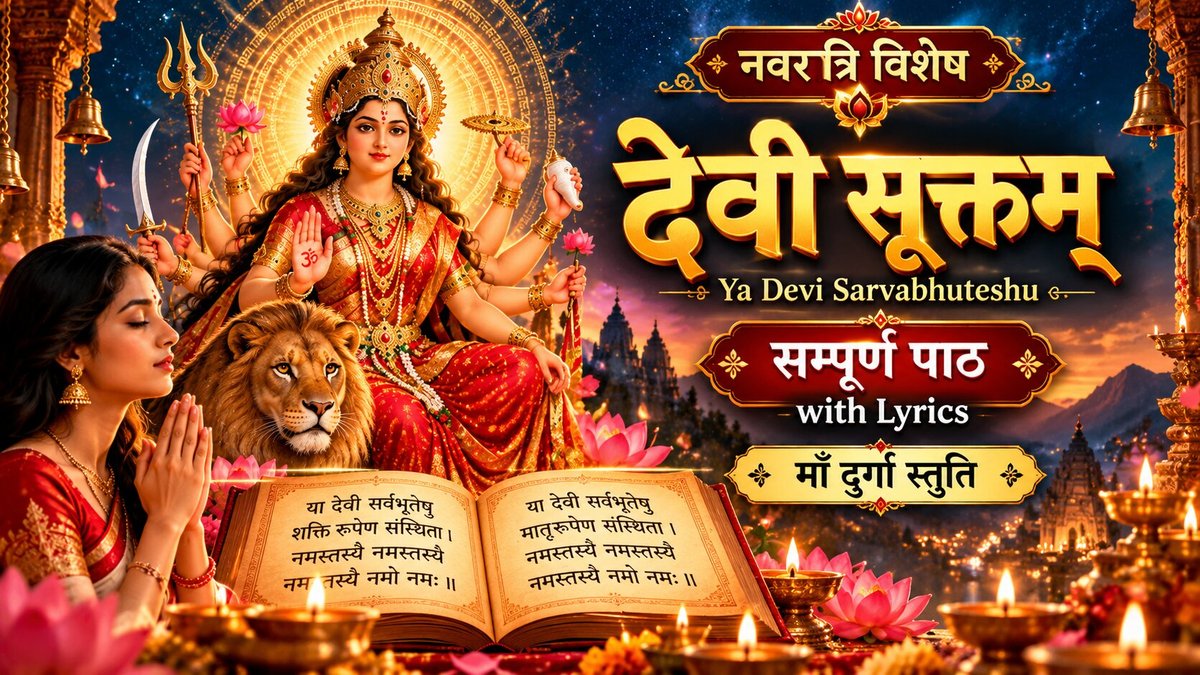
The cosmic night that precedes all creation: Ratri Suktam as a hymn of Yoga-nidra
The Tantrokta Ratri Suktam occupies a luminous place within the Durga Saptashati, appearing as the prayer the gods offer to the supreme Goddess in her form as Yoga-nidra - the divine sleep of Lord Vishnu from which all creation emerges and into which it finally returns. Night, in this hymn, is not darkness in any ordinary sense but the primordial feminine power that pervades and sustains all existence. The mood is one of profound cosmic adoration, the reverence one feels standing at the threshold of the absolute, where even the great preserver Vishnu rests in the Goddess's embrace. The Saptashati is recited widely during both Navratri celebrations, and the Ratri Suktam functions as a sacred prelude that sets the devotional atmosphere before the main path of Chandi is begun.
Devotees who practise the complete Chandi-path - particularly during Shardiya Navratri and Chaitra Navratri - recite this suktam with the understanding that they are entering a space of heightened shakti where ordinary protective energies are intensified. In the Jyotish tradition, hymns to Maa Durga in her night form are associated with the Moon (Chandra) and with Rahu, whose domain includes the mysterious, the hidden, and the transformative aspects of existence. Traditionally, the Ratri Suktam is chanted in the evening or by night, often by candlelight or lamp, and is considered especially effective for those seeking protection from unseen obstacles and for cultivating a quality of wakeful surrender within the cycles of rest and activity.