Hanuman Aarti – Aarti Kije Hanuman Lala Ki: Lyrics, Meaning & Benefits
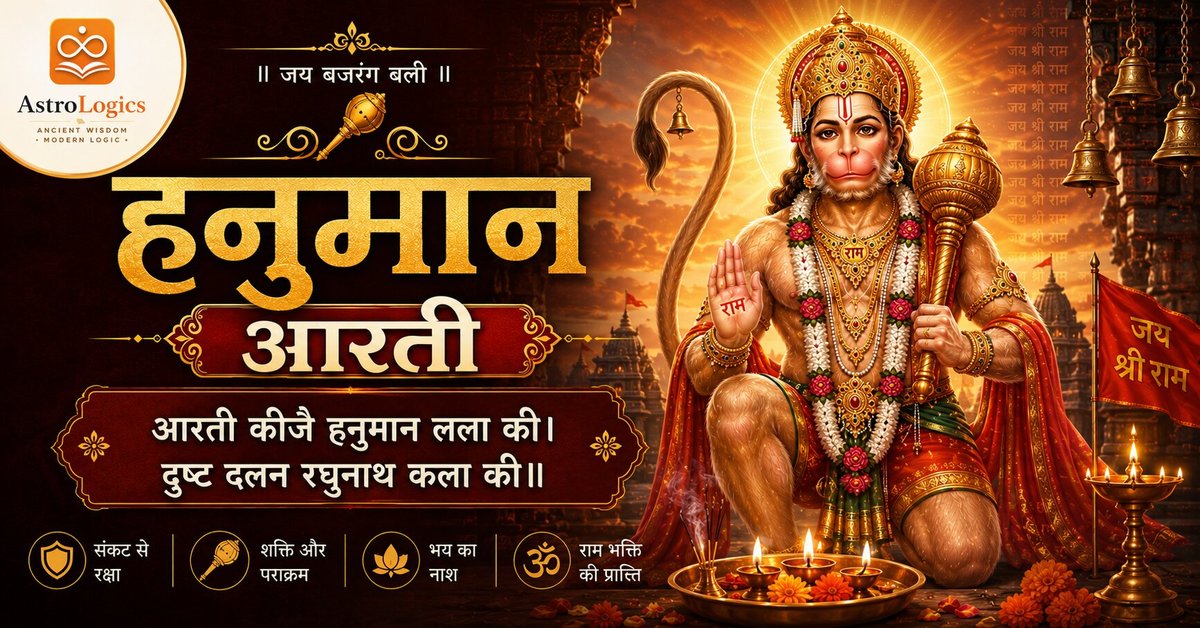
Aarti Kije Hanuman Lala Ki Lyrics (हिंदी में)
आरती कीजै हनुमान लला की। दुष्ट दलन रघुनाथ कला की॥
जाके बल से गिरिवर कांपे। रोग दोष जाके निकट न झांके॥
अनजानी पुत्र महाबलदायी। संतान के प्रभु सदा सहाई॥
दे बीरा रघुनाथ पठाए। लंका जारी सिया सुध लाए॥
लंका सो कोट समुद्र सी खाई। जात पवनसुत बार न लाई॥
लंका जारी असुर संहारे। सियारामजी के काज संवारे॥
लक्ष्मण मूर्छित पड़े सकारे। आणि संजीवन प्राण उबारे॥
पैठी पताल तोरि जम कारे। अहिरावण की भुजा उखाड़े॥
बाएं भुजा असुरदल मारे। दाहिने भुजा संतजन तारे॥
सुर नर मुनि जन आरती उतारे। जै जै जै हनुमान उचारे॥
कंचन थार कपूर लौ छाई। आरती करत अंजना माई॥
लंकविध्वंस कीन्ह रघुराई। तुलसीदास प्रभु कीरति गाई॥
जो हनुमान जी की आरती गावै। बसी बैकुंठ परमपद पावै॥
आरती कीजै हनुमान लला की। दुष्ट दलन रघुनाथ कला की॥
Aarti Kije Hanuman Lala Ki – Transliteration (English)
Aarti kije Hanuman Lala ki, Dusht dalan Raghunath kala ki
Jaake bal se girvar kaanpe, Rog dosh jaake nikat na jhaanke
Anjani putra mahaabaladaai, Santan ke Prabhu sadaa sahaai
De beera Raghunath pathaaye, Lanka jaari siya sudh laaye
Lanka so kot samudra si khaai, Jaat Pawanasut baar na laai
Lanka jaari asur sanhaare, Siya Raam ji ke kaaj sanvaare
Lakshman moorchit pade sakaare, Aani Sanjeewan praan ubaare
Paithi Pataal tori jam kaare, Ahiraavan ki bhuja ukhaade
Baaen bhuja asurdal maare, Daahine bhuja santjan taare
Sur nar muni jan aarti utaare, Jai jai jai Hanuman uchaare
Kanchan thaar kapoor lau chhaai, Aarti karat Anjana Maai
Lankvidhwans keenh Ragharaai, Tulsidas Prabhu keerati gaai
Jo Hanuman ji ki aarti gaave, Basi Baikunth Parampad paave
Aarti kije Hanuman Lala ki, Dusht dalan Raghunath kala ki
Meaning & Significance
Aarti Kije Hanuman Lala Ki is a stirring tribute to the mighty Pavanputra (son of the wind god), recounting the pivotal episodes of his service to Lord Rama: crossing the ocean in a single bound, burning Lanka, reviving Lakshmana with the Sanjeevani herb, and descending into Patala to defeat Ahiravana. The aarti captures both the awe-inspiring power of Hanuman - before whose strength even mountains tremble and disease dares not approach - and his profound tenderness as the eternal protector of devotees (Santan ke Prabhu). The final verse, drawn from the Tulsidas tradition, declares that whoever sings this aarti will attain the supreme abode of Vaikuntha.
About Lord Hanuman
Hanuman, the son of the wind god Vayu and Anjana, is the foremost devotee of Lord Rama and the embodiment of courage, selfless service, and unyielding faith. He is described in the Ramayana as the one who leapt across the ocean, located Sita in Lanka, and carried the entire Dronagiri mountain when a single herb was needed to revive Lakshmana. Hanuman is regarded as a chiranjeevi (immortal) who continues to reside wherever the name of Rama is heard, and devotees believe he is especially alert to the prayers of those in distress. In Vedic astrology, propitiating Hanuman is considered the most effective remedy for the malefic influence of Saturn (Shani) and Mars (Mangal).
Benefits of Reciting the Aarti Kije Hanuman Lala Ki
How to Perform the Aarti (Pooja Vidhi)
- Face the image or idol of Hanuman; if possible use a murti with Hanuman holding the gada (mace) and the Sanjeevani mountain - the form that best resonates with the aarti's narrative.
- Offer red flowers (particularly red hibiscus or marigold), sindoor (vermilion), and panchamrit or pure ghee.
- Light a ghee lamp and incense; ring the bell as the aarti begins to focus the mind and announce the start of worship.
- Sing or recite the aarti aloud with feeling - Hanuman is said to be especially pleased by enthusiastic, heartfelt recitation rather than mechanical chanting.
- After the aarti, circumambulate (parikrama) the image five times if space permits - an odd number of pradakshinas is traditional.
Offer prasad of laddoos (besan or boondi), bananas, or jaggery and distribute to all present.
Best Day & Time to Recite
Tuesday (Mangalvar) is Hanuman's primary day, and Saturday (Shanivar) is equally important because Hanuman is considered the supreme protector against Saturn's challenging transits. Sunrise and sunset are the most auspicious times. The Hanuman Jayanti (Chaitra Purnima) and Diwali are major annual festivals when extended aarti and Hanuman Chalisa recitation are customary. Devotees in the midst of a Sade Sati (Saturn's seven-and-a-half year transit) are often advised to recite this aarti daily without fail.
Frequently Asked Questions
What is the difference between Hanuman Aarti and Hanuman Chalisa?
The Hanuman Chalisa is a 40-verse devotional poem by Tulsidas that comprehensively narrates Hanuman's life, qualities, and miraculous deeds. The aarti is a shorter liturgical hymn sung specifically during the lamp-waving ceremony at the conclusion of puja. The Chalisa is recited as a complete devotional act in itself; the aarti serves as the ritual culmination of the worship ceremony. Many devotees recite the Chalisa first and then sing the aarti to close the session.
Why is Hanuman associated with Rama even though he is independently worshipped?
Hanuman's entire identity is defined by his total devotion to Rama. He is the archetype of the perfect devotee (bhakta) - one who has no existence or desire outside service to the Lord. Yet this very completeness of surrender paradoxically makes him one of the most powerful independent deities in the tradition, because his power flows directly from his proximity to the divine. Worshipping Hanuman is thus regarded as a swift path to Rama's grace.
Can the Hanuman aarti be recited at night?
Yes. While sunrise and sunset are the preferred times, there is no prohibition on reciting the Hanuman aarti at night. On the contrary, reciting it before sleeping is a common practice for those seeking protection during the night hours and relief from fearful dreams.
Aarti Kije Hanuman Lala Ki: devotion to the invincible servant of Ram
Among the many hymns sung in Hanuman's honour, Aarti Kije Hanuman Lala Ki holds a place of particular affection in the everyday bhakti of millions across India. It is the aarti most commonly offered at the close of Hanuman puja in temples and homes alike, its melody familiar enough that it can arise spontaneously from a gathering of any size. Hanuman is worshipped as the embodiment of strength, courage, selfless service, and absolute devotion to Shri Ram, and this aarti captures that spirit with great warmth - the devotee approaches not a remote cosmic power but a lala, a beloved child-like protector who delights in the love of his devotees.
In the Jyotish tradition, Hanuman is strongly associated with Mangal (Mars) and also with Shani (Saturn) - and his worship on Tuesdays and Saturdays is traditionally recommended as a practice that can ease the challenging influences of both these planets while bestowing courage and resilience. This aarti is therefore particularly beloved among those undertaking Hanuman sadhana for protection, for the relief of obstacles, or simply for the joy of bhakti. Devotees believe that sincere offering of this aarti, even without elaborate ritual, draws Hanuman's grace swiftly - a reflection of the tradition's teaching that he responds most readily to heartfelt surrender rather than external ceremony.