Gayatri Mantra: Sanskrit Text, Meaning, Benefits & How to Chant

Gayatri Mantra - Sanskrit Text
ॐ भूर्भुवः स्वः ।
तत्सवितुर्वरेण्यं
भर्गो देवस्य धीमहि ।
धियो यो नः प्रचोदयात् ॥
Transliteration (Roman/IAST)
oṃ bhūr bhuvaḥ svaḥ |
tat savitur vareṇyaṃ
bhargo devasya dhīmahi |
dhiyo yo naḥ pracodayāt ||
Meaning
'Om. (We meditate upon) the earth, the atmosphere and the heavens. We meditate upon that adorable, supreme radiance of the divine Savitr (the Sun, the source of all light and life). May that divine light illumine and inspire our intellects (dhiyaḥ).'
The mantra is, at heart, a prayer for the awakening of the intellect. It does not ask for material gifts but for inner illumination - that the same effulgence which sustains the cosmos may kindle clarity, discrimination and right understanding in the mind of the seeker. The three vyahrtis (bhūḥ, bhuvaḥ, svaḥ) sweep through the three worlds, situating the prayer within the whole of creation before it turns to the light of Savitr.
About this Mantra
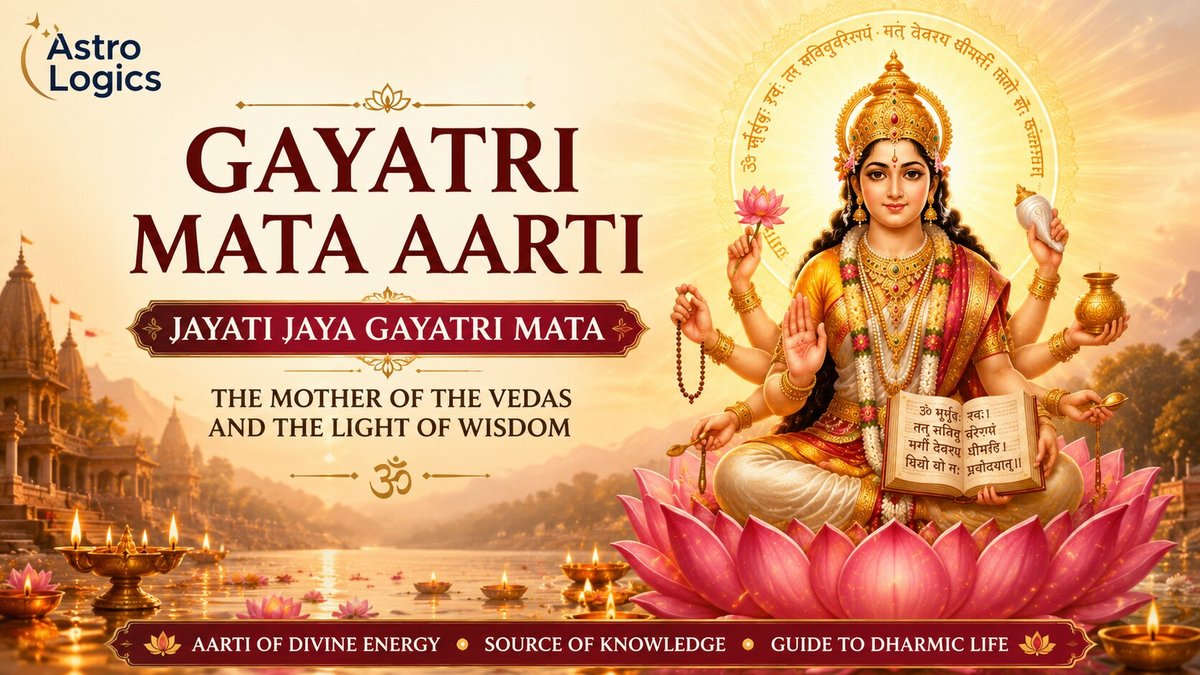
The Gayatri Mantra is among the most ancient and revered of all Vedic mantras, drawn from the Rigveda (Mandala 3.62.10), where it is attributed to the sage Vishwamitra. It is addressed to Savitr, the solar deity of the life-giving impulse, and is personified as the Goddess Gayatri, 'mother of the Vedas' (Veda-mata). Composed in the Gayatri metre of twenty-four syllables, it forms the heart of the daily Sandhyavandana performed at the three twilights, and is traditionally received at the sacred-thread (upanayana) initiation. It is regarded as the very essence and seed of all the Vedas.
Significance & Spiritual Benefits
The Gayatri is celebrated as a mantra that purifies the mind, sharpens the intellect, and removes the darkness of ignorance. Regular japa is said to bestow mental clarity, focus, wisdom, serenity, good health and spiritual progress. Because it asks for the illumination of the buddhi (intellect), it is especially valued by students and seekers. It is held to protect the one who chants it, to burn away accumulated negativity, and to gradually align the individual mind with the universal light. Many traditions prescribe 108 repetitions (one mala) daily.
Astrological Relevance
The Gayatri Mantra is fundamentally a Surya (Sun) mantra, addressed to Savitr, the solar power. In Vedic astrology the Sun governs the soul (atma), vitality, confidence, authority, the father, and the 1st, 9th and 10th houses. Chanting Gayatri is a classic remedy for a weak or afflicted Sun - strengthening self-confidence, leadership, health and the light of discrimination in the chart. It is best performed at sunrise, the Sun's own hour. The Sun also rules the Krittika, Uttara Phalguni and Uttara Ashadha nakshatras and the sign Leo; natives with a debilitated Sun (in Libra) or Sun afflicted by Saturn, Rahu or Ketu particularly benefit. Each deity also has its own Gayatri, but this original Savitri Gayatri is the supreme one.
How to Chant (Vidhi)
Bathe and sit facing east at sunrise (or west at sunset), preferably on a clean asana near water or a tulsi plant. Begin with the pranayama and achamana of Sandhya if known. Chant the mantra with correct pronunciation, ideally 108 times on a rudraksha or crystal mala, keeping the mind on the meaning - the prayer for illumined intellect. It is traditionally chanted softly (upamshu) or mentally rather than loudly. Conclude by offering arghya (water) to the Sun.
Best Day & Time
The three sandhyas - sunrise, midday and sunset - are the prescribed times, with sunrise (Brahma Muhurta to dawn) being the most powerful. Sunday, the Sun's day, is especially auspicious, as are Ratha Saptami and solar transits (Sankranti). For strengthening the Sun astrologically, Sunday sunrise is ideal.
Frequently Asked Questions
What does the Gayatri Mantra mean?
It is a prayer to the divine light of Savitr (the Sun): 'May we meditate upon that supreme radiance of the divine, and may it inspire and illumine our intellects.' It asks for wisdom and clarity, not material gain.
How many times should it be chanted?
A common practice is 108 repetitions (one mala) daily, at sunrise or the three twilights. Even chanting it 3, 9 or 27 times with sincerity is beneficial. Consistency matters more than quantity.
Can anyone chant the Gayatri Mantra?
Today the Gayatri is widely chanted by anyone with devotion and respect. Traditionally it was received at upanayana, but its benefits - clarity, calm and inner light - are open to all sincere seekers.
The Vedas' luminous summit - the Gayatri as daily practice and solar remedy
The Gayatri Mantra holds a position in Indian spiritual life that is virtually unparalleled: drawn from the Rigveda and cherished across millennia, it is the mantra received at the threshold of learning, chanted through a lifetime of daily sandhyavandana, and carried as a last refuge in moments of uncertainty. Its genius is its universal scope; it does not petition for any particular blessing but invites the light of the divine solar intelligence to illuminate and inspire the mind. The correct recitation with the three vyahrtis - Bhuh, Bhuvah, Svah - grounds the mantra in all three planes of existence simultaneously, while the pranava that precedes them encompasses the whole. In this sense every sincere recitation is at once a personal prayer and a cosmological acknowledgement.
In the Jyotish tradition, the Gayatri is the preeminent Surya mantra - the primary upaya for a weak or afflicted Sun in the birth chart, ideally practised at sunrise facing east during brahma muhurta. The Sun governs the soul, the will, the capacity for authentic self-expression, and one's relationship with authority and the father - and devotees believe that sustained Gayatri japa gradually clarifies the mind, builds ethical steadiness, and produces an inner luminosity that makes a person a grounding presence for those around them. What is remarkable about the Gayatri is that, unlike mantras oriented toward a specific form of the divine, it addresses the light itself - making it one of the rare Vedic prayers approachable with equal sincerity across a wide range of philosophical and devotional starting points.