Sankat Mochan Hanuman Ashtak - Baal Samay Ravi Bhakshi Liyo
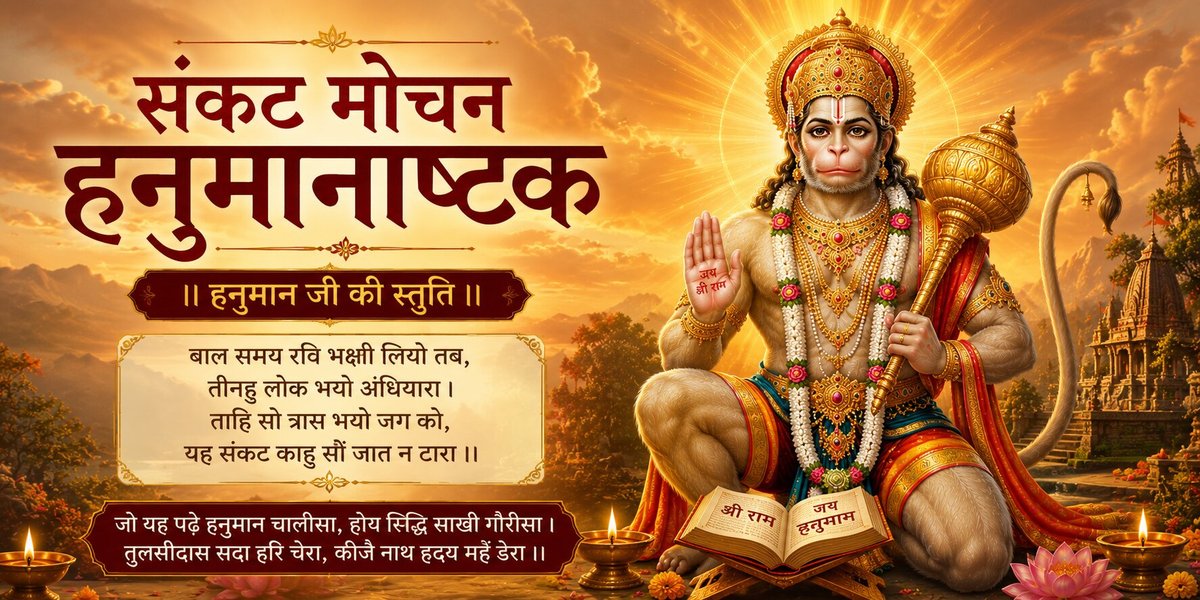
Tulsidas and the eight crises that Hanuman dissolves
The Sankat Mochan Hanuman Ashtak is one of the most beloved compositions attributed to the great sant-poet Tulsidas, the author of the Ramcharitmanas. Where the Hanuman Chalisa surveys the whole of Hanuman's life and qualities in forty verses, the Ashtak takes a more concentrated approach: each of its eight verses presents a specific crisis - physical, emotional, familial, social - and then invokes Hanuman as the one power capable of resolving it. The opening image, of the child Hanuman swallowing the sun in his hunger and play, establishes from the very first line that we are in the presence of a being whose strength surpasses all ordinary measure. This is not sentimental devotion but a hard-won faith, the faith of someone who has genuinely faced difficulty and found that Hanuman's name, sincerely called upon, has the capacity to shift even the most immovable circumstances.
In the Jyotish tradition, the Hanuman Ashtak is widely prescribed as a remedy for challenging Saturn transits, for Sade-Sati, and for the fear, delay, or obstacles that a malefic Mars can bring. Tulsidas's own life - marked by deep personal loss and eventual transformation through devotion - gives the hymn an additional emotional authority: the words come from someone who understood sankat (crisis) from the inside. Devotees recite the Ashtak on Tuesdays and Saturdays, often at dawn or in the evening, believing that the eight-fold invocation corresponds to the eight directions and offers protection from all quarters. The Awadhi verses carry a warmth and directness that makes them equally powerful as quiet personal prayer or as shared recitation in a gathering.
Sankat Mochan Hanuman Ashtak - Sanskrit/Awadhi Text
Composed by Goswami Tulsidas (16th century).
बाल समय रबि भक्षि लियो तब, तीनहुँ लोक भयो अँधियारो ।
ताहि सों त्रास भयो जग को, यह संकट काहु सों जात न टारो ॥
देवन आन करि बिनती तब, छाँड़ि दियो रबि कष्ट निवारो ।
को नहिं जानत है जग में कपि, संकटमोचन नाम तिहारो ॥१॥
बालि की त्रास कपीस बसै गिरि, जात महाप्रभु पंथ निहारो ।
चौंकि महा मुनि शाप दिया तब, चाहिय कौन बिचार बिचारो ॥
के द्विज रूप लिवाय महाप्रभु, सो तुम दास के शोक निवारो ।
को नहिं जानत है जग में कपि, संकटमोचन नाम तिहारो ॥२॥
अंगद के संग लेन गये सिय, खोज कपीस यह बैन उचारो ।
जीवत ना बचिहौ हम सो जु, बिना सुधि लाय इहाँ पगु धारो ॥
हेरि थके तट सिंधु सबै तब, लाय सिया-सुधि प्राण उबारो ।
को नहिं जानत है जग में कपि, संकटमोचन नाम तिहारो ॥३॥
रावन त्रास दई सिय को सब, राक्षसि सों कहि शोक निवारो ।
ताहि समय हनुमान महाप्रभु, जाय महा रजनीचर मारो ॥
चाहत सीय अशोक सों आगि सु, दै प्रभु मुद्रिका शोक निवारो ।
को नहिं जानत है जग में कपि, संकटमोचन नाम तिहारो ॥४॥
बाण लग्यो उर लछिमन के तब, प्राण तजे सुत रावण मारो ।
लै गृह बैद्य सुषेन समेत, तबै गिरि द्रोण सु बीर उपारो ॥
आनि सजीवन हाथ दई तब, लछिमन के तुम प्राण उबारो ।
को नहिं जानत है जग में कपि, संकटमोचन नाम तिहारो ॥५॥
रावण युद्ध अजान कियो तब, नाग कि फाँस सबै सिर डारो ।
श्रीरघुनाथ समेत सबै दल, मोह भयो यह संकट भारो ॥
आनि खगेस तबै हनुमान जु, बंधन काटि सुत्रास निवारो ।
को नहिं जानत है जग में कपि, संकटमोचन नाम तिहारो ॥६॥
बंधु समेत जबै अहिरावन, लै रघुनाथ पाताल सिधारो ।
देबिहिं पूजि भली बिधि सों बलि, देउ सबै मिति मंत्र बिचारो ॥
जाय सहाय भयो तब ही, अहिरावण सैन्य समेत सँहारो ।
को नहिं जानत है जग में कपि, संकटमोचन नाम तिहारो ॥७॥
काज किये बड़ देवन के तुम, वीर महाप्रभु देखि बिचारो ।
कौन सो संकट मोर गरीब को, जो तुमसों नहिं जात है टारो ॥
बेगि हरो हनुमान महाप्रभु, जो कछु संकट होय हमारो ।
को नहिं जानत है जग में कपि, संकटमोचन नाम तिहारो ॥८॥
॥ दोहा ॥
लाल देह लाली लसे, अरु धरि लाल लंगूर ।
बज्र देह दानव दलन, जय जय जय कपि सूर ॥
Transliteration (Roman/IAST)
Bāla samaya rabi bhakṣi liyo taba, tīnahuṁ loka bhayo aṁdhiyāro |
Tāhi soṁ trāsa bhayo jaga ko, yaha saṅkaṭa kāhu soṁ jāta na ṭāro ||
Devana āna kari binatī taba, chāṁḍi diyo rabi kaṣṭa nivāro |
Ko nahiṁ jānata hai jaga meṁ kapi, saṅkaṭamocana nāma tihāro ||1||
Bāli kī trāsa kapīsa basai giri, jāta mahāprabhu paṁtha nihāro |
Chauṁki mahā muni śāpa diyā taba, cāhiya kauna bicāra bicāro ||
Ke dvija rūpa livāya mahāprabhu, so tuma dāsa ke śoka nivāro |
Ko nahiṁ jānata hai jaga meṁ kapi, saṅkaṭamocana nāma tihāro ||2||
Aṁgada ke saṁga lena gaye siya, khoja kapīsa yaha baina ucāro |
Jīvata nā bacihau hama so ju, binā sudhi lāya ihāṁ pagu dhāro ||
Heri thake taṭa siṁdhu sabai taba, lāya siyā-sudhi prāṇa ubāro |
Ko nahiṁ jānata hai jaga meṁ kapi, saṅkaṭamocana nāma tihāro ||3||
Rāvana trāsa daī siya ko saba, rākṣasi soṁ kahi śoka nivāro |
Tāhi samaya hanumāna mahāprabhu, jāya mahā rajanīcara māro ||
Cāhata sīya aśoka soṁ āgi su, dai prabhu mudrikā śoka nivāro |
Ko nahiṁ jānata hai jaga meṁ kapi, saṅkaṭamocana nāma tihāro ||4||
Bāṇa lagyo ura lachimana ke taba, prāṇa taje suta rāvaṇa māro |
Lai gṛha baidya suṣena sameta, tabai giri droṇa su bīra upāro ||
Āni sajīvana hātha daī taba, lachimana ke tuma prāṇa ubāro |
Ko nahiṁ jānata hai jaga meṁ kapi, saṅkaṭamocana nāma tihāro ||5||
Rāvaṇa yuddha ajāna kiyo taba, nāga ki phāṁsa sabai sira ḍāro |
Śrīraghunātha sameta sabai dala, moha bhayo yaha saṅkaṭa bhāro ||
Āni khagesa tabai hanumāna ju, baṁdhana kāṭi sutrāsa nivāro |
Ko nahiṁ jānata hai jaga meṁ kapi, saṅkaṭamocana nāma tihāro ||6||
Baṁdhu sameta jabai ahirāvana, lai raghunātha pātāla sidhāro |
Debihiṁ pūji bhalī bidhi soṁ bali, deu sabai miti maṁtra bicāro ||
Jāya sahāya bhayo taba hī, ahirāvaṇa sainya sameta saṁhāro |
Ko nahiṁ jānata hai jaga meṁ kapi, saṅkaṭamocana nāma tihāro ||7||
Kāja kiye baḍa devana ke tuma, vīra mahāprabhu dekhi bicāro |
Kauna so saṅkaṭa mora garība ko, jo tumasoṁ nahiṁ jāta hai ṭāro ||
Begi haro hanumāna mahāprabhu, jo kachu saṅkaṭa hoya hamāro |
Ko nahiṁ jānata hai jaga meṁ kapi, saṅkaṭamocana nāma tihāro ||8||
|| Dohā ||
Lāla deha lālī lase, aru dhari lāla laṁgūra |
Bajra deha dānava dalana, jaya jaya jaya kapi sūra ||
Meaning
Each of the eight verses recalls a moment when Hanuman dispelled a crisis, and ends with the ringing refrain: 'Who in this world does not know your name, O Kapi - Sankatmochan, the remover of troubles?' The verses recount how the infant Hanuman swallowed the sun and then released it at the gods' prayer; how he, as a brahmin, eased Sugriva's fear; how he found Sita and saved the despairing search party; how he comforted Sita and burnt Lanka; how he brought the Sanjeevani herb to revive Lakshmana; how he freed Rama and the army from the serpent-noose by summoning Garuda; and how he slew Ahiravana in the netherworld to rescue Rama. The poet then pleads: if you have done such great deeds for the gods, what trouble of this humble devotee could you not remove? The closing doha salutes Hanuman's radiant red form, his strength like a thunderbolt, and his power to crush demons.
About this Stotra/Mantra
The Sankat Mochan Hanuman Ashtak is one of the most beloved Hanuman prayers in North India, composed in Awadhi by Goswami Tulsidas, author of the Ramcharitmanas and the Hanuman Chalisa. 'Ashtak' means a hymn of eight stanzas, and each stanza closes with the powerful refrain naming Hanuman as Sankatmochan - the one who removes every crisis. It is recited especially in times of fear, illness, legal trouble or distress.
Significance & Spiritual Benefits
This ashtak is the classic prayer for relief from sankat - danger, distress and obstacles. Devotees recite it to gain courage, protection from enemies and evil forces, victory in conflict, and freedom from fear in difficult places such as courts and lonely roads. Regular recitation, often alongside the Hanuman Chalisa, is believed to build a shield of protection and to invite Hanuman's swift help in emergencies.
Astrological Relevance
Hanuman is the supreme deity for the planet Saturn (Shani) and for Mars (Mangal). His worship is the foremost remedy during Sade Sati, the dhaiya, and Shani mahadasha or antardasha, as well as for an afflicted or ill-placed Mars and for Mangal Dosha. The Sankat Mochan Ashtak, with its theme of removing crisis and fear, is especially recommended when malefic transits bring obstacles, litigation, debt or hidden enemies. Tuesday and Saturday recitation is the traditional remedy.
How to Chant (Vidhi)
Bathe and sit before an image of Hanuman, ideally with a lamp of sesame or mustard oil. Offer red flowers, sindoor and a garland; boondi or jaggery make good prasad. Recite the eight verses and the doha with devotion. In distress, chant it 8 or 11 times, often after the Hanuman Chalisa. Conclude by praying for the removal of your specific difficulty.
Best Day & Time
Tuesday and Saturday are sacred to Hanuman. Dawn and dusk are the most effective times. During Sade Sati or periods of crisis, daily recitation is advised. Hanuman Jayanti is the most auspicious day of the year.
Frequently Asked Questions
Who composed the Sankat Mochan Hanuman Ashtak?
It was composed by Goswami Tulsidas, the 16th-century saint-poet who also wrote the Ramcharitmanas and the Hanuman Chalisa. The text is in Awadhi and is firmly in the public domain.
When should I recite this ashtak?
It is recited in times of trouble, fear or illness, and as a regular Tuesday and Saturday practice for protection. It is often chanted together with the Hanuman Chalisa.
What does 'Sankat Mochan' mean?
Sankat means crisis or trouble and mochan means the one who removes it. Sankatmochan is a title of Hanuman as the remover of all difficulties.