Shri Nandakumarashtakam: Sanskrit Text, Meaning & Benefits
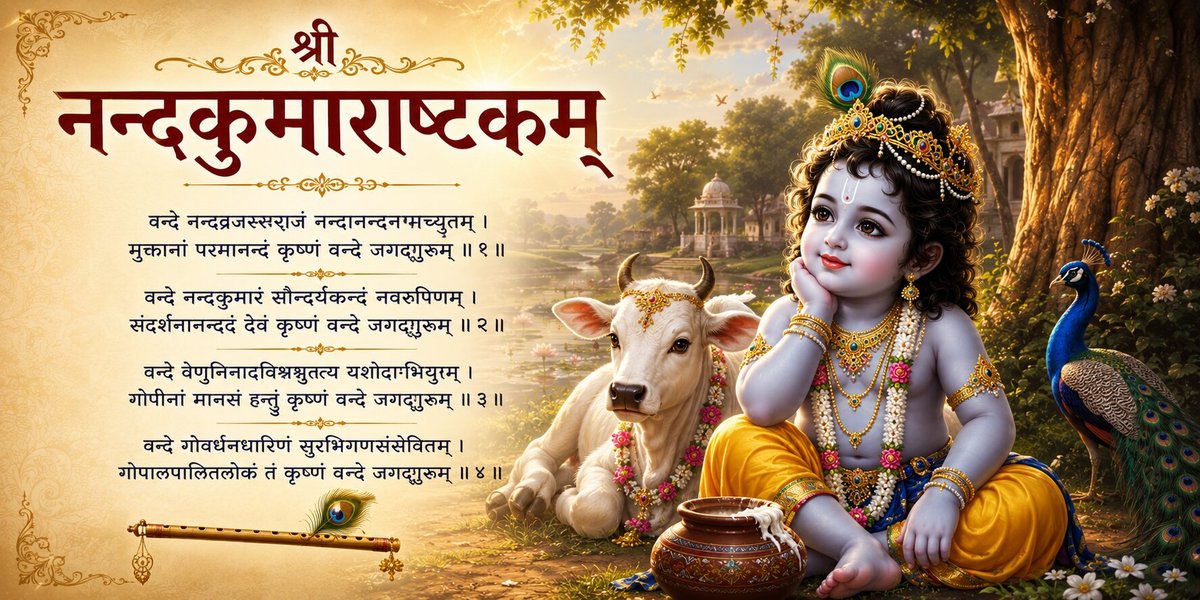
Vallabhacharya's vision of Krishna as Nanda's beloved son
The Shri Nandakumarashtakam, composed by Mahaprabhu Vallabhacharya - the founder of the Shuddhadvaita (Pushti Marga) tradition - is a jewel of classical Vaishnava hymn-writing that addresses Krishna not in his cosmic, awe-inspiring majesty but in the intimate, tender register of the son of Nanda Baba, the cowherd chief of Vrindavan. This choice of perspective is deeply intentional within the Pushti Marga tradition: Vallabhacharya's theology of divine grace holds that the most accessible and transformative relationship a devotee can cultivate with Krishna is one of pure, childlike love - the love of Nanda and Yashoda, who knew him simply as their beautiful, mischievous, radiant boy. Each of the eight verses invites the reader into that Vrindavan world.
The ashtakam is traditionally recited as part of the morning seva in Pushti Marga households and temples, when the image of Shrinathji (the primary form worshipped in this tradition) is adorned and awakened for the day. Devotees regard Vallabhacharya's own compositions as especially potent bridges to Krishna's presence, since they are the fruit of a direct devotional realisation rather than scholarly construction. The hymn is considered particularly auspicious on Janmashtami, on the Ekadashi of each fortnight, and on the days of Vrindavan's principal festivals. Those who recite it with a heart softened by longing - what the tradition calls vyakulata, the sweet ache of love for the divine - are said to find that Nanda's son draws very near.
Shri Nandakumarashtakam - Sanskrit Text
।। श्रीनन्दकुमाराष्टकम् ।।
सुन्दरगोपालम् उरवनमालं नयनविशालं दुःखहरं।
वृन्दावनचन्द्रमानन्दकन्दं परमानन्दं धरणिधरम्।
वल्लभघनश्यामं पूर्णकामम् अत्यभिरामं प्रीतिकरं।
भज नन्दकुमारं सर्वसुखसारं तत्त्वविचारं ब्रह्मपरम्।।1।।
सुन्दरवारिजवदनं निर्जितमदनम् आनन्दसदनं मुकुटधरं।
गुञ्जाकृतिहारं विपिनविहारं परमोदारं चीरहरं।
वल्लभपटपीतं कृत-उपवीतं करनवनीतं विबुधवरं।
भज नन्दकुमारं सर्वसुखसारं तत्त्वविचारं ब्रह्मपरम्।।2।।
शोभितमुखधूलं यमुनाकूलं निपटअतूलं सुखदतरं।
मुखमण्डितरेणुं चारितधेनुं वादितवेणुं मधुरसुरं।
वल्लभमतिविमलं शुभपदकमलं नखरुचिअमलं तिमिरहरं।
भज नन्दकुमारं सर्वसुखसारं तत्त्वविचारं ब्रह्मपरम्।।3।।
शिरमुकुटसुदेशं कुञ्चितकेशं नटवरवेशं कामवरं।
मायाकृतमनुजं हलधर-अनुजं प्रतिहतदनुजं भारहरं।
वल्लभव्रजपालं सुभगसुचालं हितमनुकालं भाववरं।
भज नन्दकुमारं सर्वसुखसारं तत्त्वविचारं ब्रह्मपरम्।।4।।
इन्दीवरभासं प्रकटसुरासं कुसुमविकासं वंशिधरं।
हृतमन्मथमानं रूपनिधानं कृतकलगानं चित्तहरं।
वल्लभमृदुहासं कुञ्जनिवासं विविधविलासं केलिकरं।
भज नन्दकुमारं सर्वसुखसारं तत्त्वविचारं ब्रह्मपरम्।।5।।
अतिपरप्रवीणं पालितदीनं भक्ताधीनं कर्मकरं।
मोहनमतिधीरं फणिबलवीरं हतपरवीरं तरलतरं।
वल्लभव्रजरमणं वारिजवदनं हलधरशमनं शैलधरं।
भज नन्दकुमारं सर्वसुखसारं तत्त्वविचारं ब्रह्मपरम्।।6।।
जलधरद्युतिअङ्गं ललितत्रिभङ्गं बहुकृतरङ्गं रसिकवरं।
गोकुलपरिवारं मदनाकारं कुञ्जविहारं गूढतरं।
वल्लभव्रजचन्द्रं सुभगसुछन्दं कृतआनन्दं भ्रान्तिहरं।
भज नन्दकुमारं सर्वसुखसारं तत्त्वविचारं ब्रह्मपरम्।।7।।
वन्दितयुगचरणं पावनकरणं जगदुद्धरणं विमलधरं।
कालियशिरगमनं कृतफणिनमनं घातितयमनं मृदुलतरं।
वल्लभदुःखहरणं निर्मलचरणम् अशरणशरणं मुक्तिकरं।
भज नन्दकुमारं सर्वसुखसारं तत्त्वविचारं ब्रह्मपरम्।।8।।
।। इति श्रीमद्वल्लभाचार्यविरचितं श्रीनन्दकुमाराष्टकं सम्पूर्णम् ।।
Transliteration (Roman/IAST)
sundaragopālam uravanamālaṁ nayanaviśālaṁ duḥkhaharaṁ |
vṛndāvanacandramānandakandaṁ paramānandaṁ dharaṇidharam |
vallabhaghanaśyāmaṁ pūrṇakāmam atyabhirāmaṁ prītikaraṁ |
bhaja nandakumāraṁ sarvasukhasāraṁ tattvavicāraṁ brahmaparam ||1||
sundaravārijavadanaṁ nirjitamadanam ānandasadanaṁ mukuṭadharaṁ |
guñjākṛtihāraṁ vipinavihāraṁ paramodāraṁ cīraharaṁ |
vallabhapaṭapītaṁ kṛta-upavītaṁ karanavanītaṁ vibudhavaraṁ |
bhaja nandakumāraṁ sarvasukhasāraṁ tattvavicāraṁ brahmaparam ||2||
śobhitamukhadhūlaṁ yamunākūlaṁ nipaṭatūlaṁ sukhadataraṁ |
mukhamaṇḍitareṇuṁ cāritadhenuṁ vāditaveṇuṁ madhurasuraṁ |
vallabhamativimalaṁ śubhapadakamalaṁ nakharuciamalaṁ timiraharaṁ |
bhaja nandakumāraṁ sarvasukhasāraṁ tattvavicāraṁ brahmaparam ||3||
śiramukuṭasudeśaṁ kuñcitakeśaṁ naṭavaraveśaṁ kāmavaraṁ |
māyākṛtamanujaṁ haladhara-anujaṁ pratihatadanujaṁ bhāraharaṁ |
vallabhavrajapālaṁ subhagasucālaṁ hitamanukālaṁ bhāvavaraṁ |
bhaja nandakumāraṁ sarvasukhasāraṁ tattvavicāraṁ brahmaparam ||4||
indīvarabhāsaṁ prakaṭasurāsaṁ kusumavikāsaṁ vaṁśidharaṁ |
hṛtamanmathamānaṁ rūpanidhānaṁ kṛtakalagānaṁ cittaharaṁ |
vallabhamṛduhāsaṁ kuñjanivāsaṁ vividhavilāsaṁ kelikaraṁ |
bhaja nandakumāraṁ sarvasukhasāraṁ tattvavicāraṁ brahmaparam ||5||
atiparapravīṇaṁ pālitadīnaṁ bhaktādhīnaṁ karmakaraṁ |
mohanamatidhīraṁ phaṇibalavīraṁ hataparavīraṁ taralataraṁ |
vallabhavrajaramaṇaṁ vārijavadanaṁ haladharaśamanaṁ śailadharaṁ |
bhaja nandakumāraṁ sarvasukhasāraṁ tattvavicāraṁ brahmaparam ||6||
jaladharadyutiaṅgaṁ lalitatribhaṅgaṁ bahukṛtaraṅgaṁ rasikavaraṁ |
gokulaparivāraṁ madanākāraṁ kuñjavihāraṁ gūḍhataraṁ |
vallabhavrajacandraṁ subhagasuchandaṁ kṛtānandaṁ bhrāntiharaṁ |
bhaja nandakumāraṁ sarvasukhasāraṁ tattvavicāraṁ brahmaparam ||7||
vanditayugacaraṇaṁ pāvanakaraṇaṁ jagaduddharaṇaṁ vimaladharaṁ |
kāliyaśiragamanaṁ kṛtaphaṇinamanaṁ ghātitayamanaṁ mṛdulataraṁ |
vallabhaduḥkhaharaṇaṁ nirmalacaraṇam aśaraṇaśaraṇaṁ muktikaraṁ |
bhaja nandakumāraṁ sarvasukhasāraṁ tattvavicāraṁ brahmaparam ||8||
Meaning
Each verse paints Krishna in tender, vivid imagery and ends with the same loving refrain: "Worship Nandakumara - the essence of all happiness, the contemplation of Truth, the Supreme Brahman." He is the beautiful cowherd wearing the forest garland, large-eyed, remover of sorrow, the moon of Vrindavan, the very root of bliss; the lotus-faced one who has conquered Cupid, abode of joy, crowned, wearing the gunja-berry necklace, roaming the woods, supremely generous; smeared with the dust of play on the Yamuna's bank, herding the cows, playing the flute in sweet notes; with curling locks and crown, dressed like the king of dancers, who took human form by his Maya, younger brother of Balarama, destroyer of demons and reliever of the earth's burden. He shines like the blue lotus, holds the flute, steals the mind with his melody; he protects the humble, is bound by his devotees' love, danced upon the serpent Kaliya's hood, lifted the mountain. The final verse adores his honoured feet - purifying, world-saving, the refuge of the refugeless, the bestower of liberation. The hymn thus weaves Krishna's beauty, play (lila) and saving grace into a single garland of devotion.
About this Stotra
The Shri Nandakumarashtakam ("eight verses on the son of Nanda") is a celebrated devotional hymn composed by Shri Mahaprabhu Vallabhacharya (1479–1531 CE), the great teacher of the Pushtimarg tradition of Krishna bhakti. Its colophon names him as the author: śrīmadvallabhācāryaviracitam. Written in a flowing, rhyme-rich metre, each verse builds layer upon layer of Krishna's enchanting attributes and closes with the call bhaja nandakumāram - "worship the son of Nanda." It is widely sung in Vaishnava households and temples for its sweetness and its power to fill the heart with love for Krishna.
Significance & Spiritual Benefits
The hymn is treasured as a path to ananda (bliss) and devotion. Singing it is believed to remove sorrow (the refrain calls Krishna duḥkhaharam), purify the mind, dissolve delusion (bhrāntiharam), and lead toward liberation (muktikaram). Because each verse contemplates Krishna as the Supreme Brahman (brahmaparam), it unites loving devotion with the highest knowledge, making it both a heart-melting bhajan and a meditation on Truth. Regular recitation is said to deepen surrender, draw Krishna's grace, and bring inner joy and peace.
Astrological / Devotional Relevance
As a hymn to Lord Krishna - a complete avatar of Vishnu - the Nandakumarashtakam carries the benefic, harmonising grace associated with Vishnu worship. Devotionally, it is recommended for cultivating the qualities of love, charm and emotional well-being, and is especially soothing for an afflicted Moon (mind, emotions) and for those seeking relief from grief and restlessness. Singing it strengthens bhakti and brings the steadying, auspicious influence of Krishna into daily life. Its emphasis on bliss and the dissolving of delusion makes it a gentle remedy for mental disquiet and a support for spiritual progress.
How to Chant (Vidhi)
After bathing, sit before an image of Bal Krishna or Krishna of Vrindavan. Light a lamp, offer tulsi leaves, flowers and a simple bhog (butter or sweets are dear to Krishna). Sing the eight verses melodiously, letting the refrain bhaja nandakumāram carry the feeling of love. It may be recited once daily as a bhajan; singing it with music heightens its devotional effect. Conclude with salutations and a prayer for love and liberation.
Best Day & Time
Janmashtami (Krishna's birthday) is the supreme occasion. Otherwise, Wednesdays and Ekadashi, and the early morning or evening worship hours, are ideal. Many devotees sing it daily as part of Krishna seva.
Frequently Asked Questions
Who composed the Nandakumarashtakam?
It was composed by Shri Vallabhacharya (Mahaprabhu Vallabhacharya), the founder of the Pushtimarg path of Krishna devotion, as its colophon states.
What does the refrain mean?
The refrain bhaja nandakumāram sarvasukhasāram tattvavicāram brahmaparam means "Worship the son of Nanda, the essence of all happiness, the contemplation of Truth, the Supreme Brahman."
What are the benefits of singing it?
It is sung to remove sorrow, purify the mind, deepen love for Krishna, dispel delusion and lead toward liberation and inner bliss.