Chhath Puja 2026: Dates, Sandhya & Usha Arghya Muhurat, Vidhi
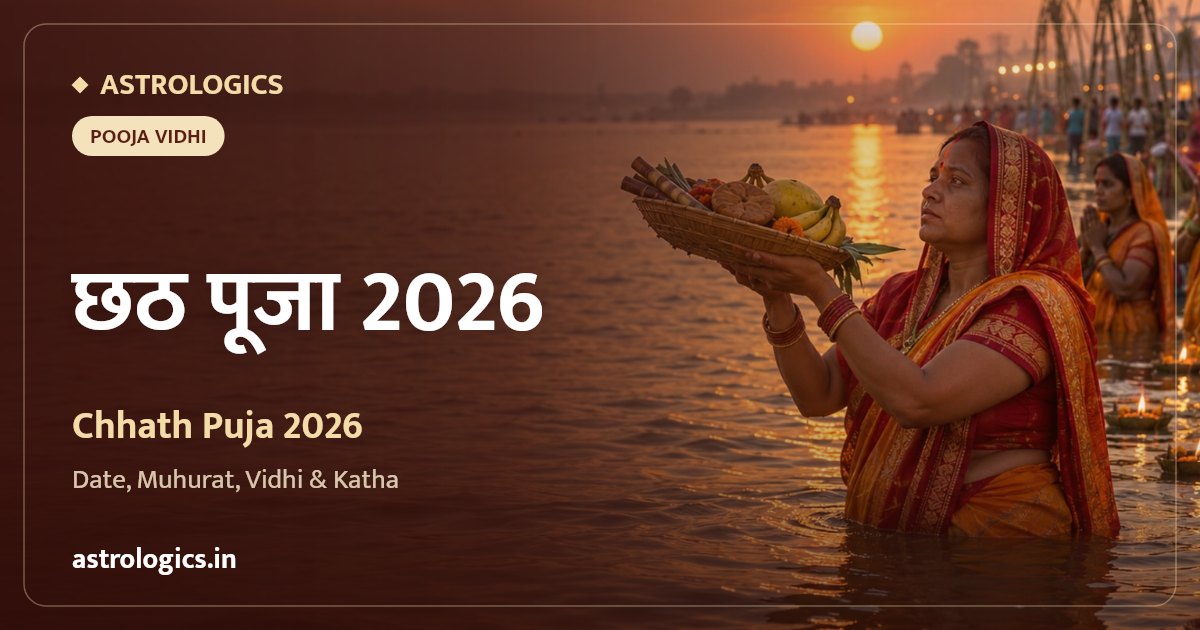
Chhath Puja 2026 runs over four days, from Nahay Khay on Friday, 13 November to Usha Arghya on Monday, 16 November. The main evening offering, Sandhya Arghya, falls on Sunday, 15 November at sunset (05:28 PM), and the fast is broken the next morning at Usha Arghya, Monday 16 November at sunrise (06:44 AM).
Every date and time below is computed from our own Vedic panchang for Delhi, not copied from a calendar - check any of it yourself on the free daily Panchang. Sunrise and sunset shift with your city; use the panchang for your own location.
संक्षेप में: छठ पूजा 2026 चार दिनों की है - नहाय खाय शुक्रवार, 13 नवम्बर, खरना शनिवार, 14 नवम्बर, संध्या अर्घ्य रविवार, 15 नवम्बर और ऊषा अर्घ्य सोमवार, 16 नवम्बर। मुख्य संध्या अर्घ्य सूर्यास्त पर, सायं 05:28 बजे, डूबते सूर्य को दिया जाता है, और अगली सुबह 06:44 पर उगते सूर्य को अर्घ्य देकर व्रत पूर्ण होता है। अर्घ्य जल में खड़े होकर, फल और ठेकुआ से भरे सूप से दिया जाता है। समय दिल्ली के हैं। पूरा लेख हिंदी में पढ़ें →
Chhath Puja 2026: the four days
| Day | Date | Tithi | What happens |
|---|---|---|---|
| 1 · Nahay Khay | Fri, 13 November | Kartik Shukla Chaturthi | Purifying bath, one satvik meal |
| 2 · Kharna | Sat, 14 November | Kartik Shukla Panchami | Day-long fast, broken at dusk with gur kheer and roti |
| 3 · Sandhya Arghya | Sun, 15 November | Kartik Shukla Shashthi | Arghya to the setting sun, 05:28 PM |
| 4 · Usha Arghya | Mon, 16 November | Kartik Shukla Saptami | Arghya to the rising sun, 06:44 AM - fast ends |
Sandhya Arghya muhurat, 15 November 2026
- Sandhya Arghya (evening offering): Sunday, 15 November, at sunset - 05:28 PM (Delhi)
- Shashthi tithi: begins Saturday 14 November 11:25 PM, ends Monday 16 November 02:02 AM - it covers the whole of Sunday, so there is no ambiguity about the day this year
- Nakshatra: Uttara Ashadha (lord Sun)
The arghya is offered standing in water, facing the sun as it sets, from a bamboo soop or daura holding fruit, thekua and sugarcane. This is the moment most people mean when they say "Chhath Puja."
Usha Arghya muhurat, 16 November 2026
- Usha Arghya (morning offering): Monday, 16 November, at sunrise - 06:44 AM (Delhi)
- Saptami tithi: begins Monday 16 November 02:02 AM, running through the morning
The second arghya is offered to the rising sun the next morning, at the same ghat, by the same family. This closes the 36-hour fast that began at Kharna, and the vratti (the person observing the vrat) eats for the first time since the previous evening.
Significance of Chhath Puja
Chhath is the worship of Surya, the Sun, and of Chhathi Maiya - a form of Shashthi Devi, protector of children and of a mother’s wellbeing. It is one of the very few major Hindu festivals with no idol: the deity worshipped is the visible sun itself, at the two moments - setting and rising - when it can be looked at directly. The vrat is kept most often by mothers, for the health, long life and prosperity of their children, though fathers, unmarried people and whole families keep it too, for the wellbeing of the household.
Its roots are in the Kosi-Mithila-Bhojpur region - today’s Bihar, eastern Uttar Pradesh, Jharkhand and the Nepal Terai - and it has travelled with that population to every city and country they have settled in, from Delhi and Mumbai to Mauritius, Trinidad, the Gulf and the United States. It remains, wherever it is kept, a festival without priests: the family performs every rite itself, at the water’s edge, in full public view of the ghat.
Chhath Puja vidhi - the four days, step by step
Day 1: Nahay Khay
The vratti bathes, ideally in the Ganga or another river, and the household eats one satvik meal cooked in pure ghee - traditionally kaddu-bhaat (pumpkin and rice) with chana dal. This meal marks the start of purity for the household: no onion, no garlic, and increasing care in the kitchen from this point on.
Day 2: Kharna (Lohanda)
A day-long fast without water, broken only after sunset. The vratti then prepares and eats rasiao-kheer (rice cooked in jaggery and milk) with roti and bananas, first offered to Chhathi Maiya. The moment this meal ends, the strict 36-hour nirjala (waterless) fast begins - it does not end until Usha Arghya the next morning.
Day 3: Sandhya Arghya
The whole family carries the soop - bamboo winnowing trays heaped with thekua, seasonal fruit, sugarcane and coconut - to a river, pond or a specially prepared ghat. Standing waist-deep in the water, the vratti offers arghya to the sun as it sets. The evening is spent at the ghat in bhajan and community, often through the night.
Day 4: Usha Arghya
Before sunrise the family returns to the same spot and offers the second arghya as the sun rises. This is when the fast breaks and the vrat concludes; prasad is distributed to family, neighbours and anyone present at the ghat, regardless of who kept the fast.
Rules of the Chhath vrat
- The fast from Kharna to Usha Arghya is nirjala - no water at all - and is one of the most physically demanding vrats in the calendar. It should only be kept by someone in good health; pregnancy, illness or medical advice against fasting are all valid reasons to observe the festival without keeping the fast yourself.
- The household keeps sattvic food from Nahay Khay onward - no onion, no garlic, no non-vegetarian food, and everything freshly prepared.
- The thekua and other prasad are cooked with particular care for cleanliness, often by the vratti personally.
- Borrowed or second-hand clothes and utensils are avoided for the puja; everything used is new or freshly washed.
Mantras for Chhath Puja
ॐ ह्रीं ह्रीं सूर्याय सहस्रकिरणाय मनोवाञ्छितफलं देहि देहि स्वाहा॥
ॐ सूर्याय नमः॥ ॐ आदित्याय नमः॥
The complete collection of Surya mantras, with meaning, is on our Surya Mantra page, and the full devotional library - aarti, chalisa and stotra texts - is in Spirituality.
Book a puja for Chhath 2026
Chhath itself is performed by the family, not by a priest, and that is worth keeping exactly as it is. If your reason for keeping it is your children’s wellbeing and you would also like a separate, priest-performed puja for that purpose, or a general nine-graha puja that includes Surya, these are the honest matches:
- Santan Prapti Puja - from ₹5,500 - for a child’s health, long life and wellbeing, the same purpose most families keep Chhath for
- Navgraha Shanti Puja - from ₹5,500 - appeases all nine grahas including Surya
Performed by pandits in your name, with sankalp, a recorded video, photographs and prasad couriered to you. The full list is in the online puja store.
Chhath Puja 2026: FAQs
When is Chhath Puja in 2026?
Chhath Puja 2026 runs over four days: Nahay Khay on Friday 13 November, Kharna on Saturday 14 November, Sandhya Arghya on Sunday 15 November, and Usha Arghya on Monday 16 November.
What time is Sandhya Arghya on 15 November 2026?
Sunset in Delhi on 15 November 2026 is at 05:28 PM, and the evening arghya is offered at that time, standing in water facing the setting sun.
What time is Usha Arghya on 16 November 2026?
Sunrise in Delhi on 16 November 2026 is at 06:44 AM. The morning arghya is offered at that time, and the 36-hour fast ends immediately after.
Is Chhath Puja only observed in Bihar and eastern UP?
Those are its roots, but it is kept today across India and among the diaspora wherever families from that region have settled - from Delhi and Mumbai to Mauritius, the Gulf, the UK and the US. Anyone may keep it; no caste, region or priestly permission is required, since the family performs every rite itself.
What this vrat brings your family also depends on your own chart - start with a free Kundli, get the detailed ₹49 Kundli report, or talk to an astrologer about the right remedy for your chart. Planning the puja logistics? The free Muhurat finder gives you sunrise and sunset for any city.
Note: dates and timings on this page are computed from our own Vedic panchang for Delhi (28.61°N, 77.21°E) and follow the Purnimanta lunar month used in North India. They shift by a few minutes with your city. Please confirm with your family’s local panchang before observing the vrat, and do not keep the nirjala fast against medical advice.
Building an app or website? Hindu festival and vrat dates for any year are available through the AstroLogics API.