32 Names of Maa Durga (Durga Dwatrimsha Namavali): Text & Meaning
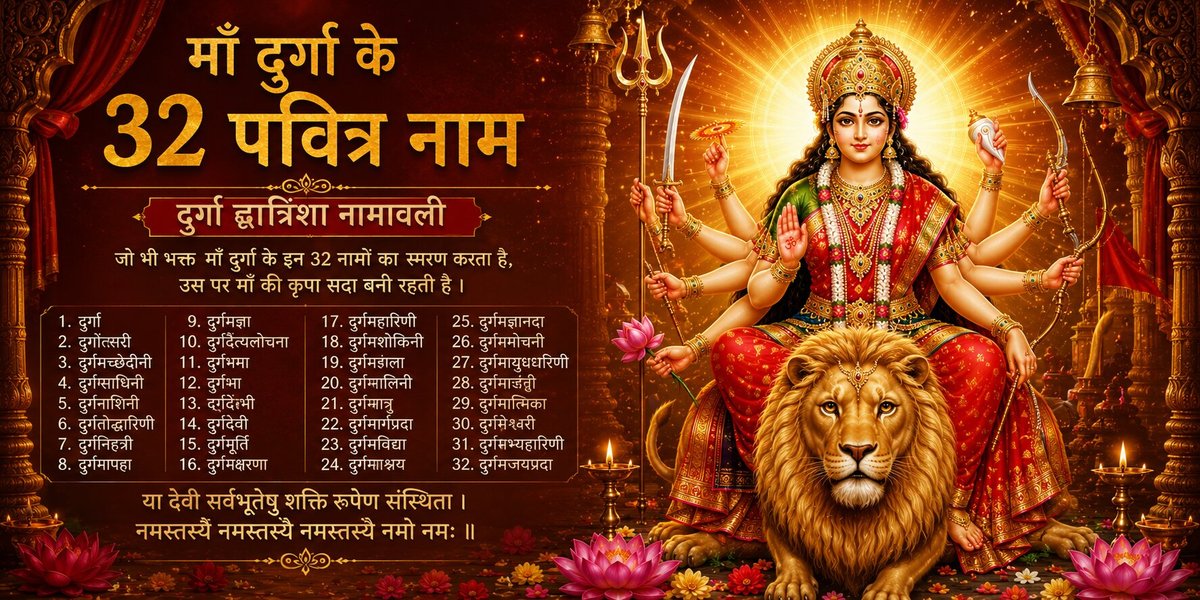
Every one of these thirty-two names begins with “Durga” — the Goddess who is herself a fortress and who removes all that is difficult to cross. She is the queller of distress (Durgatishamani), the remover of calamities (Durgapadvinivarini) and the cutter-down of obstacles (Durgamachhedani).
The armour of thirty-two names and the shakti of fearless recitation
The Durga Dwatrimsha Namamala is a concentrated garland of power. Each of its thirty-two names is not merely a title but a condensed attribute of the Goddess - her forms as remover of distress, destroyer of demons, protector of the vulnerable, and sovereign of the three worlds. The tradition behind such namamalas understands that to name the Goddess repeatedly and attentively is to invite each of those qualities into one's own awareness, gradually reshaping the inner landscape of the devotee. The distinctive feature of this particular set of names is that every single one begins with the root "Durga" itself, reinforcing with each recitation that all her forms ultimately converge on the single reality of the Mother who ferries her devotees across difficulty.
Navratri is the natural occasion for chanting the Dwatrimsha Namamala, particularly during the evening hours when the Goddess is traditionally believed to be most receptive to devotional approach. Devotees believe that regular recitation cultivates a quality of inner fearlessness - not the absence of challenge, but the settled confidence that one is held and protected by a higher power. In the Jyotish tradition, Goddess Durga is associated with the planet Mars in its protective and courageous aspect, and the thirty-two names are sometimes recommended as a traditional graha-shanti practice for those navigating periods of fear, conflict, or sudden upheaval. The namamala is short enough to memorise with a week's devoted practice, and this accessibility is part of what has made it beloved across generations of Devi worshippers.
32 Names of Maa Durga - Sanskrit Text
1. दुर्गा
2. दुर्गातिशमनी
3. दुर्गापद्विनिवारिणी
4. दुर्गमच्छेदनी
5. दुर्गसाधिनी
6. दुर्गनाशिनी
7. दुर्गतोद्धारिणी
8. दुर्गनिहन्त्री
9. दुर्गमापहा
10. दुर्गमज्ञानदा
11. दुर्गदैत्यलोकदवानला
12. दुर्गमा
13. दुर्गमालोका
14. दुर्गमात्मस्वरूपिणी
15. दुर्गमार्गप्रदा
16. दुर्गमविद्या
17. दुर्गमाश्रिता
18. दुर्गमज्ञानसंस्थाना
19. दुर्गमध्यानभासिनी
20. दुर्गमोहा
21. दुर्गमगा
22. दुर्गमार्थस्वरूपिणी
23. दुर्गमासुरसंहन्त्री
24. दुर्गमायुधधारिणी
25. दुर्गमांगी
26. दुर्गमता
27. दुर्गम्या
28. दुर्गमेश्वरी
29. दुर्गभीमा
30. दुर्गभामा
31. दुर्गभा
32. दुर्गदारिणी
।। इति श्रीदुर्गाद्वात्रिंशन्नाममाला सम्पूर्णा ।।
Transliteration (Roman/IAST)
1. durgā
2. durgātiśamanī
3. durgāpadvinivāriṇī
4. durgamacchedanī
5. durgasādhinī
6. durganāśinī
7. durgatoddhāriṇī
8. durganihantrī
9. durgamāpahā
10. durgamajñānadā
11. durgadaityalokadavānalā
12. durgamā
13. durgamālokā
14. durgamātmasvarūpiṇī
15. durgamārgapradā
16. durgamavidyā
17. durgamāśritā
18. durgamajñānasaṁsthānā
19. durgamadhyānabhāsinī
20. durgamohā
21. durgamagā
22. durgamārthasvarūpiṇī
23. durgamāsurasaṁhantrī
24. durgamāyudhadhāriṇī
25. durgamāṁgī
26. durgamatā
27. durgamyā
28. durgameśvarī
29. durgabhīmā
30. durgabhāmā
31. durgabhā
32. durgadāriṇī
Meaning
Every one of these thirty-two names begins with "Durga" - the Goddess who is herself a fortress and who removes all that is difficult to cross (durga). She is the queller of distress (Durgatishamani), the remover of calamities (Durgapadvinivarini), the cutter-down of obstacles (Durgamachhedani), the destroyer of difficulty (Durganashini), the rescuer from adversity (Durgatoddharini). She is the giver of knowledge that is hard to attain (Durgamajnanada), the forest-fire that consumes the demons of the difficult realm (Durgadaityalokadavanala), the very form of the soul beyond reach (Durgamatmasvarupini), the bestower of the difficult path (Durgamargaprada), the slayer of the unconquerable demon (Durgamasurasamhantri), wielder of fearsome weapons (Durgamayudhadharini), the supreme mistress (Durgameshvari), the terrible and radiant one (Durgabhima, Durgabha), and the destroyer of every difficulty (Durgadarini). The tradition holds that reciting these names frees the devotee from every fear and hardship without doubt.
About this Namamala
The Durga Dwatrimsha Namamala ("garland of thirty-two names") is one of the most loved short hymns to the Mother Goddess, traditionally associated with the Durga Saptashati (Devi Mahatmya) tradition. Each name plays on the word durga - meaning both the Goddess and "difficulty" or "impassable fort" - to declare that the Goddess is the answer to every kind of trouble. Its brevity and rhythmic alliteration make it exceptionally easy to memorise and chant, and it is recited as a quick yet potent protective prayer.
Significance & Spiritual Benefits
The hymn carries a famous promise: whoever recites these thirty-two names is freed from all fears and difficulties without doubt. Devotees chant it in times of danger, distress, illness, legal trouble, fear or crisis, and as a daily shield of protection. It is believed to dispel negativity, grant courage, remove obstacles, and invoke the Mother's swift intervention. Because each name affirms the Goddess as the destroyer of a specific category of difficulty, the recitation works like a comprehensive prayer for protection on every front.
Astrological Relevance
Goddess Durga is the supreme Shakti, and in Vedic remedial astrology she is invoked to overcome the malefic effects of difficult planetary periods - particularly Mars (courage, conflict, accidents), Rahu and Ketu (sudden fears, confusion, hidden enemies), and Saturn (prolonged hardship). The 32-name mala is a recommended remedy during testing dashas and transits, for protection from enemies (sixth house), sudden calamities (eighth house), and fear-related afflictions. As the embodiment of Shakti, Durga's grace strengthens the will to face and cross any "durga" (difficult passage) the chart indicates, making this namamala a favourite remedy during Navratri and crisis periods.
How to Chant (Vidhi)
Bathe and sit before an image of Maa Durga. Light a lamp (preferably ghee or sesame oil) and offer red flowers, kumkum and incense. Recite the 32 names with focus and devotion, ideally 11, 21 or 108 times on a rudraksha or red-coral mala in times of difficulty. A simple daily recitation once or three times also serves as a protective practice. Conclude by bowing and praying to the Mother for protection and the removal of obstacles.
Best Day & Time
Navratri (especially Chaitra and Sharad Navratri) is the most powerful time. Otherwise, Tuesdays and Fridays - the days sacred to the Goddess - and the Ashtami and Navami tithis are ideal. The pre-dawn and dusk hours are best for recitation.
Frequently Asked Questions
Why do all 32 names begin with Durga?
The word durga means both the Goddess and "difficulty" or "impassable fort." Each name declares that the Goddess overcomes a particular kind of difficulty, so the whole garland affirms her power to remove every hardship.
What is the main benefit of chanting these 32 names?
Tradition holds that one who recites them is freed from all fears and difficulties without doubt. They are chanted for protection, courage and the removal of obstacles.
When is the best time to recite the 32 names of Durga?
During Navratri above all, and otherwise on Tuesdays and Fridays, on Ashtami/Navami, or daily in times of difficulty.