Gayatri Mata Aarti – Jayati Jaya Gayatri Mata: Lyrics, Meaning & Benefits
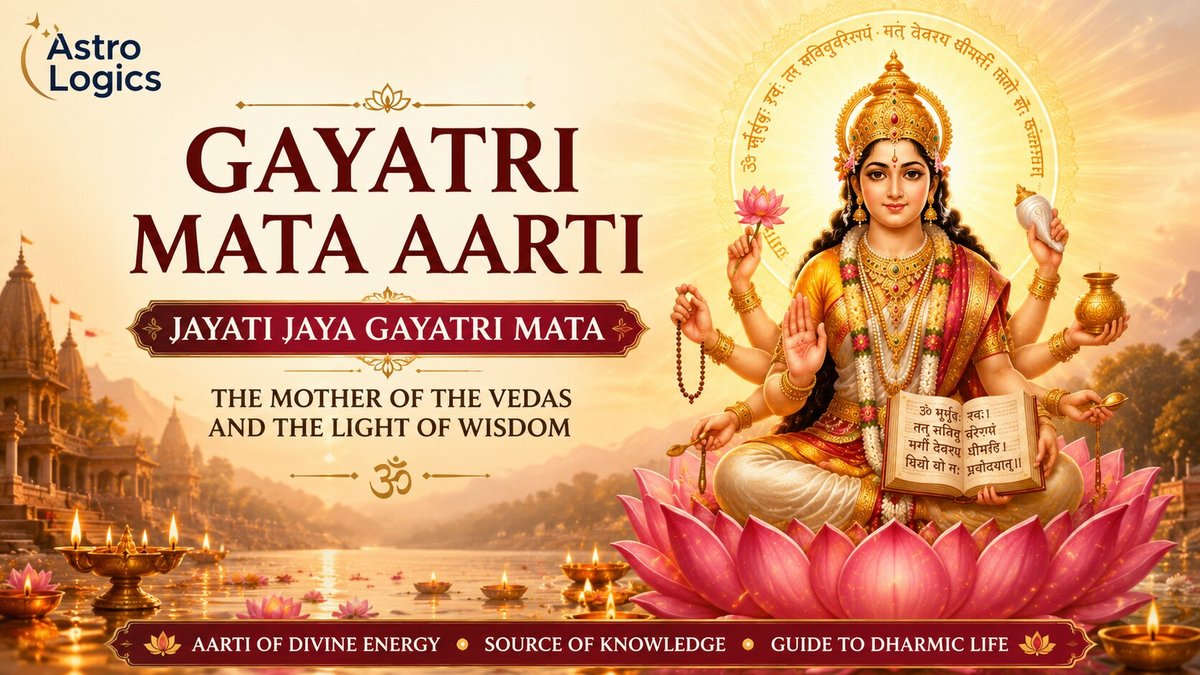
Gayatri Mata: the mother of the Vedas and the light of wisdom
Goddess Gayatri is revered in the Hindu tradition as Vedmata - the mother of the Vedas - and as the divine personification of the sacred Gayatri mantra that forms the luminous heart of Vedic spirituality. She is depicted with five faces representing the five pranas and the five elements, and her worship is especially associated with the dawn, when the mind is freshest and most receptive to the light of knowledge. In the Jyotish tradition, Gayatri is closely linked with Surya, the Sun, whose life-giving radiance she embodies; many Jyotishis recommend her aarti and mantra as part of Surya upasana to strengthen the solar principle in one's chart and to cultivate clarity, vitality, and wisdom.
This aarti is traditionally sung at the conclusion of Gayatri puja - particularly on Gayatri Jayanti, which falls on Shukla Ekadashi in the month of Jyeshtha, and on every Purnima when devotees observe special sadhana. Students, seekers, and householders alike turn to this hymn before beginning study, creative work, or any pursuit requiring discernment and understanding. What gives the composition its distinctive warmth is that it honours the goddess not in a mood of fear or transaction but of filial love - as a mother whose only wish is that her children walk in the light of truth. Devotees believe regular recitation sharpens the intellect, dispels confusion, and gradually aligns the seeker with their highest purpose.
Gayatri Mata Aarti Lyrics (हिंदी में)
जयति जय गायत्री माता, जयति जय गायत्री माता।
सत् मारग पर हमें चलाओ, जो है सुखदाता॥
जयति जय गायत्री माता॥
आदि शक्ति तुम अलख निरंजन जगपालक कर्त्री।
दुःख शोक, भय, क्लेश कलह दारिद्र दैन्य हत्री॥
जयति जय गायत्री माता॥
ब्रह्म रूपिणी, प्रणात पालिनि जगत धातृ अम्बे।
भव भयहारी, जन-हितकारी, सुखदा जगदम्बे॥
जयति जय गायत्री माता॥
भय हारिणी, भवतारिणी, अनघे अज आनन्द राशि।
अविकारी, अखण्डहरी, अविचलित, अमले, अविनाशी॥
जयति जय गायत्री माता॥
कामधेनु सतचित आनन्द जय गंगा गीता।
सविता की शाश्वती शक्ति तुम सावित्री सीता॥
जयति जय गायत्री माता॥
ऋग, यजु साम, अथर्व प्रणयनी, प्रणव महामहिमे।
कुण्डलिनी सहस्त्र सुषुमना शोभा गुण गरिमे॥
जयति जय गायत्री माता॥
स्वाहा, स्वधा, शची ब्रह्माणी राधा रुद्राणी।
जय सतरूपा, वाणी, विद्या, कमला कल्याणी॥
जयति जय गायत्री माता॥
जननी हम हैं दीन-हीन, दुःख-दरिद्र के घेरे।
यदपि कुटिल, कपटी कपूत तउ बालक हैं तेरे॥
जयति जय गायत्री माता॥
स्नेहसनी करुणामय माता चरण शरण दीजै।
विलख रहे हम शिशु सुत तेरे दया दृष्टि कीजै॥
जयति जय गायत्री माता॥
काम, क्रोध, मद, लोभ, दम्भ, दुर्भाव द्वेष हरिये।
शुद्ध बुद्धि निष्पाप हृदय मन को पवित्र करिये॥
जयति जय गायत्री माता॥
जयति जय गायत्री माता, जयति जय गायत्री माता।
सत् मारग पर हमें चलाओ, जो है सुखदाता॥
Gayatri Mata Aarti – Transliteration (English)
Jayati Jaya Gayatri Mata, Jayati Jaya Gayatri Mata
Sat marag par hamen chalaao, jo hai sukhdaata
Jayati Jaya Gayatri Mata
Aadi Shakti tum alakh niranjan jagpaalak kartri
Dukh shok, bhay, klesh kalah daaridr dainy hatri
Jayati Jaya Gayatri Mata
Brahm roopini, pranaat paalini jagat dhaatri Ambe
Bhav bhayhaaree, jan-hitkaaree, sukhdaa Jagdambe
Jayati Jaya Gayatri Mata
Bhay haarini, bhavtaarini, anaghe aj aanand raashi
Avikaaree, akhandhaaree, avichalit, amale, avinaashi
Jayati Jaya Gayatri Mata
Kaamdenu satchit aanand, Jai Ganga Geeta
Savita ki shaashwati Shakti tum Saavitri Seeta
Jayati Jaya Gayatri Mata
Rig, Yaju Saam, Atharv pranayani, Pranav mahaamahime
Kundalini sahastr sushumna shobha gun garime
Jayati Jaya Gayatri Mata
Swaahaa, Swadhaa, Shachi Brahmani, Radha Rudrani
Jai Satroopa, Vaani, Vidyaa, Kamala Kalyaani
Jayati Jaya Gayatri Mata
Janani hum hain deen-heen, dukh-daaridr ke ghere
Yadapi kutil, kapti kapoot, tau baalak hain tere
Jayati Jaya Gayatri Mata
Snehsani karunamayi maata, charan sharan deejai
Vilakh rahe hum shishu sut tere, daya drishti keejai
Jayati Jaya Gayatri Mata
Kaam, krodh, mad, lobh, dambh, durbhaav dwesh hariye
Shuddh buddhi nishpaap hridaya, man ko pavitra kariye
Jayati Jaya Gayatri Mata
Jayati Jaya Gayatri Mata, Jayati Jaya Gayatri Mata
Sat marag par hamen chalaao, jo hai sukhdaata
Meaning & Significance
The Gayatri Mata aarti (Jayati Jaya Gayatri Mata) addresses the goddess in her most expansive cosmological identity. She is simultaneously the primordial Shakti (Aadi Shakti), the sustainer of the cosmos (jagpaalak kartri), the destroyer of suffering, fear, and poverty (dukh shok bhay klesh daaridr hatri), and the living energy behind all four Vedas (Rig, Yaju, Sama, Atharva). One of the most theologically dense verses identifies her as Kamdhenu (the wish-fulfilling cosmic cow of heaven), the Ganga, the Gita, Savitri, and Sita simultaneously - affirming that Gayatri Mata is not a sectarian deity but the universal mother-principle who wears every sacred name. The penultimate verse is unusually personal: the devotee confesses to being wicked, deceitful, and lacking - yet insists on being the goddess's child, entitled to her compassion precisely because of the mother-child relationship. The closing petition is the most morally ambitious: remove from the devotee all six inner enemies (kaam, krodh, mad, lobh, dambh, dwesh) and purify the mind - not a prayer for outer prosperity but for inner transformation.
About Gayatri Mata (Vedmata)
Gayatri Mata - known as Vedmata (mother of the Vedas), Devamata (mother of the gods), and Vishwamata (mother of the universe) - is the goddess who is the personification of the Gayatri Mantra (Om Bhur Bhuvah Svah, Tat Savitur Varenyam, Bhargo Devasya Dhimahi, Dhiyo Yo Nah Prachodayat), considered the most sacred mantra in the Hindu tradition. She is depicted with five faces representing the five pranas (vital energies) and ten arms holding the attributes of all the major deities - emphasising that she contains all divinity within herself. The Gayatri Mantra is a prayer to the solar intelligence (Savita) asking for the illumination of the intellect; Gayatri Mata is the living feminine form of that solar wisdom. In Vedic astrology, Gayatri is associated with the Sun (Surya) and the power of viveka (discernment) - the light that dispels the darkness of ignorance.
Benefits of Reciting the Gayatri Mata Aarti
- The aarti's core petition - "sat marag par hamen chalaao" (lead us on the path of truth) - makes it the ideal daily prayer for moral orientation and ethical clarity.
- The verse asking for the removal of kaam, krodh, mad, lobh, dambh, and dwesh (desire, anger, pride, greed, arrogance, and hatred) is a complete programme of inner purification.
- Regular recitation supports the practice of the Gayatri Mantra by bringing the meditator into relationship with the goddess's personal form, supplementing the abstract mantra meditation with devotional engagement.
- Considered especially potent for those undertaking long-term spiritual sadhana - the aarti's comprehensive theology of Gayatri as Vedmata, Kamdhenu, and universal Shakti deepens understanding of the mantra's scope.
- The identification of Gayatri with Kundalini and the Sushumna nadi (in the sixth verse) makes this aarti relevant to practitioners of yoga and tantra who are working with the body's energy system.
- Those with afflicted Sun in their Vedic birth chart are often advised to perform Gayatri puja and recite this aarti at sunrise as a powerful surya upaya.
How to Perform the Aarti (Pooja Vidhi)
- Rise before sunrise and bathe; the Brahma muhurta (approximately 90 minutes before dawn) is the most auspicious time for Gayatri worship.
- Face east (toward the rising sun) during the puja; set up the space with the Gayatri Mata image, a red or orange cloth, and fresh flowers.
- Light a ghee lamp and camphor; offer fresh flowers, akshata, sandalwood paste, and fruits as naivedya.
- Begin with 108 repetitions of the Gayatri Mantra (or a minimum of 11) before transitioning to the aarti - this prepares the space and the mind for the devotional singing.
- Sing all ten verses of the aarti with special attention to the final verse asking for purification of the six inner enemies - this verse may be sung a second time as a conclusion.
- After the aarti, sit in silence for a few moments with eyes closed, allowing the vibration of the mantra and aarti to settle into awareness before resuming daily activities.
Best Day & Time to Recite
Sunrise is the canonical time for Gayatri worship - the aarti is ideally performed as the sun rises in the east, its light and the sound of the mantra reinforcing each other. Sunday (Ravivar) is the primary day, as the Sun (Ravi/Surya) governs the Gayatri Mantra's deity Savita. Akshaya Tritiya, the day of the Vedas' composition according to some traditions, and the period of Navratri are also highly auspicious. The summer solstice (Uttarayana, when the sun is at its northernmost point) is considered the peak period for Gayatri sadhana. Those performing a serious Gayatri anushthan (intensive practice) typically recite the mantra and aarti both at sunrise (Pratahsandhya) and sunset (Sayamsandhya) daily without break for a fixed period of 40 days or more.
Frequently Asked Questions
Is Gayatri Mata the same as the Gayatri Mantra?
Gayatri Mata is the personalised, devotional form of the Gayatri Mantra. The mantra itself is a Sanskrit verse addressed to the solar divine intelligence (Savita) asking for illumination of the intellect. Over centuries of devotional practice, this mantra became personified as a goddess - Gayatri Mata - who embodies in a relatable, worshippable form the abstract spiritual qualities the mantra invokes: purity, light, wisdom, and truth. Worshipping the goddess and reciting the mantra are complementary rather than competing practices; the aarti engages the emotional and devotional faculties while the mantra works on the subtler levels of consciousness.
Can women recite the Gayatri Mantra and perform Gayatri puja?
The traditional restriction on women reciting the Gayatri Mantra - rooted in certain interpretations of smriti texts - has been widely questioned and rejected by major modern Hindu reform movements, including the Arya Samaj, the Gayatri Pariwar founded by Pandit Shriram Sharma Acharya, and numerous Shankaracharyas. Today, Gayatri Mata aarti and Gayatri Mantra recitation are practised freely by women throughout India and the global Hindu community. Many of the tradition's most celebrated Gayatri practitioners have been women.
What is the best way to introduce children to Gayatri worship?
Begin with the aarti, which is melodic, accessible, and emotionally engaging - children respond naturally to song. Singing the Jayati Jaya Gayatri Mata aarti together at sunrise or in the evening is a gentle, non-dogmatic way to introduce the Vedmata to young minds. The imagery of the goddess as a caring mother who guides her children on the path of truth (sat marag) is deeply resonant with children. The Gayatri Mantra can then be introduced gradually as the child grows - starting with the simpler "Om Bhur Bhuvah Svah" and building to the full 24-syllable mantra.