Ahoi Mata Aarti – Jai Ahoi Mata: Lyrics, Meaning & Ahoi Ashtami Significance
Ahoi Mata Aarti Lyrics (हिंदी में)
जय अहोई माता, जय अहोई माता।
तुमको निसदिन ध्यावत, हर विष्णु विधाता॥ ॐ जय अहोई माता॥
ब्रह्माणी, रुद्राणी, कमला, तू ही है जगमाता।
सूर्य-चन्द्रमा ध्यावत, नारद ऋषि गाता॥ ॐ जय अहोई माता॥
माता रूप निरंजन, सुख-सम्पत्ति दाता।
जो कोई तुमको ध्यावत, नित मंगल पाता॥ ॐ जय अहोई माता॥
तू ही पाताल बसंती, तू ही है शुभदाता।
कर्म-प्रभाव प्रकाशक, जगनिधि से त्राता॥ ॐ जय अहोई माता॥
जिस घर थारो वासा, वाहि में गुण आता।
कर न सके सोई कर ले, मन नहीं घबराता॥ ॐ जय अहोई माता॥
तुम बिन सुख न होवे, न कोई पुत्र पाता।
खान-पान का वैभव, तुम बिन नहीं आता॥ ॐ जय अहोई माता॥
शुभ गुण सुंदर युक्ता, क्षीर निधि जाता।
रतन चतुर्दश तोकू, कोई नहीं पाता॥ ॐ जय अहोई माता॥
श्री अहोई माँ की आरती, जो कोई गाता।
उर उमंग अति उपजे, पाप उतर जाता॥ ॐ जय अहोई माता, मैया जय अहोई माता॥
Ahoi Mata Aarti – Transliteration (English)
Jai Ahoi Mata, Jai Ahoi Mata
Tumako nisadin dhyavat, Har Vishnu Vidhata - Om Jai Ahoi Mata
Brahmani, Rudrani, Kamala, tu hi hai Jagamata
Surya-Chandrama dhyavat, Narad Rishi gata - Om Jai Ahoi Mata
Mata roop niranjan, sukh-sampatti data
Jo koi tumako dhyavat, nit mangal pata - Om Jai Ahoi Mata
Tu hi patal basanti, tu hi hai shubhadata
Karma-prabhav prakashak, jagandhi se trata - Om Jai Ahoi Mata
Jis ghar tharo vasa, wahi mein gun ata
Kar na sake soi kar le, man nahin ghabrata - Om Jai Ahoi Mata
Tum bin sukh na hove, na koi putra pata
Khan-pan ka vaibhav, tum bin nahin ata - Om Jai Ahoi Mata
Shubh gun sundar yukta, kshir nidhi jata
Ratan chaturdash toku, koi nahin pata - Om Jai Ahoi Mata
Shri Ahoi Maan ki aarti, jo koi gata
Ur umang ati upaje, paap utar jata - Om Jai Ahoi Mata, Maiya Jai Ahoi Mata
Meaning & Significance
The Ahoi Mata Aarti is a devotional hymn of eight verses, each unlocking a facet of the goddess's boundless compassion. The opening verse establishes Ahoi Mata as the supreme divine mother contemplated by Brahma, Vishnu, and the cosmic intelligences themselves - a statement that places her at the apex of the sacred hierarchy. Subsequent verses identify her with Brahmaani (the shakti of Brahma), Rudraani (the shakti of Shiva), and Kamala (Lakshmi), affirming that all forms of the divine feminine are her expression. The penultimate verse makes the profound theological point that she is the keeper of the fourteen jewels that arose from the cosmic ocean - wealth, health, prosperity, and every sacred treasure belong to her domain. The final verse promises that anyone who sings her aarti with a full heart will have accumulated sins dissolved like mist at dawn.
About Ahoi Mata
Ahoi Mata is a form of Parvati or Shakti specifically venerated by mothers in northern India, particularly in Uttar Pradesh, Rajasthan, Delhi, and Haryana. Her mythology is rooted in a popular folk narrative in which a mother accidentally harms a young animal while digging clay to repair her home; stricken with grief, she undertakes a fast and sincere worship, and the divine mother appears to forgive and bless her. From this story arose the tradition of Ahoi Ashtami - a fast kept without water from sunrise to the first sighting of the stars, dedicated entirely to the well-being of one's children. The syllables of her name echo her function: "A" (without) + "hoi" (loss); she is the goddess who prevents the loss of children and blesses mothers with enduring family happiness.
Benefits of Reciting the Ahoi Mata Aarti
- Invokes divine protection over children, shielding them from illness, accidents, and misfortune throughout the year.
- Strengthens the bond of love and sacrifice that defines conscious motherhood, cultivating patience and grace.
- Recitation on Ahoi Ashtami while observing the fast is said to dissolve past karma affecting the family lineage.
- Regular worship of Ahoi Mata is believed to bring prosperity and abundance into the household, as she governs the flow of material blessings.
- The aarti reinforces the awareness that the divine mother pervades all realms - earth, atmosphere, and the deeper worlds - offering protection at every level.
- Singing with genuine emotion purifies the devotee's own heart, replacing anxiety about one's children with a deeper trust in divine care.
How to Perform the Aarti (Pooja Vidhi)
- On Ahoi Ashtami (Krishna Paksha Ashtami of Kartik month, eight days before Diwali), mothers observe a nirjala (waterless) fast from sunrise until the evening stars appear.
- At dusk, prepare a puja space with a wall painting or image of Ahoi Mata (often depicted with seven children around her), along with images of sai (a mythological creature linked to her lore).
- Arrange a puja thali with a lit diya, kumkum, rice grains, flowers, and offerings of puris and halwa as prasad.
- Draw water into a kalash and place it before the image; the kalash represents the life-giving waters of her blessing.
- Recite the Ahoi Mata Vrat Katha and then sing the aarti with full devotion while circling the lamp before her image.
- After sighting the stars (or the moon), offer water as arghya and break the fast, distributing prasad to all family members.
Best Day & Time to Recite
The primary occasion for the Ahoi Mata Aarti is Ahoi Ashtami, which falls on the eighth day of the dark fortnight (Krishna Paksha) in the month of Kartik - typically in October or November. The aarti is sung at dusk, precisely at the time of breaking the fast upon sighting the evening star. Outside of Ahoi Ashtami, mothers may recite this aarti on any auspicious day, especially Navratri, Diwali puja, or whenever they seek special divine protection for their children. Morning and evening are always considered suitable times for aarti in the home shrine.
Frequently Asked Questions
What is the significance of Ahoi Ashtami for mothers?
Ahoi Ashtami is one of the most deeply observed maternal fasts in Hindu tradition. Mothers keep a full-day waterless fast and pray to Ahoi Mata - a form of the divine mother - for the long life, health, and prosperity of their children. The fast mirrors the depth of a mother's love and sacrifice, and the act of breaking it only after sighting the evening star symbolises the meeting of human effort with divine grace.
Who is Ahoi Mata and why is she depicted with seven sons?
Ahoi Mata is a manifestation of Parvati, the cosmic mother, in her role as the protector of children and the granter of motherly blessings. In traditional iconography she is shown surrounded by seven sons, symbolising the fullness of family blessing - the number seven carries sacred weight across many Hindu texts as representing completeness. Her image often includes the sai creature from the folk narrative that gave rise to this vrat.
Can the Ahoi Mata Aarti be recited by those without children?
Yes. While the vrat is traditionally observed by mothers praying for their children, the aarti may be recited by anyone seeking the grace of the divine mother. Women who wish for children, newly married couples, and those who simply feel drawn to maternal divine energy all recite this aarti with benefit. Ahoi Mata's blessings extend to all who approach her with genuine devotion and a pure heart.
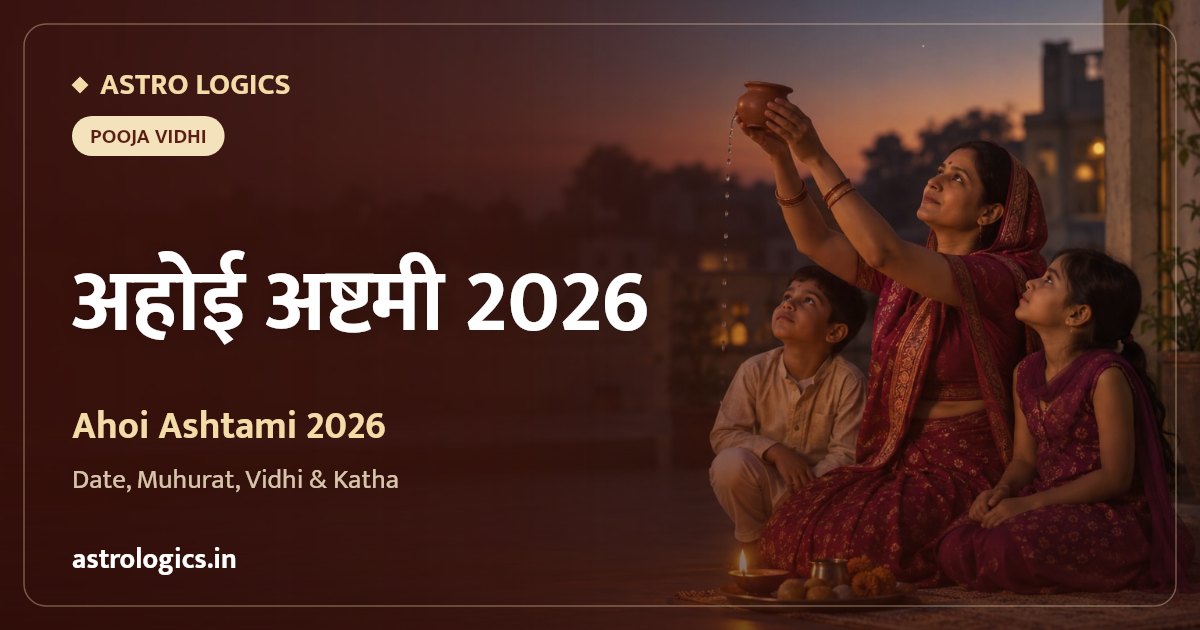
A mother's prayer and the grace of Ahoi Mata on the eighth night
The Ahoi Mata Aarti belongs to one of the most intimate and touching observances in the Hindu devotional calendar -- Ahoi Ashtami, observed on the eighth day of the dark fortnight of the month of Kartik, just a few days before Diwali. On this day, mothers who wish for the long life, health, and flourishing of their children keep a strict fast from sunrise until the stars appear in the evening sky, at which point they break their fast after sighting the stars or the moon and performing puja to Ahoi Mata. The aarti forms the devotional heart of this ritual, offering the mother's love and gratitude to the goddess who is believed to watch over children and bless them with vitality and protection.
What makes this aarti particularly moving is the intimacy of the devotional relationship it expresses. Ahoi Mata is worshipped not in grand temples but most often through a simple figure drawn on the wall of the home -- the domestic space itself becomes the sacred space, and the mother's love becomes the primary vehicle of devotion. The singing of Jai Ahoi Mata is simultaneously a personal prayer, an act of community solidarity among mothers who gather for the occasion, and an expression of faith that a mother's love, channelled through sincere worship, reaches the divine. Devotees across North India and in the Indian diaspora hold this aarti with particular tenderness, recognising in it the most natural form of bhakti: a parent's prayer for her child.