Rupam Dehi Jayam Dehi: Argala Stotram Verses of Maa Durga
Rupam Dehi Jayam Dehi - Sanskrit Text
(from the Argala Stotram of the Durga Saptashati)
मधुकैटभविध्वंसि विधातृवरदे नमः।
रूपं देहि जयं देहि यशो देहि द्विषो जहि॥
महिषासुरनिर्नाशि भक्तानां सुखदे नमः।
रूपं देहि जयं देहि यशो देहि द्विषो जहि॥
धूम्रनेत्रवधे देवि धर्मकामार्थदायिनि।
रूपं देहि जयं देहि यशो देहि द्विषो जहि॥
रक्तबीजवधे देवि चण्डमुण्डविनाशिनि।
रूपं देहि जयं देहि यशो देहि द्विषो जहि॥
निशुम्भशुम्भनिर्नाशि त्रैलोक्यशुभदे नमः।
रूपं देहि जयं देहि यशो देहि द्विषो जहि॥
वन्दिताङ्घ्रियुगे देवि सर्वसौभाग्यदायिनि।
रूपं देहि जयं देहि यशो देहि द्विषो जहि॥
अचिन्त्यरूपचरिते सर्वशत्रुविनाशिनि।
रूपं देहि जयं देहि यशो देहि द्विषो जहि॥
नतेभ्यः सर्वदा भक्त्या चापर्णे दुरितापहे।
रूपं देहि जयं देहि यशो देहि द्विषो जहि॥
स्तुवद्भ्यो भक्तिपूर्वं त्वां चण्डिके व्याधिनाशिनि।
रूपं देहि जयं देहि यशो देहि द्विषो जहि॥
देहि सौभाग्यमारोग्यं देहि देवि परं सुखम्।
रूपं देहि जयं देहि यशो देहि द्विषो जहि॥
विधेहि देवि कल्याणं विधेहि विपुलां श्रियम्।
रूपं देहि जयं देहि यशो देहि द्विषो जहि॥
Transliteration (Roman/IAST)
madhukaiṭabhavidhvaṃsi vidhātṛvarade namaḥ |
rūpaṃ dehi jayaṃ dehi yaśo dehi dviṣo jahi ||
mahiṣāsuranirnāśi bhaktānāṃ sukhade namaḥ |
rūpaṃ dehi jayaṃ dehi yaśo dehi dviṣo jahi ||
dhūmranetravadhe devi dharmakāmārthadāyini |
rūpaṃ dehi jayaṃ dehi yaśo dehi dviṣo jahi ||
raktabījavadhe devi caṇḍamuṇḍavināśini |
rūpaṃ dehi jayaṃ dehi yaśo dehi dviṣo jahi ||
niśumbhaśumbhanirnāśi trailokyaśubhade namaḥ |
rūpaṃ dehi jayaṃ dehi yaśo dehi dviṣo jahi ||
vanditāṅghriyuge devi sarvasaubhāgyadāyini |
rūpaṃ dehi jayaṃ dehi yaśo dehi dviṣo jahi ||
acintyarūpacarite sarvaśatruvināśini |
rūpaṃ dehi jayaṃ dehi yaśo dehi dviṣo jahi ||
natebhyaḥ sarvadā bhaktyā cāparṇe duritāpahe |
rūpaṃ dehi jayaṃ dehi yaśo dehi dviṣo jahi ||
stuvadbhyo bhaktipūrvaṃ tvāṃ caṇḍike vyādhināśini |
rūpaṃ dehi jayaṃ dehi yaśo dehi dviṣo jahi ||
dehi saubhāgyamārogyaṃ dehi devi paraṃ sukham |
rūpaṃ dehi jayaṃ dehi yaśo dehi dviṣo jahi ||
vidhehi devi kalyāṇaṃ vidhehi vipulāṃ śriyam |
rūpaṃ dehi jayaṃ dehi yaśo dehi dviṣo jahi ||
Meaning
The recurring refrain - rūpaṃ dehi jayaṃ dehi yaśo dehi dviṣo jahi - means “Grant me beauty, grant me victory, grant me glory, and destroy my enemies.” On the inner level the “enemies” are desire, anger, greed and delusion. Each opening line addresses the Goddess by a different heroic deed or quality: she who destroyed the demons Madhu and Kaitabha and blessed Brahma the creator; she who annihilated Mahishasura and gives joy to her devotees; she who slew Dhumralochana and bestows dharma, kama and artha; she who killed Raktabija, Chanda and Munda; she who destroyed Shumbha and Nishumbha and brings welfare to the three worlds; she at whose feet all bow, giver of all good fortune; of inconceivable form and deeds, destroyer of every foe; remover of sin for those who bow with devotion; Chandika who cures disease; giver of fortune, health and supreme happiness; bestower of welfare and abundant prosperity.
About this Stotra
These verses form the heart of the Argala Stotram, one of the three preliminary hymns (with Kavacha and Kilaka) recited before the main Durga Saptashati path. “Argala” means a bolt or latch; the stotra is said to unbolt the door to the Goddess’s grace so that the recitation of the Saptashati bears full fruit. The Rupam Dehi Jayam Dehi refrain is so beloved that it is often sung on its own during Navratri, its steady rhythm making it ideal for congregational chanting.
Significance & Spiritual Benefits
The four boons requested - beauty, victory, glory and the destruction of enemies - cover the full range of human aspiration, both worldly and spiritual. Devotees recite these verses to gain confidence, overcome opposition, win in righteous endeavours, and protect themselves from hostile forces. Because the prayer is woven from the Goddess’s victories over demons, it is held to transfer that victorious energy to the reciter, dissolving fear and inertia and replacing them with radiant strength.
Astrological Relevance
As a Shakti invocation, the Argala verses are prescribed in Vedic remedial astrology for natives troubled by a weak Sun (loss of status and yasha/glory), an afflicted Venus (loss of charm and rupa/beauty), a harsh Mars or Rahu/Ketu causing enmity and disputes (shatru-bhava, the 6th house), and a debilitated Moon causing fear. The very structure of the refrain maps onto these: rupa to Venus, jaya and the destruction of enemies to Mars, yasha to the Sun. Recitation during Navratri and on Fridays and Tuesdays is a classic upaya to strengthen these significations.
How to Chant (Vidhi)
After bathing, sit before the Goddess with a lit lamp and offer red flowers and kumkum. Within the full Saptashati ritual, the Argala Stotram is recited after the Kavacha; on its own, begin with a salutation to Ganesha and the guru, then chant these verses with the refrain after each line. Repeat the set as a whole, ideally an odd number of times, and close by surrendering the fruit to the Mother. Maintain attentive, devotional feeling rather than mechanical speed.
Best Day & Time
Most powerful during the nine nights of Navratri, on Ashtami and Navami, and on Tuesdays and Fridays. The Brahma-muhurta before dawn and the dusk sandhya are ideal daily windows. It may also be chanted before any contest, examination, interview or confrontation where victory is sought.
Frequently Asked Questions
What does Rupam Dehi Jayam Dehi mean?
It means “Grant me beauty, grant me victory, grant me glory, and destroy my enemies” - a four-fold request to Goddess Durga that runs as a refrain through the Argala Stotram.
Where do these verses come from?
They are the central verses of the Argala Stotram, a preliminary hymn of the Durga Saptashati (Devi Mahatmya) within the Markandeya Purana, recited before the main reading.
Who are the “enemies” the prayer asks to destroy?
Outwardly they are hostile people and obstacles; inwardly they are the six foes of the mind - desire, anger, greed, delusion, pride and envy - whose destruction is the deeper goal of the prayer.
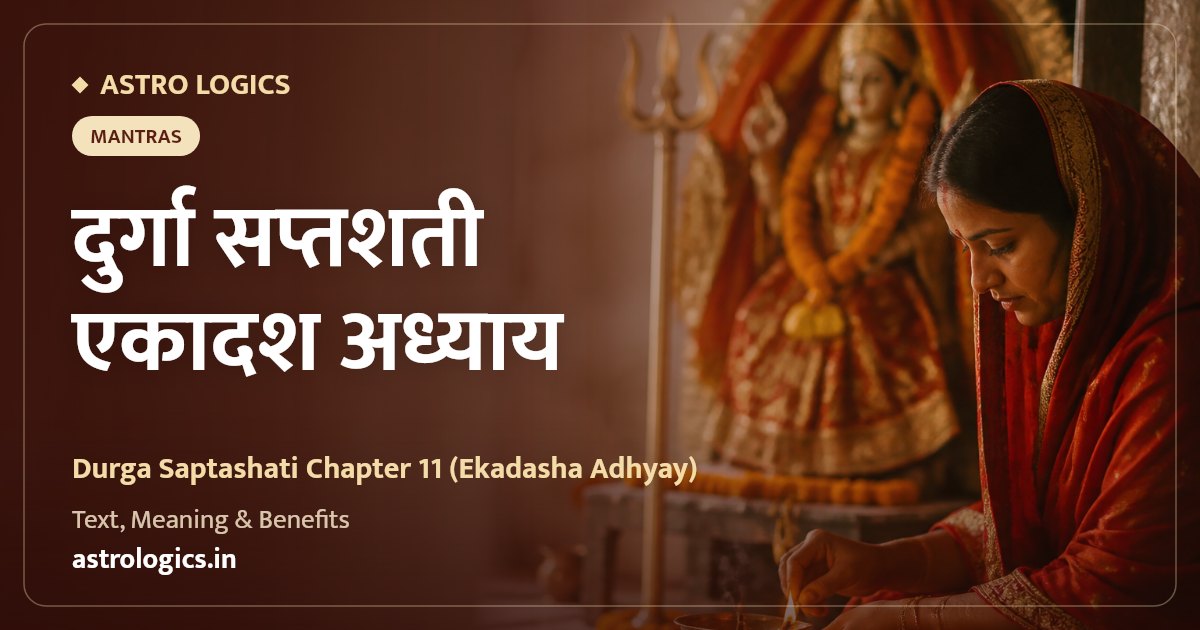
Why the Argala Stotram holds a central place in Navratri sadhana
The Argala Stotram occupies a unique devotional position within the Durga Saptashati, serving as a gateway prayer that prepares the worshipper's heart before the recitation of the main text. Unlike purely descriptive hymns, this stotram is structured as a direct, intimate petition - the devotee approaches the Goddess not in awe alone but in earnest yearning, asking her to bless every dimension of life: beauty, victory, fame, and the inner strength to overcome personal failings. The mood, or rasa, it evokes is a blend of vira (heroic aspiration) and shanta (peaceful surrender), as the devotee simultaneously acknowledges their own limitations and the boundless grace of Shakti.
Devotees traditionally recite the Argala Stotram as part of the prescribed Saptashati patha sequence during Navratri, on each of the nine sacred nights, and also on Fridays and Ashtami tithis throughout the year. Its repetitive refrain - the heartfelt plea echoed verse after verse - is considered a form of intensified appeal that gradually dissolves ego and deepens devotion. Those who engage with Devi upasana during Shukra-related remedies in the Jyotish tradition also turn to this stotram, as the Goddess in her most luminous aspect is associated with Mahalakshmi's grace, which in Vedic astrology resonates with Venus's qualities of beauty and abundance. What remains most touching is the stotram's honesty: it asks not just for spiritual heights but for the very human blessings devotees carry in their hearts.