Shiv Tandava Stotram – Jatatavi Galajjala: Lyrics, Meaning & Significance
Shiv Tandava Stotram Lyrics (हिंदी में)
जटाटवीगलज्जलप्रवाहपावितस्थले गलेऽवलम्ब्य लम्बितां भुजंगतुंगमालिकाम् ।
डमड्डमड्डमड्डमन्निनादवड्डमर्वयं चकार चण्डताण्डवं तनोतु नः शिवः शिवम् ॥१॥
जटाकटाहसम्भ्रमभ्रमन्निलिम्पनिर्झरीविलोलवीचिवल्लरीविराजमानमूर्धनि ।
धगद्धगद्धगज्ज्वलल्ललाटपट्टपावके किशोरचन्द्रशेखरे रतिः प्रतिक्षणं मम ॥२॥
धराधरेन्द्रनन्दिनीविलासबन्धुबन्धुरस्फुरद्दिगन्तसन्ततिप्रमोदमानमानसे ।
कृपाकटाक्षधोरणीनिरुद्धदुर्धरापदि क्वचिद्दिगम्बरे मनो विनोदमेतु वस्तुनि ॥३॥
जटाभुजङ्गपिङ्गलस्फुरत्फणामणिप्रभाकदम्बकुङ्कुमद्रवप्रलिप्तदिग्वधूमुखे ।
मदान्धसिन्धुरस्फुरत्त्वगुत्तरीयमेदुरे मनो विनोदमद्भुतं बिभर्तु भूतभर्तरि ॥४॥
सहस्रलोचनप्रभृत्यशेषलेखशेखरप्रसूनधूलिधोरणीविधूसराङ्घ्रिपीठभूः ।
भुजङ्गराजमालया निबद्धजाटजूटकः श्रियै चिराय जायतां चकोरबन्धुशेखरः ॥५॥
ललाटचत्वरज्वलद्धनञ्जयस्फुलिङ्गभानिपीतपञ्चसायकं नमन्निलिम्पनायकम् ।
सुधामयूखलेखया विराजमानशेखरं महाकपालिसम्पदे शिरोजटालमस्तु नः ॥६॥
करालभालपट्टिकाधगद्धगद्धगज्ज्वलद्धनञ्जयाहुतीकृतप्रचण्डपञ्चसायके ।
धराधरेन्द्रनन्दिनीकुचाग्रचित्रपत्रकप्रकल्पनैकशिल्पिनि त्रिलोचने रतिर्मम ॥७॥
नवीनमेघमण्डलीनिरुद्धदुर्धरस्फुरत्कुहूनिशीथिनीतमःप्रबन्धबद्धकन्धरः ।
निलिम्पनिर्झरीधरस्तनोतु कृत्तिसिन्धुरः कलानिधानबन्धुरः श्रियं जगद्धुरन्धरः ॥८॥
प्रफुल्लनीलपङ्कजप्रपञ्चकालिमप्रभावलम्बिकण्ठकन्दलीरुचिप्रबद्धकन्धरम् ।
स्मरच्छिदं पुरच्छिदं भवच्छिदं मखच्छिदं गजच्छिदान्धकच्छिदं तमन्तकच्छिदं भजे ॥९॥
अखर्वसर्वमङ्गलाकलाकदम्बमञ्जरी रसप्रवाहमाधुरी विजृम्भणामधुव्रतम् ।
स्मरान्तकं पुरान्तकं भवान्तकं मखान्तकं गजान्तकान्धकान्तकं तमन्तकान्तकं भजे ॥१०॥
जयत्वदभ्रविभ्रमभ्रमद्भुजङ्गमश्वसद्विनिर्गमत्क्रमस्फुरत्करालभालहव्यवाट् ।
धिमिद्धिमिद्धिमिद्धिमिन्मृदङ्गतुङ्गमङ्गलध्वनिक्रमप्रवर्तितप्रचण्डताण्डवः शिवः ॥११॥
दृषद्विचित्रतल्पयोर्भुजङ्गमौक्तिकस्रजोर्गरिष्ठरत्नलोष्ठयोः सुहृद्विपक्षपक्षयोः ।
तृणारविन्दचक्षुषोः प्रजामहीमहेन्द्रयोः समं प्रवर्तयन्मनः कदा सदाशिवं भजे ॥१२॥
कदा निलिम्पनिर्झरीनिकुञ्जकोटरे वसन्विमुक्तदुर्मतिः सदा शिरः स्थमञ्जलिं वहन् ।
विमुक्तलोललोचनो ललामभाललग्नकः शिवेति मन्त्रमुच्चरन् कदा सुखी भवाम्यहम् ॥१३॥
इमं हि नित्यमेवमुक्तमुत्तमोत्तमं स्तवं पठन्स्मरन्ब्रुवन्नरो विशुद्धिमेति सन्ततम् ।
हरे गुरौ सुभक्तिमाशु याति नान्यथा गतिं विमोहनं हि देहिनां सुशङ्करस्य चिन्तनम् ॥१४॥
पूजावसानसमये दशवक्त्रगीतं यः शम्भुपूजनपरं पठति प्रदोषे ।
तस्य स्थिरां रथगजेन्द्रतुरङ्गयुक्तां लक्ष्मीं सदैव सुमुखीं प्रददाति शम्भुः ॥१५॥
Shiv Tandava Stotram – Transliteration (English)
Jatatavi-galajjala-pravaha-pavita-sthale gale-valambya lambitam bhujanga-tunga-malikam |
Damad-damad-damad-daman-ninada-vaddamarvayam chakara chanda-tandavam tanotu nah shivah shivam ||1||
Jata-kataha-sambhrama-bhraman-nilimpa-nirjhari-vilola-vichi-vallari-virajamana-murdhani |
Dhagad-dhagad-dhagaj-jvalal-lalata-patta-pavake kishora-chandra-shekhare ratih pratikshanam mama ||2||
Dhara-dharendra-nandini-vilasa-bandhu-bandhura-sphurad-diganta-santati-pramoda-mana-manase |
Kripa-kataksha-dharani-niruddha-durdhara-apadi kvachid-digambare mano vinodam etu vastuni ||3||
Jata-bhujanga-pingala-sphurat-phana-mani-prabha-kadamba-kunkuma-drava-pralipta-dig-vadhu-mukhe |
Madandha-sindhura-sphurat-tvag-uttariya-medure mano vinodam adbhutam bibhartu bhuta-bhartari ||4||
Sahasra-lochana-prabhrtya-shesha-lekha-shekhara-prasuna-dhuli-dharani-vidhusara-anghri-pitha-bhuh |
Bhujanga-raja-malaya nibaddha-jata-jutakah shriyai chiray jayatam chakora-bandhu-shekharah ||5||
Lalata-chatvara-jvalad-dhananjaya-sphulingabha-nipita-pancha-sayakam naman-nilimpa-nayakam |
Sudha-mayukha-lekhaya virajamana-shekharam mahakarpali-sampade shiro-jatalamas-tu nah ||6||
Karala-bhala-pattika-dhagad-dhagad-dhagaj-jvalad-dhananjaya-ahuti-krita-prachanda-pancha-sayake |
Dhara-dharendra-nandini-kucha-agra-chitra-patraka-prakalpana-eka-shilpini trilochain ratir mama ||7||
Navina-megha-mandali-niruddha-durdhara-sphurat-kuhu-nishithini-tamah-prabandha-baddha-kandharah |
Nilimpa-nirjhari-dharas tanotu kritti-sindhurah kala-nidhan-bandurah shriyam jagad-dhurandharah ||8||
Praphulla-nila-pankaja-prapancha-kalima-prabhava-lambikantha-kandali-ruchi-prabaddha-kandharam |
Smara-cchidam pura-cchidam bhava-cchidam makha-cchidam gaja-cchidan-dhaka-cchidam tam antaka-cchidam bhaje ||9||
Akharva-sarva-mangala-kala-kadamba-manjari rasa-pravaha-madhuri vijrmbhana-madhu-vratam |
Smarantakam purantakam bhavantakam makhantakam gajantakan-dhakaantakam tam antakantakam bhaje ||10||
Jayatvad-abhra-vibhrama-bhramad-bhujanga-mashvasad-vinirgamat-krama-sphurat-karala-bhala-havyavat |
Dhimid-dhimid-dhimid-dhimin-mrdanga-tunga-mangala-dhvani-krama-pravartita-prachanda-tandavah shivah ||11||
Drsad-vichitra-talpayur-bhujanga-mauktika-srajor-garishtha-ratna-loshthayoh suhrd-vipaksha-pakshayoh |
Trnararvinda-chakshushoh praja-mahi-mahendrayoh samam pravartayan-manah kada sadashivam bhaje ||12||
Kada nilimpa-nirjhari-nikunja-kotare vasan-vimukta-durmatih sada shirah-stham-anjalim vahan |
Vimukta-lola-lochano lalama-bhala-lagnakah shiveti mantra-muchcharan kada sukhi bhavamy-aham ||13||
Imam hi nityam evam uktam uttamottamam stavam pathan-smaran-bruvan-naro vishuddhim eti santatam |
Hare gurau subhaktim ashu yati nanyatha gatim vimochanam hi dehinam sushankara-sya chintanam ||14||
Puja-vasana-samaye dasha-vaktra-gitam yah shambhu-pujana-param pathati pradoshe |
Tasya sthiram ratha-gajendra-turanga-yuktam lakshmim sadaiva sumukhi pradadati shambhuh ||15||
Meaning & Significance
Shiv Tandava Stotram is a majestic Sanskrit hymn that captures the awe-inspiring image of Lord Shiva performing his cosmic dance with unmatched grandeur and ferocity. The stotram opens with the iconic verse describing how the sacred Ganga flows from Shiva's forest-like matted locks, sanctifying his throat that bears serpents coiled in garlands. His damaru drum beats out the rhythm Damad-Damad, echoing across the cosmos as he dances. Each verse unveils a new facet of Shiva's magnificence - his third eye blazing like fire, his crescent moon ornament, his equanimity towards all beings, and his role as the destroyer of death itself. The stotram is composed in the Drutavilambita metre, whose rapid, surging cadence mirrors the thunder and urgency of the Tandava itself, making it one of the most rhythmically charged compositions in all of Sanskrit literature.
About the Composer
According to tradition, Shiv Tandava Stotram was composed by Ravana, the learned king of Lanka. Ravana was not only a warrior-king but also a great scholar, a Shaiva devotee, and a skilled Sanskrit poet. The legend recounts that while attempting to carry Mount Kailash - the abode of Shiva - Ravana was pinned beneath it by Shiva's toe. In that moment of helpless reverence, Ravana composed this stotra to appease the Lord. Touched by Ravana's devotion and erudition, Shiva released him and gifted him the divine sword Chandrahas. The closing verse refers to the stotram as composed by the ten-faced one (Dasavaktra-gitam), confirming the tradition. The hymn represents a remarkable fusion of devotion, poetic genius, and surrender.
About Shiva
Lord Shiva, the third deity of the Hindu Trinity, is the God of Destruction and Transformation. Known by a thousand names - Mahadeva, Nataraja, Bholenath, Mahakala - Shiva is the eternal Yogi who dwells on Mount Kailash in deep meditation, yet also dances the Tandava that brings about the dissolution of the universe. His form is paradoxical: he wears serpents and ashes, yet his consort is the auspicious Parvati; he is the lord of renunciants yet the head of a divine family. The Ganga flowing from his matted hair, the crescent moon on his brow, the trident in his hand, and the third eye on his forehead are among his most celebrated attributes. Shiva embodies the principle that creation and destruction are two faces of the same eternal reality.
Spiritual Significance & Benefits
- Regular recitation of Shiv Tandava Stotram is said to invoke the blessings of Lord Shiva and deepen meditative awareness.
- The powerful rhythmic metre is believed to purify the environment and the mind when chanted with sincere devotion.
- Reciting this stotra during Pradosha Kala (evening twilight) is traditionally held to bring prosperity, stability, and divine grace.
- The stotram cultivates an attitude of complete surrender, reminding devotees that ego must yield before the divine.
- Its verse on equanimity (verse 12) serves as a spiritual guide for developing equal-mindedness towards wealth and poverty, friend and foe.
- Chanting builds concentration and vocal resonance, as the Drutavilambita metre demands precise breath control and focus.
When & How It Is Sung
Shiv Tandava Stotram is traditionally recited during Mahashivratri, the annual festival celebrating Lord Shiva's cosmic dance. It is also chanted during Pradosha (the thirteenth lunar night), on Mondays dedicated to Shiva, and before or after Shiva puja. Devotees recite it facing the Shiva Linga with folded hands and a concentrated mind, ideally after a bath and in a clean space. The stotram is best recited in a single unbroken sitting, once or in multiples of three. In temples, it is often sung collectively during abhisheka (ritual bathing of the Shiva Linga) to heighten the devotional atmosphere.
Frequently Asked Questions
Who composed the Shiv Tandava Stotram?
According to Hindu tradition, the Shiv Tandava Stotram was composed by Ravana, the king of Lanka, when he was trapped beneath Mount Kailash. The closing verse refers to it as composed by the ten-faced one (Dasavaktra), reinforcing the traditional attribution.
How many verses does the Shiv Tandava Stotram have?
The most widely accepted version contains fifteen verses, including the phala-shruti (benefit verse). Some extended versions include additional verses bringing the total to sixteen or seventeen. The core verses describe Shiva's dance, appearance, and cosmic power.
What is the significance of the Tandava dance of Shiva?
The Tandava is Shiva's cosmic dance of creation, preservation, and dissolution. As Nataraja, Shiva dances in a ring of fire symbolising the endless cycle of the universe. The dance simultaneously destroys ignorance and liberates souls. Shiv Tandava Stotram captures the ecstatic, fierce aspect of this dance through its thundering metre and vivid imagery.
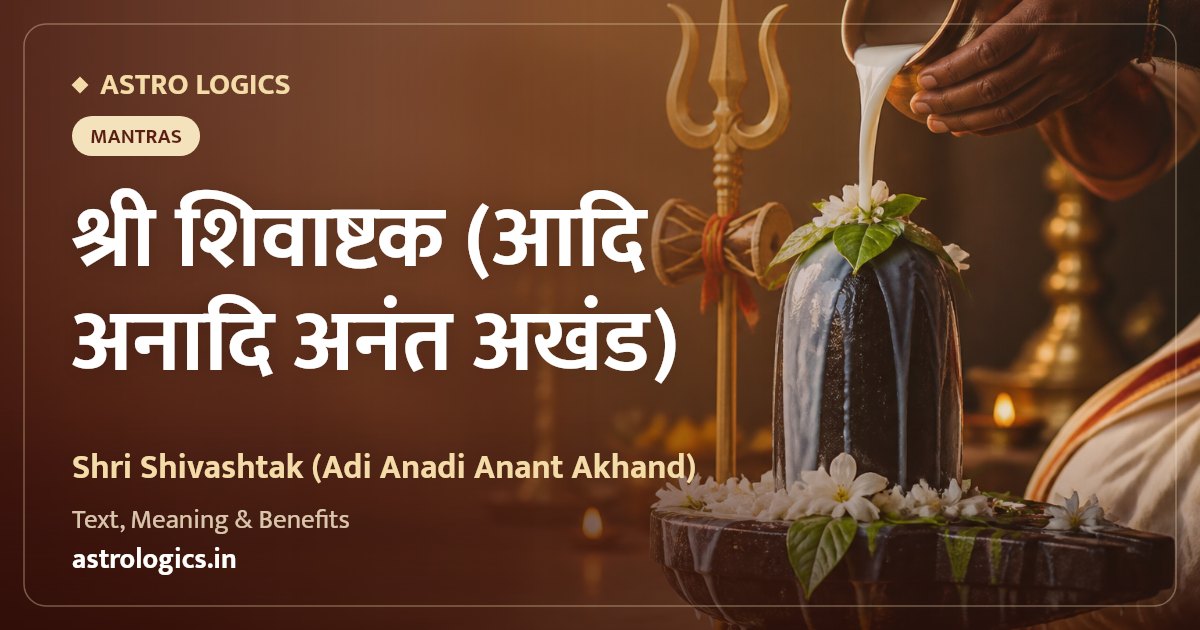
The cosmic fury and devotion behind Ravana's hymn to Shiva
The Shiv Tandava Stotram stands apart in the Shaivite tradition because of its composer's extraordinary identity: Ravana, the scholar-king of Lanka, whose devotion to Lord Shiva was as fierce as his pride. The stotram evokes the raudra and vira rasas - awe-struck terror and heroic wonder - as it paints Shiva in his most elemental aspect: the cosmic dancer whose matted locks carry the Ganga, whose neck bears the darkness of Halahala poison, and whose drumbeat sets the rhythm of creation and dissolution alike. Reciting this stotram is traditionally associated with invoking Shiva's most dynamic energy, making it especially resonant during Pradosh Kaal on Mondays and Tuesdays, and throughout the sacred month of Shravan.
Devotees believe that meditating on the imagery woven through this stotram - the serpents, the cremation ash, the trident - helps quiet the ego and deepen surrender to Mahadeva. In the Jyotish tradition, Shiva is intimately linked with Saturn (Shani), and some practitioners recite this stotram as an act of reverence that honours the destroyer-transformer aspect of the cosmos. The stotram's rhythmic, percussion-like metre mirrors the very Tandava it describes, turning every recitation into a devotional act of participation in the divine dance.