Shri Badrinath Aarti – Pawan Mand Sugandh Sheetal Lyrics in Hindi
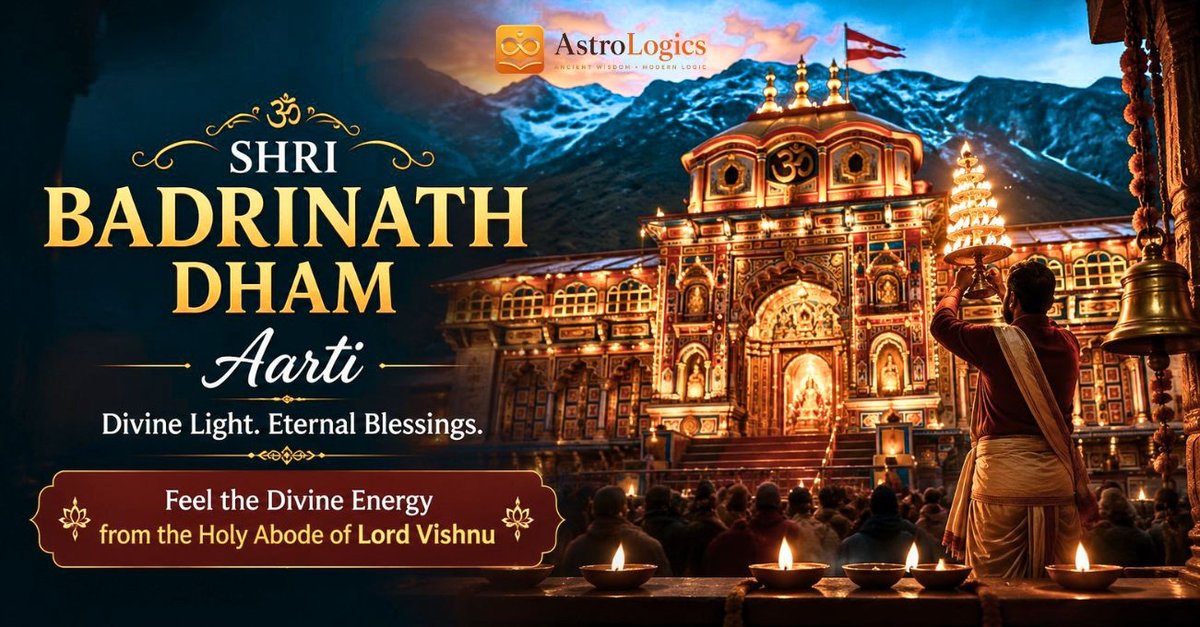
Shri Badrinath Aarti Lyrics (हिंदी में)
पवन मंद सुगंध शीतल,
हेम मंदिर शोभितम् ।
निकट गंगा बहत निर्मल,
श्री बद्रीनाथ विश्व्म्भरम् ॥
शेष सुमिरन करत निशदिन,
धरत ध्यान महेश्वरम् ।
वेद ब्रह्मा करत स्तुति,
श्री बद्रीनाथ विश्वम्भरम् ॥
॥ पवन मंद सुगंध शीतल… ॥
शक्ति गौरी गणेश शारद,
नारद मुनि उच्चारणम् ।
जोग ध्यान अपार लीला,
श्री बद्रीनाथ विश्व्म्भरम् ॥
॥ पवन मंद सुगंध शीतल… ॥
इंद्र चंद्र कुबेर धुनि कर,
धूप दीप प्रकाशितम् ।
सिद्ध मुनिजन करत जय जय,
बद्रीनाथ विश्व्म्भरम् ॥
॥ पवन मंद सुगंध शीतल… ॥
यक्ष किन्नर करत कौतुक,
ज्ञान गंधर्व प्रकाशितम् ।
श्री लक्ष्मी कमला चंवरडोल,
श्री बद्रीनाथ विश्व्म्भरम् ॥
॥ पवन मंद सुगंध शीतल… ॥
कैलाश में एक देव निरंजन,
शैल शिखर महेश्वरम् ।
राजयुधिष्ठिर करत स्तुति,
श्री बद्रीनाथ विश्व्म्भरम् ॥
॥ पवन मंद सुगंध शीतल… ॥
श्री बद्रजी के पंच रत्न,
पढ्त पाप विनाशनम् ।
कोटि तीर्थ भवेत पुण्य,
प्राप्यते फलदायकम् ॥
पवन मंद सुगंध शीतल,
हेम मंदिर शोभितम् ।
निकट गंगा बहत निर्मल,
श्री बद्रीनाथ विश्व्म्भरम् ॥
Shri Badrinath Aarti – Transliteration (English)
Pawan Mand Sugandh Sheetal,
Hem Mandir Shobhitam |
Nikat Ganga Bahat Nirmal,
Shri Badrinath Vishvambharam ||
Shesh Sumiran Karat Nishdin,
Dharat Dhyan Maheshvaram |
Ved Brahma Karat Stuti,
Shri Badrinath Vishvambharam ||
|| Pawan Mand Sugandh Sheetal… ||
Shakti Gauri Ganesh Sharad,
Narad Muni Ucchaараnam |
Jog Dhyan Apaar Leela,
Shri Badrinath Vishvambharam ||
|| Pawan Mand Sugandh Sheetal… ||
Indra Chandr Kuber Dhuni Kar,
Dhoop Deep Prakashitam |
Siddh Munijan Karat Jai Jai,
Badrinath Vishvambharam ||
|| Pawan Mand Sugandh Sheetal… ||
Yaksh Kinnar Karat Kautuk,
Gyan Gandharv Prakashitam |
Shri Lakshmi Kamala Chanwardol,
Shri Badrinath Vishvambharam ||
|| Pawan Mand Sugandh Sheetal… ||
Kailash Mein Ek Dev Niranjan,
Shail Shikhar Maheshvaram |
Rajyudhishthir Karat Stuti,
Shri Badrinath Vishvambharam ||
|| Pawan Mand Sugandh Sheetal… ||
Shri Badri Ji Ke Panch Ratan,
Padhat Paap Vinashanam |
Koti Tirth Bhavet Punya,
Praapyate Phaladaayakam ||
Pawan Mand Sugandh Sheetal,
Hem Mandir Shobhitam |
Nikat Ganga Bahat Nirmal,
Shri Badrinath Vishvambharam ||
Meaning & Significance
The Badrinath Aarti opens with a vivid evocation of the Himalayan setting: a cool, fragrant breeze; a golden temple gleaming amid the peaks; and the pure Ganga flowing nearby. “Vishvambhara” - sustainer of the universe - is the refrain that anchors every verse, asserting that the Lord enshrined here is none other than the cosmic Vishnu. The aarti then catalogues all of creation paying homage: Sheshanaga meditates on him day and night; Brahma and the Vedas sing his praises; Shakti, Gauri, Ganesha, Saraswati, and Narada chant his name; Indra, Chandra, and Kubera illuminate the sanctum with incense and lamps; Yakshas, Kinnaras, and Gandharvas revel in his presence; even Shiva on Kailash adores him. The closing verse declares that reciting these five gems of Badri destroys sin and yields merit equal to a crore pilgrimages - a statement of profound devotional confidence.
About Shri Badrinath (Deity)
Shri Badrinath is one of the most sacred Char Dham pilgrimage sites in India, situated in the Chamoli district of Uttarakhand at an altitude of approximately 3,300 metres in the Garhwal Himalayas. The presiding deity is Lord Badri Vishal - a form of Vishnu depicted in meditative posture. According to Puranic legend, Vishnu meditated at this spot beneath a badri (jujube) tree, and the goddess Lakshmi herself transformed into the tree to shield him from harsh weather. The temple is open only for six months each year, between May and November, as the region is snow-bound for the rest of the year. The evening Maha-Aarti at Badrinath is an unforgettable spiritual spectacle witnessed by hundreds of thousands of pilgrims annually.
Benefits of Reciting the Shri Badrinath Aarti
How to Perform the Aarti (Pooja Vidhi)
- Cleanse yourself with a bath and wear fresh, preferably white or yellow, clothes before performing the puja.
- Place a picture or idol of Lord Badrinath on a clean altar. Decorate it with fresh flowers, preferably white or yellow blooms such as champa or marigold.
- Light a ghee lamp and incense (dhoop), and offer tulsi leaves, fruits, and panchamrit to the deity.
- With both hands holding the aarti plate bearing the lit lamp, perform gentle clockwise circles before the image while reciting or singing the aarti.
- Ring a bell throughout to sanctify the space and signal the act of worship to the divine.
- Conclude by prostrating before the Lord, offering a silent prayer, and distributing the prasad to all present.
Best Day & Time to Recite
The Badrinath Aarti holds special significance on Ekadashi (the eleventh lunar day of each fortnight), as Ekadashi is the most sacred day for Vishnu worship. Thursday (Brihaspativar) is also auspicious for Vishnu devotees. The most powerful time to perform the aarti is at twilight - either at dawn (sunrise) or at dusk - mirroring the celebrated Sandhya Aarti performed at the Badrinath temple every evening. Performing this aarti during the Char Dham Yatra season (May to November) is believed to carry extraordinary merit.
Frequently Asked Questions
What does “Vishvambhara” mean in the Badrinath Aarti refrain?
“Vishvambhara” is a Sanskrit epithet meaning “the one who sustains and nourishes the entire universe.” It is a name of Lord Vishnu, emphasising his role as the cosmic preserver who upholds all of creation. In the context of this aarti, it repeatedly affirms that the Lord worshipped at Badrinath is not merely a regional deity but the supreme universal sustainer himself.
Why is Badrinath considered one of the four Char Dham pilgrimage sites?
Badrinath is one of the four sacred Char Dham sites - along with Yamunotri, Gangotri, and Kedarnath - established in the Himalayas. According to tradition, Adi Shankaracharya systematised these four pilgrimage centres in the 8th century CE to revitalise Vedic-Vaishnava religion across India. Badrinath, as the abode of Vishnu, forms the Vaishnava anchor of the Char Dham circuit, and a complete pilgrimage of all four is considered among the highest spiritual achievements available to a Hindu devotee.
Can this aarti be recited by people who have not visited Badrinath?
Absolutely. The closing verse of the aarti explicitly states that reciting these “five gems of Badri” bestows the merit of a crore tirthas - meaning it is intended precisely for devotees everywhere, not only for pilgrims present at the temple. Regular recitation at home, especially on Ekadashi and Thursdays, is considered highly meritorious and a spiritually effective substitute for those unable to undertake the physical pilgrimage.



Where the Himalayas themselves become an altar
The Pawan Mand Sugandh Sheetal aarti of Shri Badrinath is among the most visually evocative of all Vaishnava aarti compositions, because its imagery does not reach for metaphor; it simply describes the reality of the place: the cool, fragrant mountain wind, the sound of the Alaknanda river, the eternal snows serving as the temple's backdrop. Badrinath, one of the four Char Dham pilgrimage sites, is the abode of Lord Badrinarayan (a form of Vishnu) in Uttarakhand's Chamoli district. The aarti is sung daily in the temple - at the Maha Abhishek ceremony at dawn and at the evening Shayan Aarti - and its verses carry for pilgrims the memory of those sublime moments long after they have descended to the plains.
For devotees who cannot make the journey, reciting or listening to this aarti is believed to invoke the atmosphere of Badrinath - a sense of elevation, purity, and stillness - within the home. The composition is not merely descriptive but deeply meditative: its unhurried pace and focus on the natural grandeur surrounding the shrine invite the listener to pause, breathe, and remember that the Lord is worshipped most fittingly in a mind as clear and calm as the mountain air the verses celebrate. It is, in the truest sense, a pilgrimage in sound.