Shri Satyanarayan Bhagwan Aarti – Jai Lakshmi Ramana Lyrics and Meaning
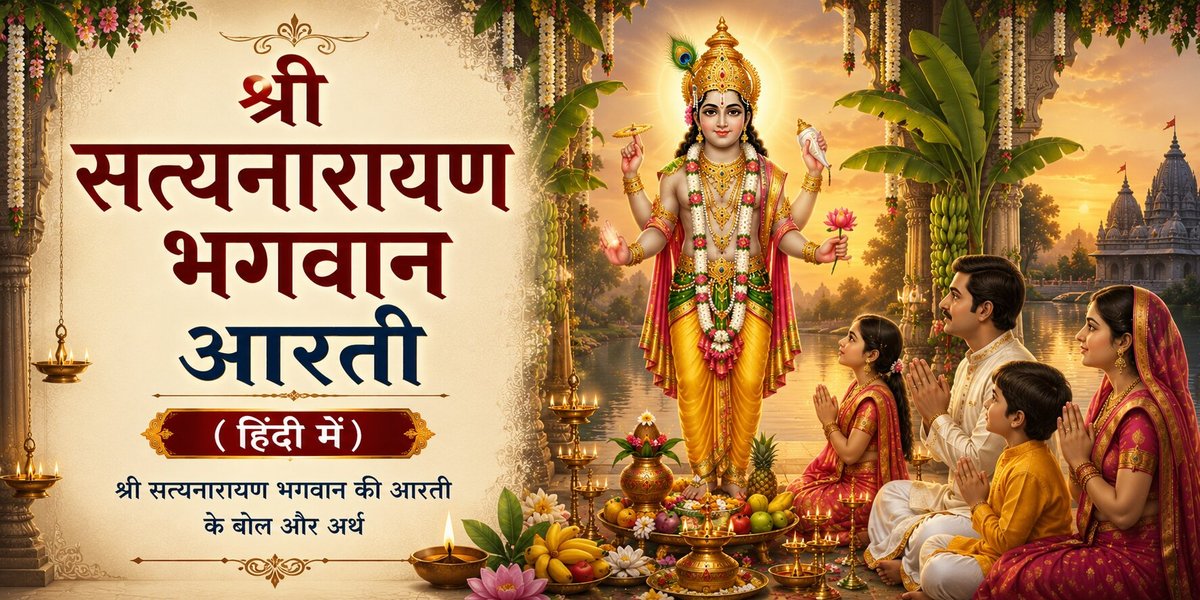
The aarti that seals the Satyanarayan vrata with gratitude
The Jai Lakshmi Ramana aarti occupies a special ritual position: it is not simply a hymn of praise but the formal, joyful conclusion of the Satyanarayan Puja, the moment when the assembled household turns its individual prayers into collective thanksgiving. Addressed to Lord Vishnu in his aspect as Satyanarayan - the Lord of Truth; it pairs him explicitly with Lakshmi, reminding worshippers that abundance and virtue are always understood as a divine couple in the Vaishnava tradition. The aarti is traditionally performed on Purnima (the full moon), on auspicious family occasions such as griha pravesh or marriage, and at the conclusion of any Satyanarayan Katha reading, making it one of the most widely recognizable aarti melodies in Indian homes.
What distinguishes this aarti is its overtly relational mood: each verse celebrates a quality of the Lord - his role as sustainer, as remover of sorrow, as bestower of wisdom - in a voice that feels personally addressed rather than liturgically formal. Devotees believe that offering this aarti with a lit diya, flowers, and a pure heart invites Vishnu's grace into domestic life, ensuring that the blessings sought during the puja are fully acknowledged and sealed. The melody is simple enough for young children to join, which is itself part of its enduring design: it binds generations of a family together in a single moment of luminous devotion.
Shri Satyanarayan Bhagwan Aarti Lyrics (हिंदी में)
ॐ जय लक्ष्मी रमणा, स्वामी जय लक्ष्मी रमणा ।
सत्यनारायण स्वामी, जन पातक हरणा ॥ ॐ जय लक्ष्मी रमणा ॥
रत्न जड़ित सिंहासन, अद्भुत छवि राजे ।
नारद करत निरंतर, घंटा ध्वनि बाजें ॥ ॐ जय लक्ष्मी रमणा ॥
प्रकट भए कलि कारण, द्विज को दरस दियो ।
बूढ़ो ब्राह्मण बनकर, कंचन महल कियो ॥ ॐ जय लक्ष्मी रमणा ॥
दुर्बल भील कठारो, जिन पर कृपा करी ।
चंद्रचूड़ एक राजा, तिनकी विपत्ति हरी ॥ ॐ जय लक्ष्मी रमणा ॥
वैश्य मनोरथ पायो, श्रद्धा तज दीन्हीं ।
सो फल भोग्यो प्रभुजी, फिर स्तुति किन्हीं ॥ ॐ जय लक्ष्मी रमणा ॥
भाव भक्ति के कारण, छिन-छिन रूप धरें ।
श्रद्धा धारण किन्हीं, तिनके काज सरें ॥ ॐ जय लक्ष्मी रमणा ॥
ग्वाल-बाल संग राजा, वन में भक्ति करी ।
मनवांछित फल दीन्हों, दीन दयालु हरि ॥ ॐ जय लक्ष्मी रमणा ॥
चढ़त प्रसाद सवायो, कदली फल मेवा ।
धूप दीप तुलसी से, राजी सत्यदेवा ॥ ॐ जय लक्ष्मी रमणा ॥
सत्यनारायण जी की आरती, जो कोई नर गावें ।
ऋद्धि-सिद्धि सुख संपत्ति, मनवांछित फल पावें ॥ ॐ जय लक्ष्मी रमणा ॥
Shri Satyanarayan Bhagwan Aarti – Transliteration (English)
Om Jai Lakshmi Ramana, Swami Jai Lakshmi Ramana,
Satyanarayan Swami, Jan Paatak Harana ॥ Om Jai Lakshmi Ramana ॥
Ratna Jadit Singhasan, Adbhut Chhavi Raaje,
Narad Karat Nirantar, Ghanta Dhvani Bajen ॥ Om Jai Lakshmi Ramana ॥
Prakat Bhaye Kali Karan, Dwij Ko Daras Diyo,
Budho Brahman Banakar, Kanchan Mahal Kiyo ॥ Om Jai Lakshmi Ramana ॥
Durbal Bheel Katharo, Jin Par Kripa Kari,
Chandrachud Ek Raja, Tinki Vipatti Hari ॥ Om Jai Lakshmi Ramana ॥
Vaishya Manorath Paayo, Shraddha Taj Dinhi,
So Phal Bhogyo Prabhuji, Phir Stuti Kinhi ॥ Om Jai Lakshmi Ramana ॥
Bhaav Bhakti Ke Kaaran, Chhin Chhin Roop Dharen,
Shraddha Dharan Kinhi, Tinke Kaaj Saren ॥ Om Jai Lakshmi Ramana ॥
Gwal Baal Sang Raja, Van Mein Bhakti Kari,
Manvanchit Phal Dinon, Deen Dayalu Hari ॥ Om Jai Lakshmi Ramana ॥
Chadat Prasaad Savaayo, Kadali Phal Meva,
Dhoop Deep Tulsi Se, Raaji Satyadeva ॥ Om Jai Lakshmi Ramana ॥
Satyanarayan Ji Ki Aarti, Jo Koi Nar Gaave,
Riddhi Siddhi Sukh Sampatti, Manvanchit Phal Paave ॥ Om Jai Lakshmi Ramana ॥
Meaning & Significance
The Satyanarayan Aarti, beginning with the invocation 'Om Jai Lakshmi Ramana,' is the concluding devotional song of the Satyanarayan Puja - one of the most widely performed Vaishnava rituals in Hindu households across India and the diaspora. Satyanarayan combines 'Satya' (truth) and 'Narayan' (the sustainer of all) - naming the eternal Lord who upholds cosmic order. The aarti narrates, in compact verse, the episodes from the Satyanarayan Katha: the Lord appearing to a poor Brahmin in the form of an old man, showering grace upon a simple tribal hunter and a troubled king, and the consequences faced by those who neglect the prasad of the puja. Each verse affirms that sincere faith (shraddha) and devotion always draw the Lord's compassionate response.
The closing verse proclaims that whoever sings this aarti with sincerity receives prosperity, spiritual powers (riddhi-siddhi), and the fulfilment of all righteous desires - a traditional assurance that reflects the joyful, wish-fulfilling nature of Satyanarayan's grace.
About Shri Satyanarayan Bhagwan
Satyanarayan Bhagwan is a form of Lord Vishnu revered for His accessibility and immediate responsiveness to devotion. The Satyanarayan Vrat Katha (sacred narrative) is found in the Skanda Purana and narrates how the sage Narada, moved by the suffering of humanity in the Kali Yuga, approached Lord Vishnu for a simple yet powerful ritual that householders could perform for welfare, prosperity, and the removal of obstacles. The ritual - involving the preparation of panchamrit, the offering of banana and wheat-flour prasad (sheera), the recitation of five chapters of the katha, and the concluding aarti - has been performed in Hindu homes for centuries at auspicious occasions such as new business ventures, marriages, housewarming ceremonies, and monthly on Purnima (full moon) or Ekadashi.
Benefits of Reciting the Shri Satyanarayan Bhagwan Aarti
- Traditionally believed to fulfil earnest desires when recited after completing the Satyanarayan Puja with sincerity.
- Invokes Lord Vishnu's protective grace for the family's wellbeing and material prosperity.
- Reinforces values of honesty, gratitude, and faith through the narrative contained in the aarti's verses.
- Completes the Satyanarayan Vrat properly - the katha is considered incomplete without the concluding aarti.
- Regular monthly recitation on Purnima is considered especially auspicious in the tradition.
- Cultivates a sense of joyful surrender and trust in divine providence in family life.
How to Perform the Aarti (Pooja Vidhi)
- Complete the full Satyanarayan Puja, including the reading or hearing of the five-chapter katha, before performing this aarti.
- Prepare the prasad (sheera - wheat flour, ghee, sugar, and banana) and place it before the deity as an offering.
- Light a ghee diya and incense; arrange the altar with images of Lord Vishnu or Satyanarayan Bhagwan.
- Hold the aarti thali with the lit diya and move it clockwise before the deity while singing the aarti with the entire family.
- Ring a bell throughout the aarti to sustain focus and create a devotional atmosphere.
- Distribute the prasad (sheera) to all present immediately after the aarti, as accepting the prasad is an integral part of the vrat's completion.
Best Day & Time to Recite
The Satyanarayan Puja and its aarti are most commonly performed on Purnima (full moon day), Ekadashi, and Sankranti. Thursday is the traditional day for Vishnu worship and is considered especially auspicious for this puja. The ritual is also performed on occasions of personal significance - at the start of a new business, upon completing a home, at weddings, after safe returns from journeys, or in fulfilment of a vow. The puja is typically conducted in the late morning or early afternoon, with the aarti as the celebratory conclusion.
Frequently Asked Questions
What is the significance of the prasad in Satyanarayan Puja?
The prasad - typically sheera made from wheat flour, ghee, sugar, banana, and milk - is central to the Satyanarayan Vrat. The Katha contains explicit episodes describing the misfortune that befalls those who disrespect or fail to accept the prasad, emphasising the tradition's teaching that the offering made to the Lord must be received with equal reverence. Distributing and accepting the prasad is seen as a form of grace that flows from the Lord to all present.
Does one need a priest to perform the Satyanarayan Puja?
While performing the puja with a learned priest's guidance is traditionally recommended, many families perform this puja at home using printed katha books and the aarti text. The essential requirement is sincerity, cleanliness, and a calm, devotional atmosphere. In many communities, the head of the household reads the katha and the entire family participates in the aarti and prasad.
How is Satyanarayan different from other Vishnu forms?
Satyanarayan is understood as the accessible, benevolent form of Vishnu who is specifically responsive to the householder's prayers for prosperity and welfare in the Kali Yuga. Unlike many Vishnu forms that are worshipped through elaborate temple rituals, Satyanarayan worship was designed as an inclusive home-based vrat accessible to ordinary families - emphasising sincere faith and the sharing of prasad over elaborate material arrangements.