Thumak Chalat Ramchandra – Tulsidas Bhajan Lyrics, Meaning & Significance
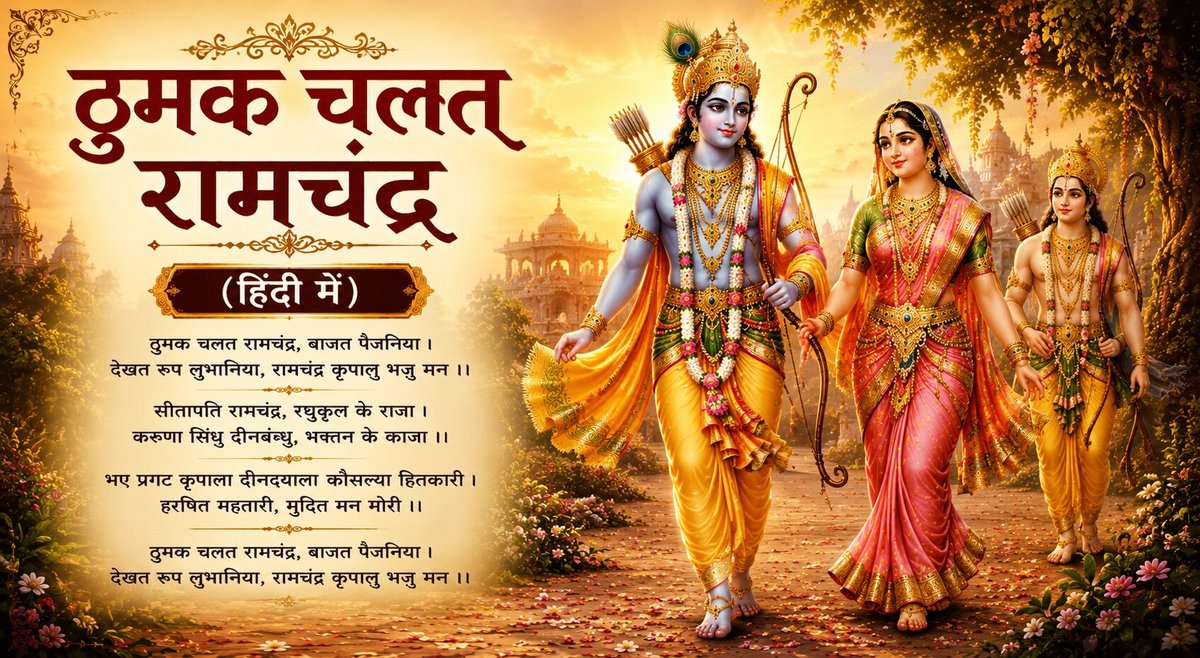
Toddling divinity: the vatsalya rasa at the heart of Thumak Chalat Ramchandra
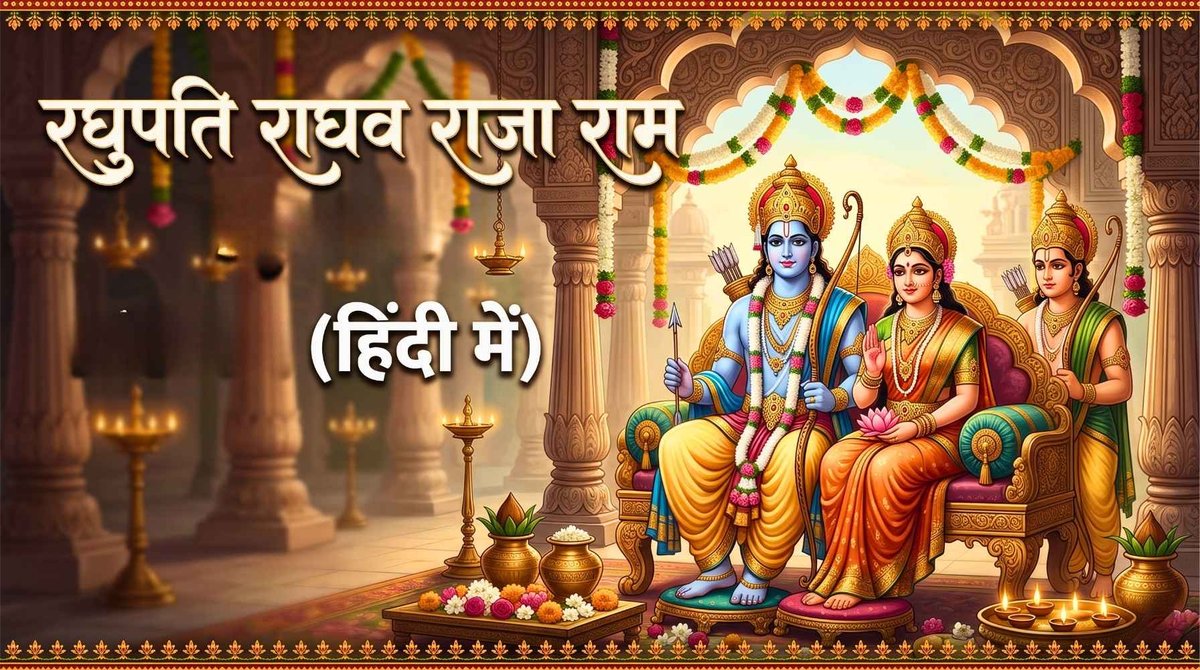
Thumak Chalat Ramchandra by Tulsidas belongs to the Vinaya Patrika, a collection that ranges across many devotional moods, but this particular pada is pure vatsalya rasa - the overflowing parental tenderness that arises when the devotee contemplates the Lord as a small child. Tulsidas paints a picture of infant Rama toddling across the palace courtyard at Ayodhya, anklets and ornaments jingling, curls swaying, the delight of the entire household. Every sensory detail - the sound of tiny footsteps, the glint of jewellery, the gathered gaze of Kaushalya and the maids - is chosen to evoke a particular quality of tenderness that pierces even the most composed heart.
This bhajan is especially associated with the celebration of Ram Navami, the birth anniversary of Shri Ram, when temples and homes ring with songs of his childhood. It is also a beloved lullaby-style composition sung to children and to the Lord's image at bedtime in the tradition of Shayan Aarti. What gives it its extraordinary staying power across generations is Tulsidas's genius for making the infinite feel intimate: the same Lord who bridges the ocean and defeats Ravana is here stumbling adorably across a courtyard, and the devotee's heart, encountering both truths simultaneously, finds itself held in a love that is at once reverent and warmly familiar.
Thumak Chalat Ramchandra Lyrics (हिंदी में)
ठुमक चलत रामचंद्र, बाजत पैंजनियाँ।
ठुमक चलत रामचंद्र, बाजत पैंजनियाँ॥
किलकि किलकि उठत धाय, गिरत भूमि लटपटाय।
धाय मात गोद लेत, दशरथ की रनियाँ।
ठुमक चलत रामचंद्र, बाजत पैंजनियाँ॥
अंचल रज अंग झारि, विविध भाँति सो दुलारि।
तन मन धन वारि वारि, कहत मृदु बचनियाँ।
ठुमक चलत रामचंद्र, बाजत पैंजनियाँ॥
विद्रुम से अरुण अधर, बोलत मुख मधुर मधुर।
सुभग नासिका में चारू, लटकत लटकनियाँ।
ठुमक चलत रामचंद्र, बाजत पैंजनियाँ॥
तुलसीदास अति आनंद, देख के मुखारविंद।
रघुवर छबि के समान, रघुवर छबि बनियाँ।
ठुमक चलत रामचंद्र, बाजत पैंजनियाँ॥
Thumak Chalat Ramchandra – Transliteration (English)
Thumak chalat Rāmachandra, bājat painjaniyāṃ.
Thumak chalat Rāmachandra, bājat painjaniyāṃ.
Kilaki kilaki uthat dhāy, girat bhūmi latapṭāy.
Dhāy māt god let, Dasarath kī raniyāṃ.
Thumak chalat Rāmachandra, bājat painjaniyāṃ.
Añchal raj ang jhāri, vividh bhāṃti so dulāri.
Tan man dhan vāri vāri, kahat mṛidu bachaniyāṃ.
Thumak chalat Rāmachandra, bājat painjaniyāṃ.
Vidruma se aruṇ adhar, bolat mukh madhur madhur.
Subhag nāsikā meṃ chāru, laṭakat laṭakaniyāṃ.
Thumak chalat Rāmachandra, bājat painjaniyāṃ.
Tulsīdās ati ānand, dekh ke mukhāravind.
Raghuvar chhabi ke samān, Raghuvar chhabi baniyāṃ.
Thumak chalat Rāmachandra, bājat painjaniyāṃ.
Meaning & Significance
In this enchanting bhajan, Tulsidas enters the dimension of vātsalya bhakti - devotion through the emotion of parental love for the divine child. The refrain Thumak chalat Rāmachandra, bājat painjaniyāṃ paints the scene of infant Rama toddling forward, his tiny anklets ringing with each unsteady step. The first verse shows baby Rama squealing in delight, running toward something, then tumbling softly to the ground, whereupon the queens of Dasharatha's household - Kaushalya, Kaikeyi and Sumitra - rush to scoop him up. In the second verse, the mothers tenderly brush dust from his garments and pour out their deepest love in gentle words. The third verse notes his lips the colour of red coral (vidruma), his sweet melodious babbling, and the beautiful nose-ornament swinging at his nose. Tulsidas concludes with his own rapture: seeing Rama's lotus face, the poet discovers that the only fitting comparison for Rama's beauty is Rama's own beauty - no earthly image can match the original. The bhajan captures the theology that the Supreme Being is also infinitely approachable as the beloved child of the devotee's heart.
About the Composer
Goswami Tulsidas (approximately 1532–1623 CE) is one of the most celebrated poet-saints in all of Indian literature. Born in Rajapur, Uttar Pradesh, he is principally known for the Ramcharitmanas, his monumental retelling of the Ramayana in Awadhi, which transformed the way northern India understood and experienced the story of Rama. Tulsidas also composed the Vinaya Patrika, a collection of devotional petitions addressed to Rama and his court, from which Thumak Chalat Ramchandra is drawn. His other major works include Kavitāvalī, Gītāvalī, and Hanuman Chalisa. Tulsidas is revered across the Hindu world as a mahakavi - a great poet - whose writings bridged scriptural learning and popular devotion, making the grace of Rama accessible to every household.
About Ram
Lord Rama is the seventh avatāra of Vishnu, born in Ayodhya as the eldest son of King Dasharatha. His life, as narrated in the Ramayana and Ramcharitmanas, exemplifies the ideals of righteousness (dharma), filial piety, marital fidelity, and just kingship. Rama is worshipped across the Hindu world as Maryādā Puruṣottama - the best of men who upholds the highest moral law. His name is considered equivalent to liberation itself: the phrase Rāma nāma sat hai is spoken at Hindu funerals as the ultimate truth. In the vātsalya tradition celebrated in this bhajan, Rama is approached not as the cosmic sovereign but as the tender, playful child who fills the hearts of his devotees with pure joy.
Spiritual Significance & Benefits
- Meditating on this bhajan awakens vātsalya bhāva - the devotional emotion of parental love that dissolves the distance between the devotee and God.
- The imagery of the divine child's stumbling steps reminds practitioners that God is not remote or formidable but intimately close and vulnerable to our love.
- Singing this bhajan is said to fill the heart with innocence and joy, washing away anxiety and mental turbulence.
- The anklet-sound motif (painjaniyāṃ) is used as an aid for nāda sādhana - meditation on divine sound vibration.
- Recitation on Ram Navami and throughout the month of Chaitra is considered especially auspicious for families seeking the blessings of domestic harmony.
When & How It Is Sung
Thumak Chalat Ramchandra is typically sung at a gently lilting pace that mirrors a toddler's bouncy gait. Musicians traditionally set it in Rāga Bhairavī or Rāga Yaman, with tabla accompaniment keeping a playful rhythm. It is especially popular at Ram Navami celebrations, in temple balā-leelā programmes depicting Rama's childhood, and as a lullaby sung during evening prayers. Devotional singers such as Anup Jalota and Lata Mangeshkar have brought this composition to national audiences. In home worship (pūjā), families often sing it during the early morning or at dusk as part of the daily Ram-bhajan sequence.
Frequently Asked Questions
Is Thumak Chalat Ramchandra from the Ramcharitmanas?
No. The bhajan is drawn from the Vinaya Patrika, Tulsidas's collection of devotional petitions and songs. While the Ramcharitmanas is an epic narrative poem retelling the Ramayana, the Vinaya Patrika is a devotional lyric anthology expressing the poet's personal relationship with Rama and his court.
What is vātsalya bhakti?
Vātsalya bhakti is one of the five principal modes of devotion recognised in the Bhakti tradition, specifically the relationship of a parent (or nurse) toward the divine as a beloved child. It is the opposite of reverential awe - instead of approaching God with formality, the devotee nurtures, protects and delights in the divine as a helpless infant. Both Yashoda's love for baby Krishna and the queens' love for baby Rama exemplify this form of devotion.
Why does Tulsidas say Raghuvar chhabi ke samān, Raghuvar chhabi baniyāṃ?
This phrase, meaning "the beauty of Raghuvar (Rama) is comparable only to the beauty of Raghuvar himself," is Tulsidas's poetic declaration that Rama's divine beauty transcends all earthly categories of comparison. Every metaphor a poet might use - moon, lotus, jewel - ultimately falls short. The supreme original surpasses every substitute, and only the original can be its own standard of excellence.