Shiva Manasa Puja: Sanskrit Text, Meaning & Benefits
Shiva Manasa Puja - Sanskrit Text
रत्नैः कल्पितमासनं हिमजलैः स्नानं च दिव्याम्बरं
नानारत्नविभूषितं मृगमदामोदाङ्कितं चन्दनम् ।
जातीचम्पकबिल्वपत्ररचितं पुष्पं च धूपं तथा
दीपं देव दयानिधे पशुपते हृत्कल्पितं गृह्यताम् ॥ १॥
सौवर्णे नवरत्नखण्डरचिते पात्रे घृतं पायसं
भक्ष्यं पञ्चविधं पयोदधियुतं रम्भाफलं पानकम् ।
शाकानामयुतं जलं रुचिकरं कर्पूरखण्डोज्ज्वलं
ताम्बूलं मनसा मया विरचितं भक्त्या प्रभो स्वीकुरु ॥ २॥
छत्रं चामरयोर्युगं व्यजनकं चादर्शकं निर्मलं
वीणाभेरिमृदङ्गकाहलकला गीतं च नृत्यं तथा ।
साष्टाङ्गं प्रणतिः स्तुतिर्बहुविधा ह्येतत्समस्तं मया
सङ्कल्पेन समर्पितं तव विभो पूजां गृहाण प्रभो ॥ ३॥
आत्मा त्वं गिरिजा मतिः सहचराः प्राणाः शरीरं गृहं
पूजा ते विषयोपभोगरचना निद्रा समाधिस्थितिः ।
सञ्चारः पदयोः प्रदक्षिणविधिः स्तोत्राणि सर्वा गिरो
यद्यत्कर्म करोमि तत्तदखिलं शम्भो तवाराधनम् ॥ ४॥
करचरणकृतं वाक्कायजं कर्मजं वा
श्रवणनयनजं वा मानसं वापराधम् ।
विहितमविहितं वा सर्वमेतत्क्षमस्व
जय जय करुणाब्धे श्रीमहादेव शम्भो ॥ ५॥
Transliteration (Roman/IAST)
ratnaiḥ kalpitam-āsanaṃ himajalaiḥ snānaṃ ca divyāmbaraṃ
nānāratna-vibhūṣitaṃ mṛgamadāmodāṅkitaṃ candanam |
jātī-campaka-bilvapatra-racitaṃ puṣpaṃ ca dhūpaṃ tathā
dīpaṃ deva dayānidhe paśupate hṛt-kalpitaṃ gṛhyatām || 1||
(verses 2–4 continue the offering of food, music, salutations and the identification of every act with the worship of Shiva) …
ātmā tvaṃ girijā matiḥ sahacarāḥ prāṇāḥ śarīraṃ gṛhaṃ
pūjā te viṣayopabhoga-racanā nidrā samādhi-sthitiḥ |
sañcāraḥ padayoḥ pradakṣiṇa-vidhiḥ stotrāṇi sarvā giro
yad yat karma karomi tat tad akhilaṃ śambho tavārādhanam || 4||
kara-caraṇa-kṛtaṃ vāk-kāya-jaṃ karma-jaṃ vā
śravaṇa-nayana-jaṃ vā mānasaṃ vāparādham |
vihitam-avihitaṃ vā sarvam-etat kṣamasva
jaya jaya karuṇābdhe śrī-mahādeva śambho || 5||
Meaning
The hymn is a complete worship of Shiva performed entirely in the mind. In the first verse the devotee offers a seat fashioned of jewels, a bath of cool Himalayan water, divine garments, sandal paste scented with musk, flowers of jasmine, champaka and bilva, incense and a lamp - "all imagined in my heart; accept it, O Lord, ocean of compassion, Pashupati" (verse 1). The second verse offers a feast: clarified butter and payasam in a golden, gem-set vessel, five kinds of food with milk and curd, plantains, sweet drinks, countless vegetables, refreshing water bright with camphor, and betel - "all fashioned by my mind with devotion; please accept it" (verse 2). The third offers the royal honours of worship - parasol, fans, mirror, the music of vina, drum and horn, song, dance, prostrations and many hymns of praise - all surrendered by mere resolve (verse 3). The fourth verse is the philosophical heart: "You are the Self, Girija (Parvati) is my intellect, my life-breaths are your companions, my body is your temple; my enjoyment of sense-objects is your worship, my sleep is samadhi, my walking is circumambulation, all my words are hymns to you - whatever act I perform, all of it, O Shambhu, is your worship" (verse 4). The closing verse begs forgiveness for every fault committed by hand, foot, speech, body, action, ear, eye or mind, whether prescribed or forbidden - "forgive it all; victory, victory to you, ocean of mercy, Sri Mahadeva Shambhu" (verse 5).
About this Stotra
Shiva Manasa Puja - "the mental worship of Shiva" - is a celebrated hymn attributed to Adi Shankaracharya. Its premise is profound: true worship needs no external materials, for the most precious offerings can be created and offered within the heart. Verse by verse it performs a complete shodashopachara puja (the sixteen-fold ritual) using only imagination, and then dissolves the very distinction between worshipper and worship in the fourth verse, where every ordinary act of life is recognised as the adoration of Shiva. The hymn closes, as so many of Shankaracharya's do, with a plea for forgiveness of all faults, making it both a worship and a prayer of contrition.
Significance & Spiritual Benefits
Manasa puja teaches that devotion is ultimately an inner act. The hymn is treasured by those who cannot perform elaborate external rituals - the sick, the travelling, the renunciate - yet it is equally a contemplative practice for everyone, training the mind to see all of life as service to the Divine. Its fourth verse is one of the great statements of non-dual devotion in Hindu literature, collapsing the separation between the soul and Shiva. Reciting it cultivates single-pointed attention, surrender, and the constant remembrance of God, and its closing prayer brings the peace of one whose faults have been laid at the Lord's feet. It is often recited at the conclusion of any Shiva puja to make good whatever was lacking in the outward ritual.
Astrological Relevance
As a hymn of inner Shiva worship, the Shiva Manasa Puja is a remedy that requires no materials and so suits every horoscope. Shiva, lord of dissolution and detachment, is the deity invoked for afflictions of Shani (Saturn), Rahu and Ketu - the planets of karma and the shadowy unknown - and his mental worship is especially powerful during Sade Sati and the nodal dashas. Because the hymn turns the mind itself into the temple, it strengthens an afflicted Chandra (Moon), the karaka of the mind and emotional peace, and its emphasis on forgiveness and the dissolving of faults pacifies a harsh Mangala (Mars). It is widely recited on Mondays and during Pradosha for general planetary peace and inner steadiness.
How to Chant (Vidhi)
This hymn is uniquely suited to recitation without any external setup, since the worship is mental. Even so, when possible, sit before a Shiva lingam or image, facing east or north, and light a lamp. Close the eyes and, as each verse is recited, vividly visualise offering the seat, bath, garments, food, music and salutations to Shiva within the heart. Recite verse 4 slowly, contemplating that every act of your life is his worship. End with the verse of forgiveness and the chant "Om Namah Shivaya." It is the ideal closing prayer after any Shiva puja.
Best Day & Time
Monday (Somvar), the Pradosha twilight, Maha Shivaratri and the month of Shravana are most auspicious. The Brahma-muhurta and the evening Pradosha hour are ideal, but because it needs no materials, the Manasa Puja may be performed mentally at any time and place.
Frequently Asked Questions
What is the meaning of "Manasa Puja"?
Manasa Puja means "mental worship." The hymn performs a complete worship of Shiva - seat, bath, garments, food, music, salutations - entirely in the imagination, teaching that sincere devotion offered within the heart is fully acceptable to the Lord.
Who composed the Shiva Manasa Puja?
It is traditionally attributed to Adi Shankaracharya, the great Advaita teacher, and reflects his characteristic blend of devotion and non-dual wisdom, especially in the verse that recognises every act of life as the worship of Shiva.
When is it best recited?
It can be recited at any time, since it requires no materials, but it is especially fitting as the closing prayer after a Shiva puja and on Mondays, Pradosha and Maha Shivaratri. Its verse of forgiveness makes amends for any shortcomings in one's outward worship.
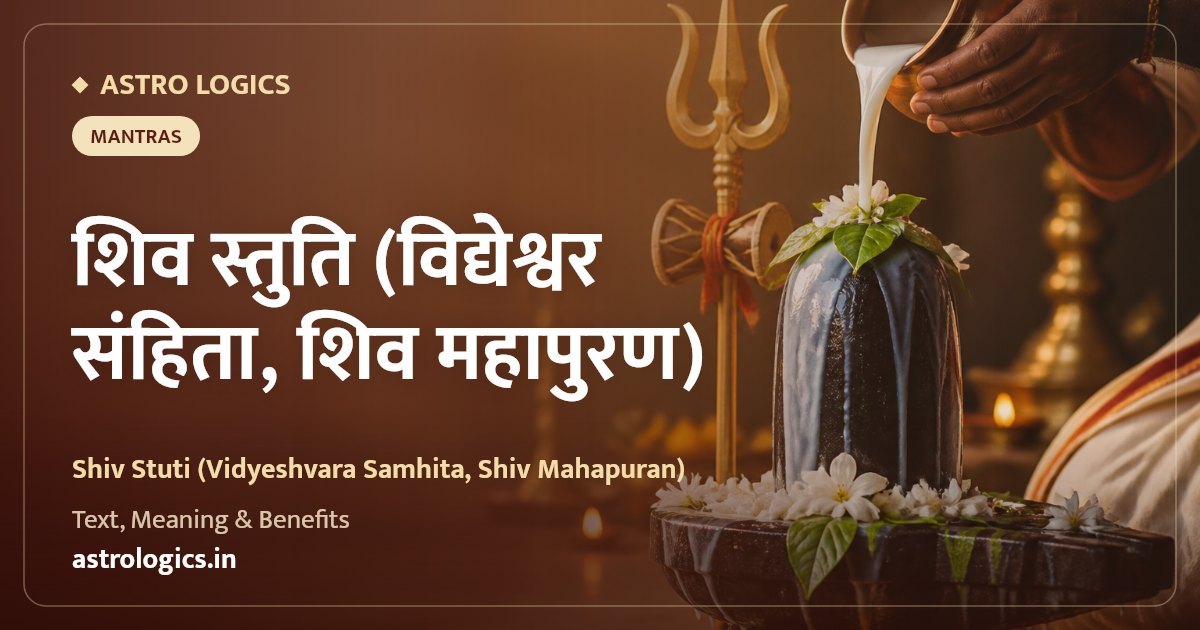
Worship without walls: the inner temple of Shiva Manasa Puja
The Shiva Manasa Puja, attributed to Adi Shankaracharya, dissolves the boundary between external ritual and inner contemplation. Unlike temple worship that depends on physical ingredients, this hymn asks the devotee to offer everything - a jewelled seat, the waters of sacred rivers, fine garments, fragrant flowers, and even music and dance - through the power of the trained, surrendered mind. The result is a practice uniquely suited to moments when outward worship is impossible, reminding the devotee that Lord Shiva, the witness-consciousness itself, dwells closer than any shrine. The mood it evokes is one of intimate adoration, a bhava in which the boundary between worshipper and worshipped gradually softens.
The hymn's fourth verse, which recognises every ordinary act - walking, breathing, sleeping, speaking - as a form of worship offered to the Lord, is especially cherished in Advaita Vedanta circles as a daily affirmation of non-dual awareness. In the Jyotish tradition, Shiva Manasa Puja holds particular resonance for those seeking to strengthen Saturn (Shani) or Ketu, both associated with detachment, inner renunciation, and transcendence of the material. Devotees traditionally recite it during the early morning hours before sunrise, or on Mondays and Pradosha days, believing that sincerity of intention consecrates the offering far more than any external grandeur.