Shri Chandi Dhwaj Stotram: Sanskrit Text, Meaning & Benefits
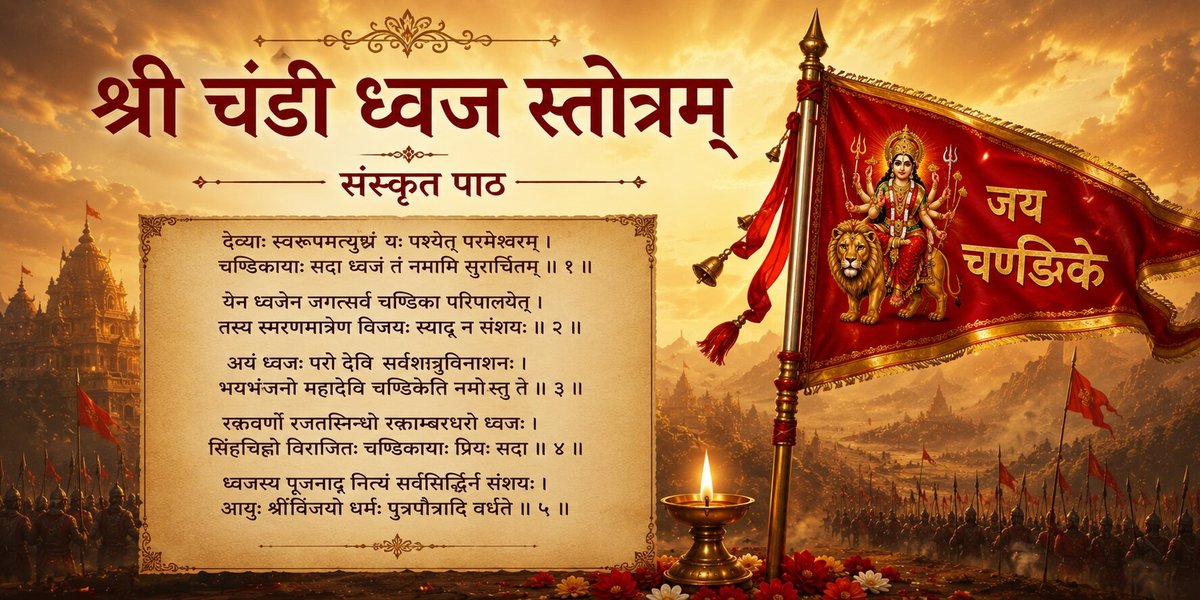
Chandi's battle-standard and the prayer for righteous sovereignty
The Shri Chandi Dhwaj Stotram occupies a distinctive place in the Shakta canon because its mood is explicitly one of petition for kingship, prosperity, and dominion - not in a grasping sense but in the sense of asking the goddess to remove what stands between the devotee and their rightful place in the world. The dhwaj, or banner-standard, is a potent symbol: armies went to war behind such flags, and invoking Chandi's flag is to ask for her martial shakti to lead the way. The Markandeya-tradition context of the hymn places it within the lineage of the Devi Mahatmyam, inheriting its vision of the goddess as the supreme power who defeats the forces of darkness on behalf of all beings.
Navratri - observed twice a year, in Chaitra and Ashwin - is the natural home of this stotra, when the nine nights of Devi worship create an atmosphere in which this kind of robust, unabashed petition feels entirely appropriate. The viniyoga that opens the text formally dedicates the recitation, grounding it in devotional intention rather than mere desire. Devotees believe that chanting the Chandi Dhwaj Stotram during Navratri with a pure sankalpa invites the goddess's protective and empowering energy into one's endeavours, and that the repeated refrain of the text is itself a form of rhythmic surrender - placing one's ambitions at the feet of the goddess and asking her to fulfill them in alignment with dharma.
Shri Chandi Dhwaj Stotram - Sanskrit Text
ॐ अस्य श्रीचण्डीध्वजस्तोत्रमहामन्त्रस्य मार्कण्डेय ऋषिः, अनुष्टुप् छन्दः, श्रीमहालक्ष्मीर्देवता, श्रां बीजम्, श्रीं शक्तिः, श्रूं कीलकं मम वाञ्छितार्थफलसिद्ध्यर्थे विनियोगः।
ॐ श्रीं नमो जगत्प्रतिष्ठायै देव्यै भूत्यै नमो नमः।
परमानन्दरूपायै नित्यायै सततं नमः।।1।।
नमस्तेऽस्तु महादेवि परब्रह्मस्वरूपिणि।
राज्यं देहि धनं देहि साम्राज्यं देहि मे सदा।।2।।
रक्ष मां शरण्ये देवि धनधान्यप्रदायिनि।
राज्यं देहि धनं देहि साम्राज्यं देहि मे सदा।।3।।
नमस्तेऽस्तु महाकाली परब्रह्मस्वरूपिणि।
राज्यं देहि धनं देहि साम्राज्यं देहि मे सदा।।4।।
नमस्तेऽस्तु महालक्ष्मी परब्रह्मस्वरूपिणि।
राज्यं देहि धनं देहि साम्राज्यं देहि मे सदा।।5।।
महासरस्वती देवि परब्रह्मस्वरूपिणि।
राज्यं देहि धनं देहि साम्राज्यं देहि मे सदा।।6।।
नमो ब्राह्मी नमस्तेऽस्तु परब्रह्मस्वरूपिणि।
राज्यं देहि धनं देहि साम्राज्यं देहि मे सदा।।7।।
नमो माहेश्वरी देवि परब्रह्मस्वरूपिणि।
राज्यं देहि धनं देहि साम्राज्यं देहि मे सदा।।8।।
नमस्तेऽस्तु च कौमारी परब्रह्मस्वरूपिणि।
राज्यं देहि धनं देहि साम्राज्यं देहि मे सदा।।9।।
नमस्ते वैष्णवी देवि परब्रह्मस्वरूपिणि।
राज्यं देहि धनं देहि साम्राज्यं देहि मे सदा।।10।।
नमस्तेऽस्तु च वाराही परब्रह्मस्वरूपिणि।
राज्यं देहि धनं देहि साम्राज्यं देहि मे सदा।।11।।
नारसिंही नमस्तेऽस्तु परब्रह्मस्वरूपिणि।
राज्यं देहि धनं देहि साम्राज्यं देहि मे सदा।।12।।
नमो नमस्ते इन्द्राणी परब्रह्मस्वरूपिणि।
राज्यं देहि धनं देहि साम्राज्यं देहि मे सदा।।13।।
नमो नमस्ते चामुण्डे परब्रह्मस्वरूपिणि।
राज्यं देहि धनं देहि साम्राज्यं देहि मे सदा।।14।।
नमो नमस्ते नन्दायै परब्रह्मस्वरूपिणि।
राज्यं देहि धनं देहि साम्राज्यं देहि मे सदा।।15।।
रक्तदन्ते नमस्तेऽस्तु परब्रह्मस्वरूपिणि।
राज्यं देहि धनं देहि साम्राज्यं देहि मे सदा।।16।।
नमस्तेऽस्तु महादुर्गे परब्रह्मस्वरूपिणि।
राज्यं देहि धनं देहि साम्राज्यं देहि मे सदा।।17।।
शाकम्भरी नमस्तेऽस्तु परब्रह्मस्वरूपिणि।
राज्यं देहि धनं देहि साम्राज्यं देहि मे सदा।।18।।
शिवदूति नमस्तेऽस्तु परब्रह्मस्वरूपिणि।
राज्यं देहि धनं देहि साम्राज्यं देहि मे सदा।।19।।
नमस्ते भ्रामरी देवि परब्रह्मस्वरूपिणि।
राज्यं देहि धनं देहि साम्राज्यं देहि मे सदा।।20।।
नमो नवग्रहरूपे परब्रह्मस्वरूपिणि।
राज्यं देहि धनं देहि साम्राज्यं देहि मे सदा।।21।।
नवकूट महादेवि परब्रह्मस्वरूपिणि।
राज्यं देहि धनं देहि साम्राज्यं देहि मे सदा।।22।।
स्वर्णपूर्णे नमस्तेऽस्तु परब्रह्मस्वरूपिणि।
राज्यं देहि धनं देहि साम्राज्यं देहि मे सदा।।23।।
श्रीसुन्दरी नमस्तेऽस्तु परब्रह्मस्वरूपिणि।
राज्यं देहि धनं देहि साम्राज्यं देहि मे सदा।।24।।
नमो भगवती देवि परब्रह्मस्वरूपिणि।
राज्यं देहि धनं देहि साम्राज्यं देहि मे सदा।।25।।
दिव्ययोगिनी नमस्ते परब्रह्मस्वरूपिणि।
राज्यं देहि धनं देहि साम्राज्यं देहि मे सदा।।26।।
नमस्तेऽस्तु महादेवि परब्रह्मस्वरूपिणि।
राज्यं देहि धनं देहि साम्राज्यं देहि मे सदा।।27।।
नमो नमस्ते सावित्री परब्रह्मस्वरूपिणि।
राज्यं देहि धनं देहि साम्राज्यं देहि मे सदा।।28।।
जयलक्ष्मी नमस्तेऽस्तु परब्रह्मस्वरूपिणि।
राज्यं देहि धनं देहि साम्राज्यं देहि मे सदा।।29।।
मोक्षलक्ष्मी नमस्तेऽस्तु परब्रह्मस्वरूपिणि।
राज्यं देहि धनं देहि साम्राज्यं देहि मे सदा।।30।।
चण्डीध्वजमिदं स्तोत्रं सर्वकामफलप्रदम्।
राजते सर्वजन्तूनां वशीकरणसाधनम्।।31।।
।। इति श्रीचण्डीध्वजस्तोत्रं सम्पूर्णम् ।।
Transliteration (Roman/IAST)
oṁ asya śrīcaṇḍīdhvajastotramahāmantrasya mārkaṇḍeya ṛṣiḥ, anuṣṭup chandaḥ, śrīmahālakṣmīrdevatā, śrāṁ bījam, śrīṁ śaktiḥ, śrūṁ kīlakaṁ mama vāñchitārthaphalasiddhyarthe viniyogaḥ |
oṁ śrīṁ namo jagatpratiṣṭhāyai devyai bhūtyai namo namaḥ |
paramānandarūpāyai nityāyai satataṁ namaḥ ||1||
namaste'stu mahādevi parabrahmasvarūpiṇi |
rājyaṁ dehi dhanaṁ dehi sāmrājyaṁ dehi me sadā ||2||
rakṣa māṁ śaraṇye devi dhanadhānyapradāyini |
rājyaṁ dehi dhanaṁ dehi sāmrājyaṁ dehi me sadā ||3||
namaste'stu mahākālī parabrahmasvarūpiṇi |
rājyaṁ dehi dhanaṁ dehi sāmrājyaṁ dehi me sadā ||4||
namaste'stu mahālakṣmī parabrahmasvarūpiṇi |
rājyaṁ dehi dhanaṁ dehi sāmrājyaṁ dehi me sadā ||5||
mahāsarasvatī devi parabrahmasvarūpiṇi |
rājyaṁ dehi dhanaṁ dehi sāmrājyaṁ dehi me sadā ||6||
namo brāhmī namaste'stu parabrahmasvarūpiṇi |
rājyaṁ dehi dhanaṁ dehi sāmrājyaṁ dehi me sadā ||7||
namo māheśvarī devi parabrahmasvarūpiṇi |
rājyaṁ dehi dhanaṁ dehi sāmrājyaṁ dehi me sadā ||8||
namaste'stu ca kaumārī parabrahmasvarūpiṇi |
rājyaṁ dehi dhanaṁ dehi sāmrājyaṁ dehi me sadā ||9||
namaste vaiṣṇavī devi parabrahmasvarūpiṇi |
rājyaṁ dehi dhanaṁ dehi sāmrājyaṁ dehi me sadā ||10||
namaste'stu ca vārāhī parabrahmasvarūpiṇi |
rājyaṁ dehi dhanaṁ dehi sāmrājyaṁ dehi me sadā ||11||
nārasiṁhī namaste'stu parabrahmasvarūpiṇi |
rājyaṁ dehi dhanaṁ dehi sāmrājyaṁ dehi me sadā ||12||
namo namaste indrāṇī parabrahmasvarūpiṇi |
rājyaṁ dehi dhanaṁ dehi sāmrājyaṁ dehi me sadā ||13||
namo namaste cāmuṇḍe parabrahmasvarūpiṇi |
rājyaṁ dehi dhanaṁ dehi sāmrājyaṁ dehi me sadā ||14||
namo namaste nandāyai parabrahmasvarūpiṇi |
rājyaṁ dehi dhanaṁ dehi sāmrājyaṁ dehi me sadā ||15||
raktadante namaste'stu parabrahmasvarūpiṇi |
rājyaṁ dehi dhanaṁ dehi sāmrājyaṁ dehi me sadā ||16||
namaste'stu mahādurge parabrahmasvarūpiṇi |
rājyaṁ dehi dhanaṁ dehi sāmrājyaṁ dehi me sadā ||17||
śākambharī namaste'stu parabrahmasvarūpiṇi |
rājyaṁ dehi dhanaṁ dehi sāmrājyaṁ dehi me sadā ||18||
śivadūti namaste'stu parabrahmasvarūpiṇi |
rājyaṁ dehi dhanaṁ dehi sāmrājyaṁ dehi me sadā ||19||
namaste bhrāmarī devi parabrahmasvarūpiṇi |
rājyaṁ dehi dhanaṁ dehi sāmrājyaṁ dehi me sadā ||20||
namo navagraharūpe parabrahmasvarūpiṇi |
rājyaṁ dehi dhanaṁ dehi sāmrājyaṁ dehi me sadā ||21||
navakūṭa mahādevi parabrahmasvarūpiṇi |
rājyaṁ dehi dhanaṁ dehi sāmrājyaṁ dehi me sadā ||22||
svarṇapūrṇe namaste'stu parabrahmasvarūpiṇi |
rājyaṁ dehi dhanaṁ dehi sāmrājyaṁ dehi me sadā ||23||
śrīsundarī namaste'stu parabrahmasvarūpiṇi |
rājyaṁ dehi dhanaṁ dehi sāmrājyaṁ dehi me sadā ||24||
namo bhagavatī devi parabrahmasvarūpiṇi |
rājyaṁ dehi dhanaṁ dehi sāmrājyaṁ dehi me sadā ||25||
divyayoginī namaste parabrahmasvarūpiṇi |
rājyaṁ dehi dhanaṁ dehi sāmrājyaṁ dehi me sadā ||26||
namaste'stu mahādevi parabrahmasvarūpiṇi |
rājyaṁ dehi dhanaṁ dehi sāmrājyaṁ dehi me sadā ||27||
namo namaste sāvitrī parabrahmasvarūpiṇi |
rājyaṁ dehi dhanaṁ dehi sāmrājyaṁ dehi me sadā ||28||
jayalakṣmī namaste'stu parabrahmasvarūpiṇi |
rājyaṁ dehi dhanaṁ dehi sāmrājyaṁ dehi me sadā ||29||
mokṣalakṣmī namaste'stu parabrahmasvarūpiṇi |
rājyaṁ dehi dhanaṁ dehi sāmrājyaṁ dehi me sadā ||30||
caṇḍīdhvajamidaṁ stotraṁ sarvakāmaphalapradam |
rājate sarvajantūnāṁ vaśīkaraṇasādhanam ||31||
Meaning
After the viniyoga (which names Markandeya as the seer, anushtup as the metre, Mahalakshmi as the deity, and the seed-syllables of the mantra), the hymn opens by bowing to the Goddess as the foundation of the worlds, the very form of supreme bliss, eternal and ever-present. Then verse after verse salutes her in each of her great forms - Mahadevi, Mahakali, Mahalakshmi, Mahasaraswati, the seven Matrikas (Brahmi, Maheshwari, Kaumari, Vaishnavi, Varahi, Narasimhi, Indrani), Chamunda, Nanda, Raktadantika, Mahadurga, Shakambhari, Shivaduti, Bhramari, the nine-planet form, Shrisundari, Bhagavati, the divine Yogini, Savitri, Jayalakshmi and Mokshalakshmi - each time addressing her as "the very form of the Supreme Brahman" and praying with the refrain: rājyaṁ dehi dhanaṁ dehi sāmrājyaṁ dehi me sadā - "Grant me kingdom, grant me wealth, grant me dominion always." The closing verse declares that this Chandi Dhwaj hymn bestows the fruit of every desire and shines as a means of mastery over all beings.
About this Stotra
The Shri Chandi Dhwaj Stotram ("the banner-hymn of Chandi") belongs to the Markandeya / Durga Saptashati devotional tradition. Its structure is a litany: each verse names a distinct manifestation of the Mother Goddess and repeats the same earnest prayer for sovereignty, wealth and dominion. The complete recitation, prefaced by its viniyoga and seed-syllables, is treasured as a "siddha" stotra - a perfected hymn - recited especially during Navratri for material and spiritual abundance.
Significance & Spiritual Benefits
The stotra's own phalashruti calls it sarvakāmaphalapradam - granting the fruit of every desire. Devotees recite it to attract prosperity, success, authority and protection, and to overcome poverty and obstacles. Because it addresses the Goddess across all her forms and unifies them as the one Para-Brahman, the hymn is regarded as a complete Shakti worship in itself. Regular recitation is believed to bring confidence, victory over difficulties, harmony in the home and the steady inflow of wealth (Lakshmi).
Astrological Relevance
Because the refrain explicitly seeks dhana (wealth) and rajya (kingdom/status), this stotra is widely used as a remedy to strengthen the wealth and status indicators of a horoscope - the 2nd house (accumulated wealth), the 11th house (gains), and the 10th house (authority, kingdom). It invokes Mahalakshmi, the karaka of fortune, making it apt during weak Jupiter or Venus periods and for those facing financial stagnation. Verse 21 salutes the Goddess as the nine-planet form (Navagraha-rupa), so the hymn is also chanted to harmonise overall planetary influences and ward off graha-related obstacles. It is a favourite Navratri remedy for material and spiritual rise together.
How to Chant (Vidhi)
Bathe and sit before an image of Maa Durga/Chandi or Mahalakshmi, facing east or north. Light a ghee lamp, offer red flowers, kumkum and incense. Begin with the viniyoga, then recite the verses attentively, sustaining the refrain with sincere intent for prosperity and the Goddess's protection. Reciting it daily during Navratri, or on Fridays for Lakshmi's grace, is especially recommended. Conclude with gratitude and, where possible, a small charitable offering.
Best Day & Time
Navratri (Chaitra and Sharad) is the supreme occasion. Otherwise, Fridays (for Lakshmi/Shakti) and Tuesdays (for Durga), and the Ashtami tithi, are ideal. Recite in the morning after worship or at dusk during the Navratri nights.
Frequently Asked Questions
What does the Chandi Dhwaj Stotram ask for?
Each verse repeats the prayer "grant me kingdom, wealth and dominion always," addressed to the Goddess in her many forms - so it is chanted chiefly for prosperity, status and protection.
Who is the seer of this stotra?
Its viniyoga names the sage Markandeya as the rishi, anushtup as the metre, and Mahalakshmi as the presiding deity.
When should it be recited for best results?
During Navratri above all, and otherwise on Fridays and Tuesdays, ideally as a daily practice through the nine nights of the Goddess.