Shri Mallikarjuna Mangalashasanam: Auspicious Salutations to the Lord of Srisailam
Shri Mallikarjuna Mangalashasanam - Sanskrit Text
उमाकान्ताय कान्ताय कामितार्थप्रदायिने ।
श्रीगिरीशाय देवाय मल्लिनाथाय मङ्गलम् ॥
सर्वमङ्गलरूपाय श्रीनगेन्द्रनिवासिने ।
गङ्गाधराय नाथाय श्रीगिरीशाय मङ्गलम् ॥
सत्यानन्दस्वरूपाय नित्यानन्दविधायिने ।
स्तुत्याय श्रुतिगम्याय श्रीगिरीशाय मङ्गलम् ॥
मुक्तिप्रदाय मुख्याय भक्तानुग्रहकारिणे ।
सुन्दरेशाय सौम्याय श्रीगिरीशाय मङ्गलम् ॥
श्रीशैले शिखरेश्वरं गणपतिं श्रीहाटकेशं
पुनस्सारङ्गेश्वरं बिन्दुतीर्थममलं घण्टार्कसिद्धेश्वरम् ।
गङ्गां श्रीभ्रमराम्बिकां गिरिसुतामारामवीरेश्वरं
शङ्खंचक्रवराहतीर्थमनिशं श्रीशैलनाथं भजे ॥
हस्ते कुरङ्गं गिरिमध्यरङ्गं शृङ्गारिताङ्गं गिरिजानुषङ्गम् ।
मूर्धेन्दुगङ्गं मदनाङ्गभङ्गं श्रीशैललिङ्गं शिरसा नमामि ॥
॥ इति श्रीमल्लिकार्जुनमङ्गलाशासनम् सम्पूर्णम् ॥
Transliteration (Roman/IAST)
umākāntāya kāntāya kāmitārthapradāyine |
śrīgirīśāya devāya mallināthāya maṅgalam ||
sarvamaṅgalarūpāya śrīnagendranivāsine | gaṅgādharāya nāthāya śrīgirīśāya maṅgalam ||
(... continuing with auspicious salutations to Sri Girisha, and closing with) haste kuraṅgaṃ girimadhyaraṅgaṃ śṛṅgāritāṅgaṃ girijānuṣaṅgam | mūrdhendugaṅgaṃ madanāṅgabhaṅgaṃ śrīśailaliṅgaṃ śirasā namāmi ||
Meaning
Each verse showers "mangalam" - auspiciousness, blessing, glory - upon Lord Mallikarjuna, the Shiva of Srisailam. He is hailed as the beloved of Uma (Parvati), the bestower of every desired object, the divine Lord of the sacred mountain (Sri Girisha); as the very form of all auspiciousness, who dwells on the king of mountains, who bears the Ganga; as the embodiment of true bliss, the granter of eternal joy, praised by all and known through the Vedas; and as the giver of liberation, gracious to devotees, beautiful and gentle. The penultimate verse reverences the cluster of holy shrines and tirthas of Srisailam - Shikhareshwara, Ganapati, Hatakeshwara, Sarangeshwara, the Bindu tirtha, Ghantarka Siddheshwara, the Ganga, Goddess Bhramaramba, Veereshwara and the Shankha, Chakra and Varaha tirthas. The final verse bows with the head to the lingam of Srisailam - Shiva who holds the deer, dances on the mountain, is beautifully adorned, ever in the company of Parvati, bears the moon and Ganga on his head, and once burned the body of Kama.
About this Stotra
A Mangalashasanam is a hymn of "auspicious benediction" - a garland of verses that invoke mangalam (blessing and well-being) upon a deity, traditionally sung at the close of worship. The Shri Mallikarjuna Mangalashasanam is dedicated to Lord Mallikarjuna of Srisailam in Andhra Pradesh, one of the twelve Jyotirlingas of Shiva and, together with the Shakti Peetha of Goddess Bhramaramba, among the holiest sites in India. The hymn weaves the Lord, his consort and the sacred geography of the mountain shrine into a single act of auspicious praise.
Significance & Spiritual Benefits
Singing the Mangalashasanam invokes auspiciousness, well-being and the grace of Lord Mallikarjuna upon the devotee and the home. It is recited to fulfil righteous desires (the Lord is praised as kamitartha-pradayi, the giver of what is wished for), to gain Shiva's blessing, peace and protection, and ultimately liberation (mukti). As a benedictory hymn, it is especially sung at the conclusion of puja, on auspicious occasions, and during pilgrimage to Srisailam, sanctifying every undertaking with Shiva's mangalam.
Astrological Relevance
As a hymn to a Jyotirlinga Shiva, the Mallikarjuna Mangalashasanam carries the remedial power of Shiva worship, foremost among the appeasements for Saturn (Shani), the karaka of karma and hardship, and for trying periods such as Sade Sati. The Moon and Ganga upon the Lord's head connect his worship to mental peace and a strong Chandra, the karaka of the mind. Because Srisailam is also the abode of Goddess Bhramaramba - a Shakti Peetha - this hymn additionally invokes the grace of the Divine Mother (Shakti), benefiting those seeking strength, protection and the auspiciousness (saubhagya) that supports marriage, family and well-being. Monday, sacred to Shiva and the Moon, is its ideal day.
How to Chant (Vidhi)
Bathe and sit before a Shiva lingam or an image of Mallikarjuna and Bhramaramba. Light a lamp, offer bilva leaves, white or jasmine (mallika) flowers, and water or milk abhisheka, and apply vibhuti. Sing the Mangalashasanam with devotion, ideally at the close of your worship as a benediction, visualising the sacred mountain shrine of Srisailam. It is especially fitting on Mondays and during pilgrimage.
Best Day & Time
Monday (Somvar) and the pradosha (dusk) hours are ideal. Maha Shivaratri, the Mondays of Shravan, Karthika Masam and pradosha vrata days are especially auspicious, as is any occasion of pilgrimage to Srisailam.
Frequently Asked Questions
Who is Mallikarjuna?
Mallikarjuna is the form of Lord Shiva enshrined at Srisailam, one of the twelve Jyotirlingas, where he abides with Goddess Bhramaramba. The name combines "mallika" (jasmine) and "arjuna," reflecting the worship offered to him.
What is a Mangalashasanam?
A Mangalashasanam is a hymn of auspicious blessing, invoking mangalam (well-being and glory) upon a deity. It is traditionally sung at the conclusion of worship to seal it with auspiciousness.
Why does the hymn name many shrines and tirthas?
Srisailam is a vast sacred complex with many subsidiary shrines and holy waters. The hymn reverences these - from Shikhareshwara to the Varaha tirtha and Goddess Bhramaramba - to honour the entire sacred geography of the mountain in one prayer.
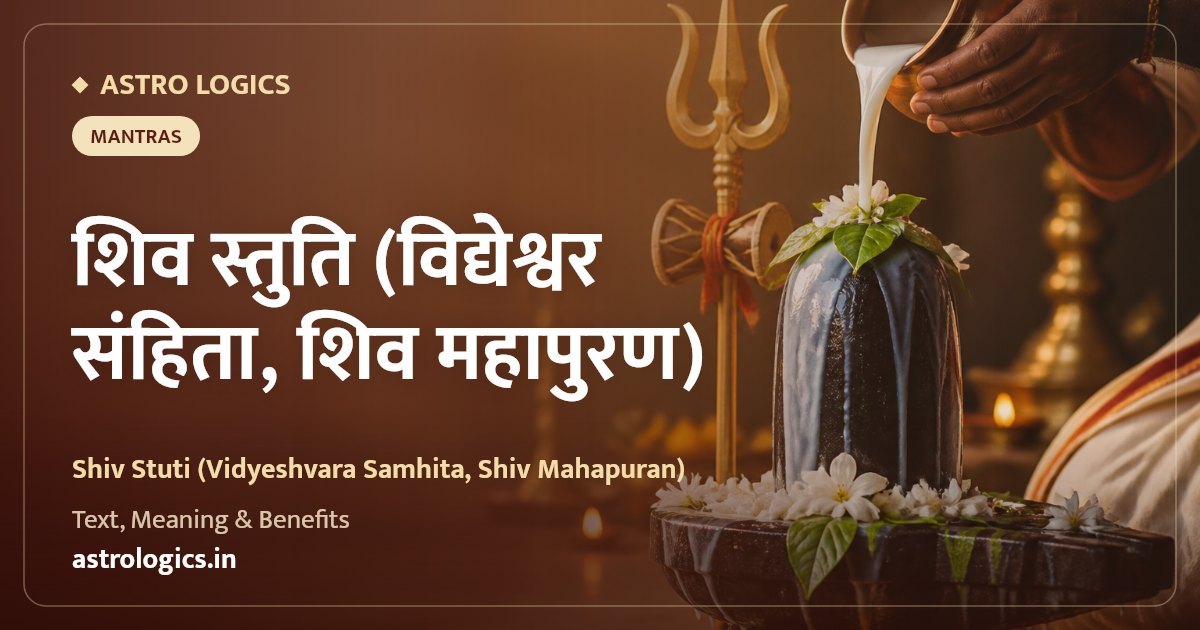
Where Shiva and Shakti meet on the sacred mountain: the spirit of Mallikarjuna Mangalashasanam
The Srisailam Jyotirlinga is one of the most ancient and revered of the twelve Jyotirlingas, nestled in the Nallamala hills of Andhra Pradesh where the Krishna River curves protectively around the mountain. Lord Mallikarjuna - Shiva as the one adorned with jasmine - presides here alongside Goddess Bhramaramba, the fierce form of Shakti who embodies the hum of bees. The Shri Mallikarjuna Mangalashasanam is a prayer of auspiciousness (mangalam), a genre in which each verse blesses the Lord himself - a beautiful inversion where the devotee becomes the one who pronounces auspiciousness upon the deity, the temple, and the sacred landscape. The rasa is one of joyful reverence mixed with a sense of wonder at standing at the confluence of Shaiva and Shakta energies on a mountain that has drawn seekers for millennia.
In the Jyotish tradition, Srisailam and the Mallikarjuna Jyotirlinga are associated with Shani (Saturn), and the mountain's geography - remote, elevated, and demanding of effort to reach - mirrors the Saturnine qualities of perseverance and renunciation that Shiva embodies. Mondays and Pradosha days are considered the most auspicious times for reciting this mangalashasanam, and pilgrims to Srisailam traditionally offer bilva leaves and white flowers. Even for those who cannot make the physical journey, devotees believe that sincere recitation of this hymn mentally conveys the devotee to the sacred mountain, invoking the blessings of both the Jyotirlinga and the surrounding tirthas named within the verses.