Shri Siddhivinayak Aarti – Sukhkarta Dukhharta: Lyrics, Meaning & Benefits
Shri Siddhivinayak Aarti – Sukhkarta Dukhharta Lyrics (हिंदी में)
।। श्री गणेशाय नमः ।।
सुखकर्ता दुखहर्ता वार्ता विघ्नाची।
नुरवी पूर्वी प्रेम कृपा जयाची।
सर्वांगी सुंदर उटी शेंदुराची।
कंठी झळके माळ मुक्ताफळाची॥ १॥
जय देव जय देव जय मंगलमूर्ती।
दर्शनमात्रे मनकामना पुरती॥
रत्नखचित फरा तूज गौरीकुमरा।
चंदनाची उटी कुंकुमकेशरा।
हिरे जडित मुकुट शोभतो बरा।
रुणझुणती नुपुरे चरणी घागरिया॥ २॥
जय देव जय देव जय मंगलमूर्ती।
दर्शनमात्रे मनकामना पुरती॥
लंबोदर पितांबर फनी वरवंदना।
सरळ सोंड वक्रतुंड त्रिनयना।
दास रामाचा वाट पाहे सदना।
संकटी पावावे निर्वाणी रक्षावे सुरवंदना॥ ३॥
जय देव जय देव जय मंगलमूर्ती।
दर्शनमात्रे मनकामना पुरती॥
।। श्री गणेशाय नमः ।।
Shri Siddhivinayak Aarti – Transliteration (English)
Sukhkarta Dukhharta Vaarta Vighnachi
Nurvi Purvi Prem Krupa Jayachi
Sarvangee Sundar Uti Shendurachi
Kanthi Jhalke Maal Muktaphalachi - 1
Jai Dev Jai Dev Jai Mangalamurti
Darshanamaatre Manakaamana Purti
Ratnakhachit Phara Tuj Gaurikumara
Chandanachi Uti Kunkumakeshara
Hire Jadit Mukut Shobhato Bara
Runjhunati Nupure Charani Ghagariya - 2
Jai Dev Jai Dev Jai Mangalamurti
Darshanamaatre Manakaamana Purti
Lambodar Pitambar Phani Varavandana
Saral Sond Vakratund Trinayana
Das Ramacha Vaat Pahe Sadana
Sankati Paavave Nirvaani Rakshave Suravandana - 3
Jai Dev Jai Dev Jai Mangalamurti
Darshanamaatre Manakaamana Purti
Meaning & Significance
Sukhkarta Dukhharta - "the giver of happiness and remover of sorrow" - is the most beloved Ganesh aarti of Maharashtra, composed by the seventeenth-century saint-poet Samarth Ramdas (1608–1681), spiritual mentor of Chhatrapati Shivaji Maharaj. Written in Marathi with a lilting, accessible melody, it opens by declaring Ganesha's dual role: he who creates the conditions for joy and simultaneously dissolves every form of obstacle and grief. The word Vighnachi in the first line means "of obstacles," affirming that this is the aarti of Ganesha as Vighnaharta - the one who tears away all that blocks the devotee's path.
The second verse adorns the deity with gemstone-studded ornaments (ratna-khachit), a sandalwood-and-saffron paste tilaka, a diamond-set crown, and tinkling ankle bells - painting a vivid image of Ganesha as simultaneously regal and approachable. The third verse moves from the visual to the personal: the devotee (described as "the servant of Rama," evoking Ramdas's identity as a Rama devotee) waits earnestly at the Lord's door, begging to be saved at every juncture of life and especially at the moment of death (nirvaani rakshave - "protect at liberation").
This aarti is sung at the Shri Siddhivinayak Temple in Mumbai, one of the wealthiest and most visited temples in India, as well as at virtually every Ganesh Chaturthi celebration across Maharashtra and the Marathi diaspora worldwide.
About Shri Ganesha (Siddhivinayak)
Ganesha, the elephant-headed son of Shiva and Parvati, is the remover of obstacles (Vighnaharta), the lord of beginnings, and the deity of wisdom, prosperity, and success. He is invoked before every auspicious undertaking - a journey, a business venture, a wedding, or a new study - because tradition holds that no endeavour can succeed without his blessing. The name Siddhivinayak means "the bestower of siddhi (accomplishment)" and is the specific form of Ganesha enshrined in the celebrated Mumbai temple on Prabhadevi.
In Vedic astrology, Ganesha is associated with Ketu (the south lunar node) and the principle of inner wisdom, transcendence of the material world, and breaking the grip of illusion. Wednesday (Budhvar) is considered auspicious for Ganesha worship, though the entire month of Bhadrapada - especially Ganesh Chaturthi - is his primary festival season. Devotees offer durva grass, modak (sweet dumplings), and red hibiscus to invoke his grace.
Benefits of Reciting the Shri Siddhivinayak Aarti
- Invokes Ganesha's twin power as both the creator of auspicious conditions (sukhkarta) and the dissolver of every sorrow and obstacle (dukhharta).
- Traditionally sung before any new beginning - a journey, ceremony, or project - to clear the path of hidden impediments.
- Regular recitation during Ganesh Chaturthi is said to intensify the festival's blessings and deepen the devotee's connection with the divine.
- The closing plea - "sankati paavave, nirvaani rakshave" - is particularly cherished as a prayer for protection at every difficult juncture of life, including the final transition.
- Singing in the Marathi tradition of Samarth Ramdas connects the devotee to a lineage of intense spiritual practice and nation-building energy.
- Daily recitation is believed to sharpen intellect and remove confusion, drawing on Ganesha's nature as lord of wisdom and clarity.
How to Perform the Aarti (Pooja Vidhi)
- Bathe and wear clean clothes, ideally in red or yellow - Ganesha's sacred colours - before beginning the puja.
- Prepare the puja thali with a ghee lamp (or panchadipa), durva grass, red hibiscus flowers, modak or coconut, incense, and kumkum.
- Place a Ganesha murti or image at the centre of the altar; apply a tilaka of red sindoor or kumkum to the idol's forehead.
- Offer twenty-one durva grass blades tied in a bundle - this is the most beloved offering of Ganesha, more precious to him, tradition says, than gold.
- Light the lamp, ring the bell, and sing all three verses of the aarti with full attention, waving the lamp in slow clockwise circles before the deity.
- After the aarti, distribute modak or coconut as prasad, and conclude with the chanting of "Ganpati Bappa Morya!"
Best Day & Time to Recite
Wednesday (Budhvar) is Ganesha's weekly day of grace, and performing this aarti on consecutive Wednesdays - especially with a Ganesh vrat - is considered deeply auspicious. The chaturthi tithi (the fourth lunar day of each fortnight) is Ganesha's monthly sacred day; the Sankashti Chaturthi (the fourth day of the dark fortnight) observed with a fast and evening moon-sighting is one of the most powerful monthly practices for Ganesha devotees. Sunrise and dusk are the preferred daily windows. Ganesh Chaturthi in the month of Bhadrapada (August–September) is the annual festival peak, when this aarti is sung with communal joy across Maharashtra and beyond.
Frequently Asked Questions
Who composed Sukhkarta Dukhharta and when?
The aarti was composed by Sant Samarth Ramdas, the seventeenth-century Maharashtrian saint (1608–1681) who was also the spiritual guide of Chhatrapati Shivaji Maharaj. Ramdas was primarily a devotee of Rama but composed this Marathi Ganesh aarti to make the worship of Ganesha accessible to all people through a melodious, easy-to-memorise text. The aarti has since become the defining liturgical piece of Ganesh worship in Maharashtra.
Why is Ganesha worshipped before all other deities?
Ganesha holds the title of Prathamapujya - the one worshipped first. A famous mythological account explains that when the gods held a race to determine who would be worshipped first, Ganesha's elder brother Kartikeya raced around the entire universe on his peacock, while Ganesha simply circumambulated his parents Shiva and Parvati, declaring them his entire universe. Shiva declared Ganesha the winner, establishing the tradition of his primacy in all worship.
What is the difference between Sukhkarta Dukhharta and the Vakratunda Mahakaya sloka?
Vakratunda Mahakaya is a Sanskrit shloka (two-line verse) used as a brief invocatory prayer before beginning any auspicious activity. Sukhkarta Dukhharta is a full Marathi aarti - a devotional hymn sung during the lamp-waving ritual at the close of Ganesh puja. The shloka takes under a minute; the aarti unfolds over several minutes of communal singing. Both honour Ganesha but serve distinct liturgical purposes.
Sukhkarta Dukhharta: the aarti that names Ganesha's role in every devotee's life
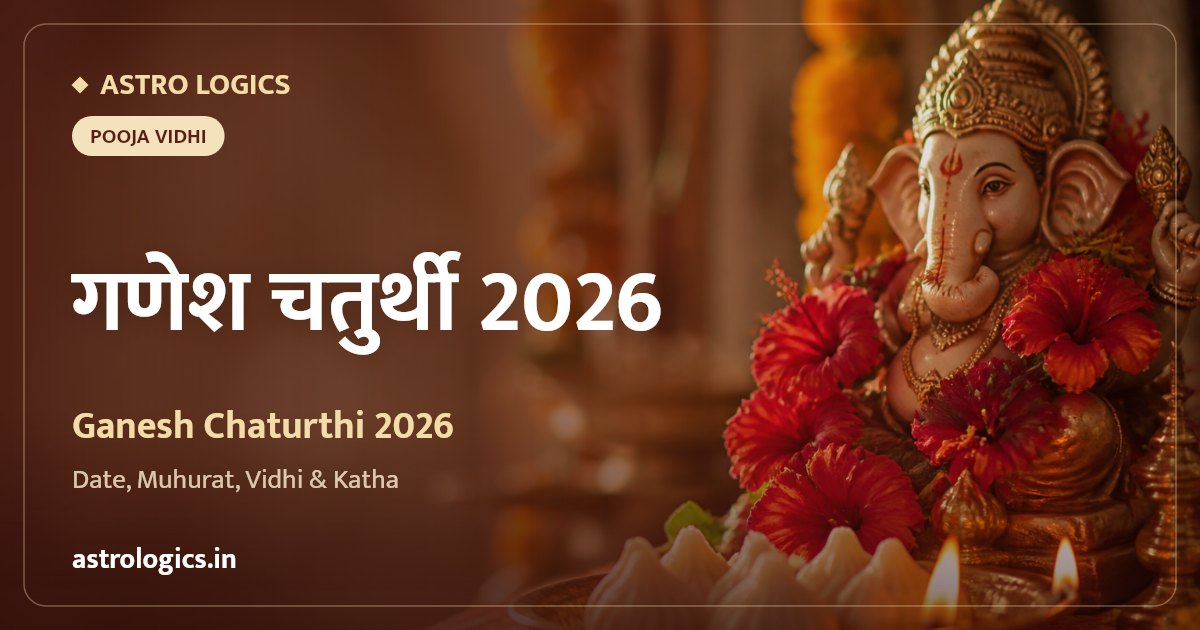
The Sukhkarta Dukhharta aarti is the most widely recognised devotional composition in honour of Lord Ganesha across Maharashtra and indeed much of India. Its opening words name Ganesha precisely as he is understood in the bhakti tradition: the one who creates happiness and removes sorrow -- a description so direct and so true to the devotee's living experience of this beloved deity that the aarti has felt both personal and universal for generations. In the Maharashtrian devotional tradition, it is associated with the revered poet-saint Samarth Ramdas, and it has been sung in millions of homes, temples, and Ganesh utsav mandals as the heartbeat of Ganesha worship.
The aarti is sung during the daily morning and evening Ganesha puja, but it reaches its most jubilant expression during Ganesh Chaturthi, the ten-day festival in which public celebrations and home installations of Ganesha idols come alive across India. In the Jyotish tradition, Ganesha is invoked before any new undertaking -- and in ritual terms, he is also the deity prayed to at the outset of every planetary remedy -- reflecting his role as the remover of obstacles that stand between a devotee and auspicious beginnings. Devotees believe that offering this aarti with a lamp and flowers at the close of each day invites Ganesha's protective presence into the home and quietens the anxieties that accumulate in ordinary life.