Indira Ekadashi 2026: Date, Shubh Muhurat, Paran Time, Vrat Katha & Mantra
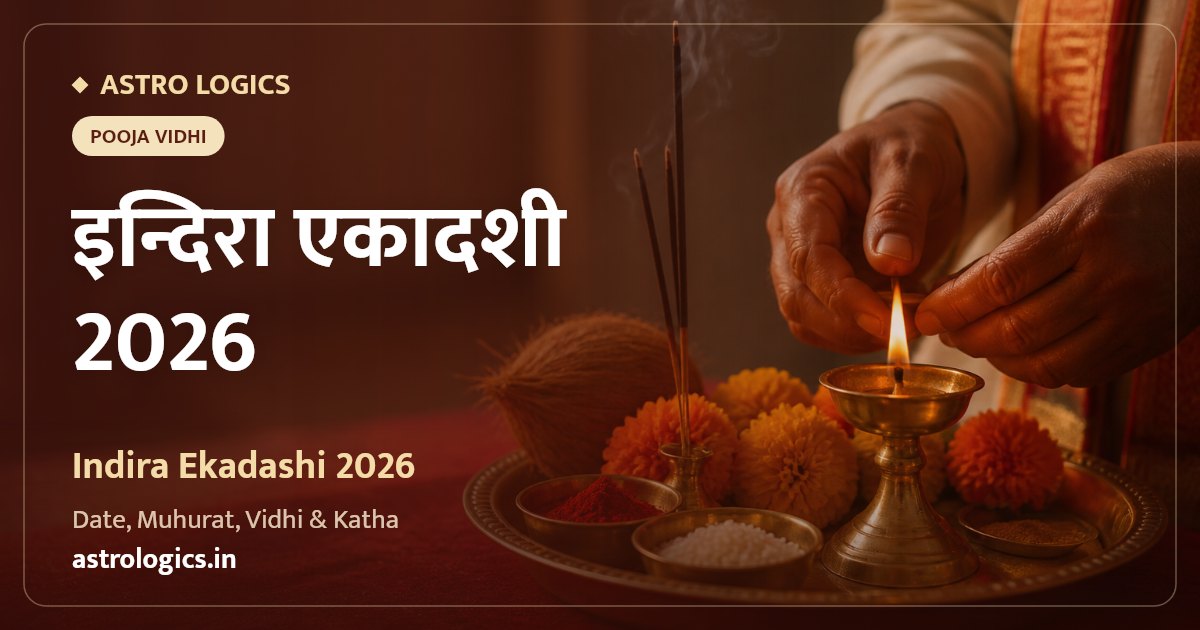
Indira Ekadashi 2026 falls on Tuesday, 6 October 2026. It is the Ekadashi of the Krishna paksha of Ashwin — the Ekadashi kept for the ancestors, inside Pitru Paksha — and the fast is broken (paran) on Wednesday, 7 October 2026 between 06:17 AM and 11:17 PM.
Below is the complete guide to Indira Ekadashi 2026: the tithi timings, the shubh muhurat, the paran window and how it was worked out, the vrat vidhi, the vrat katha and the mantras of Lord Vishnu, in the form of Shaligram. Every date and time on this page is computed from our own Vedic panchang for Delhi, not copied from a calendar — you can check any of them yourself on our free daily Panchang.
संक्षेप में: इन्दिरा एकादशी 2026 मंगलवार, 6 अक्टूबर को है। यह आश्विन कृष्ण पक्ष की एकादशी है, जो पितृ पक्ष के भीतर पड़ती है और पितरों के लिए रखी जाती है; इसमें शालिग्राम रूप में भगवान विष्णु की पूजा होती है। एकादशी तिथि 6 अक्टूबर प्रातः 02:08 से 7 अक्टूबर रात 12:35 तक है, और पारण बुधवार, 7 अक्टूबर को प्रातः 06:17 से रात 11:17 के बीच किया जाता है। सभी समय दिल्ली के लिए हैं। पूरा लेख हिंदी में पढ़ें →
Indira Ekadashi 2026: date, tithi and paran
| Vrat date | Tuesday, 6 October 2026 |
|---|---|
| Lunar month & paksha | Ashwin, Krishna Paksha |
| Ekadashi tithi begins | Tuesday, 6 October 2026 at 02:08 AM |
| Ekadashi tithi ends | Wednesday, 7 October 2026 at 12:35 AM |
| Paran (fast-breaking) | Wednesday, 7 October 2026, 06:17 AM to 11:17 PM |
| Nakshatra / Yoga | Ashlesha (lord Mercury) / Sadhya |
Indira Ekadashi 2026 shubh muhurat (Delhi)
- Brahma Muhurat: 04:41 AM to 05:29 AM
- Abhijit Muhurat: 11:45 AM to 12:33 PM
- Sunrise / Sunset: 06:17 / 18:02
- Rahu Kaal (avoid): 03:05 PM to 04:33 PM
The Moon runs in Ashlesha with the auspicious Sadhya yoga — sadhya meaning "that which can be accomplished", which is the right word for a fast whose entire purpose is to complete something on behalf of someone who can no longer act for themselves.
These timings are for Delhi. Sunrise moves by up to about forty minutes across India, and the muhurats move with it — enter your own city on the Panchang for your local figures.
Indira Ekadashi paran (fast-breaking) time
The paran is on Wednesday, 7 October 2026, from 06:17 AM to 11:17 PM. Hari Vasara ends at 06:15 AM, two minutes before sunrise, so the paran window opens with the sunrise itself.
The window is worked out this way: the fast is broken on Dwadashi, after sunrise, once Hari Vasara — the first quarter of the Dwadashi tithi, in which paran is forbidden — has passed, and before the Dwadashi tithi itself ends. Breaking the fast early in the window is considered better than late, and leaving it until after Dwadashi has ended is held to undo the merit of the fast.
Significance of Indira Ekadashi
Indira Ekadashi is the one Ekadashi of the year whose merit is not kept for oneself. It falls in the Krishna paksha of Ashwin — that is, inside Pitru Paksha, the fortnight of the ancestors — and the entire fruit of the fast is dedicated to the forefathers, particularly to any ancestor believed to be held back from their onward journey. Families who observe shraddha in this fortnight often keep this vrat as its culmination. If you have been told your chart carries a Pitru Dosha, this is the day in the Hindu year most directly associated with addressing it.
Indira Ekadashi vrat vidhi — how to keep the fast
- Rise in the Brahma Muhurat (04:41 AM to 05:29 AM), bathe, and take the sankalpa — say plainly what the fast is for.
- Clean the puja space, place an image or idol of Lord Vishnu, in the form of Shaligram, and light a ghee lamp.
- Offer tulsi leaves, yellow flowers, sandalwood, incense, fruit and panchamrit. Tulsi is essential to any Vishnu vrat — but never pluck tulsi on the Ekadashi day itself; pick the leaves the evening before.
- Chant the Vishnu mantras below and read or listen to the Indira Ekadashi vrat katha.
- Keep the fast as your health allows — nirjala (waterless) is the strictest form and is optional; phalahar with fruit, milk and water is the common practice. Rice and grains are avoided by everyone keeping any Ekadashi.
- Spend the evening in bhajan and the aarti of Lord Vishnu. Many households stay awake (jagran) through the night.
- Break the fast (paran) the next day inside the window given above, after offering food and dakshina to a brahmin or to someone in need.
Indira Ekadashi vrat katha
In the city of Mahishmati ruled a righteous king named Indrasena. He was devoted, just, and untroubled — until the sage Narada arrived at his court one day with news no king wants to hear.
Narada told him he had been to the realm of Yama, and had seen there the king’s own father. The old king had been a good man, but one vow of an Ekadashi fast had been broken in his lifetime, and for that single lapse he had not been able to move on. He had a message for his son: keep the Indira Ekadashi vrat, and give me its merit, and I will be released.
Indrasena did not argue and did not delay. He performed the shraddha rites for his father, fed and honoured brahmins, kept the Ashwin Krishna Ekadashi fast with his whole household, and at the end of it dedicated every particle of its merit to his father — keeping none of it back for himself.
The merit reached where it was sent. His father was released from that state and went on to the higher world, and Indrasena, who had asked for nothing, ruled long and well and was followed by his son. That is the promise of Indira Ekadashi: it is a fast performed for someone else, and it is said to reach them.
Mantras to chant on Indira Ekadashi
Chant these during the puja and through the day’s japa:
ॐ नमो भगवते वासुदेवाय॥
ॐ नमो नारायणाय॥
शान्ताकारं भुजगशयनं पद्मनाभं सुरेशं
विश्वाधारं गगनसदृशं मेघवर्णं शुभाङ्गम्॥
ॐ श्रीं ह्रीं क्लीं महालक्ष्म्यै नमः॥
The complete aarti, chalisa and mantra texts are in our devotional library, and the Ekadashi Mata aarti is the one most families sing at the evening lamp.
Book a puja for Indira Ekadashi 2026
This is the one Ekadashi whose stated purpose is the release of an ancestor, and it falls inside Pitru Paksha — so the pind daan and tarpan rites belong to the same fortnight and the same intention. If you would rather have it performed properly by pandits on your behalf, with sankalp in your name, a recorded video, photographs and prasad couriered to you, these are the two that fit this vrat:
- Pitra Dosh Nivaran Puja with Pind Daan & Tarpan — from ₹6,500
- Satyanarayan Katha Puja — from ₹3,100
Every puja is available in Individual, Family and Maha tiers; the full list is in the online puja store.
Indira Ekadashi 2026: FAQs
When is Indira Ekadashi in 2026?
Indira Ekadashi 2026 is on Tuesday, 6 October. The Ekadashi tithi begins at 02:08 AM on 6 October and ends at 12:35 AM on 7 October.
What is the Indira Ekadashi 2026 paran time?
The paran is on Wednesday, 7 October 2026, from 06:17 AM to 11:17 PM (Delhi). Hari Vasara ends at 06:15 AM, two minutes before sunrise, so the window opens at sunrise.
Why is Indira Ekadashi kept for ancestors?
It falls inside Pitru Paksha, the fortnight dedicated to the forefathers, and its katha is explicitly about a son releasing his father from a stalled afterlife by dedicating the merit of this fast to him. The merit is given away rather than kept.
Can I keep Indira Ekadashi if my parents are alive?
Yes. The vrat is dedicated to all the forefathers of the family line, not only to a parent who has died, and it is commonly kept alongside the shraddha rites of the same fortnight.
Whether this vrat helps you the way the katha promises depends on far more than the date: it depends on which dasha you are running and what your own chart is doing. Start with your free birth chart on Free Kundli, get the detailed 46-page Kundli report for ₹49, or talk to an astrologer about the right vrat and remedy for your chart. Planning a ceremony? The free Muhurat finder will rank the days for you.
More from this series: Kamika Ekadashi · Devshayani Ekadashi · Aja Ekadashi · Parivartini Ekadashi.
Note: dates and timings on this page are computed from our own Vedic panchang for Delhi (28.61°N, 77.21°E) and follow the Purnimanta lunar month used in North India. They can differ by city and by calendar tradition. The paran window follows the standard rule — after sunrise, after Hari Vasara, before Dwadashi ends. Please confirm with your family’s panchang or a learned pandit before observing the vrat.