Shankaracharya Krit Shivashtakam: Sanskrit Text, Meaning & Benefits
Shankaracharya Krit Shivashtakam - Sanskrit Text
तस्मै नमः परमकारणकारणाय
दीप्तोज्ज्वलज्ज्वलितपिङ्गललोचनाय ।
नागेन्द्रहारकृतकुण्डलभूषणाय
ब्रह्मेन्द्रविष्णुवरदाय नमः शिवाय ॥ १॥
श्रीमत्प्रसन्नशशिपन्नगभूषणाय
शैलेन्द्रजावदनचुम्बितलोचनाय ।
कैलासमन्दरमहेन्द्रनिकेतनाय
लोकत्रयार्तिहरणाय नमः शिवाय ॥ २॥
पद्मावदातमणिकुण्डलगोवृषाय
कृष्णागरुप्रचुरचन्दनचर्चिताय ।
भस्मानुषक्तविकचोत्पलमल्लिकाय
नीलाब्जकण्ठसदृशाय नमः शिवाय ॥ ३॥
लम्बत्सपिङ्गलजटामुकुटोत्कटाय
दंष्ट्राकरालविकटोत्कटभैरवाय ।
व्याघ्राजिनाम्बरधराय मनोहराय
त्रैलोक्यनाथनमिताय नमः शिवाय ॥ ४॥
दक्षप्रजापतिमहामखनाशनाय
क्षिप्रं महात्रिपुरदानवघातनाय ।
ब्रह्मोर्जितोर्ध्वगकरोटिनिकृन्तनाय
योगाय योगनमिताय नमः शिवाय ॥ ५॥
संसारसृष्टिघटनापरिवर्तनाय
रक्षःपिशाचगणसिद्धसमाकुलाय ।
सिद्धोरगग्रहगणेन्द्रनिषेविताय
शार्दूलचर्मवसनाय नमः शिवाय ॥ ६॥
भस्माङ्गरागकृतरूपमनोहराय
सौम्यावदातवनमाश्रितमाश्रिताय ।
गौरीकटाक्षनयनार्धनिरीक्षणाय
गोक्षीरधारधवलाय नमः शिवाय ॥ ७॥
आदित्यसोमवरुणानिलसेविताय
यज्ञाग्निहोत्रवरधूमनिकेतनाय ।
ऋक्सामवेदमुनिभिः स्तुतिसंयुताय
गोपाय गोपनमिताय नमः शिवाय ॥ ८॥
शिवाष्टकमिदं पुण्यं यः पठेत् शिवसन्निधौ ।
शिवलोकमवाप्नोति शिवेन सह मोदते ॥
॥ इति श्रीशङ्कराचार्यकृतं शिवाष्टकं सम्पूर्णम् ॥
Transliteration (Roman/IAST)
tasmai namaḥ paramakāraṇa-kāraṇāya
dīptojjvalaj-jvalita-piṅgala-locanāya |
nāgendra-hāra-kṛta-kuṇḍala-bhūṣaṇāya
brahmendra-viṣṇu-varadāya namaḥ śivāya || 1||
(each of the eight verses closes with the refrain "namaḥ śivāya" - "salutations to Shiva")
ādityasoma-varuṇānila-sevitāya
yajñāgnihotra-vara-dhūma-niketanāya |
ṛk-sāma-veda-munibhiḥ stuti-saṃyutāya
gopāya gopa-namitāya namaḥ śivāya || 8||
śivāṣṭakam-idaṃ puṇyaṃ yaḥ paṭhet śiva-sannidhau |
śivalokam-avāpnoti śivena saha modate ||
Meaning
Each verse paints a facet of Shiva and ends "namah Shivaya." He is the cause of the supreme cause, with blazing tawny eyes, adorned with the king of serpents as a garland and earrings, the giver of boons to Brahma, Indra and Vishnu (verse 1). He bears the gentle crescent moon and the serpent, his eyes kissed by the face of Parvati (the daughter of the mountain-king), dwelling on Kailasa, Mandara and Mahendra, remover of the sorrow of the three worlds (verse 2). He shines with lotus-pure jewelled earrings, smeared with dark agaru and sandal, his throat dark as the blue lotus (verse 3). With matted tawny locks piled high as a crown, with fearsome fangs as the dread Bhairava, clad in a tiger-skin yet captivating, bowed to by the lords of the three worlds (verse 4). He destroyed Daksha's great sacrifice and swiftly slew the demons of the three cities (Tripura); he is Yoga itself, to whom yogis bow (verse 5). He fashions, transforms and dissolves the cycle of creation, surrounded by hosts of rakshasas, pishachas and siddhas, served by serpents, planets and ganas, clad in a tiger-skin (verse 6). His form is enchanting with ash-smeared limbs, the refuge of those who seek refuge, glancing with half an eye the side-long look of Gauri, white as a stream of cow's milk (verse 7). He is served by the Sun, Moon, Varuna and Wind, dwelling in the rising smoke of the sacrificial fire, hymned by the sages of the Rig and Sama Vedas, the protector to whom even the cowherds bow (verse 8). The closing verse promises that whoever recites this holy Shivashtaka in Shiva's presence attains Shiva-loka and rejoices with Shiva.
About this Stotra
This Shivashtakam - opening "Tasmai namah paramakarana-karanaya" - is one of the most famous eight-verse hymns to Lord Shiva, composed by Adi Shankaracharya. Each of its richly compounded Sanskrit verses heaps epithet upon epithet to evoke the full majesty of Shiva - at once the serene, moon-crowned consort of Parvati and the terrifying Bhairava clad in tiger-skin and ash, both the transcendent cause of the cosmos and the gracious lord who removes the suffering of the three worlds. The hymn is recited on most occasions of Shiva worship and concludes with a phalashruti (statement of fruits) promising the attainment of Shiva's own realm.
Significance & Spiritual Benefits
By garlanding Shiva with his every aspect - creator, sustainer, destroyer, yogi, saviour and supreme reality - the hymn carries the devotee's mind from the visible form to the boundless Lord behind it. Its phalashruti is explicit: one who recites it in Shiva's presence reaches Shiva-loka and delights eternally in his company. Devotees chant it for removal of suffering (the hymn calls Shiva "remover of the sorrow of the three worlds"), for protection, for spiritual elevation and for the grace that leads to liberation. Its powerful, rhythmic Sanskrit makes it a favourite for recitation during abhisheka and on Shiva festivals.
Astrological Relevance
As a complete hymn to Shiva, this Shivashtakam is a remedy for the most difficult planetary influences. Shiva presides over Shani (Saturn), Rahu and Ketu, and his worship is prescribed during Sade Sati, the nodal dashas and Maha-dasha junctions. The verses' emphasis on Shiva as conqueror of death and destroyer of demons makes the hymn supportive of longevity and a strong Lagna (ascendant); the crescent moon on his brow links it to mental peace and an afflicted Chandra (Moon); and the prayer's reference to the Sun, Moon, Varuna and Wind serving Shiva reflects his lordship over the planetary forces themselves. It is recited on Mondays and during Pradosha for overall graha-shanti (planetary peace).
How to Chant (Vidhi)
Bathe and sit before a Shiva lingam or image, facing east or north. Light a lamp, offer bilva (bel) leaves, white flowers and sacred ash, and apply tripundra. Recite the eight verses with devotion, ideally during or after the abhisheka of the lingam with water or milk. The hymn is especially effective when chanted "shiva-sannidhau" - in the presence of Shiva - as the phalashruti directs. Conclude with "Om Namah Shivaya" and the offering of the lamp.
Best Day & Time
Monday (Somvar), the Pradosha twilight, Maha Shivaratri and the month of Shravana are the most auspicious. The Brahma-muhurta and the evening Pradosha hour are ideal times for recitation.
Frequently Asked Questions
Who composed this Shivashtakam?
It is attributed to Adi Shankaracharya. It is distinct from his other Shiva hymns and is identified by its opening line "Tasmai namah paramakarana-karanaya."
What does its phalashruti promise?
The closing verse states that whoever recites this holy Shivashtaka in the presence of Shiva attains Shiva-loka (the realm of Shiva) and rejoices eternally in his company.
When should it be recited?
It is recited on most occasions of Shiva worship and is especially auspicious on Mondays, during Pradosha, and on Maha Shivaratri, ideally during the abhisheka of a Shiva lingam.
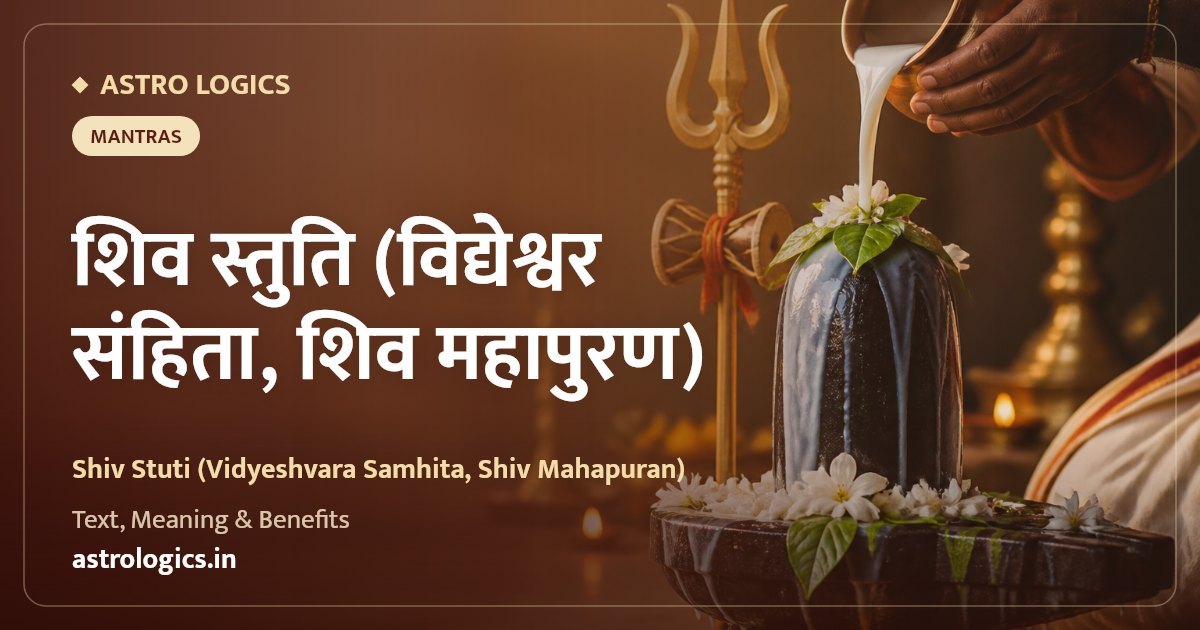
Adi Shankaracharya's eight-verse garland of ultimate causation
The Shivashtakam attributed to Adi Shankaracharya opens with a philosophical declaration before it becomes devotional: Shiva is saluted as the supreme cause behind all causes - paramakarana-karanaya. This framing immediately places the hymn within an Advaita Vedantic vision in which Shiva is not merely one deity among many but the very ground of existence from which all phenomena arise. Yet as each verse unfolds, this cosmic vastness becomes intimate, as the one who transcends all form is simultaneously celebrated in his manifold glory - dancer, ascetic, destroyer of death, lord of the three worlds - before each verse returns to the simple, encompassing salutation: namah Shivaya.
Devotees recite the Shivashtakam on Mondays, which are traditionally Shiva's day, during Mahashivratri vigils, and during the auspicious month of Shravan when Shiva worship intensifies across India. The phalashruti at the hymn's close - promising Shiva's own realm to the sincere reciter - follows the classical pattern of stotra literature while pointing to something deeper: the hymn does not merely describe Shiva but, in the bhakti tradition, draws the devotee into Shiva's presence through the act of praise. In the Jyotish tradition, Shiva stotras are associated with Saturn as well as with the removal of fear and ego-rigidity, and the Shivashtakam's blend of philosophical precision and devotional warmth makes it a natural ally for those seeking both inner understanding and outer peace.