Aarti Kunj Bihari Ki – Shri Krishna Aarti for Devotion and Bliss
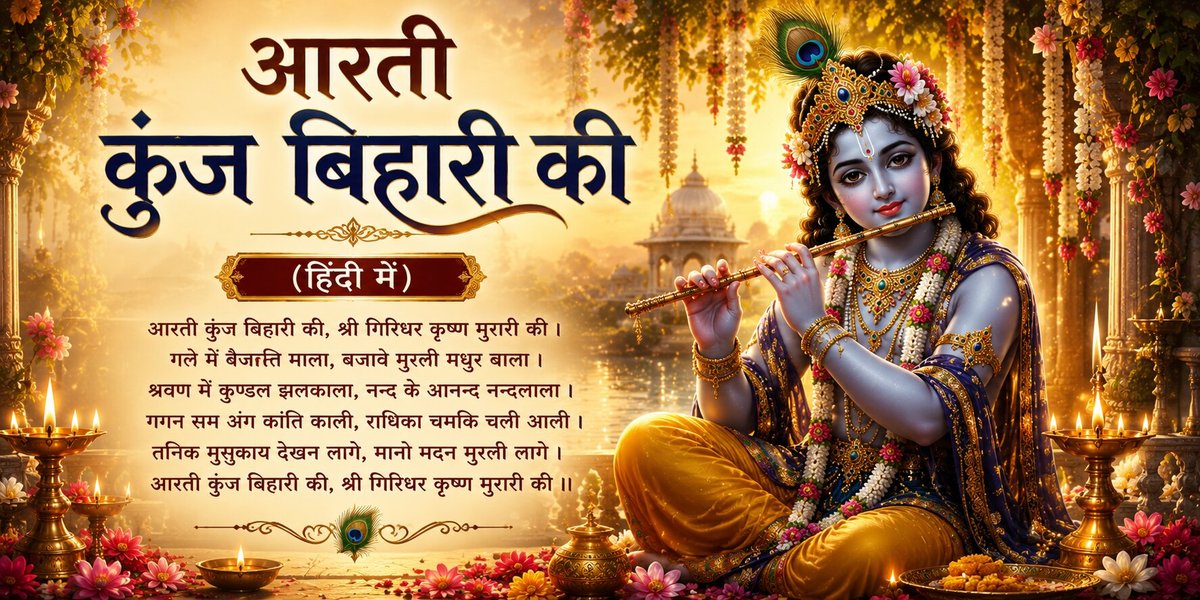
Kunj Bihari: the flute-player of the groves and the heart of Vrindavan bhakti
Aarti Kunj Bihari Ki is one of the most cherished and widely sung aartis in the entire Krishna bhakti tradition. Kunj Bihari - the one who wanders playfully among the forest groves - evokes a specific mood of intimate love: not the awe of the cosmic Vishnu but the tender sweetness of Krishna in Vrindavan, playing his flute at dusk among the kadamba trees. This aarti captures that madhurya rasa - the rasa of sweetness - and carries the devotee into a world where every moment with Krishna is suffused with beauty and longing. It is sung at evening aarti in Krishna temples and at Sandhya puja in homes, filling the space with devotion as the lamps are waved.
The aarti is especially beloved during Janmashtami, in the month of Shravan, and throughout the Braj festivals. Devotees offer it with flowers of the season - often yellow or fragrant varieties - and with the surrender characteristic of bhakti as a love relationship. What makes this composition enduringly distinct is that it does not ask anything of the Lord; it simply rejoices in his beauty and presence. That quality of selfless celebration - offering the lamp of one's heart without demand or calculation - is precisely the devotional ideal that Krishna bhakti holds before the seeker as the highest form of love.
Aarti Kunj Bihari Ki Lyrics (हिंदी में)
आरती कुंजबिहारी की, श्री गिरिधर कृष्ण मुरारी की ॥
गले में बैजंती माला, बजावै मुरली मधुर बाला ।
श्रवण में कुंडल झलकाला, नंद के आनंद नंदलाला ।
गगन सम अंग कांति काली, राधिका चमक रही आली ।
लतन में ठाढ़े बनमाली भ्रमर सी अलक, कस्तूरी तिलक, चंद्र सी झलक,
ललित छवि श्यामा प्यारी की, श्री गिरिधर कृष्ण मुरारी की ॥
आरती कुंजबिहारी की, श्री गिरिधर कृष्ण मुरारी की ॥
कनकमय मोर मुकुट बिलसै, देवता दरसन को तरसैं ।
गगन सों सुमन रासि बरसै ।
बजे मुरचंग, मधुर मिरदंग, ग्वालिन संग, अतुल रति गोप कुमारी की,
श्री गिरिधर कृष्ण मुरारी की ॥
आरती कुंजबिहारी की, श्री गिरिधर कृष्ण मुरारी की ॥
जहां ते प्रकट भई गंगा, सकल मन हारिणि श्री गंगा ।
स्मरन ते होत मोह भंगा ।
बसी शिव सीस, जटा के बीच, हरै अघ कीच, चरन छवि श्रीबनवारी की,
श्री गिरिधर कृष्ण मुरारी की ॥
आरती कुंजबिहारी की, श्री गिरिधर कृष्ण मुरारी की ॥
चमकती उज्ज्वल तट रेनू, बज रही वृंदावन बेनू ।
चहुं दिसि गोपि ग्वाल धेनू ।
हंसत मृदु मंद, चांदनी चंद, कटत भव फंद, टेर सुन दीन दुखारी की,
श्री गिरिधर कृष्ण मुरारी की ॥
आरती कुंजबिहारी की, श्री गिरिधर कृष्ण मुरारी की ॥
Aarti Kunj Bihari Ki – Transliteration (English)
Aarti Kunjabihari Ki, Shri Giridhar Krishna Murari Ki ॥
Gale Mein Baijanti Mala, Bajaavai Murali Madhur Bala,
Shravan Mein Kundal Jhalkaala, Nand Ke Aanand Nandalala,
Gagan Sam Ang Kaanti Kaali, Radhika Chamak Rahi Aali,
Latan Mein Thaadhe Banmaali, Bhramar Si Alak, Kasturi Tilak, Chandra Si Jhalak,
Lalit Chhavi Shyama Pyari Ki, Shri Giridhar Krishna Murari Ki ॥
Aarti Kunjabihari Ki, Shri Giridhar Krishna Murari Ki ॥
Kanakamay Mor Mukut Bilasai, Devata Darasan Ko Tarasain,
Gagan Son Suman Raasi Barasai,
Baje Murachang, Madhur Mridang, Gwalin Sang, Atul Rati Gop Kumari Ki,
Shri Giridhar Krishna Murari Ki ॥
Aarti Kunjabihari Ki, Shri Giridhar Krishna Murari Ki ॥
Jahan Te Prakat Bhai Ganga, Sakal Man Haarini Shri Ganga,
Smaran Te Hot Moh Bhanga,
Basi Shiv Sees, Jata Ke Beech, Harai Agh Keech, Charan Chhavi Shribanawaari Ki,
Shri Giridhar Krishna Murari Ki ॥
Aarti Kunjabihari Ki, Shri Giridhar Krishna Murari Ki ॥
Chamakti Ujjwal Tat Renu, Baj Rahi Vrindavan Benu,
Chahun Disi Gopi Gwal Dhenu,
Hansat Mridu Mand, Chandani Chand, Katat Bhav Phand, Ter Sun Deen Dukhari Ki,
Shri Giridhar Krishna Murari Ki ॥
Aarti Kunjabihari Ki, Shri Giridhar Krishna Murari Ki ॥
Meaning & Significance
Aarti Kunj Bihari Ki is among the most cherished devotional hymns in the Vaishnava tradition, composed in reverence of Shri Krishna in His enchanting form as the wanderer of the sacred groves of Vrindavan. Each verse paints a vivid portrait of the Lord - His peacock-feather crown, the golden anklets, the mesmerising flute, the sapphire complexion glowing beneath moonlight, and the divine Ganga born from His lotus feet. The aarti reminds devotees that worldly illusions dissolve in the remembrance of the Lord, and that even the gods long for His vision.
Sung at dawn and dusk in temples across North India, this aarti creates a sacred atmosphere where the devotee's mind turns wholly toward the divine, invoking peace, bliss, and spiritual upliftment with every repetition of the refrain.
About Shri Krishna (Kunj Bihari)
Shri Krishna, celebrated as Kunj Bihari - the delight of the forest bowers - is the eighth avatar of Lord Vishnu and the Supreme Being in Vaishnavism. Born in Mathura and nurtured in Vrindavan among the Gopa community, Krishna is revered as the eternal lover who embodies divine joy, wisdom, and compassion. His pastimes in Vrindavan, the lifting of Govardhan Hill (hence Giridhar), and His teachings in the Bhagavad Gita form the spiritual bedrock of devotees across the world. Temples in Vrindavan, Mathura, and Dwarka draw millions of pilgrims who come to experience the living presence of Krishna.
Benefits of Reciting the Aarti Kunj Bihari Ki
- Invokes the grace of Shri Krishna and fills the heart with devotional bliss (bhakti rasa).
- Helps calm the mind, dissolve anxieties, and cultivate inner peace through focused chanting.
- Strengthens the atmosphere of the home when performed during morning and evening puja.
- Deepens one's connection with the Krishna-bhakti tradition of Vrindavan.
- Believed in the tradition to purify the surroundings and ward off negative energies.
- Chanting regularly fosters discipline, gratitude, and mindfulness in daily life.
How to Perform the Aarti (Pooja Vidhi)
- Cleanse the puja space, bathe and wear clean clothes before beginning the ritual.
- Place a murti or image of Shri Krishna on the altar; offer fresh flowers, tulsi leaves, and seasonal fruits.
- Light a ghee diya and an incense stick; ring a small bell to invite divine presence.
- Hold the aarti plate (thali) with the lit diya and move it in a circular clockwise motion before the deity while chanting the aarti.
- Chant the aarti with devotion, ideally accompanied by a harmonium, manjira, or simply with clapping hands.
- After the aarti, offer a small prayer, distribute prasad, and bow in gratitude (dandavat pranam).
Best Day & Time to Recite
This aarti is traditionally performed twice daily - at sunrise (Mangal Aarti) and at sunset (Sandhya Aarti). Wednesday and Ekadashi tithis are especially auspicious for Krishna worship. Janmashtami, Radha Ashtami, and all Ekadashi days are regarded as particularly powerful occasions for extended chanting of this aarti. Regular daily recitation, however, is considered more beneficial than occasional performance on auspicious days alone.
Frequently Asked Questions
Who composed Aarti Kunj Bihari Ki?
The precise authorship of this aarti is attributed to the Vaishnava bhakti tradition, with some scholars connecting it to the devotional poetry lineage associated with the saints of Vrindavan. It has been passed down through centuries of temple practice and is sung in virtually every Krishna temple in North India.
What does 'Kunj Bihari' mean?
Kunj means a grove or bower of trees, and Bihari means one who wanders or takes delight. Together, Kunj Bihari refers to Lord Krishna who eternally enjoys His divine pastimes in the sacred groves of Vrindavan - a name that evokes both His playfulness and His spiritual majesty.
Can this aarti be chanted at home without a temple setting?
Yes, the aarti may be performed at a home altar with sincere devotion. A simple diya, a clean image or murti of Krishna, and a focused, reverent mind are sufficient. The tradition holds that the Lord accepts the offering of the heart above all external arrangements.